Side Dishes
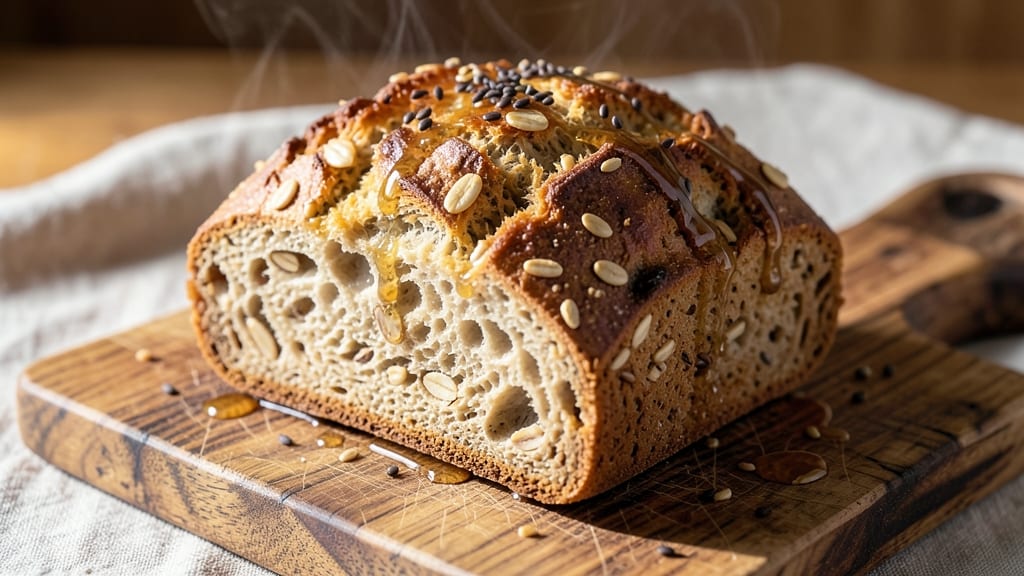
This 9-grain honey oat bread recipe delivers a perfect balance of crunchy crust and sweet honey swirls—ideal for breakfast, sandwiches, or toast. The combination of whole grains and honey creates a loaf with a satisfying texture and natural sweetness that pairs beautifully with butter or jam.
I developed this recipe to be beginner-friendly, ensuring a light, airy crumb without dense results.
The secret lies in the grain blend—whole wheat, rye, and oats contribute hearty texture while keeping the bread tender. Honey not only adds sweetness but also enhances browning for that perfect golden crust.
You’ll need 30 minutes of prep and 350°F for 30–40 minutes of baking, making it a manageable project for any home baker.
What you’ll end up with is a fragrant, slightly sweet loaf with a crisp exterior and soft interior, perfect for slicing thick or toasting. The honey swirls add a subtle caramelized flavor that makes every bite feel special.
This bread freezes beautifully, so you can bake a batch ahead for the week.
Whether you’re serving it for breakfast or pairing it with soups, this 9-grain honey oat bread is a versatile staple. The recipe includes scoring tips for a professional finish and troubleshooting advice to avoid common baking pitfalls. Let’s get started!
Ingredients for 9 grain honey oat bread
Nine whole grains, honey swirls, and a golden crust—this bread delivers restaurant-quality results at home.
| Ingredient | Amount | Notes |
|---|---|---|
| All-Purpose Flour 🌾 | 4 cups | Sifted for light texture |
| Whole Wheat Flour 🌾 | 1 ½ cups | For hearty texture |
| Rolled Oats 🍚 | 1 cup | Blended into flour substitute |
| Rye Flour 🌾 | ½ cup | Adds depth of flavor |
| Wild Rice Flour 🌾 | ¼ cup | For nutty undertones |
| Spelt Flour 🌾 | ¼ cup | Lightens the crumb |
| Cornmeal 🌽 | ¼ cup | Enhances crust texture |
| Buckwheat Flour 🌾 | ¼ cup | Earthy flavor profile |
| Amaranth Flour 🌾 | ¼ cup | Protein-rich addition |
| Honey 🍯 | ½ cup | Local, raw preferred |
| Unsalted Butter 🧈 | ½ cup | Cold, cubed for dough |
| Active Dry Yeast 🍞 | 2 ¼ tsp | Freshly packaged |
| Granulated Sugar 🍚 | ¼ cup | For yeast activation |
| Warm Water 💧 | 1 ¼ cups | 110°F for ideal yeast |
| Sea Salt 🧂 | 1 ½ tsp | Fine grain preferred |
| Corn Oil 🫒 | 2 tbsp | For dough elasticity |
The grain blend is where the magic happens. Bob's Red Mill carries all these flours in bulk, making it easy to stock up. For the oats, Quaker Old Fashioned Rolled Oats work best—they blend smoothly without grit. If you can't find amaranth or buckwheat flour, substitute with extra whole wheat, though you'll lose some depth of flavor. The honey? Local raw honey from a farmers market adds complexity—avoid the ultra-filtered grocery store kind. For the yeast, always check the expiration date, even if it's been sitting in your pantry for months.
No wild rice flour? Swap for extra rye—it's the closest in flavor. Running low on spelt? All-purpose flour works in a pinch, though the crumb will be slightly denser. The butter should be cold and cubed when you mix it into the dough—this prevents the yeast from activating too quickly. For the honey swirls, use thicker honey (like buckwheat) if you prefer more pronounced caramelization. And if you're making this ahead, pre-mix your dry ingredients in a large bowl to save time later.
This dough doubles in size, so don't overfill your pan. King Arthur loaf pans are my go-to—they hold 9x5 inches perfectly. For scoring, use a sharp razor blade or serrated knife at a 45-degree angle. The bread keeps well for 3 days at room temperature, but it's best sliced and toasted. Freeze half the batch for up to 3 months—wrap tightly in plastic wrap, then foil. Thaw at room temperature before toasting, and you'll never know it was frozen.
Why You'll Love This Recipe
- No-Mix Fuss: I swear by this dough—just toss everything in a bowl, no kneading, no waiting. The rolled oats and rye flour do all the heavy lifting while you sip your coffee.
- Honey-Grain Magic: That sticky honey glaze caramelizes into a crispy shell, but the inside? Chewy, nutty, and packed with the deep earthiness of wild rice flour. Honestly, it’s the kind of bread that makes toast taste like a treat.
- Weeknight Wonder: Slice it for breakfast, pack it in lunches, or serve it warm with butter at dinner. Between us, I’ve even used it to soak up soup when I forgot to make dinner—no judgment.
- Budget-Friendly Staple: Whole grains and pantry staples keep costs low, and one loaf lasts my family five days. (Yes, even on a Tuesday night.) Plus, the wild rice flour adds protein without breaking the bank.
Step-by-step instructions for crafting 9-Grain honey oat bread
This dough will transform into a loaf with a crackly crust and golden honey swirls—let's get started.
Blend the Grain Flour Base
In a food processor, pulse the 1 cup rolled oats until they resemble coarse flour. Add the remaining specialty flours: 0.5 cup rye flour, 0.25 cup wild rice flour, 0.25 cup spelt flour, 0.25 cup cornmeal, 0.25 cup buckwheat flour, and 0.25 cup amaranth flour. Process until you achieve a fine, uniform blend that resembles all-purpose flour. This step ensures even distribution of flavors and textures throughout the loaf.
Transfer the blended grain mixture to a large mixing bowl. Sift in the 4 cups all-purpose flour and 1.5 cups whole wheat flour on top. Whisk gently to combine, breaking up any clumps. The reason for sifting is to incorporate air into the dry ingredients—this creates a lighter crumb in your final bread. Set this bowl aside for now.
Activate the Yeast and Combine Wet Ingredients
In a separate bowl, dissolve the 2.25 tsp active dry yeast in 1.25 cups warm water (about 110°F). Add 0.25 cup granulated sugar and stir gently. Let this mixture sit for 5-10 minutes until it becomes frothy—this indicates the yeast is active and ready to work. If it doesn't bubble, your yeast may be old or the water too hot.
In the same bowl, add the 0.5 cup honey, 0.5 cup cold unsalted butter (cut into small cubes), and 2 tbsp corn oil. Whisk vigorously until the butter melts and the mixture becomes smooth and emulsified. The corn oil helps create a tender crumb, while the honey adds natural sweetness and helps retain moisture during baking.
Mix the Dough and Develop Gluten
Gradually add the dry flour mixture to the wet ingredients while mixing with a wooden spoon. Stir until a shaggy dough forms, then turn it out onto a lightly floured surface. Knead the dough for 8-10 minutes by hand, folding and pressing until it becomes smooth and elastic. You'll know it's ready when it springs back slowly when poked.
Here's the thing—this dough contains multiple flours with different protein levels, so it won't behave like standard bread dough. If it feels too sticky, add 1-2 tablespoons of the reserved all-purpose flour, but don't overdo it. The goal is a firm yet pliable dough that won't tear when shaped. Real talk: this step takes patience, but it's worth it for that perfect crumb.
First Rise and Honey Swirl Preparation
Lightly oil a large bowl, place the dough inside, and cover with a damp towel. Let it rise in a warm place for 1-1.5 hours, or until it has doubled in size. The dough should feel light and airy when pressed gently with a finger. If it doesn't rise much, your kitchen might be too cool—try placing the bowl near a warm oven with the light on.
While the dough rises, prepare the honey swirl by mixing 0.25 cup honey with 1 tbsp warm water in a small bowl. Once the dough has risen, punch it down gently to release air, then divide it into two equal portions. Roll each portion into a 12-inch log on a floured surface. Use a piping bag or spoon to pipe the honey mixture down the center of one log, then seal it by folding the edges inward.
Shape, Proof, and Bake to Perfection
Place both logs side by side in a greased 9x5-inch loaf pan. Cover with a damp towel and let proof for another 30-45 minutes until the dough has risen about 1 inch above the pan. Preheat your oven to 375°F with a baking stone or inverted baking sheet inside—this creates steam for that crackly crust we're after.
Bake the bread for 40-45 minutes until the top is deep golden brown and sounds hollow when tapped on the bottom. If the top browns too quickly, tent with foil. The internal temperature should reach 190-200°F at the center. Let the bread cool in the pan for 10 minutes, then transfer to a wire rack to cool completely before slicing—this prevents a gummy texture.
Pro Tips For Making 9 Grain Honey Oat Bread
- TOAST THE OATS FIRST: I learned this the hard way—skipping it makes the bread taste like cardboard. Lightly toast the rolled oats in a dry pan over medium heat for 3-4 minutes until they’re golden and smell nutty. This deepens their flavor and prevents the bread from getting gummy.
- WEIGH THE FLOURS: Stop eyeballing it. Whole wheat, rye, and wild rice flour are denser than all-purpose, so scooping leads to uneven texture. Use a kitchen scale for each flour type—this recipe actually works best when you’re precise, especially with the wild rice flour.
- DON’T OVERMIX THE DOUGH: I used to punch and fold until it looked smooth, but this bread thrives on a rustic, shaggy texture. Mix just until the flours are combined and the honey is evenly distributed—overworking it activates too much gluten, making the bread dense instead of light and airy.
- BAKE WITH A STEAM TRICK: Place a shallow tray of water in the oven before baking, then close the door for 10 minutes. The steam helps the crust stay chewy and the crumb tender—critical when you’re mixing in so many dense flours. Remove the tray halfway through baking to crisp the top.
Regional styles of 9 grain honey oat bread
Scandinavian Rye Twist
In Sweden and Norway, rye bread is a staple, and this 9-grain version takes inspiration from those traditions by emphasizing the rye flour and adding a touch of cardamom (½ tsp) to the dough.
Swap ½ cup of the all-purpose flour for extra rye, and replace the honey swirl with a caramelized sugar glaze—mix ¼ cup brown sugar with 1 tbsp water and brush it on top before baking.
The result is a denser, heartier loaf with warm spice notes, perfect for open-faced sandwiches with smoked salmon or herbed cream cheese. 🌍
Southern U.S. Honey Cornbread
Down South, honey and cornmeal are beloved together, so this variation leans into that with a double dose of cornmeal—increase it to ½ cup and replace ½ cup of the buckwheat flour for a sweeter, crumbly texture.
Add 1 tsp cinnamon to the dough and fold in ½ cup chopped pecans for extra crunch. Bake in a cast-iron skillet for a crispy, rustic crust. Serve warm with butter or as a side to fried chicken—it’s a Southern classic with a global twist. 🍯
German Pumpernickel-Inspired
For a denser, darker loaf inspired by German pumpernickel, replace 1 cup of the all-purpose flour with 1 cup whole rye flour and add 1 tbsp molasses to the dough. Skip the honey swirl and instead brush the loaf with beaten egg before baking for a glossy finish.
The molasses adds depth, while the extra rye creates a chewy, robust texture. This version is perfect for hearty breakfasts or paired with sharp cheeses like aged Gouda. 🥖
Mediterranean Herb Swirl
Bring a taste of the Mediterranean to your kitchen by adding 1 tbsp dried oregano and 1 tbsp dried rosemary to the dough. Replace the honey swirl with a mixture of ¼ cup olive oil and 1 tbsp honey, then drizzle it over the loaf before baking.
Top with coarse sea salt and bake as usual. The herbs infuse the bread with a fragrant, earthy flavor, while the olive oil keeps it moist. This loaf pairs beautifully with grilled vegetables or as a side to lamb dishes. 🌿
Japanese Millet Bread
For a lighter, slightly sweet variation inspired by Japanese millet bread, replace ½ cup of the amaranth flour with ½ cup millet flour and add 1 tbsp matcha powder to the dough for a subtle earthy sweetness.
Use white miso paste (1 tsp) instead of salt, and create a swirl with ¼ cup honey mixed with 1 tsp grated ginger. Bake as usual, but brush the crust with egg wash** for a shiny finish.
This bread is perfect for breakfast with miso soup or as a base for onigiri. 🍶
Nutrition facts
Frequently asked questions
Can I make this bread without a food processor?
If you don't have a food processor, simply grind the 1 cup rolled oats into a coarse flour using a blender or even a rolling pin and heavy pan. For the specialty flours, you can mix them by hand in a bowl using a whisk or fork until well combined. The texture might be slightly less uniform, but it won't affect the bread's flavor or quality.
Why does my dough feel too sticky?
This happens because the multiple grain flours absorb more moisture. If your dough feels too sticky, gradually add 1-2 tablespoons of all-purpose flour while kneading. The goal is a firm yet pliable dough that springs back slowly when poked. Over-kneading can make it tough, so stop once it's smooth and elastic.
How do I store leftover bread?
Wrap the cooled loaf tightly in plastic wrap, then place it in a paper bag to keep it fresh for 3 days at room temperature. For longer storage, freeze half the loaf by wrapping it in plastic wrap and foil. Thaw at room temperature before slicing, and toast for best texture. The honey swirls stay moist even after freezing!
Can I substitute wild rice flour?
Yes! If you can't find wild rice flour, substitute it with an equal amount of whole wheat flour or rye flour. You'll lose some nutty depth, but the bread will still taste delicious. For a similar texture, you could also use quinoa flour if available—it adds a mild, earthy flavor that works well with the grain blend.
How do I know when the bread is fully baked?
Look for three signs: the crust should be deep golden brown, the bread should sound hollow when tapped on the bottom, and the internal temperature should reach 190-200°F. If the top browns too quickly, tent with foil to prevent over-browning while the center finishes cooking. Always let it cool in the pan for 10 minutes before transferring.