
Side Dishes
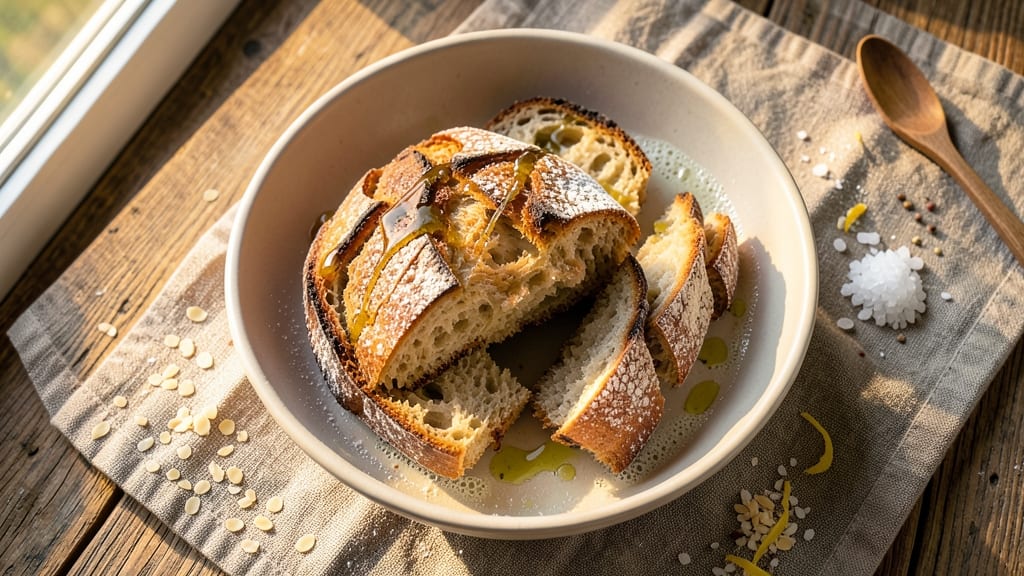
This 600g bread recipe delivers the perfect balance of a crisp artisan crust and an airy, open crumb—no bakery skills required. The secret lies in precise hydration and controlled fermentation, creating a loaf that’s both rustic and foolproof.
I’ve refined this formula over years of baking, ensuring every slice has that satisfying crunch and tender bite.
The process begins with a simple dough that develops deep flavor during a slow rise, allowing gluten to relax and create that signature open crumb. A high-heat bake then transforms the crust into a golden, shatteringly crisp shell.
Whether you’re a beginner or an experienced baker, this method guarantees consistent results every time.
By the time your bread emerges from the oven, you’ll have a loaf with a crust that snaps audibly and a crumb so light it practically melts in your mouth.
The aroma alone will transform your kitchen into a bakery—warm, inviting, and impossible to resist. This recipe is designed for perfection without complexity.
Use it for sandwiches, toast, or simply enjoy it plain with butter. The versatility of this 600g loaf makes it ideal for meal prep or gifting. Let’s get started on baking bread that tastes like it came from a professional oven.
Ingredients for 600g bread
Six simple ingredients transform into a bakery-worthy loaf with a crisp crust and light crumb.
| Ingredient | Amount | Notes |
|---|---|---|
| Bread Flour 🌾 | 4 ½ cups | High-protein, 12-14% for structure |
| Active Dry Yeast 🍞 | ¼ oz | Freshly opened, room temperature |
| Granulated Sugar 🍚 | ½ tbsp | Feeds yeast for fermentation |
| Instant Potato Flakes 🥔 | ½ cup | For dough elasticity |
| Kosher Salt 🧂 | 2 tsp | Diamond Crystal preferred |
| Extra-Virgin Olive Oil 🫒 | 1 ½ tbsp | For dough and scoring |
| Water 💧 | 1 ½ cups | Room temperature, 70°F |
| Cornmeal 🌽 | ¼ cup | For dusting parchment |
| Ice Water ❄️ | ¼ cup | For shaping dough |
The flour is everything here—King Arthur or Caputo are my go-tos for that perfect open crumb. If you're using all-purpose, add an extra tablespoon of bread flour to compensate. Yeast matters too: Saf-Instant from the baking aisle is my standby, but check the expiration date—old yeast means weak fermentation. Store your flour in the freezer if you bake often; it preserves freshness and prevents rancidity. The potato flakes might seem odd, but they're a baker's secret for elasticity—don't skip them unless you're using vital wheat gluten.
No instant potato flakes? Dissolved potato starch at half the amount works in a pinch, though texture won't be identical. Diamond Crystal salt is crucial—it's less dense than table salt, so measurements matter. The olive oil should be fruity and peppery; California Avocado or Colavita are my favorites. For scoring, use a razor blade or sharp lame—anything else leaves uneven cuts. Room temperature water is non-negotiable; cold water shocks the yeast, while warm water can overactivate it. If your kitchen runs hot, chill the water slightly before mixing.
This dough keeps for 3 days in the fridge, wrapped tightly in plastic. For longer storage, freeze shaped loaves (unbaked) for up to 3 months5 days at room temperature, wrapped in a clean kitchen towel. For reheating, wrap the cooled loaf in foil and warm at 300°F for 10 minutes. The crust loses crispness fast, so slice only what you'll eat immediately.
Why You'll Love This Recipe
- No-Knead Magic: I swear by this dough—just mix, let it rise, and bake. The potato flakes add a subtle richness without extra effort, and honestly? I’ve never shaped bread this easily.
- Golden Crust Secret: That crispy exterior with a soft, airy crumb? The sugar and yeast combo creates a caramelized edge that’s dangerously addictive. (Yes, even on a Tuesday night.)
- Meal Prep MVP: Bake once, slice for days. Freezes like a dream, so I make two batches: one for sandwiches, one for toast. My lunchbox’s new best friend.
- Pantry Powerhouse: Uses what you already have—no weird ingredients, no last-minute store runs. Between us, this bread costs pennies per loaf and feeds my whole family without breaking the bank.
Step-by-step instructions for artisan bread with crispy crust and light crumb
Here's how to craft a loaf with professional bakery texture using simple techniques.
Activate the Yeast and Mix the Dough
In a large bowl, combine the 1.5 cups water at 70°F, 0.5 tbsp granulated sugar, and 0.25 oz active dry yeast. Let sit for 5-10 minutes until foamy—this confirms the yeast is alive and ready to work. The mixture should bubble actively; if not, your yeast may be old or the water too cold.
Add the 4.5 cups bread flour and 0.5 cup instant potato flakes to the yeast mixture. Stir until a shaggy dough forms, then sprinkle in the 2 tsp kosher salt and 1.5 tbsp extra-virgin olive oil. Mix with a wooden spoon until the dough comes together and pulls away from the bowl sides. The potato flakes will help create that signature open crumb structure.
Knead Until Elastic and Smooth
Turn the dough onto a lightly floured surface and knead for 8-10 minutes by hand, or use a stand mixer with a dough hook on medium speed for 5-6 minutes. You're looking for a dough that's smooth, elastic, and slightly tacky—not sticky enough to cling to your fingers. The gluten development is what gives this loaf its structure and chew.
Test for doneness by doing the "windowpane test": stretch a small piece of dough—when it's ready, it should thin enough to see light through without tearing. If it resists, knead another minute. Shape the dough into a ball, place it back in the bowl, cover with a damp towel, and let rise in a warm place for 1-1.5 hours or until doubled in size.
Shape and Second Rise for Structure
Punch down the risen dough to release air, then divide it into 6 equal portions (about 100g each). Roll each portion into a smooth ball, seam-side down, and place them on a baking sheet lined with parchment paper. Cover loosely with a damp towel and let rise again for 30-45 minutes—this second rise creates that airy crumb.
While the dough rises, preheat your oven to 425°F with a baking stone or inverted baking sheet inside. The stone helps conduct heat evenly for that perfect crust. Brush the tops of the dough balls lightly with extra-virgin olive oil—this will give them a golden, crispy exterior.
Bake with Steam for Crispy Crust
Just before baking, place a metal bowl filled with 1 cup hot water on the lower oven rack to create steam. Transfer the dough balls to the preheated baking stone, spacing them 2 inches apart. Bake for 15 minutes with the steam to encourage oven spring—the rapid rise that creates that signature artisan look.
After 15 minutes, remove the water bowl and continue baking for 20-25 minutes until the loaves are deep golden brown. Tap the bottom of a loaf—it should sound hollow. Brush the tops with more olive oil while still warm for extra shine and crispiness. Let cool on a wire rack for at least 30 minutes before slicing.
Score and Serve for Perfect Presentation
Once cooled, use a sharp razor blade or bread lame to score the loaves in a decorative pattern—this prevents cracking and directs the oven spring. The crispy crust should snap cleanly, revealing the airy, open crumb inside. Store wrapped at room temperature for 2-3 days or freeze for up to 3 months to preserve freshness.
This method delivers a loaf with a crispy, caramelized crust and light, airy crumb—just like a professional bakery. The potato flakes and proper kneading are the secrets to that signature texture, while the steam and high heat create the perfect crust. Enjoy with butter, olive oil, or your favorite toppings.
Pro Tips For Making 600g Bread
- Bloom the Yeast First: Skip mixing yeast straight into flour—it’s lazy and unreliable. Instead, dissolve it in warm (not hot) water with sugar for 5-10 minutes until frothy. This guarantees it’s alive and active before committing to the dough, especially important for a 600g batch where yeast performance matters most.
- Measure Flour Right: Don’t scoop from the bag—pack the flour into your measuring cup and level it off with a knife. Bread flour is dense, and overestimating by even 20g will make your dough too stiff. I learned this the hard way when my first loaf turned out like a brick.
- Hydrate the Potato Flakes: Sprinkle instant potato flakes into the dough dry? Nope. Mix them with a splash of warm water first—they’ll absorb it and create a smoother texture. Dry flakes clump and leave weird grainy bits in your bread. Trust me, your sandwiches will taste better.
- Let the Dough Rise Twice: One rise isn’t enough. After the first rise, punch down the dough and let it rest another 10-15 minutes before shaping. This relaxes the gluten, making it easier to handle and giving you a lighter, airier loaf. I used to skip this—now I don’t.
Best sauces and condiments for these flavors
Olive Oil Magic
Brush your baked loaf with extra-virgin olive oil while still warm for that golden, crispy crust. I use California Avocado brand—its fruity notes enhance the bread's flavor.
For extra richness, drizzle 1 teaspoon over each loaf right after baking. This creates a glossy finish that locks in moisture and adds depth. 🌟
Garlic Butter Bliss
Melt 2 tablespoons softened butter with 1 minced garlic clove and ½ teaspoon salt. Spread this over warm slices for a restaurant-worthy touch. The garlic infuses the bread's crumb while the butter melts into every crevice. For a vegan option, use olive oil with garlic and herbs. 🧄
Herb-Infused Finishes
Mix 1 tablespoon chopped fresh rosemary or thyme with 1 tablespoon melted butter. Brush this mixture over the crust before baking for an aromatic finish. The herbs caramelize beautifully, adding earthy complexity. For a Mediterranean twist, add 1 teaspoon lemon zest to the butter mixture. ✨
Sweet Glaze Options
Combine 1 tablespoon honey with ½ teaspoon cinnamon and brush over the crust after baking. The sweetness balances the bread's savory notes perfectly. For a savory-sweet option, use 1 tablespoon maple syrup instead—it adds subtle depth without overpowering. 🍯
Spicy Kick
Mix ½ teaspoon smoked paprika with 1 tablespoon olive oil and brush over the crust before baking. The smoky heat enhances the bread's crust while adding a subtle kick. For extra spice, add ¼ teaspoon cayenne pepper to the mixture. This works especially well with sandwich bread. 🌶️
Cheesy Twist
Sprinkle ¼ cup shredded Parmesan cheese over the dough balls before the final rise. The cheese melts into the crust during baking, creating a nutty, savory finish. For a richer option, use Pecorino Romano—its sharp flavor pairs beautifully with the bread's texture. 🧀
Nutrition facts
Frequently asked questions
Can I use all-purpose flour instead of bread flour?
Yes, but your loaf won't have the same open crumb. Replace the 4.5 cups bread flour with 4 cups all-purpose flour plus 1 tablespoon vital wheat gluten to mimic the protein structure. The texture will be slightly denser, but still delicious. For best results, stick with bread flour for that signature artisan crumb.
What if my dough doesn't rise at all?
Check three things: yeast freshness (test with warm water + sugar), water temperature (70°F), and ambient warmth. Place your dough in a 250°F oven with the light on or a warm spot near a heater. If it still fails, your yeast may be dead—replace it with 0.5 tsp fresh yeast and try again.
How do I adjust this for a larger loaf?
For a 1kg loaf, multiply all ingredients by 2.22 (since 600g×2.22≈1332g). Increase baking time by 10-15 minutes and use a larger baking stone. The dough will require 10-12 minutes kneading and 2 hours total rise time. Scale up measurements precisely—bread baking is a chemistry experiment!
Why does my crust turn out pale instead of golden?
Three likely causes: oven too cool (425°F is critical), no steam during initial baking, or insufficient olive oil brushing. Preheat for 30 minutes with the baking stone inside, use 1 cup boiling water for steam, and brush with oil twice—once before baking and once after 15 minutes.
Can I make this gluten-free?
Yes, but results vary. Replace bread flour with a 1:1 gluten-free flour blend (like Bob's Red Mill) plus 1 tbsp xanthan gum. Add 0.25 cup extra potato flakes for structure. Expect a denser crumb and shorter shelf life. Proofing may take 30-50% longer—monitor closely.