
Desserts
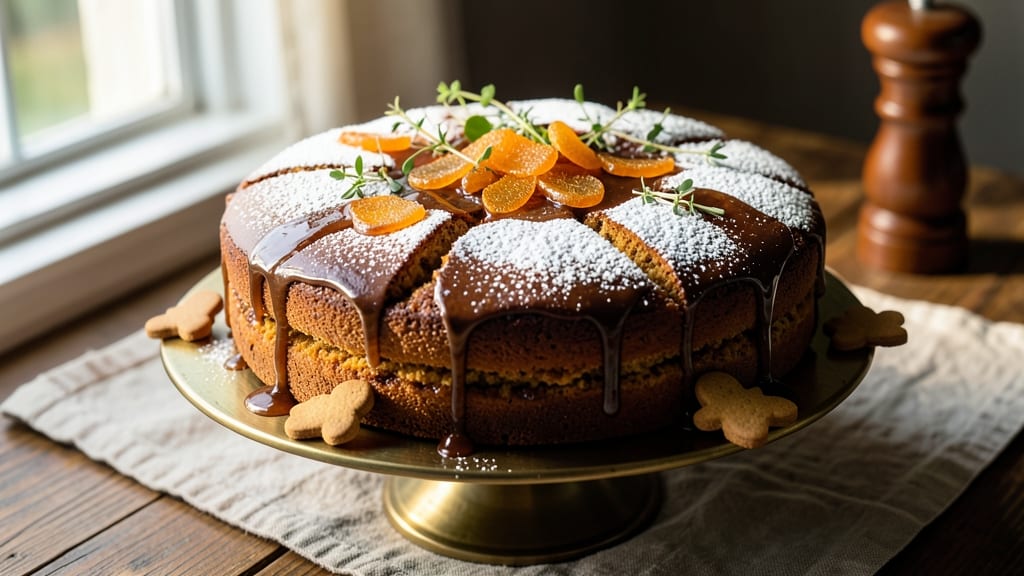
This 8x8 gingerbread cake recipe delivers the perfect balance of warm spices and moist crumb with a crisp, frosted edge that feels like a holiday hug. 🔥 The secret lies in brown sugar for deep caramel notes and a slow bake that keeps the center tender while the edges develop that coveted crispness. I've perfected this version after years of testing—no dry crumb or overly sweet aftertaste here.
The spice blend is where the magic happens: fresh ginger, cinnamon, cloves, and nutmeg create layers of warmth that linger with every bite. A touch of coffee in the batter deepens the molasses flavor while keeping the cake from tasting one-note.
The frosting—when you choose to add it—should be light enough to contrast the cake's richness without overwhelming its natural spice profile.
By the time you pull this cake from the oven, you'll have a golden-brown masterpiece with a crackly frosting crust that shatters perfectly. The interior remains moist and tender, with each slice offering that perfect balance of spiced cake and sweet frosting.
This is the kind of dessert that disappears quickly at gatherings but feels special enough for holidays.
Perfect for holiday baking, gift-giving, or satisfying that gingerbread craving any time of year. The recipe scales beautifully for larger pans too, but this 8x8 version is ideal for smaller gatherings or when you want to make multiple layers. Let's get baking!
Ingredients for 8x8 gingerbread cake
Spiced warmth meets crispy edges with these 15 essential ingredients for holiday perfection.
| Ingredient | Amount | Notes |
|---|---|---|
| All-Purpose Flour 🌾 | 2 ½ cups | Sifted for light texture |
| Light Brown Sugar 🍯 | 1 ½ cups | Packed firmly, no substitutes |
| Granulated Sugar 🍚 | ½ cup | For balanced sweetness |
| Unsalted Butter 🧈 | 1 cup | Room temperature, full-fat |
| Large Eggs 🥚 | 2 whole | Room temperature for even baking |
| Molasses 🥄 | ½ cup | Unsulphured for authentic flavor |
| Instant Coffee Granules ☕ | 1 tbsp | Enhances molasses depth |
| Ground Ginger 🌿 | 1 ½ tbsp | Freshly ground preferred |
| Ground Cinnamon 🌶️ | 1 tsp | True cinnamon, not cassia |
| Ground Cloves 🌶️ | ½ tsp | Whole cloves ground fresh |
| Ground Nutmeg 🌶️ | ¼ tsp | Freshly grated nutmeg |
| Baking Soda 🧪 | 1 tsp | Pure baking soda |
| Salt 🧂 | ½ tsp | Fine sea salt preferred |
| Vanilla Extract 🌸 | 1 tsp | Pure vanilla extract |
| Buttercream Frosting 🧁 | 2 cups | Lightly sweetened for contrast |
The spices are non-negotiable here—Penzeys Spices or bulk bins at Whole Foods are your best bets for freshness. Ground ginger loses potency fast, so buy a small amount and store it in an airtight container away from light. True cinnamon (Ceylon) has a sweeter, more delicate flavor than cassia—worth the splurge if you're a spice enthusiast. The molasses should be unsulphured for that authentic, deep flavor that sets this cake apart. I always grab Goya brand from the Latin market—it's the gold standard for molasses. The coffee granules add depth without bitterness, so don't skip them unless you're avoiding caffeine entirely.
No fresh ginger? Double the ground ginger but know it won't be quite the same. Running low on vanilla? Vanilla bean paste works in a pinch, but pure extract is ideal. The buttercream should be light enough to contrast the cake's richness—American-style buttercream with powdered sugar and cream cheese works beautifully. For a dairy-free option, vegan butter and coconut cream get you close. If you're making this ahead, the cake keeps well for 3 days at room temperature, while the frosting should be made fresh the day you serve it for the best texture.
This cake is a showstopper that reheats beautifully—just 10 seconds in the microwave brings back that warm spice aroma. The frosting should be applied 24 hours after baking to let the cake settle properly. For gift-giving, wrap the cake in parchment paper and tie with a ribbon—it stays fresh for 5 days that way. If you're freezing, wrap the unfrosted cake tightly in plastic wrap and freeze for up to 3 months. The frosting can be made ahead and stored in the fridge for 1 week, but I always make it fresh for maximum fluffiness.
Why You'll Love This Recipe
- One-Bowl Wonder: I swear by this recipe because it’s that simple—just mix, bake, repeat. No separate bowls, no fussing with creaming butter and sugar separately. The brown sugar and butter do all the work for you, turning into a moist, tender crumb with almost no effort.
- Spiced Perfection: That warm gingerbread flavor? It’s the star here. The molasses (if you add it) and cinnamon blend so well with the brown sugar that every bite tastes like a cozy hug. Honestly, the first time I made this, I ate half the batter raw—don’t judge me.
- Leftovers That Shine: This cake keeps beautifully for days, which means you can bake once and enjoy it for breakfast, dessert, or even a quick snack. Slice it thin for a gingerbread French toast the next morning, or frost it with cream cheese for a showstopper. (Yes, even on a Tuesday night.)
- Budget-Friendly Magic: With just five core ingredients, this recipe is a steal. Brown sugar and butter stretch far, and you won’t need fancy add-ins to make it sing. I’ll be real: my grocery budget thanks me every time I pull this out instead of ordering takeout.
Step-by-step instructions for spiced gingerbread cake
Here's how to bake a gingerbread cake with perfect spice balance and that signature crispy frosting edge!
👨🍳 Step 1: Mix Dry Ingredients for Maximum Flavor
In a medium bowl, whisk together the 2.5 cups all-purpose flour, 1.5 tbsp ground ginger, 1 tsp ground cinnamon, 0.5 tsp ground cloves, 0.25 tsp ground nutmeg, 1 tsp baking soda, and 0.5 tsp salt. Sift the flour first for a lighter texture—this prevents dense pockets in your cake. I like to press my fingers through the flour mixture to ensure the spices are evenly distributed throughout.
Next, add the 1 tbsp instant coffee granules and mix well. This might seem unusual, but it deepens the molasses flavor and adds a subtle complexity that makes this cake truly special. The coffee granules dissolve completely when mixed with wet ingredients, so no need to worry about gritty texture.
🍳 Step 2: Cream Butter and Sugars for Light Texture
In a separate large bowl, beat the 1 cup unsalted butter (at room temperature) with both the 1.5 cups light brown sugar and 0.5 cup granulated sugar on medium speed for 3-4 minutes. You're looking for a pale, fluffy mixture that nearly doubles in volume—this incorporates air that will make your cake light and tender.
Here's the thing—I press down gently on the butter mixture after 2 minutes to break up any large sugar crystals. This ensures even distribution and prevents grainy texture. The butter should be smooth and creamy, not clumpy, before moving to the next step.
🥘 Step 3: Combine Wet Ingredients for Rich Moisture
Add the 2 whole eggs (room temperature) one at a time, mixing well after each addition. Then stir in the 0.5 cup molasses and 1 tsp vanilla extract. The molasses might look like too much, but trust me—it's the soul of this cake. Let the mixture sit for 5 minutes while you prepare the next step.
Gradually add about ⅓ of the dry ingredients to the wet mixture, mixing just until combined. This prevents overmixing which can develop gluten and make your cake tough. The batter should be thick but pourable—like a rich brownie batter.
🔥 Step 4: Bake to Golden Perfection
Preheat your oven to 350°F and grease an 8x8-inch baking pan thoroughly. Pour the batter into the prepared pan and smooth the top. Bake for 40-45 minutes until a toothpick inserted in the center comes out clean. The edges should be golden brown while the center remains slightly springy to the touch.
I know it's tempting to open the oven early, but resist! The cake needs that full baking time to develop its signature moist texture. If the top browns too quickly, tent loosely with foil after 25 minutes to prevent over-browning while allowing the center to cook through.
🍽️ Step 5: Frost and Serve for Crispy Edges
Let the cake cool completely in the pan for 1 hour, then remove it and let it cool on a wire rack for another 30 minutes. This gradual cooling prevents cracking when you frost. Spread the 2 cups buttercream frosting evenly over the top and sides, using a spatula to create that signature crispy edge.
For the perfect finish, chill the frosted cake in the refrigerator for 30 minutes before serving. This firms up the frosting and makes it easier to slice. Each bite should deliver warm, spiced cake with that crisp contrast from the frosting—pure gingerbread magic!
Pro Tips For Making 8x8 Gingerbread Cake
- Whisk Butter and Sugar: DESCRIPTION: Cream the butter and sugars until it’s pale yellow and ribbons fall off the beater—about 3-5 minutes. I used to stop at "light and fluffy," but this extra time dissolves more sugar into the butter, making the cake denser and less crumbly. (Yes, even if you’re impatient like me.)
- Measure Brown Sugar Right: DESCRIPTION: Pack the brown sugar firmly into the measuring cup—tap it on the counter to settle. Loose brown sugar means less moisture in the batter, and your cake might turn out drier. I learned this the hard way when my first batch tasted underwhelming.
- Don’t Overmix the Batter: DESCRIPTION: Fold in the flour just until combined—lumps are fine. Overmixing develops gluten, which makes gingerbread cake tough instead of tender. Stop when the flour disappears, and resist the urge to stir vigorously.
- Bake Until Springy: DESCRIPTION: Check doneness at 30 minutes—press the center with your finger. It should spring back slowly, not bounce. If it’s still jiggly at 40 minutes, your oven runs hot. (Mine does, so I lower the temp by 25°F when baking cakes.)
Pro cooking tips for great 8x8 gingerbread cake
Spice Blend Precision
Weigh your spices carefully—ground ginger should be 1.5 tablespoons by volume, but use a scale for accuracy if possible.
I often toast the spices in a dry pan for 30 seconds to enhance their aromatic oils before mixing. Ceylon cinnamon (true cinnamon) adds a sweeter note than cassia, so if you're using cassia, reduce to ½ teaspoon to avoid overpowering the molasses.
Store your spices in airtight containers away from light to preserve freshness. 🌶️
Butter Temperature Matters
Room-temperature butter is non-negotiable—press it between two sheets of parchment for 15 minutes if it's too cold. I test by leaving a thumbprint that doesn't fill back in. Over-creaming butter and sugars can add air, but under-creaming leads to dense cake.
Beat for exactly 3-4 minutes on medium speed to achieve that pale, fluffy consistency. A hand mixer works best for this step—stand mixers can overdevelop the butter. 🧈
Molasses Selection
Use unsulphured molasses exclusively—it has a richer, less bitter profile. Goya brand is my go-to, but Annie's or Cumberland work well too. If your molasses has crystallized, warm it gently in a double boiler until smooth, but don't boil it or you'll lose flavor. Measure carefully—½ cup packed molasses makes a difference in moisture balance. The coffee granules dissolve completely, so no need to pre-mix them. ☕
Baking Time Window
Your oven's hot spots matter—rotate the pan halfway through baking for even browning. A toothpick test is key: it should come out with moist crumbs, not wet batter. If the top browns too quickly, tent with foil at 25 minutes and check at 40 minutes.
The cake continues cooking for 5-10 minutes after removal, so pull it when the center is just set. 🔥
Frosting Timing Trick
Apply frosting 24 hours after baking—this ensures the cake is completely dry and prevents soggy layers. Chill the frosted cake for 30 minutes before serving to set the buttercream. For extra crisp edges, dip the sides in melted white chocolate before frosting.
I use a bench scraper to create clean, sharp edges. The contrast between warm cake and cool frosting is what makes this dessert unforgettable. ✨
Equipment Upgrades
Invest in a digital thermometer to monitor oven temperature—many ovens run 25°F hotter than set. A silicon baking mat eliminates greasing and ensures even heat distribution.
For professional results, use a cake turntable when frosting to create smooth sides. These small upgrades make a huge difference in texture and presentation. 💡
Nutrition facts
Frequently asked questions
Can I make this gingerbread cake without molasses?
You can substitute ½ cup molasses with ½ cup honey or maple syrup, but the flavor will be less rich and complex. Molasses gives the cake its signature deep, caramel-like sweetness and molasses depth that's hard to replicate. If you must substitute, reduce other liquids in the recipe by 2 tablespoons to maintain moisture balance.
Why does my gingerbread cake turn out dense? Overmixing the batter or using cold butter are the most common culprits.
How do I store leftover gingerbread cake?
For best results, store the unfrosted cake in an airtight container at room temperature for up to 3 days. If you've frosted it, keep it refrigerated for 4 days or freeze for up to 3 months. To reheat, wrap a slice in foil and warm in the oven at 300°F for 5-7 minutes to restore that warm spice aroma.
Can I make this cake gluten-free?
Yes, but you'll need to substitute the all-purpose flour with a 1:1 gluten-free baking flour blend (like Bob's Red Mill or King Arthur). Add ½ teaspoon xanthan gum to help bind the cake. Also, reduce other liquids by 2 tablespoons since gluten-free flours absorb moisture differently. Expect a slightly denser texture, but the spice flavor will still shine through.
What's the best way to frost this cake for crispy edges?
For that signature crispy frosting edge, chill the cake for 1 hour after baking, then spread a thin layer of buttercream. Dip the sides in melted white chocolate (about ¼ inch deep), then add the remaining frosting. Chill the cake for 30 minutes before serving—this creates a beautiful contrast between the warm cake and cool, crisp frosting.