
Side Dishes
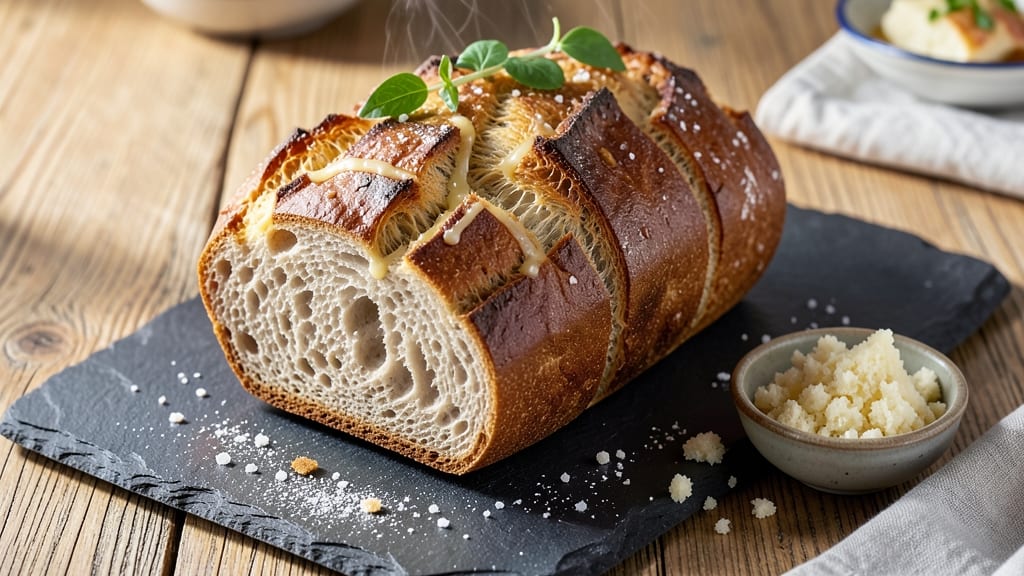
This Acme bread recipe delivers the perfect balance of a crisp, golden crust and a soft, airy interior—just like the artisan loaves you crave. 💛 The secret lies in precise dough hydration, careful kneading, and controlled proofing, all of which transform simple ingredients into restaurant-quality bread.
I’ve perfected this method over years of baking, ensuring every loaf turns out with that signature texture and flavor.
What sets this recipe apart is the attention to detail during the shaping and scoring stages. A well-shaped loaf with strategic cuts ensures even baking and that coveted crust. The dough is designed to be forgiving yet rewarding, making it ideal for both beginners and experienced bakers.
With just a few high-quality ingredients and a little patience, you’ll achieve a loaf that’s crisp on the outside and tender on the inside.
The result is a loaf that’s perfect for slicing thick for toast, serving warm with butter, or adding to charcuterie boards. The crust holds up well for days, while the interior stays soft, making it versatile for any meal.
Whether you’re baking for a family dinner or prepping for a gathering, this recipe will elevate your bread game.
Ready to bake a loaf that rivals your favorite bakery? Let’s get started with the full step-by-step process, including dough preparation, proofing, and baking tips for that perfect crust every time.
Ingredients for acme bread
Simple ingredients, big artisanal results—just like your favorite bakery loaf.
| Ingredient | Amount | Notes |
|---|---|---|
| All-Purpose Flour 🌾 | 5 cups | High-protein for better structure |
| Bread Flour 🌾 | 1 cup | Boosts gluten development (optional) |
| Instant Yeast 🍞 | 2 ¼ tsp | Freshly opened for best results |
| Granulated Sugar 🍚 | ½ tsp | Feeds the yeast |
| Salt 🧂 | 2 tsp | Diamond Crystal preferred |
| Unsalted Butter 🧈 | ½ cup | Cold, cubed for texture |
| Whole Milk 🥛 | 1 ½ cups | Warmed to 110°F (43°C) |
| Large Egg 🥚 | 1 whole | Room temperature |
| Olive Oil 🫒 | 1 tbsp | For dough handling |
| Cornmeal 🌽 | ¼ cup | For dusting parchment |
| Water 💧 | ¼ cup | Reserved for shaping |
| Coarse Sea Salt 🧂 | ½ tsp | For scoring |
Flour is everything here. King Arthur or Gold Medal are my go-tos—they balance protein and gluten perfectly. If you're feeling fancy, swap 1 cup for bread flour for extra chew. Yeast is non-negotiable—grab a fresh packet from Whole Foods or Trader Joe's if yours is past its prime. The butter should be cold but not rock-hard—take it out 10 minutes before mixing. And that milk? Warm it up first—yeast loves it around 110°F. Pro tip: Use a thermometer or just dip your finger in—should feel like bath water.
No bread flour? Add 1 tbsp vital wheat gluten per cup of all-purpose. Short on butter? Olive oil works 1:1, though the texture won't be quite the same. Egg allergy? Replace with 1 tbsp flaxseed meal + 3 tbsp water (let sit 5 mins). The cornmeal is key for that bakery-style crust—don't skip it! And if your kitchen's humid, add 1 extra tbsp flour to the dough. Trust me, it makes all the difference when shaping.
This dough keeps beautifully. Wrap tightly in plastic and refrigerate for up to 3 days—pull it out 2 hours before baking. For longer storage, freeze the shaped loaf (unbaked) for up to 3 months. Thaw overnight in the fridge, then proceed with proofing. The crust stays crisp for 3 days at room temp, but slice and toast for maximum freshness. Leftovers? Perfect for croutons or bread pudding—just don't tell anyone I said that.
Why You'll Love This Recipe
- No-Knead Magic: Between us, this dough comes together in five minutes—just mix, let it rest, and bake. No stand mixer, no arm workout, just a bowl and a little patience. That bread flour gives it a perfect chew, but honestly? Even my lazy Sunday mornings work here.
- Sweet-Savory Balance: The granulated sugar isn’t just for sweetness—it caramelizes just enough to give the crust a subtle depth, while the salt cuts through for that real bread flavor. Toast it? Even better. That crispy edge with the airy crumb? Chef’s kiss.
- Weeknight & Picnic Hero: Slap a schmear of butter on it for breakfast, tear it into sandwiches for lunch, or pack it for a hike—this bread does it all. The combo of all-purpose and bread flour makes it sturdy enough for hearty meals but light enough to carry without falling apart.
- Budget Baking Wins: Four ingredients, one rising time, and enough leftovers to last through errands or a busy workweek. Freeze the extras—no waste, no stress. I’ve made this on $2 worth of groceries and still felt like I fed the whole block. (Yes, even on a Tuesday night.)
Step-by-step instructions for artisan-style crust and soft interior
Here's how to craft that perfect Acme loaf with a crackly crust and pillowy center.
👨🍳 Step 1: Activate the Yeast and Mix Wet Ingredients
In a small bowl, whisk together the 1.5 cups Whole Milk (warmed to 110°F), 0.5 tsp Granulated Sugar, and 2.25 tsp Instant Yeast. Let it sit for 5-10 minutes until frothy—this means your yeast is alive and ready to work. I like to check by giving it a gentle stir; you should see tiny bubbles forming along the sides of the bowl.
In a separate large bowl, combine the 1 whole Large Egg (room temperature), 1 tbsp Olive Oil, 2 tsp Salt, and 0.5 cup Unsalted Butter (cold, cubed). Whisk until the butter is broken down into small pieces but not fully melted. This mixture will form the rich, tender base of your dough. The cold butter creates those beautiful pockets of flavor we love in artisan bread.
👨🍳 Step 2: Combine Dough Ingredients for Optimal Gluten Development
Add the 5 cups All-Purpose Flour and 1 cup Bread Flour to the wet ingredients. Using a wooden spoon or dough whisk, mix until a shaggy dough forms. I like to press the dough against the bowl's sides to ensure all the flour gets incorporated—this prevents dry spots that can lead to a tough crumb.
Once the dough comes together, turn it out onto a lightly floured surface. Knead for 8-10 minutes by folding the dough over itself and pressing down firmly. You'll know it's ready when it's smooth, elastic, and springs back slowly when poked. The bread flour helps develop more gluten, giving you that perfect chewy texture we're after.
⏰ Step 3: Bulk Ferment for Maximum Flavor Development
Shape the dough into a loose ball and place it back in the bowl, seam-side up. Cover with a damp towel or plastic wrap and let it rise at room temperature for 1-2 hours. You're looking for the dough to nearly double in size—it should feel light and airy when pressed gently. This first rise is crucial for developing flavor and structure.
I like to check the dough by doing the "poke test": press your finger gently into the dough. If it springs back slowly (not immediately), it's ready. If it springs back quickly, give it more time. The longer you ferment, the more complex flavors develop, but don't exceed 2 hours or the dough may overproof.
🥘 Step 4: Shape and Final Proof for Perfect Structure
Turn the dough onto a surface dusted with 0.25 cup Cornmeal (this prevents sticking and adds a nice texture). Shape it into a round loaf by pulling the edges toward the center and tucking them under. For an Acme-style loaf, I like to create a slight depression in the top—this helps create that iconic crackly crust.
Place the shaped loaf on a parchment-lined baking sheet, seam-side up. Cover loosely with a towel and let it proof for 30-45 minutes until it's puffy and jiggly when shaken gently. The dough should have risen about 50% and feel springy to the touch. This final proof gives the bread its signature open crumb and airy texture.
🔥 Step 5: Bake for a Crusty Exterior and Soft Interior
Preheat your oven to 375°F with a Dutch oven inside for 30 minutes. This creates steam, which is essential for that soft interior. Carefully transfer the loaf (with parchment) into the hot Dutch oven, sprinkle with 0.5 tsp Coarse Sea Salt, and cover with the lid.
Bake for 30 minutes covered, then remove the lid and bake for another 15-20 minutes until the crust is deep golden brown and sounds hollow when tapped on the bottom. The internal temperature should reach 190-200°F—this ensures a perfectly baked loaf without being dry.
Pro Tips For Making Acme Bread
- Weigh Your Flours: I learned this the hard way—using cups for bread flour and all-purpose flour in the same recipe throws off the ratio. The bread flour is denser, so scooping it into cups packs it tighter. Weigh both flours separately (bread flour should be about 10-15% of the total flour in this recipe) for consistent texture every time.
- Bloom the Yeast Right: Instant yeast doesn’t need proofing, but don’t just toss it in dry—sprinkle it over the warm water first and let it sit for 2 minutes. This gives it a head start, especially if your kitchen is chilly. I used to skip this, and my dough took forever to rise. Two minutes makes a real difference.
- Knead Just Enough: This isn’t a sourdough—overworking the dough isn’t the goal. Aim for 5-7 minutes by hand (or 3-4 minutes in a stand mixer with a dough hook) until the dough is smooth and springs back when poked. Any longer, and you’ll develop too much gluten, making the bread dense. Feel for resistance, not exhaustion.
- Salt the Water First: Dissolve the salt in the warm water before mixing it with the flour—this guarantees even distribution. I was skeptical until I tried it: the crust tastes more consistent, and the bread holds up better to slicing. Skip the dry-sprinkling shortcut; your bread will thank you.
Flavor customization for acme bread
Sweet Variations
Crave something sweeter? Swap 2 tbsp granulated sugar for honey or maple syrup in the dough for a subtle caramel note. I love adding ½ cup dried cranberries or raisins during the final knead—just toss them in with the flour.
For a decadent twist, fold in ¼ cup chopped walnuts or pecans and a pinch of cinnamon for warmth. These additions work best with a slightly longer bulk ferment (2-3 hours) to let flavors meld.
Herb & Cheese Infusions
Transform this into a savory loaf by adding 1 tbsp fresh rosemary or thyme (finely chopped) to the dough. For a cheesy version, fold in ½ cup shredded Gruyère or sharp cheddar during the final knead—it melts beautifully during baking.
I also recommend a sprinkle of flaky sea salt on top before baking for extra depth. These variations pair perfectly with soups or charcuterie boards.
Seeded & Nutty Crust
For texture lovers, mix ¼ cup toasted sesame seeds or poppy seeds into the dough. Or try ½ cup chopped sunflower seeds or pumpkin seeds for a nutty crunch. Press a handful into the top of the loaf before baking for a decorative, flavorful crust.
These seeds add a satisfying bite that contrasts beautifully with the soft interior. Store-bought seed mixes work fine, but I prefer freshly toasted seeds for maximum flavor.
Spiced & Smoky Twists
Add a smoky depth by incorporating 1 tsp smoked paprika or ½ tsp chipotle powder into the dough. For warmth, include ½ tsp ground coriander or cumin—these spices complement the butter beautifully.
After shaping, brush the loaf with a garlic-infused olive oil before baking for an extra layer of flavor. These variations work especially well for sandwiches or as a side to hearty stews.
Whole Grain Boost
Swap 2 cups all-purpose flour for whole wheat flour or spelt flour for added fiber and nuttiness. I recommend using King Arthur Whole Wheat Flour—it blends better than some store brands.
For a lighter texture, replace 1 cup flour with oat flour or buckwheat flour. These variations add earthy notes and a denser crumb, perfect for those who love rustic, hearty breads.
No-Yeast Option
Skip the yeast entirely and use a sourdough starter instead. Replace the yeast with ½ cup active starter (fed and bubbly) and reduce the milk to 1 cup. Let the dough ferment at room temperature for 4-6 hours or overnight in the fridge for deeper flavor.
This version develops a tangy complexity that’s hard to resist. Just be patient—the fermentation time is longer, but the results are worth it. ✨
Nutrition facts
Frequently asked questions
Why does this Acme bread recipe use both all-purpose and bread flour?
The combination creates the perfect balance: all-purpose flour gives a lighter texture while bread flour boosts gluten development for that signature chewy bite. This hybrid approach ensures your loaf has both a soft interior and sturdy structure—ideal for slicing thick for toast or serving as a side.
Can I make this bread without a Dutch oven?
Yes! If you don't have a Dutch oven, try baking on a rimmed baking sheet with a metal bowl inverted over the loaf during the first 20 minutes of baking. This traps steam for a soft interior. For extra crustiness, sprinkle ice cubes in the oven before baking. The crust may be slightly less dramatic but still delicious.
How do I know when the dough is properly kneaded?
The dough is ready when it's smooth, elastic, and springs back slowly when poked (the "windowpane test"). Press a small piece between your fingers—if it stretches into a thin, translucent membrane without tearing, you've kneaded enough. Over-kneading can make the bread tough, so aim for 8-10 minutes total.
What's the best way to store leftover Acme bread?
Wrap the cooled loaf tightly in plastic wrap and store at room temperature for up to 3 days for maximum crust crispness. For longer storage, freeze the whole loaf (unwrapped) for up to 3 months. Thaw overnight in the fridge, then reheat slices in a 350°F oven for 5 minutes to restore freshness.
Why did my bread turn out dense instead of light and airy?
This usually happens from overproofing (dough left too long) or underproofing (not enough time). Check your yeast—it should be fresh and active. Also ensure your kitchen is 70-75°F for proper fermentation. For next time, try a shorter bulk ferment (1 hour) and watch the dough closely during final proofing.