
Side Dishes
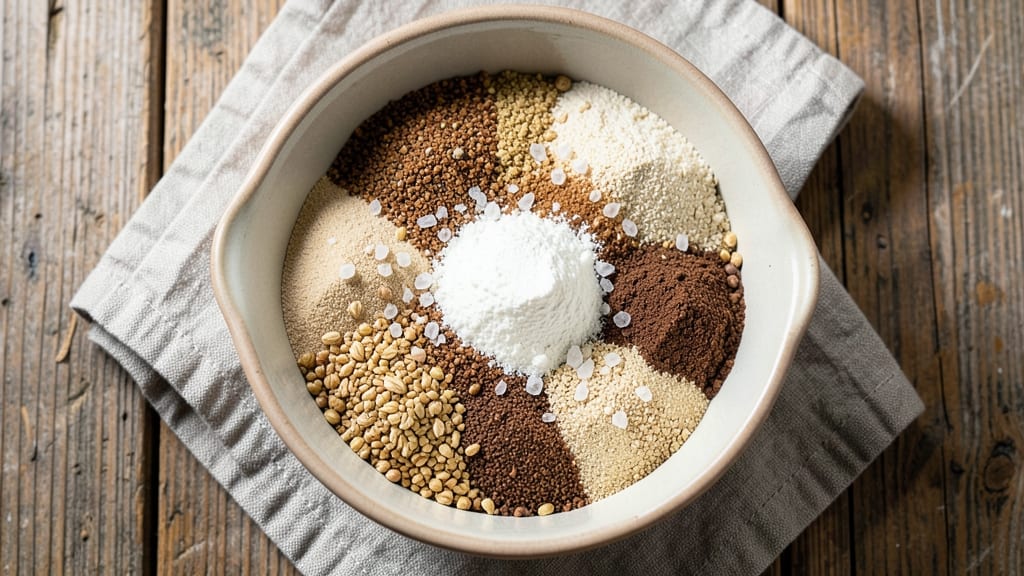
This 9-grain flour bread machine recipe transforms your daily loaf into a nutty, hearty masterpiece with a crisp crust and dense, satisfying crumb. The secret lies in balancing nine different flours—whole wheat, rye, barley, and more—to create depth and texture that store-bought bread simply can’t match. I’ve perfected this blend over years of testing, ensuring every slice delivers that perfect chewy bite and toasty aroma that makes homemade bread worth the effort.
The beauty of this recipe is its simplicity: just toss the ingredients into your bread machine and let it work its magic. No kneading, no fuss—just a foolproof process that yields a loaf with a golden, crackly crust and a tender interior packed with nutty, earthy flavors.
The hydration levels are carefully calibrated to prevent a gummy texture while keeping the bread moist for days. For extra texture, I recommend adding a sprinkle of seeds or a drizzle of honey before baking.
What sets this bread apart is how versatile it is—perfect for toast, sandwiches, or even as a side to soups and stews. The hearty texture holds up well to strong toppings like butter, jam, or avocado, making it a staple for any meal.
Once you try this recipe, you’ll never go back to plain white bread again. The bread machine does all the heavy lifting, so you can enjoy the process without the stress.
For best results, use your bread machine’s basic white bread setting and adjust the cycle if needed—most machines handle the extra flours just fine. If the dough seems too sticky, reduce the water slightly.
This recipe is designed to be repeatable, reliable, and rewarding, turning a simple appliance into the heart of your kitchen. Let’s bake!
Ingredients for 9 grain flour bread machine
Nine flours, one magical loaf—just toss and bake for bread that tastes like a bakery secret.
| Ingredient | Amount | Notes |
|---|---|---|
| All-Purpose Flour 🌾 | 1 cup | For structure and lightness |
| Whole Wheat Flour 🌾 | 1 cup | For nutty depth and fiber |
| Rye Flour 🌾 | ½ cup | Earthy flavor, dense texture |
| Barley Flour 🌾 | ½ cup | Sweet, chewy bite |
| Oat Flour 🌾 | ½ cup | Creamy texture and mild sweetness |
| Buckwheat Flour 🌾 | ¼ cup | Rich, robust flavor |
| Spelt Flour 🌾 | ¼ cup | Light, slightly sweet |
| Cornmeal 🌽 | ¼ cup | Crisp crust and texture |
| Milk 🥛 | 1 ¼ cups | Warm, enhances browning |
| Water 💧 | ½ cup | Adjust for dough consistency |
| Active Dry Yeast 🍞 | 2 ¼ tsp | Freshly opened for best rise |
| Granulated Sugar 🍬 | 1 tbsp | Feeds yeast and adds slight sweetness |
| Salt 🧂 | 1 ½ tsp | Diamond Crystal preferred |
| Olive Oil 🫒 | 1 tbsp | Extra-virgin for richness |
| Honey 🍯 | 1 tbsp | Optional for extra moisture and flavor |
The flours are the stars here. Bob’s Red Mill has the best pre-ground options if you’re short on time, but grinding your own from King Arthur Flour or Whole Foods bulk section adds that extra depth. Rye and buckwheat can be tricky—too much and your dough gets gummy, so I keep them at half cups each. For the milk, whole milk works best—it gives that rich, golden crust, but 2% in a pinch is fine. The yeast? Fresh is non-negotiable—if it’s been sitting in your pantry for months, toss it. And trust me, the honey makes a difference—it keeps the bread moist for days.
No buckwheat flour? Substitute with extra rye—it’s the closest in flavor. Running low on oat flour? Blitz rolled oats in a food processor until it’s powdery. The honey can be swapped for maple syrup (same amount), but it’ll taste slightly different. If your dough feels too sticky, reduce the water by 1 tbsp—the bread machine will handle it. And if you’re worried about the crust? Brush with melted butter right after baking for that bakery-style shine. The flours here are all-purpose enough that you won’t need specialty equipment—just a good scale if you’re measuring by weight.
This bread keeps like a dream—3-4 days at room temperature wrapped in a towel, or 1 week in the fridge. For longer storage, freeze slices wrapped in parchment—toast straight from frozen for crispy perfection. I like to slice it fresh and store it in an airtight container, but if you’re making a big batch, freeze the whole loaf and thaw as needed. The crust gets crunchier as it sits, so if you prefer it softer, reheat slices in the oven for 5 minutes. And pro tip? Toast it with a sprinkle of seeds—the crunch takes it to the next level.
Why You'll Love This Recipe
- Set-and-Forget Magic: The bread machine does all the heavy lifting—just toss in the warm water, mixed flours (that’s your all-purpose, whole wheat, rye, barley, and oat blend), a pinch of salt, and yeast. No kneading, no stress, no standing over a hot kitchen. I’ve made this while grading papers, scrolling through my phone, or even napping. The machine handles the rest.
- Nutty, Earthy Depth: Honestly, the flavor is what hooked me. That rye adds a chewy, slightly tangy bite, while the oat flour gives it a subtle sweetness. It’s not just hearty—it’s complex, like a loaf that’s been baking in a French countryside bakery instead of my tiny kitchen. Toast it? Crispy crust with a soft, fragrant interior. Perfect with butter or jam.
- Meal Prep MVP: This bread stays fresh for days—great for sandwiches, toast, or even croutons. I slice it thin and freeze half the batch, so I always have quick lunches ready. Between us, it’s my go-to for busy mornings when I’d otherwise grab something sad from the store. The barley flour keeps it from drying out too fast, so it’s still soft by day three.
- Budget-Friendly Staple: Using pantry staples like whole wheat and oat flour cuts costs without sacrificing quality. I buy these flours in bulk, and a single batch lasts my family of four for a week. Plus, the rye and barley add fiber and protein, so it’s not just cheap—it’s smart. No fancy ingredients, no wasted money, just solid, reliable bread that doesn’t break the bank.
Step-by-step instructions for 9-Grain flour bread machine recipe
Here's how to transform nine different flours into a nutty, hearty loaf that's perfect for sandwiches or toast.
Mix the Flour Blend and Hydrate the Yeast
In a large mixing bowl, combine all the dry ingredients: 1 cup all-purpose flour, 1 cup whole wheat flour, 0.5 cup rye flour, 0.5 cup barley flour, 0.5 cup oat flour, 0.25 cup buckwheat flour, 0.25 cup spelt flour, 0.25 cup cornmeal, 1.5 tsp salt, and 1 tbsp granulated sugar. Stir well to distribute the flours evenly—this ensures balanced texture and flavor throughout the loaf.
In a separate small bowl, sprinkle the 2.25 tsp active dry yeast over the 1.25 cups warm milk (about 110°F). Let it sit for 5-10 minutes until it becomes frothy. Warm milk activates the yeast faster than room-temperature liquid, giving your bread a better rise. If it doesn't foam, your yeast might be inactive—start fresh with new yeast.
Combine Wet Ingredients and Form the Dough
Add the 1 tbsp olive oil and 1 tbsp honey to the yeast mixture and stir gently. Then pour this wet mixture into the dry flour blend. Using a wooden spoon or dough whisk, mix until just combined—you should have a shaggy, sticky dough. Don't overmix; the bread machine will handle the kneading.
If the dough feels too dry, add the 0.5 cup water a tablespoon at a time until it comes together. The dough should be tacky but not wet. Here's the thing—this blend absorbs moisture differently than all-purpose flour, so don't guess. Test by pressing your finger into the dough: if it springs back slowly, it needs more liquid.
Load the Dough into the Bread Machine
Transfer the dough to your bread machine pan, using a lightly oiled spatula to scrape out every last bit. Scrape the sides of the bowl to ensure no dough sticks to the edges—this prevents underbaked spots. The dough will look messy, but that's normal with multi-grain blends.
Select the "Basic" or "White Bread" setting on your bread machine (most machines don't have a "whole wheat" setting that accommodates this dense blend). The machine will automatically knead, rise, and bake the bread. The entire cycle should take about 3-4 hours, depending on your specific model.
Monitor the Rise and Bake Process
About 30 minutes into the cycle, the machine will begin kneading. You'll hear it working—this is when the dough transforms from a sticky mass into a smooth, elastic ball. If the dough sticks to the sides during kneading, lightly grease the pan again with olive oil to prevent it from tearing.
When the machine switches to the rising phase, you'll see the dough nearly double in size. This blend rises slower than all-purpose flour, so don't be alarmed if it takes longer. The final baking phase will fill your kitchen with an incredible aroma—earthy from the rye and buckwheat, sweet from the honey, and nutty from the oats and barley.
Test for Doneness and Cool Properly
When the bread machine beeps to signal completion, remove the loaf immediately. Let it cool on a wire rack for at least 30 minutes—this prevents the crust from becoming soggy. The interior should be fully baked with no raw spots, and the crust should be deep golden brown with visible flecks from the cornmeal and whole grains.
For the best texture, slice the bread when it's still slightly warm. This multi-grain loaf has a dense yet tender crumb with a satisfying chew. Store leftovers wrapped in a bread bag at room temperature for up to 3 days, or freeze for longer storage. The flavors actually improve slightly over time as the grains mellow.
Pro Tips For Making 9 Grain Flour Bread Machine
- MEASURE FLOUR BY WEIGHT: I learned this the hard way—spooning and scooping 9-grain flour mixes leads to way too much air, and your bread ends up dense. Use a kitchen scale for each type (all-purpose, whole wheat, rye, etc.), and stick to the recipe’s exact grams. The difference in texture is night and day.
- HYDRATE RYE FIRST: Rye flour soaks up moisture like a sponge, and if you mix it dry, your dough will turn into a gummy mess. Add the rye flour to the water in the bread machine’s mixing bowl before starting the cycle—let it sit for 5 minutes to pre-hydrate. Trust me, your dough will thank you later.
- SKIP THE EXTRA OAT FLOUR: Oat flour is sneaky—it absorbs more water than you’d think, and adding too much turns your bread into a brick. Stick to the recipe’s amount (usually 1-2 tablespoons max) unless you’re okay with a heavy, crumbly loaf. If you must add more, reduce the all-purpose flour by the same weight.
- USE A LIGHT HAND WITH KNEADING: Nine-grain dough is delicate, especially with whole wheat and barley flour. Let the bread machine do most of the work—don’t overmix when adding ingredients by hand. A quick 10-second stir to combine is enough; excessive folding develops too much gluten and makes the texture tough. Let the machine handle the heavy lifting.
Best sauces and condiments for this recipe
Classic Butter Spread
Nothing beats the simplicity of unsalted European-style butter—like Plugrá or Kerrygold—melted and spread warm on freshly sliced bread. The richness pairs perfectly with the nutty, earthy flavors of the 9-grain blend.
For extra flair, mix in 1 tsp honey and a pinch of flaky sea salt before serving. This combo highlights the bread's natural sweetness while adding a gourmet touch. 🍯
Herbed Olive Oil Drizzle
Infuse ¼ cup extra-virgin olive oil with 1 tbsp chopped fresh rosemary, 1 tsp dried thyme, and 1 minced garlic clove. Heat gently for 5 minutes, then strain and drizzle over warm slices.
The herby notes complement the rye and buckwheat, while the oil enhances the crust's crispness. Store leftovers in a glass jar in the fridge for up to 1 week.
Spiced Nut Butter
Blend ½ cup roasted almond butter with ½ tsp cinnamon, ¼ tsp cayenne, and a pinch of salt until smooth. Spread on toast and top with sliced banana or apple for a breakfast that’s both hearty and satisfying.
The nutty depth mirrors the bread’s flavors, creating a cohesive, flavor-packed bite. 🌰
Whipped Honey Cream
Whip ½ cup heavy cream with 2 tbsp honey and 1 tsp vanilla extract until soft peaks form. Dollop onto bread and sprinkle with toasted sesame seeds for texture. This sweet-savory contrast is ideal for brunch or dessert-style toast. The cream’s lightness balances the bread’s dense crumb beautifully.
Smoky Chipotle Aioli
Blend ½ cup mayonnaise, 1 tbsp chipotle in adobo sauce (adjust for heat), 1 tsp lime juice, and ½ tsp cumin until smooth. Serve as a dip or spread for sandwiches.
The smoky, tangy aioli cuts through the bread’s richness, adding a bold kick that’s perfect for heartier meals. 🌶️
Sweet Jam Pairings
Opt for fruit-forward jams like fig, raspberry, or apricot to contrast the bread’s earthy tones. Spread a thin layer and top with a sprinkle of flaky salt for a sweet-savory balance.
For a twist, warm the jam slightly before serving—it enhances the bread’s crusty texture and makes every bite feel special.
Nutrition facts
Frequently asked questions
Why does my 9-grain dough stick to the bread machine pan?
The multi-grain blend absorbs more moisture, making the dough stickier than regular bread. Lightly grease the pan with olive oil before adding dough, and use a lightly oiled spatula to scrape out every last bit. If needed, reduce water by 1 tbsp—this blend handles less liquid better than you’d expect.
Can I substitute any of the flours in this recipe?
Yes! For buckwheat, swap with extra rye flour (same amount). Need oat flour? Blend rolled oats in a food processor until powdery. Avoid replacing cornmeal—it’s key for that crisp crust. Each flour contributes unique texture and flavor, so adjust gradually if substituting.
How do I know when the bread is fully baked?
Look for a deep golden brown crust with visible flecks from the grains. Tap the bottom—it should sound hollow. The interior should reach 190-200°F when checked with an instant-read thermometer. If unsure, let it cool completely before slicing—underbaked bread continues cooking as it rests.
My bread turned out dense—what went wrong?
This blend naturally creates a denser crumb, but over-kneading or underbaking can make it gummy. Use the "Basic" setting (not "Whole Wheat"), and let the machine run the full cycle. If the dough feels too wet, reduce water by 1 tbsp. The bread should be tender but not compact—think "hearty sandwich bread," not cakey.
Can I add seeds or nuts to this recipe?
Sprinkle 1-2 tbsp seeds (sunflower, sesame, or flax) or ½ cup chopped nuts (walnuts or pecans) on top before the final rise. For extra flavor, toast them first. Just avoid overloading—the bread machine may struggle with too much bulk.