
Side Dishes
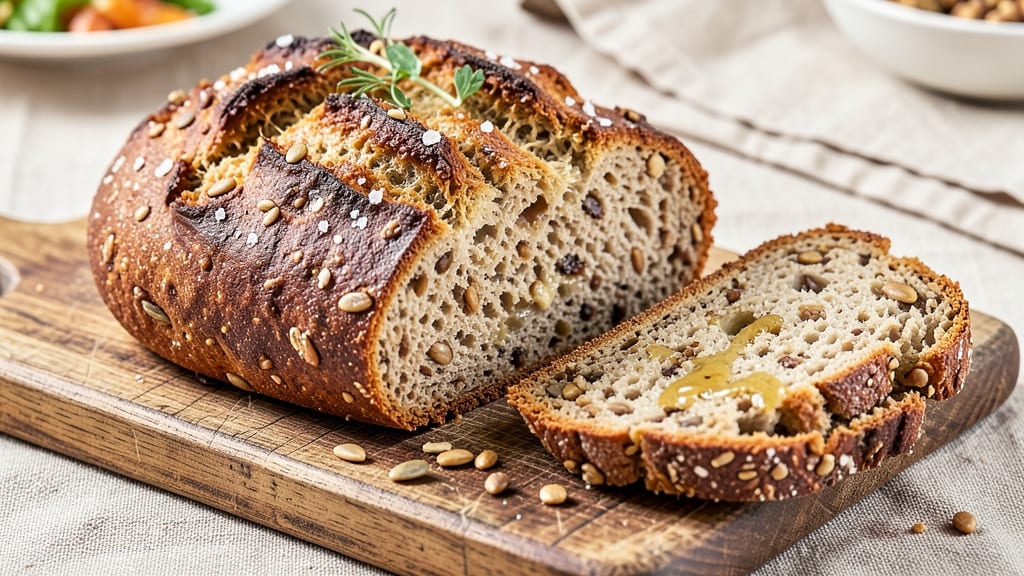
This 9-grain flour bread recipe delivers a nutty crunch and hearty texture that transforms ordinary meals into something extraordinary. ✨ The blend of whole grains creates a complex flavor profile with each slice offering a satisfying bite—perfect for toast lovers or anyone seeking nutritious, homemade bread.
What sets this apart is the careful balance of grains like wheat, rye, and barley, which not only enhance flavor but also boost nutritional value with fiber and protein.
The process is straightforward yet rewarding: mix, knead, proof, and bake at the right temperature to achieve that ideal golden crust and soft interior.
Unlike refined flour breads, this version stays fresh longer and delivers a rich, wholesome taste that pairs beautifully with soups, salads, or as a base for sandwiches. The key to success lies in proper hydration and gentle handling during kneading to develop the gluten without overworking the dough.
By the time you pull it from the oven, you'll have a fragrant, hearty loaf with a crisp exterior and tender crumb—ideal for slicing thick or serving as a rustic side. The grains add visual appeal and a satisfying crunch that keeps every bite interesting.
Whether you're preparing for a family meal or simply craving homemade bread, this recipe ensures a nutrient-packed, flavorful result that rivals artisanal bakery loaves.
Serve warm with butter, jam, or as part of a charcuterie board for an elevated touch. The versatility of this bread makes it a staple for any kitchen, offering both nutritional benefits and restaurant-quality taste at home. Let's get started on creating your perfect loaf!
Ingredients for 9 grain flour bread
Nine distinct flours blend for a loaf bursting with nutty crunch and wholesome texture.
| Ingredient | Amount | Notes |
|---|---|---|
| Whole Wheat Flour 🌾 | 2 cups | For structure and fiber |
| Rye Flour 🌾 | 1 cup | Adds nutty depth |
| Barley Flour 🌾 | ½ cup | Boosts chewiness |
| Spelt Flour 🌾 | ½ cup | Lightens texture |
| Oat Flour 🌾 | ½ cup | Adds subtle sweetness |
| Buckwheat Flour 🌾 | ¼ cup | Earthy flavor profile |
| Cornmeal 🌽 | ¼ cup | Enhances crunch |
| Millet Flour 🌾 | ¼ cup | Balances grain flavors |
| White Whole Wheat Flour 🌾 | 1 cup | Improves gluten structure |
| Active Dry Yeast 🍞 | 2 ¼ tsp | Freshly packaged preferred |
| Warm Water 💧 | 1 ½ cups | 110°F for yeast activation |
| Extra-Virgin Olive Oil 🫒 | 2 tbsp | For dough elasticity |
| Honey 🍯 | 1 tbsp | Feeds yeast naturally |
| Sea Salt 🧂 | 1 ½ tsp | Diamond Crystal preferred |
| Ground Flaxseed 🌱 | 1 tbsp | For added nutrition |
The flours are the heart of this recipe—Bob's Red Mill or King Arthur Flour blends work best, but you can source individual flours at health food stores or bulk bins. Look for stone-ground varieties (like rye and buckwheat) for deeper flavor. The white whole wheat flour is non-negotiable—it provides the gluten structure that holds this dense loaf together. If you're buying pre-ground flours, check expiration dates; freshness directly impacts flavor. For the yeast, Saf-Instant is my go-to because it doesn't need proofing in water first—just mix it right in with the flour. The flaxseed adds omega-3s and a subtle nutty note, but you can swap it for chia seeds if preferred.
Running short on a specific flour? Oat flour can replace millet at a 1:1 ratio, though the texture will be slightly softer. No buckwheat? Substitute with extra rye flour—it's the closest in flavor. The honey can be swapped for maple syrup if you're avoiding it, though honey's subtle floral notes complement the grains beautifully. For the olive oil, avocado oil works too, but it lacks the fruity depth that elevates this bread. If you're making this ahead, store the dry ingredients in airtight containers for up to 3 months—just be sure to measure out the yeast and refrigerate it separately to maintain potency.
This dough is sticky business—line your work surface with parchment paper to avoid a mess. The proofing stage is where magic happens; let it rise in a warm spot (like your oven with the light on) until it's nearly doubled—about 1.5 to 2 hours. For storage, wrap the cooled loaf in a clean kitchen towel and place it in a paper bag at room temperature. It'll stay fresh for 5-7 days, though I always have at least one slice toasted within 24 hours. Freezing? Slice first, then wrap individual pieces in parchment—up to 3 months in the freezer. The grains in this bread actually improve with a day or two of resting, so if you can plan ahead, do it.
Why You'll Love This Recipe
- No-Fuss Mixing: I swear by this recipe because it’s one bowl—just toss those flours (whole wheat, rye, barley, spelt, oats) with water, yeast, and salt. No kneading, no fuss, and no excuse to skip homemade bread when you’re short on time.
- Nutty Earthy Crunch: That blend of rye and barley gives it a deep, almost toasty bite, while the spelt adds a subtle sweetness. Toast a slice, slather with butter, and you’ll understand why I reach for this instead of store-bought every single time.
- Meal Prep MVP: It stays fresh for days—perfect for sandwiches, toast, or even croutons. I bake a loaf on Sundays, slice it, and stash it in the fridge. By Thursday, it’s still the star of my lunch.
- Pantry Stash Magic: Honestly, this recipe uses flours you might already have lurking in your cupboards. No specialty ingredients, just wholesome grains that make this bread hearty, filling, and way cheaper than buying artisanal loaves. Win-win.
Step-by-step instructions for 9-Grain flour bread
Here's how to transform nine distinct flours into a loaf with nutty depth and satisfying texture.
👨🍳 Step 1: Activate the Yeast with Honey and Warm Water
In a small bowl, whisk together the 1.5 cups warm water (about 110°F), 1 tbsp honey, and 2.25 tsp active dry yeast. Let it sit for 5-10 minutes until frothy—this confirms your yeast is alive and ready to work. The honey feeds the yeast while adding subtle sweetness that balances the earthy flours.
I always test the water temperature first with my finger—it should feel pleasantly warm, like a warm bath, not hot. If it's too hot, the yeast will die instantly. This activation step is non-negotiable; skipping it means your bread won't rise properly.
👨🍳 Step 2: Combine All Flours and Mix with Wet Ingredients
In a large mixing bowl, combine all the dry ingredients: 2 cups whole wheat flour, 1 cup rye flour, 0.5 cup barley flour, 0.5 cup spelt flour, 0.5 cup oat flour, 0.25 cup buckwheat flour, 0.25 cup cornmeal, 0.25 cup millet flour, 1 cup white whole wheat flour, 1.5 tsp sea salt, and 1 tbsp ground flaxseed. Give everything a quick stir to distribute the salt and flaxseed evenly.
Make a well in the center and pour in the yeast mixture along with 2 tbsp extra-virgin olive oil. Using a wooden spoon or dough whisk, gradually incorporate the liquids into the dry ingredients, mixing until you have a shaggy mass. The flours will vary in texture—some fine like powder, others coarse like cornmeal—so don't worry if it looks uneven at this stage.
🍳 Step 3: Knead the Dough Until Elastic (This Takes Time!)
Turn the dough onto a lightly floured surface and knead for 8-10 minutes by hand, or use a stand mixer with a dough hook on medium speed for 5-6 minutes. You're aiming for a smooth, elastic dough that springs back when poked—this develops gluten, which gives the bread its structure. The nine-grain blend is dense, so it'll resist forming a smooth ball at first.
Here's the thing—this dough is trickier than standard bread dough. The buckwheat and rye flours add density, while the oat and millet contribute moisture. Keep kneading until the dough passes the "windowpane test": stretch a small piece thin enough to see light through it without tearing. If it cracks immediately, knead another minute.
⏰ Step 4: First Rise - Patience Pays Off
Lightly coat a large bowl with olive oil, place the dough inside, and cover with a damp kitchen towel. Let it rise in a warm spot (like your oven with the light on) for 1-1.5 hours, or until it has nearly doubled in size. The dough will be slower to rise because of the dense flours, but resist the urge to rush it—proper fermentation is key to flavor development.
I like to check the dough by gently pressing two fingers into it. If the indentation stays put, it's ready. If it springs back quickly, give it another 20 minutes. The goal is a dough that's lightened but still has some resistance—this ensures a good oven spring when baked.
🔥 Step 5: Shape, Proof, and Bake to Golden Perfection
Punch down the dough to release air, then shape it into a 9x5-inch loaf pan (greased with olive oil). Cover again and let it proof for another 30-45 minutes until it rises about 1 inch above the pan. The second rise should be quicker than the first—this dough knows what it's doing now.
Preheat your oven to 375°F. Bake the bread for 40-45 minutes until the top is deep golden brown and sounds hollow when tapped on the bottom. The crust should be crisp, while the interior should register 190-200°F on an instant-read thermometer. If the top browns too quickly, tent with foil after 20 minutes to prevent over-browning.
⏰ Step 6: Cool and Slice for Maximum Enjoyment
Remove the bread from the pan and let it cool on a wire rack for at least 1 hour before slicing. This resting period allows the gluten to relax and the crumb to set properly. The bread will be dense but light, with a satisfying crunch from the cornmeal and a nutty complexity from the rye and buckwheat.
Slice it thick—this bread holds up better than delicate white bread. Serve warm with butter or olive oil for dipping, or toast it for an extra-crispy experience. The flavors deepen as it cools, so don't be in a hurry to dig in right away!
Pro Tips For Making 9 Grain Flour Bread
- Sift the Oat Flour: Oat flour is sneaky—it’s heavy and clumps like glue if you just dump it in. Lightly sifting it with the other flours (especially the rye and barley) aerates the mix and prevents a dense, gummy loaf. I used to skip this and ended up with bread that tasted like a brick—now I treat it like the troublemaker it is.
- Hydrate the Rye First: Rye flour soaks up water faster than the others, so mix it with your liquid (water, milk, or yogurt) in a separate bowl 10 minutes before combining with the dry ingredients. This prevents a dry, crumbly dough and ensures even moisture distribution—no one wants a loaf with pockets of dryness in the middle.
- Don’t Over-Knead the Spelt: Spelt flour develops gluten faster than wheat, but it’s also more delicate. Once the dough passes the "windowpane test" (stretch it thin—it should tear, not rip), stop kneading. I learned this after turning my first batch into a chewy, tough mess. Less is more here.
- Score Deep and Fast: With dense, heavy flours like rye and barley, shallow slashes won’t cut it. Use a razor blade or sharp knife to score at least ½ inch deep before baking—this directs the expansion and prevents a messy, uneven rise. And do it right before baking; the dough firms up fast.
Perfect pairings for this 9 grain flour bread
Butter Spreads
This hearty bread pairs beautifully with cultured butter like Plugrá or Kirkland Signature, which melts into the nutty crunch for a luxurious bite. For a savory twist, mix 2 tbsp softened butter with 1 tsp honey and a pinch of fleur de sel.
Spread generously on warm slices—this combo highlights the bread's earthy undertones while adding a touch of sweetness. 🍯
Artisanal Jams
Look for stone-fruit preserves like Bon Appétit's apricot or St. Dalfour's blackberry—both complement the bread's nutty depth without overpowering. For a breakfast boost, try spicy fig jam (like Maille) which adds warmth.
I love pairing it with ricotta and a drizzle of local honey for a rustic charcuterie experience.
Cheese Pairings
Aged cheeses like Manchego or Pecorino Romano create a perfect contrast with this bread's texture. For a melty option, try brie or camembert—the creamy richness balances the grains' earthiness.
I often serve it with prosciutto di Parma for a Mediterranean-inspired bite. For vegetarians, aged Gouda adds a caramelized sweetness when toasted.
Savory Dips
Whip up a quick herb-infused olive oil dip by blending ½ cup extra-virgin olive oil, 1 tbsp lemon zest, 2 tbsp chopped fresh rosemary, and 1 tsp sea salt.
This dip enhances the bread's nutty flavor while adding freshness. For a smoky option, mix ¼ cup hummus with 1 tsp smoked paprika—the contrast is surprisingly delicious. ✨
Breakfast Spreads
Creamy almond butter (like Justin's) or peanut butter (try Smucker's Natural) adds protein and richness to toasted slices. For a gourmet touch, layer with whipped ricotta, sliced figs, and a sprinkle of pistachios.
I also love adding a drizzle of balsamic glaze for a tangy finish that cuts through the bread's density.
Wine and Beer
A dry Riesling from Germany or a crisp Sauvignon Blanc from New Zealand enhances the bread's nutty complexity. For beer lovers, try a Belgian witbier like Hoegaarden—its citrus notes complement the grains beautifully.
Darker beers like porter or stout work well with the bread's robust texture, especially when paired with sharp cheeses. 🍷
Nutrition facts
Frequently asked questions
Why does my 9-grain dough feel so dense?
The mix of rye, buckwheat, and barley flours adds natural density compared to white flour. This is normal! The key is kneading until you reach the windowpane test—stretch a small piece thin enough to see light through it. The dough should be elastic but still slightly sticky. If it feels too tough, add 1 tbsp extra water and knead another 2 minutes.
Can I substitute any of the flours?
For a 1:1 swap, replace millet with oat flour or buckwheat with extra rye. The texture will change slightly—oat flour makes it softer, while rye adds more chewiness. Avoid swapping more than 25% of the total flour weight to maintain balance. For example, if you're missing spelt, use white whole wheat flour instead—it keeps the gluten structure intact.
How do I know when the bread is fully baked?
Look for three signs: the top should be deep golden brown, it should sound hollow when tapped on the bottom, and an instant-read thermometer should read 190-200°F in the center. The crust should be crisp, while the interior should feel springy—not gummy. If the top browns too quickly, tent with foil after 20 minutes to prevent over-browning.
Why did my bread turn out gummy?
Underbaking or over-kneading are the most likely culprits. Ensure your oven is fully preheated to 375°F and bake for the full 40-45 minutes. If the dough was overworked, the gluten developed too much, making the crumb dense. For future loaves, knead just until the windowpane test is passed—no longer. Also, let the bread cool completely before slicing to prevent a gummy texture.
Can I make this bread in a Dutch oven?
Yes! Shape the dough into a round and place it in a preheated Dutch oven with a lid. Bake at 375°F for 45-50 minutes, then remove the lid and bake another 10-15 minutes to crisp the crust. The Dutch oven creates steam, which improves the oven spring and gives a rustic, crusty texture. Just be sure to grease the pot well to prevent sticking.