
Side Dishes
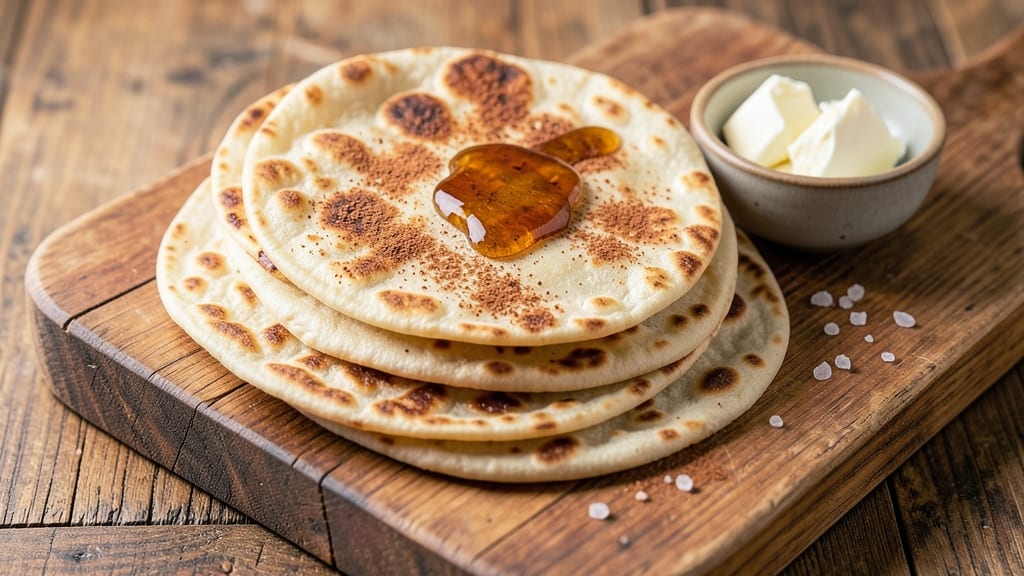
African chapati bread recipe delivers the perfect balance of flaky layers and tender centers, a staple that transforms any meal into a feast. 🔥 The secret lies in a simple dough of flour, water, and salt, kneaded just enough to create a smooth, elastic texture that stretches effortlessly—no tears, just perfect circles. This recipe brings authentic African flavors to your kitchen, where every bite reveals the magic of spiced butter and traditional techniques.
What sets this chapati apart is the technique: rolling the dough paper-thin before cooking it on a hot skillet creates those signature flaky layers that melt in your mouth. The dough rests for 30 minutes, allowing the gluten to relax and making it easier to stretch without cracking.
This patience pays off in restaurant-quality results that are crispy on the outside and soft on the inside.
Serve these golden-brown chapatis warm with curries, stews, or even as a side to grilled meats—they soak up flavors beautifully while adding a satisfying texture. The spiced butter variation elevates them further, turning a simple side into the star of the meal.
Whether you're cooking for a family gathering or a quiet weeknight dinner, this recipe delivers authenticity and adaptability.
The beauty of chapatis lies in their versatility—make a batch ahead and reheat on a skillet to keep them fresh. The dough can be prepped in advance, saving time on busy days.
With just five simple ingredients and a few key techniques, you'll master the art of African chapati bread in no time.
Ingredients for african chapati bread
Five simple ingredients transform into restaurant-quality chapatis with flaky layers and tender centers.
| Ingredient | Amount | Notes |
|---|---|---|
| All-Purpose Flour 🌾 | 4 cups | Sifted for light texture |
| Unsalted Butter 🧈 | ½ cup | Cold, cubed for spiced butter |
| Water 💧 | 1 ½ cups | Room temperature preferred |
| Salt 🧂 | 1 ½ tsp | Fine sea salt preferred |
| Granulated Sugar 🍚 | 1 tbsp | For spiced butter blend |
| Ground Cinnamon 🍃 | ½ tsp | Warm spice for butter |
| Ground Cardamom 🌿 | ¼ tsp | Authentic African touch |
| Vegetable Oil 🫒 | 2 tbsp | For skillet cooking |
The flour is the foundation—King Arthur or Bob's Red Mill brands work best for that perfect elasticity. If your kitchen isn't humid, add 1 tsp extra water to the dough. For the spiced butter, Penzeys or local spice shops carry authentic cardamom, but the grocery store variety works fine. Keep the butter cold when mixing to avoid melting—cut it into small cubes before blending with spices. The cinnamon should be fresh-ground for maximum aroma, but pre-ground is fine in a pinch. Store flour in an airtight container to prevent absorption of kitchen odors.
No cardamom? A pinch of nutmeg adds warmth, though it won't be identical. Running short on cinnamon? Half the amount of pumpkin pie spice works as a substitute. For the dough, whole wheat flour at 1:4 ratio can replace up to 25% of all-purpose flour, though the texture will be slightly denser. The vegetable oil needs to be light, like canola or sunflower—avoid heavy oils that can make chapatis greasy. If you're making a large batch, pre-portion the dough into 8 equal balls before resting to save time later. The spiced butter mixture keeps well in the fridge for up to 2 weeks when stored in an airtight jar.
Flour absorbs moisture quickly—cover the dough with a damp towel while resting to prevent drying. The spiced butter can be prepped a day ahead, making morning chapatis effortless. Store completed chapatis in a paper bag at room temperature for up to 3 days, or freeze between layers of parchment for up to 3 months. Reheat on a dry skillet for 20 seconds per side to restore crispiness. The dough's resting time is non-negotiable—skip it, and you'll fight cracks during rolling.
Why You'll Love This Recipe
- No-Knead Magic: I swear by this dough—just mix, rest, and roll. No standing at the counter for hours; the butter and sugar do all the work while you sip tea.
- Buttery Crisp Edge: That golden-brown crust with a tender center? The butter melts into the flour like it’s been friends forever, and a pinch of sugar keeps it from drying out.
- Breakfast to Brunch: Serve it warm with jam for breakfast, toast it with peanut butter for a snack, or stack it with eggs and avocado—it’s my go-to for lazy mornings or last-minute gatherings.
- Pantry Staple: Flour, butter, water—you’ve got this. It keeps for days in a bread bag, reheats in seconds, and costs pennies per serving. My budget-friendly secret weapon.
Step-by-step instructions for African chapati bread
Master the art of creating perfectly flaky chapati with this professional technique.
👨🍳 Step 1: Prepare the Spiced Butter and Dough
In a small bowl, combine the 0.5 cup unsalted butter, 1 tbsp granulated sugar, 0.5 tsp ground cinnamon, and 0.25 tsp ground cardamom. Use a fork to mash until the butter is fully incorporated and the spices are evenly distributed. This aromatic butter will infuse each layer of your chapati with warm African flavors.
In a large mixing bowl, sift the 4 cups all-purpose flour to aerate it and remove any lumps. Create a well in the center and add the 1.5 tsp salt and 1.5 cups water. Gradually incorporate the flour into the water using a wooden spoon or your hands, mixing until a shaggy dough forms. The dough should be soft but not sticky—if it's too wet, add a tablespoon of flour at a time until it reaches the right consistency.
👨🍳 Step 2: Knead and Rest the Dough
Turn the dough onto a lightly floured surface and knead for 8-10 minutes until smooth and elastic. You'll know it's ready when it springs back slightly when pressed with your finger. This kneading develops the gluten, which is essential for creating those signature flaky layers. If the dough feels too dry during kneading, add water 1 tablespoon at a time until it becomes pliable.
Shape the dough into a ball, place it back in the mixing bowl, and cover tightly with plastic wrap. Let it rest at room temperature for 1 hour. This resting period allows the gluten to relax, making the dough easier to roll out later. The dough should nearly double in size during this time, which is a good sign it's ready for shaping.
🔥 Step 3: Divide and Shape the Dough
After resting, divide the dough into 8 equal portions, each about 3 ounces in weight. Roll each portion into a smooth ball and cover with a damp towel to prevent drying. The key to flaky chapati is in the rolling technique—keep the dough balls covered to maintain moisture and flexibility. If you're making them ahead, you can refrigerate the dough balls for up to 24 hours before rolling.
To shape each chapati, take one ball and gently press it between your palms to flatten slightly. Then, using a rolling pin, roll it out from the center toward the edges in a circular motion, applying even pressure. The chapati should be about 6 inches in diameter and ⅛-inch thick. If it resists rolling, let it rest for 5 minutes to relax the gluten before trying again.
🍳 Step 4: Cook the Chapati to Golden Perfection
Heat a clean skillet over medium-high heat and add 2 tbsp vegetable oil. Once the oil is shimmering, carefully place one chapati in the skillet. Cook for 1-2 minutes until bubbles form on the surface and the bottom turns golden brown. This is the moment that matters: you'll see the edges start to puff up slightly—that's your signal to flip.
Flip the chapati using a spatula and cook the other side for another 1-2 minutes until golden brown spots appear. The chapati should be soft and pliable, not hard or rubbery. As you cook each chapati, keep them covered with a clean kitchen towel to maintain warmth and softness. The spiced butter you prepared earlier can be used to brush the top of each cooked chapati for an extra layer of flavor.
⏰ Step 5: Serve Warm and Enjoy
Transfer the cooked chapati to a plate and cover with a clean towel to keep them warm. Serve immediately while still soft and pliable. The contrast between the crispy edges and the tender, flaky interior is what makes these chapati so special. Each bite should reveal those delicate layers infused with the aromatic spiced butter.
For the best experience, serve with your favorite curries, chutneys, or even as a side to grilled meats. The chapati should hold together well when folded but remain soft enough to tear easily with your hands. If they cool down too much, you can quickly reheat them in a dry skillet over medium heat for 30-60 seconds per side to restore their warmth and softness.
Pro Tips For Making African Chapati Bread
- Use Room-Temp Butter: Cold butter makes tough chapati—soft, creamy butter (melted and cooled to lukewarm) blends better into the dough and creates flaky layers. I used to grab butter straight from the fridge, and my chapati always felt dense. Now I microwave it for 10 seconds, let it sit, then mix—game changer for that melt-in-your-mouth texture.
- Roll Thin, Roll Fast: Chapati puff best when rolled thin (about 1/8-inch) and quickly—no dragging your arm across the dough like you’re frosting a cake. I learned this after my first batch turned out like pancakes. Use a rolling pin, keep the dough taut, and roll in one smooth motion. The thinner, the faster they puff.
- Skip the Overmixing: Once you add water to the flour, stop mixing after the dough just comes together. Overworking it makes chapati tough and chewy. I used to knead like I was punishing the dough, and my chapati had the texture of a rubber band. Two minutes max—until it’s smooth but still slightly sticky.
- Salt the Water First: Dissolve the salt in the water before mixing it with flour—this ensures even distribution. I used to sprinkle salt on top of the dough, and some chapati ended up bland while others were too salty. A pinch in the water guarantees every bite has the same perfect balance.
Serving suggestions for leftovers
Curry Pairings
African chapatis shine when paired with rich, spiced curries like chicken biryani or lentil dal. The flaky layers soak up the sauce beautifully, creating a satisfying bite. I love using Madras curry powder for its bold heat—just 2 tsp per pound of chicken.
For a vegetarian option, try eggplant curry with 1 tbsp tamarind paste for tangy depth. 🌶️
Chutney Combinations
Fresh chutneys elevate chapatis to restaurant-quality. Mango chutney with 1 tbsp lime juice adds sweet-tart contrast, while mint-coriander chutney brings cooling freshness. For a quick version, blend 1 cup cilantro, 3 garlic cloves, 1 green chili, and 2 tbsp yogurt.
Serve at room temperature for best texture.
Protein Pairings
Grilled meats like keema (spiced ground beef) or chicken tikka pair perfectly with chapatis. Marinate meat in 1 tbsp ginger-garlic paste and 1 tsp garam masala for 30 minutes before grilling.
For seafood lovers, spicy shrimp curry with ½ tsp turmeric and 1 tsp cumin adds vibrant color and bold flavor.
Breakfast Versatility
Chapatis aren’t just for dinner! Use them as breakfast wraps with scrambled eggs, crumbled feta, and sautéed spinach. For a sweet twist, spread with peanut butter and drizzle with honey. The toasted edges add satisfying crunch to any morning plate. ✨
Dipping Sauces
Keep a small bowl of yogurt dip (mix ½ cup yogurt with 1 tsp roasted cumin and ½ tsp black salt) on the table. The tangy contrast balances the richness of chapatis, especially when serving with spicy lamb kebabs.
For a smoky option, add ½ tsp smoked paprika** to the yogurt mixture.
Nutrition facts
Frequently asked questions
Why does my African chapati dough tear when rolling?
The most common reason is skipping the 30-minute rest time—this relaxes the gluten so it stretches smoothly. If your kitchen is dry, cover the dough with a damp towel while resting. Also, roll from the center outward with even pressure, and use a lightly floured surface to prevent sticking. A well-kneaded dough (elastic but not sticky) is key!
Can I make the dough ahead of time?
Yes! Shape the dough into balls and refrigerate for up to 24 hours before rolling. Let them sit at room temperature for 15 minutes before shaping to make rolling easier. The cold dough will be firmer but still pliable. For longer storage, freeze the dough balls for 1 month—thaw overnight in the fridge before using.
What's the secret to flaky layers?
The magic happens during rolling—keep the dough ⅛-inch thick and roll from the center outward to create even tension. Cook on medium-high heat until bubbles form (about 1-2 minutes per side), then flip carefully. The steam trapped inside creates those signature layers! Use a nonstick skillet to prevent sticking.
How do I prevent chapatis from getting soggy?
Keep cooked chapatis covered with a clean kitchen towel to retain heat and moisture. Store them in a paper bag (not plastic) at room temperature for 2-3 days. To reheat, warm in a dry skillet over medium heat for 20-30 seconds per side. Never microwave—they'll turn rubbery!
Can I substitute whole wheat flour?
Replace up to 25% of all-purpose flour with whole wheat for a nuttier flavor, but expect a denser texture. Add 1 extra tablespoon of water per cup of whole wheat flour to compensate for its higher moisture content. For best results, use a 50/50 blend—this keeps the traditional softness while adding nutrition.