
Side Dishes
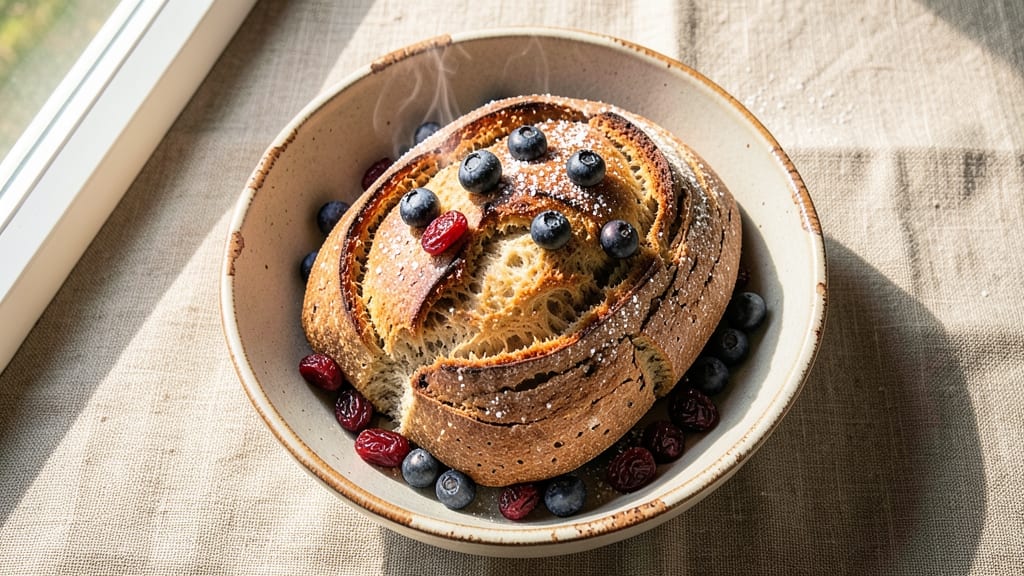
This Alaskan sourdough bread recipe brings the rugged charm of the Last Frontier to your kitchen, where wild berries meet crusty gold. Inspired by gold rush-era bakers who relied on simple ingredients and long fermentation, this loaf delivers a dense, chewy interior with a tangy bite—perfect for hearty meals.
The secret lies in cold-fermentation and a swirl of local berries that add bursts of sweet-tart flavor with every slice.
What sets this recipe apart is the Alaskan twist: using rye flour for depth and wild berries for natural sweetness, all baked in a wood-fired oven (or home oven) to achieve that signature crusty exterior.
The starter is cultivated over days, developing a robust tang that cuts through the richness of the dough. This isn’t just bread—it’s a taste of Alaska’s history, where every bite tells a story.
The result is a loaf with a golden, crackling crust that gives way to a soft, airy crumb studded with berries. The flavor is complex—slightly sweet from the berries, tangy from the sourdough, and earthy from the rye.
It’s the kind of bread that pairs beautifully with smoked salmon, wild game, or even just butter and honey. Whether you’re baking for a family gathering or treating yourself, this loaf is a labor of love that’s worth every minute.
Ready to master the art of Alaskan sourdough? The process starts with your starter—nurture it, feed it, and let it develop its signature tang. Once the dough comes together, the magic happens during proofing and baking, where patience rewards you with a loaf that’s as beautiful as it is delicious.
Let’s get started on your journey to crusty gold.
Ingredients for alaskan sourdough bread
Gold rush simplicity meets wild Alaskan flavors—just 12 ingredients for crusty, berry-swirled sourdough magic.
| Ingredient | Amount | Notes |
|---|---|---|
| Active Sourdough Starter 🍞 | 2 cups | Unfed, bubbly, 100% hydration |
| All-Purpose Flour 🌾 | 2 ½ cups | For structure and lightness |
| Rye Flour 🌾 | 1 ½ cups | Dark rye for Alaskan depth |
| Wild Blueberries 🫐 | 1 cup | Fresh or frozen, no sugar added |
| Cranberries 🍒 | ½ cup | Dried or fresh, chopped |
| Granulated Sugar 🍚 | ½ cup | For berry balance |
| Unsalted Butter 🧈 | ½ cup | Cold, cubed, for richness |
| Large Eggs 🥚 | 2 whole | Room temperature |
| Instant Yeast 🍄 | ½ tsp | Optional boost for cold fermentation |
| Kosher Salt 🧂 | 1 ½ tsp | Diamond Crystal preferred |
| Water 💧 | 1 ½ cups | Room temperature, filtered |
| Cornmeal 🌽 | ¼ cup | For dusting loaf pan |
The rye flour is non-negotiable here—it’s what gives this loaf that deep, earthy Alaskan character. King Arthur or Bob’s Red Mill are my go-tos, but any dark rye will work. For the berries, wild blueberries from Trader Joe's or frozen berries from Costco are perfect—they hold their shape during baking. If you can’t find wild blueberries, cranberries or lingonberries add a similar tart punch. The sourdough starter should be active and bubbly—if it’s sluggish, give it an extra feeding 12 hours before baking. And trust me on the butter: Plugrá or Land O’Lakes work, but nothing beats the flavor of European-style unsalted butter if you’ve got it.
No rye flour? Substitute with whole wheat flour—it won’t be identical, but it’ll add depth. Short on berries? Dried cherries or chopped apricots work in a pinch, but toss them in warm water first to soften. The sugar can be swapped for maple syrup or honey (use half the amount), but granulated keeps things classic. If you’re baking in a home oven, add 1 tsp extra yeast to compensate for the cold fermentation. And for the love of bread, don’t skip the cold proof—it’s what makes this loaf’s crust so spectacular. If you’re in a hurry, proof the dough overnight in the fridge instead of the usual 4-6 hours at room temp.
This dough is a beast—it needs time. After shaping, cover with plastic wrap and let it rise in the fridge for 12-18 hours. The longer it ferments, the more complex the flavor. For baking, preheat your oven to 450°F with a Dutch oven inside (or a baking stone if you’re wood-firing). The loaf keeps well for 3-4 days at room temperature, wrapped in a towel, or 1 week in the fridge. Freeze slices for up to 3 months—just toast straight from frozen. Pro tip: Slice and freeze unsliced so you can grab exactly what you need.
Why You'll Love This Recipe
- No-Knead Magic: I swear by this method—just mix, let it rise overnight, and bake. The rye flour adds depth without extra work, and that tangy starter does all the heavy lifting while you sleep.
- Tangy-Sweet Surprise: Those wild blueberries and cranberries burst in your mouth with every bite—like a berry cobbler trapped in bread. Honestly, the first time I tried it, I nearly ate the whole loaf straight from the pan.
- Weeknight & Holiday Hero: Perfect for slathering butter on toast in the morning or serving at Thanksgiving with gravy. Between us, it’s my go-to for potlucks because it travels well and no one leaves a slice behind.
- Stretches Your Budget: A single batch feeds my family for days—great for sandwiches, French toast, or even toasted with jam. The rye flour cuts costs, and the berries add luxury without breaking the bank. (Yes, even on a Tuesday night.)
Step-by-step instructions for Alaskan sourdough bread with wild berry swirl
Here's how to craft a rustic loaf with a golden crust and berry swirl that captures Alaska's wild flavors.
Mix the Dough for a Light, Airy Foundation
In a large mixing bowl, combine the 2 cups active sourdough starter, 1.5 cups water, 2.5 cups all-purpose flour, 1.5 cups rye flour, 1.5 teaspoons kosher salt, and 0.5 teaspoon instant yeast. Using a wooden spoon or dough whisk, mix until just combined—you should see a shaggy, sticky dough form. Let it rest for 10 minutes while you prepare the berry filling.
This resting period allows the gluten to begin developing, creating a lighter texture. The rye flour adds depth, while the starter provides that signature tang. Don't skip this step—it ensures your dough will rise properly and develop that signature open crumb structure we're after.
Prepare the Wild Berry Filling
In a separate bowl, gently combine the 1 cup wild blueberries, 0.5 cup cranberries, and 0.5 cup granulated sugar. If using dried cranberries, chop them coarsely first. Fold in the 0.5 cup cold cubed unsalted butter until evenly distributed. Set aside—this mixture should stay cool until you're ready to incorporate it into the dough.
The berries should be slightly under-mixed to maintain their texture. If using frozen blueberries, don't thaw them first—they'll release moisture at the right time during baking. This filling will create pockets of juicy sweetness throughout each slice, balancing the bread's rustic character.
Knead and Shape the Dough with Berry Swirls
After the initial rest, wet your hands with water and knead the dough on a lightly floured surface for 5-7 minutes until smooth and elastic. The dough should be soft but not sticky—add a little more all-purpose flour if needed. Divide the dough into 4 equal portions (about 1 pound each) and roll each into a 12-inch log.
Using a butter knife, carefully slice each log lengthwise down the center without cutting all the way through. Spread 1/4 of the berry mixture down the center of each log, then press the edges together to seal. Roll the logs gently to distribute the filling evenly. This creates those beautiful swirls while keeping the berries concentrated in each slice.
First Rise for Maximum Flavor Development
Place the shaped loaves on a baking sheet lined with parchment paper. Cover loosely with a clean kitchen towel and let rise at room temperature for 1-2 hours, or until they've puffed up about 50%. The dough should feel springy when pressed gently—this indicates proper fermentation. If your kitchen is cold, extend the rise time to 2-3 hours for better flavor.
This longer rise allows the sourdough to develop its signature complexity. The rye flour will contribute a subtle earthiness that pairs beautifully with the bright berries. Don't rush this step—patience here makes all the difference in the final product's depth of flavor.
Bake to Golden Perfection with Crispy Crust
Preheat your oven to 375°F. While it heats, dust a 9x5-inch loaf pan generously with 0.25 cup cornmeal, tapping out any excess. Arrange the risen loaves in the pan, seam-side down. Bake for 40-45 minutes until the crust is deep golden brown and sounds hollow when tapped on the bottom. If the tops brown too quickly, tent loosely with foil.
For that signature Alaskan sourdough crust, I like to spray the loaves with water just before baking—this creates steam that develops a beautiful oven spring. The internal temperature should reach 190-200°F when done. Let the bread cool in the pan for 10 minutes before transferring to a wire rack to prevent sinking.
Pro Tips For Making Alaskan Sourdough Bread
- STEAM THE LOAF: DESCRIPTION: After shaping, cover the dough with a damp towel and let it sit for 20 minutes in a warm oven (turned off with the light on) before baking. The rye flour in this recipe absorbs moisture like a sponge—this step guarantees a crisp crust without drying out the interior, especially when packed with juicy berries.
- TOAST THE BERRIES: DESCRIPTION: Toss your wild blueberries and cranberries in a dry skillet over medium heat for 2–3 minutes until they darken slightly and release their aroma. This caramelizes their natural sugars, cutting through the sour tang of the starter and adding depth—don’t skip it, even if it seems like extra work.
- WEIGH THE RYE: DESCRIPTION: Use a kitchen scale for the rye flour. Scooping it from the bag packs it too tightly, throwing off your hydration ratios and making the dough gummy. Rye’s dense texture changes the game—precision here means a lighter, airier crumb instead of a brick.
- SCORE DEEPER: DESCRIPTION: Slash the dough with a razor or sharp knife at least ½ inch deep before baking. The rye-heavy dough resists expansion, so deeper cuts let the bread rise where it counts. I learned this after watching my first loaf split unevenly—now it opens dramatically every time.
Essential equipment for this dish
Starter Cultivation Tools
Your sourdough starter is the heart of this Alaskan bread, so invest in a glass jar with a lid (I use a quart-sized Ball jar) for easy monitoring. A digital kitchen scale (like the OXO Good Grips) ensures precise measurements—critical for hydration control.
For feeding, I keep a small silicone spatula and measuring spoons handy to maintain consistency. 🍞
Dough Mixing Essentials
A wooden dough whisk (not plastic!) is perfect for mixing the shaggy dough without overworking it. For kneading, I recommend a well-floured surface (I use a large baking sheet) and damp hands to prevent sticking.
A bench scraper helps divide the dough cleanly when shaping. For the berry filling, a small mixing bowl and butter knife work best.
Baking Gear for Crusty Perfection
For that Alaskan-style crust, a Dutch oven (like Le Creuset) is ideal—it traps steam for oven spring. If wood-firing, a cast iron Dutch oven or baking stone works too. Preheat your oven with a loaf pan (I use a 9x5-inch Pyrex) dusted with cornmeal for easy release.
A thermometer (like Thermoworks Smoke) ensures proper internal temp of 190-200°F.
Proofing and Storage
During the cold proof, I cover my dough with plastic wrap and store it in the fridge. For shaping, a parchment-lined baking sheet prevents sticking. After baking, let the loaf cool on a wire rack (I use OXO Good Grips) to avoid a gummy texture.
Store leftovers in an airtight container or freeze slices for later.
Budget-Friendly Swaps
No Dutch oven? Use a heavy oven-safe pot with lid instead. Skip the scale? Measure flour by scooping and leveling in a standard measuring cup. For berries, frozen works—just don’t thaw them first. A spray bottle mimics steam if you can’t wood-fire. The key is patience, not perfection! 💪
Nutrition facts
Frequently asked questions
Why does this Alaskan sourdough recipe use rye flour?
Rye flour adds that signature earthy depth and hearty texture that Alaskan bakers traditionally used. The dark rye complements the wild berries and creates a denser crumb perfect for cold climates. It also boosts the bread's resistance to freezing temperatures—ideal for Alaska's long winters!
Can I substitute wild berries with other fruits?
Try dried cherries, chopped apricots, or even applesauce for moisture. For tartness, cranberries or lingonberries work beautifully. Just reduce sugar by 1-2 tablespoons if using very sweet fruits. The key is balancing the bread's tangy sourdough flavor with something bright and juicy.
How do I know when my sourdough starter is ready?
Your starter should have visible bubbles, a slightly domed top, and a pleasantly tangy aroma—not rotten or yeasty. It should float in water like a cork. For this recipe, use it when it's peaking—right after feeding, before it starts collapsing. If it's sluggish, feed it 12 hours before baking to revive it.
Why does the recipe call for cold fermentation?
Cold fermentation (12-18 hours in the fridge) develops deeper flavors and a chewier texture—classic for Alaskan bread. It also gives the gluten time to relax, preventing a tough crust. The slow rise enhances the rye's earthiness and lets the berries' flavors meld perfectly. Patience here makes all the difference!
What if my loaf doesn't rise properly?
Check your starter first—it might not be active enough. Also, ensure your dough is in a warm enough spot—ideally 75-80°F. If using a home oven, try placing the dough near the pilot light—or use a proofing box—to maintain consistent warmth. Over-kneading can also weaken gluten, so handle the dough gently.