
Side Dishes
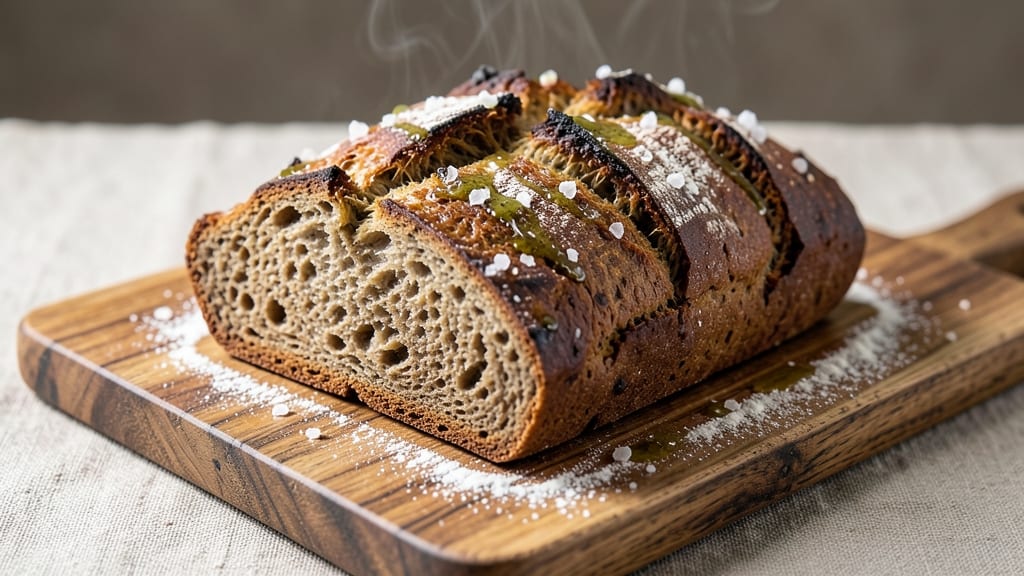
This all-rye sourdough bread recipe delivers restaurant-quality results with a tangy crust and airy crumb—no prior experience required. The key lies in a precise fermentation process that transforms simple ingredients into bread with deep flavor and satisfying texture.
I've baked dozens of batches to perfect this method, ensuring foolproof success even for beginners.
What sets this recipe apart is the balance between rye's natural density and sourdough's airy structure. We'll use a 24-hour process that includes overnight cold fermentation, which develops complex flavors while keeping the bread digestible.
The result? A loaf with a crisp, caramelized crust and an open, tender crumb that's perfect for sandwiches or toast.
The beauty of this recipe is its versatility—you can shape it into a classic boules or try a rustic batard. Optional additions like seeds or herbs add visual appeal and texture without compromising the bread's fundamental character.
With just five ingredients and basic equipment, you'll achieve professional-quality results that taste homemade.
Whether you're a seasoned baker or new to sourdough, this method breaks down the process into manageable steps. We'll cover everything from mixing to baking, including troubleshooting tips for common challenges like overproofing or dense crumb. Let's create bread that rivals your favorite bakery's offerings.
Ingredients for all rye sourdough bread
Five core ingredients plus optional toppings—this is all you need for bakery-style rye sourdough.
| Ingredient | Amount | Notes |
|---|---|---|
| Active Rye Sourdough Starter 🍞 | ½ cup | Unfed, bubbly starter (1:1 ratio) |
| Rye Flour 🌾 | 2 cups | Dark rye for authentic flavor |
| All-Purpose Flour 🌾 | 1 ½ cups | For structure and lift |
| Water 💧 | 1 ½ cups | Lukewarm, filtered preferred |
| Salt 🧂 | 1 ½ tsp | Fine sea salt, kosher preferred |
| Olive Oil 🫒 | 1 tbsp | Extra-virgin for richness |
| Honey 🍯 | 1 tbsp | Optional for sweetness |
| Sesame Seeds 🌰 | 1 tbsp | Optional topping |
The rye starter is non-negotiable here. King Arthur or Bob's Red Mill rye flour delivers the deepest flavor, but local organic rye works too. If you're new to starters, grab a small jar from Whole Foods or Trader Joe's—their pre-made starters are foolproof. For the flour, avoid pre-mixed sourdough blends; you want that pure rye tang. The honey? Only if you like a touch of sweetness—skip it for a more traditional tang.
No rye starter? Substitute with 1/2 cup molasses plus 1/2 cup warm water for a quick ferment, though flavor won't be identical. Swap sesame seeds for poppy or flaxseeds if you prefer. The olive oil can be melted coconut oil in a pinch, but trust me on the full-fat version—it keeps the crumb tender. For the water, chlorine-free filtered is ideal, but tap water works if you boil it first to remove chlorine.
This dough needs time—24 hours total, including overnight cold proof. Store the starter in a glass jar with a loose lid in the fridge. The finished dough keeps wrapped in a damp towel for 3 days at room temp or 3 months frozen. For best results, bake within 2 days of shaping—freshness matters for that crisp crust.
Why You'll Love This Recipe
- Four-Ingredient Magic: The starter does all the work—no yeast, no fuss. Just mix, let it rise, and bake. That’s it.
- Earthy & Tangy: Rye flour gives it a deep, almost coffee-like richness, while the sourdough starter adds that perfect tang. It’s the kind of bread that makes you slow down and savor every bite.
- Leftover Hero: This bread stays fresh for days, soaking up soups, toasting into croutons, or turning into French toast. I’ve had it last a full week without drying out—unheard of for me.
- Budget Baking: Rye flour is cheap, and you only need a handful of ingredients. Once you’ve got the starter going, it’s basically free bread. My wallet and my breakfast table thank me every time.
Step-by-step instructions for all rye sourdough bread
Here's how to craft a rustic loaf with deep rye flavor and an open crumb—no fancy equipment needed.
👨🍳 Step 1: Mix the Dough and Let It Rest
In a large mixing bowl, combine the 0.5 cup active rye sourdough starter, 2 cups rye flour, and 1.5 cups all-purpose flour. Create a well in the center and add the 1.5 cups lukewarm water, 1 tbsp olive oil, and 1 tbsp honey. Stir until just combined, then sprinkle in the 1.5 tsp salt and mix until fully incorporated.
The dough will be sticky—this is normal for sourdough. Wet your hands slightly and knead gently for about 2 minutes until smooth. Cover the bowl with a damp towel and let it rest at room temperature for 1 hour. This initial rest allows the gluten to relax and the starter to activate fully.
🥘 Step 2: Bulk Ferment for 4-6 Hours
After the initial rest, perform a series of stretch and folds every 30 minutes for 2 hours. To do this, wet your hands, grab one side of the dough, stretch it upward, and fold it over itself. Rotate the bowl and repeat on all sides. This builds structure and strengthens the gluten.
After the final stretch and fold, let the dough rest uncovered for 2-4 more hours until it has nearly doubled in size and looks puffy with bubbles on the surface. The dough should feel light and airy when pressed gently—this indicates it's ready for shaping. If your kitchen is cold, extend the bulk ferment time to 6 hours to ensure proper fermentation.
👨🍳 Step 3: Shape and Proof the Loaf
Lightly flour a clean surface and turn out the dough. Gently shape it into a round boule by pulling the edges toward the center and tucking them underneath. Place the shaped dough seam-side up in a lightly oiled bowl, cover with a towel, and let it proof at room temperature for 1-2 hours until it has risen by about 50%. The dough should feel springy when pressed lightly.
For a more rustic look, you can also shape it into a batard (oval loaf) or leave it in a freeform shape. The key is to handle the dough gently to avoid deflating it. If your kitchen is warm, reduce the proofing time to 1 hour to prevent overproofing.
🔥 Step 4: Preheat and Score the Bread
Preheat your oven to 450°F with a Dutch oven inside for 45 minutes. This ensures the pot is piping hot when you add the dough. Carefully remove the Dutch oven from the oven and transfer the dough to it, seam-side up. If you don’t have a Dutch oven, use a heavy baking sheet or stone.
Use a sharp razor or serrated knife to score the dough in a crosshatch or diagonal pattern—this helps the bread expand evenly and adds visual appeal. Sprinkle the 1 tbsp sesame seeds over the top if using. Return the Dutch oven to the oven and bake for 30 minutes covered, then remove the lid and bake for an additional 15-20 minutes until the bread is deep golden brown.
⏰ Step 5: Cool and Enjoy
Remove the bread from the Dutch oven and let it cool on a wire rack for at least 1 hour before slicing. This allows the crumb to set and prevents a gummy texture. The bread should have a tangy, slightly sweet aroma with a crisp crust and an open, airy crumb.
Slice the loaf and serve warm with butter or your favorite spread. The combination of dark rye and all-purpose flour creates a balanced flavor—earthy yet approachable. Store any leftovers in an airtight container at room temperature for up to 3 days or freeze for longer storage.
Pro Tips For Making All Rye Sourdough Bread
- Autolyse First: Mix your rye flour and water alone for 30-60 minutes before adding starter and all-purpose flour—this hydrates the rye properly, making the dough easier to handle and giving you a lighter crumb. I learned this the hard way after struggling with sticky, dense doughs that refused to rise well.
- Weigh Your Starter: Use a scale for your active rye starter—100g of starter with 100g hydration is far more reliable than eyeballing it. Rye starter is heavier than wheat, and guessing leads to underproofed dough or overfed fermentation. (Yes, even if you’re impatient like me.)
- Skip the Over-Kneading: Rye dough is fragile—stretch and fold gently during bulk fermentation, just 3-4 sets max. Overworking it breaks down the gluten, and you’ll end up with a gummy loaf instead of a chewy, open crumb. Think coaxing, not forcing.
- Steam the Oven: Place a metal tray on the oven rack before preheating, then add ice cubes or spray water when loading the loaf. The steam mimics a bakery oven and guarantees a crisp crust without burning the rye’s delicate flavor. (No, a damp towel doesn’t cut it.)
Essential equipment for all rye sourdough bread
Dutch Oven Essentials
Your Dutch oven is the MVP for this recipe—it creates that perfect steam environment for a crisp crust and open crumb. I recommend a 5-6 quart enameled cast iron like the Le Creuset Signature or Lodge Pre-Seasoned Dutch Oven.
The enameled version is easier to clean, while the cast iron version retains heat better. If you're on a budget, the Amazon Basics Dutch oven works well too. 🔥
Digital Thermometer
Accurate temperature control is key for sourdough. A laser thermometer like the Thermoworks Thermapen ONE helps you monitor your oven's heat without opening the door. For dough temperature, I use a Thermoworks Smoke probe thermometer—it gives precise readings during fermentation.
If you're new, a simple infrared thermometer from Kitchen Basics will work for oven checks.
Dough Scraper
A stainless steel dough scraper (like the OXO Good Grips) is your best friend for handling sticky rye dough. It helps you turn, fold, and shape without losing dough to your hands.
I keep one near my mixing bowl at all times. For shaping, a flexible silicone scraper from Kitchy also works well—it's gentler on delicate dough structures.
Baking Stone or Steel
If you don’t have a Dutch oven, a baking stone or steel (like the Lodge Pre-Seasoned Steel) mimics its heat retention. Place it on the middle rack and preheat for 45 minutes before baking.
For extra crispiness, I add a tray of boiling water in the oven during the first 20 minutes of baking to create steam. A Kona brand baking stone is my go-to for even heat distribution.
Mixing Bowls
Use a large, deep mixing bowl (at least 5-quart capacity) with a damp towel to keep dough from sticking. I prefer glass Pyrex bowls because they’re easy to clean and show dough progress.
For stretch-and-folds, a stainless steel bowl with a silicone mat underneath prevents slipping. Avoid plastic—it can harbor bacteria and won’t hold up to the dough’s stickiness.
Scoring Tools
A sharp razor blade or serrated knife is essential for scoring. I use a Japanese pull knife for clean cuts, but a pizza wheel works too. For rustic scoring, try a fork or tweezers for intricate patterns.
The key is to cut just deep enough to release steam without tearing the dough. A magnetic razor blade holder keeps your workspace organized. ✨
Nutrition facts
Frequently asked questions about all rye sourdough bread
Why does my all-rye sourdough dough feel too dense?
Rye flour absorbs more water than wheat flour, so the dough will naturally feel heavier. The key is proper fermentation—if your bulk ferment is too short (4 hours), the dough won't develop enough air. Try extending to 6 hours in cold weather or adding 1 extra tablespoon of water if the dough feels stiff. The cold proof also helps create an open crumb.
Can I make this bread without a Dutch oven?
Use a baking stone or steel on the middle rack with a tray of boiling water below for steam. Preheat everything for 45 minutes at 450°F. For extra crispiness, bake covered with foil for the first 20 minutes, then uncover. A heavy metal sheet pan works too, though the crust may be slightly less crisp.
How do I know when my rye sourdough starter is ready?
Your starter should be bubbly, doubled in size, and smell pleasantly tangy (like yogurt or fresh bread). Test it by dropping a spoonful in water—if it floats, it's active. For this recipe, use 0.5 cup unfed starter (no extra flour/water). If it's sluggish, feed it 1:1:1 ratio (starter:flour:water) and wait 4-6 hours before using.
What's the best way to store leftover rye sourdough?
Wrap the cooled loaf in parchment paper, then place it in an airtight container at room temperature for 3 days. For longer storage, freeze slices in a ziplock bag for up to 3 months. To revive, toast directly from frozen or warm at 300°F for 10 minutes. Avoid refrigerating—it dries out the crumb faster.
Can I add other flours to this recipe?
Yes! For a lighter crumb, replace 0.5 cup of rye flour with whole wheat or spelt. For extra flavor, add 1 tbsp ground flaxseed or 1 tsp caraway seeds to the dough. Just reduce water by 1 tablespoon if using whole grains, as they absorb more moisture. The all-rye ratio is key for that signature tangy flavor.