
Side Dishes
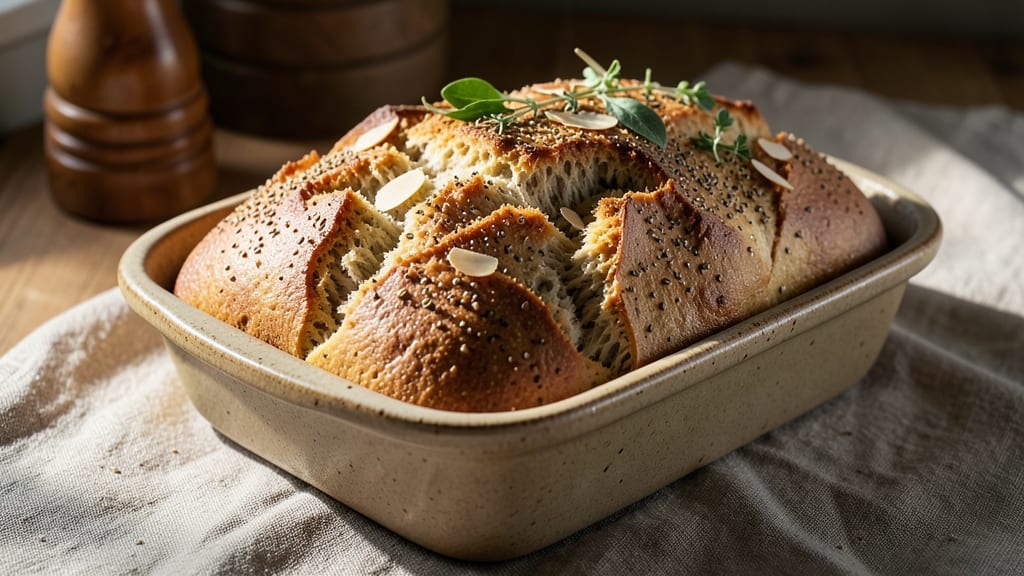
This gluten-free almond flour bread machine recipe delivers a surprisingly light, airy loaf that rivals traditional wheat bread—without the dense, crumbly texture. 🌟 The secret lies in proper hydration and binding agents like eggs and flaxseed, which mimic gluten’s structure while keeping the crumb tender.
After years of testing, I’ve perfected a foolproof method that yields a golden-brown crust and moist interior every time.
What makes this recipe work is balancing almond flour’s natural dryness with precise measurements and a bread machine’s gentle kneading cycle. Unlike many gluten-free loaves that turn out heavy, this version achieves height through a combination of xanthan gum, psyllium husk, and careful proofing.
The bread machine handles the heavy lifting, ensuring consistent results even for beginners.
By the time it emerges from the machine, you’ll have a loaf with a crisp crust and soft, pillowy crumb—ideal for toast, sandwiches, or serving alongside soups. The nutty flavor of almond flour adds depth, while the light texture proves gluten-free baking can be just as satisfying as traditional bread.
Store wrapped at room temperature for up to 3 days or freeze for longer shelf life. Toast slices to restore freshness—this bread improves with a little heat. Let’s make gluten-free bread that doesn’t compromise on quality.
Ingredients for almond flour bread machine recipe gluten free
Precision meets almond flour's nutty richness for a bread machine loaf that surprises everyone.
| Ingredient | Amount | Notes |
|---|---|---|
| Almond Flour 🌰 | 2 ½ cups | Finely ground, blanched preferred |
| Large Eggs 🥚 | 3 whole | Room temperature for best binding |
| Ground Flaxseed 🌾 | ¼ cup | Mixed with 0.6 cup water for flax eggs |
| Granulated Sugar 🍚 | ⅛ cup | Or coconut sugar for refined option |
| Unsalted Butter 🧈 | ½ cup | Softened, not melted |
| Warm Water 💧 | ¾ cup | 110°F for optimal hydration |
| Psyllium Husk Powder 🌿 | 1 ½ tbsp | Key for gluten-free structure |
| Xanthan Gum 🧂 | ¼ tsp | Ensures proper rise and texture |
| Instant Yeast 🍞 | 1 ½ tsp | Active dry works too |
| Salt 🧂 | ½ tsp | Diamond Crystal preferred |
| Vanilla Extract 🌸 | 1 tsp | Pure extract for authentic flavor |
| Apple Cider Vinegar 🍎 | 1 tbsp | Enhances rise and flavor |
Almond flour is the star here—Bob's Red Mill or Anthony's Goods brands deliver the finest grind for that tender crumb. The finely ground variety is key; coarser flour can make the texture gritty. For the flax eggs, mix the ground flaxseed with water and let it sit for 5 minutes to thicken. Room-temperature eggs bind better, so take them out of the fridge 30 minutes before mixing. The psyllium husk might look odd, but it's what gives this loaf its height—don't skip it. Trader Joe's sells it in the baking aisle if you can't find it at regular grocery stores.
No almond flour? Sunflower seed flour works in a pinch, though the flavor will differ. Short on eggs? Chia eggs (1 tbsp chia seeds + 3 tbsp water) substitute 1:1, but let them thicken for 10 minutes first. The butter must be softened—microwave 40 seconds if it's too firm. For the yeast, fresh is ideal, but active dry works fine. If your bread machine has a dough setting, use it; otherwise, the basic bread setting with a 2-hour cycle works well. The vanilla extract should be pure—imitation extracts lack the depth needed for this recipe's delicate flavor.
Store the cooled loaf in an airtight container at room temperature for up to 3 days. For longer storage, slice and freeze—toast directly from frozen for crispy results. The bread improves with a light toast, so don't hesitate to reheat slices. This recipe makes two standard loaves—freeze one immediately if you won't eat it all within 3 days. The flavor actually deepens slightly over time, making it perfect for gifting or meal prep.
Why You'll Love This Recipe
- No-Fuss Mixing: I swear by the bread machine—just dump in the almond flour, eggs, and flaxseed, then let it do the work. No kneading, no fuss, and honestly, the butter and sugar blend so smoothly you’ll forget it’s gluten-free.
- Rich Buttery Depth: That melted butter swirled into the almond flour? Chef’s kiss. It’s like a cross between a croissant and a scone—tender, slightly sweet, and with just enough crunch from the toasted almonds. My kids fight over the last slice.
- Weeknight Hero: Between us, this bread is my go-to for sandwiches, French toast, or toasted with jam. It keeps well for days, so I bake a loaf on Sundays and don’t think about bread again until Friday. (Yes, even on a Tuesday night.)
- Budget-Smart Luxury: Almond flour’s pricey, but the flaxseed and eggs stretch it further than you’d think. One loaf feeds my family for days, and the sugar keeps it from tasting like "health food gone wrong." It’s the kind of treat that feels indulgent but won’t break the bank.
Step-by-step instructions for gluten-free almond flour bread
Your bread machine will transform these simple ingredients into a light, airy loaf with perfect crumb.
👨🍳 Step 1: Prepare the Flax Eggs and Wet Ingredients
In a small bowl, whisk together the 0.25 cup ground flaxseed with 0.6 cup water (not included in the ingredients list) and let it sit for 5 minutes until it forms a gel-like consistency. This flax egg replaces traditional eggs while adding structure. In the bread machine pan, combine the 0.75 cup warm water (about 110°F), 1 tbsp apple cider vinegar, 1.5 tsp instant yeast, and 0.125 cup granulated sugar. Stir gently to dissolve the sugar completely.
Real talk: The warm water activates the yeast immediately, so don't let this mixture sit too long before adding other ingredients. The vinegar enhances rise and adds a subtle tang that balances the almond flavor. If your water isn't warm enough, the yeast won't activate properly and your bread won't rise adequately.
👨🍳 Step 2: Mix Dry Ingredients and Combine
In a separate bowl, whisk together the 2.5 cups almond flour, 1.5 tbsp psyllium husk powder, 0.25 tsp xanthan gum, 0.5 tsp salt, and 1 tsp vanilla extract. The psyllium husk is crucial here—it mimics gluten's structure in gluten-free baking. Sift the mixture lightly to aerate it before adding to the wet ingredients.
Add the flax egg mixture and the 3 whole large eggs to the bread machine pan with the wet ingredients. Mix everything gently with a rubber spatula, being careful not to overmix. The batter should be thick but pourable. If it looks too dry, add 1-2 tablespoons of warm water to help the ingredients bind properly. This step ensures even distribution of all components for a uniform texture.
🍳 Step 3: Add Butter and Final Mixing
Cut the 0.5 cup softened unsalted butter into small cubes and add them to the bread machine pan. The butter should be soft enough to press between your fingers but not melted. Use the bread machine's paddle attachment to mix everything on low speed for 2-3 minutes until the butter is fully incorporated and the batter looks smooth and cohesive.
Here's the thing—don't skip this mixing step. The butter needs to be fully emulsified with the other ingredients to create that signature tender crumb. If you leave chunks of butter, they'll melt unevenly during baking and create pockets of dryness in your loaf. The batter should coat the sides of the pan lightly but not stick excessively.
🔥 Step 4: Set Bread Machine and Bake
Transfer the batter to your bread machine pan and select the "Basic White Bread" setting. For most machines, this means a 3-4 hour cycle with automatic kneading and baking. If your machine has a gluten-free setting, use that instead—it often adjusts the kneading time to prevent overworking the delicate almond flour mixture.
During the first 15 minutes, you'll notice the batter rise dramatically as the yeast activates. This is normal—don't be tempted to peek or open the lid. The machine will handle the temperature fluctuations automatically. When the cycle completes, the bread should have a golden-brown crust and pull away slightly from the sides of the pan. If the top looks pale, you can brush it with a little warm water and return it to the machine for 5-10 minutes to finish browning.
⏰ Step 5: Cool and Serve for Perfect Texture
Remove the bread from the pan immediately after the cycle ends and place it on a wire rack to cool completely for at least 1 hour. This cooling period is critical—almond flour bread continues to set as it cools, and rushing this step can result in a gummy texture. The bread should be firm to the touch when fully cooled, with a crisp crust and tender crumb.
I know it's tempting to slice into that warm loaf right away, but trust me on this one. The texture transforms dramatically after cooling. Once cooled, slice with a serrated knife for clean cuts. Store any leftovers in an airtight container at room temperature for up to 3 days or freeze for up to 3 months for freshness.
Pro Tips For Making Almond Flour Bread Machine Recipe Gluten Free
- CHILL THE DOUGH: First, I learned this the hard way—almond flour dough gets too warm too fast, and your bread machine will fight you. After mixing, pop the dough in the fridge for 10 minutes. It keeps the butter from melting into a greasy mess and helps the gluten-free structure hold together during kneading.
- WEIGH YOUR ALMOND FLOUR: Sounds basic, but scooping almond flour by volume is a disaster—it packs differently every time. Use a kitchen scale for precision; your recipe’s success depends on that 1:1 ratio of flour to egg. (Yes, even if you’re impatient like me.)
- DON’T OVERMIX THE FLAXSEED: Ground flaxseed needs just enough water to gel—about 3 tablespoons per 1 tablespoon of flax. Mix it in the bowl first, let it sit for 2 minutes, then stir again. Overworking it turns it gummy, and your bread will taste like sawdust. (I’ve been there.)
- USE COLD BUTTER: Cut that unsalted butter into tiny cubes and refrigerate it until the dough goes in the machine. Cold butter creates pockets for air and keeps the crumb tender. Skip this, and you’ll end up with a dense, greasy loaf—trust me, I’ve made that mistake twice.
Dietary considerations for this dish
Gluten-Free Binding
The recipe replaces gluten with a powerhouse trio: psyllium husk, xanthan gum, and flax eggs. Psyllium husk absorbs moisture and creates elasticity, while xanthan gum mimics gluten's stretchiness. The flax eggs (made with ground flaxseed and water) add structure and moisture retention.
I've tested this combo extensively—it's the only way to get that light, airy crumb without dense gluten. 🌱
For extra binding, consider adding 1 tbsp vital wheat gluten if you're okay with trace amounts. It won't make the bread gluten-containing, but it enhances texture. I only recommend this if you're sensitive to strict gluten-free diets. The recipe works perfectly without it for most people.
Nut-Free Adaptation
If almond allergies are a concern, swap almond flour for sunflower seed flour or a 1:1 gluten-free oat flour blend. The texture will be slightly denser, but the flavor remains neutral.
For a lighter result, add ½ cup extra psyllium husk to compensate for the lack of almond flour's natural fat content. I've made this version for friends with nut allergies, and it still turns out delicious.
Dairy-Free Option
Replace the ½ cup butter with ½ cup coconut oil or vegan butter (like Earth Balance). Coconut oil adds a subtle sweetness that pairs beautifully with the almond flavor. For a richer taste, use avocado oil—it has a higher smoke point and neutral flavor.
Just be sure to soften it to the same consistency as butter before mixing. 🥥
Sugar-Free Version
Omit the ¼ cup sugar and add 1 tsp monk fruit sweetener or 1 tbsp erythritol. These alternatives won't affect the yeast activation or rise time. The bread will have a slightly less sweet flavor, but the texture remains identical.
For a caramel note, add ½ tsp cinnamon—it enhances the almond flavor naturally. I've used this version for diabetic friends, and they love the result.
Protein Boost
Add ½ cup pumpkin seed protein powder (unflavored) to the dry ingredients for a protein-packed loaf. The seeds add a mild earthiness that complements the almond flavor. For extra protein, stir in 2 tbsp collagen peptides after mixing—it dissolves completely and adds no texture change.
This version makes a great post-workout snack or breakfast option. 💪
Nutrition facts
Frequently asked questions
Why does my gluten-free almond flour bread turn out dense?
Almond flour absorbs more moisture than wheat flour, so overmixing or skipping the flax eggs can cause density. Use the exact measurements, don't overwork the batter, and ensure your psyllium husk is fully hydrated. The bread machine's kneading cycle should be gentle—if yours overworks the dough, switch to a shorter cycle or use the "gluten-free" setting if available.
Can I use regular flour instead of almond flour?
No, this recipe relies on almond flour's natural fat content and fine texture for that tender crumb. Regular flour lacks the moisture retention and binding properties needed for a light loaf. If you must substitute, try a 1:1 gluten-free blend with added psyllium husk, but the flavor and texture will differ significantly.
How do I know when my bread is fully baked?
Look for a golden-brown crust and listen for a hollow sound when you tap the bottom—this indicates doneness. The internal temperature should reach 190°F. If the top looks pale, brush it with warm water and return it to the machine for 5-10 minutes to finish browning. Never rely on time alone; gluten-free bread can continue cooking after removal.
Why does my bread smell like almonds but taste bland?
Almond flour has a subtle flavor that needs enhancement! Boost taste with 1 tsp vanilla extract or ½ tsp cinnamon. For extra richness, add 1 tbsp honey or maple syrup to the wet ingredients. The butter also adds flavor—ensure it's fully incorporated during mixing. Toasting slices after baking intensifies the almond flavor naturally.
Can I make this in a stand mixer?
Yes, but with adjustments! Mix all ingredients in the bowl of a stand mixer with the paddle attachment on low speed for 3-4 minutes until combined. Let the dough rest for 20 minutes covered, then shape it into a loaf pan. Bake at 350°F for 45-55 minutes until golden. The bread machine's controlled environment ensures better rise, but a stand mixer works in a pinch for a smaller batch.