
Side Dishes
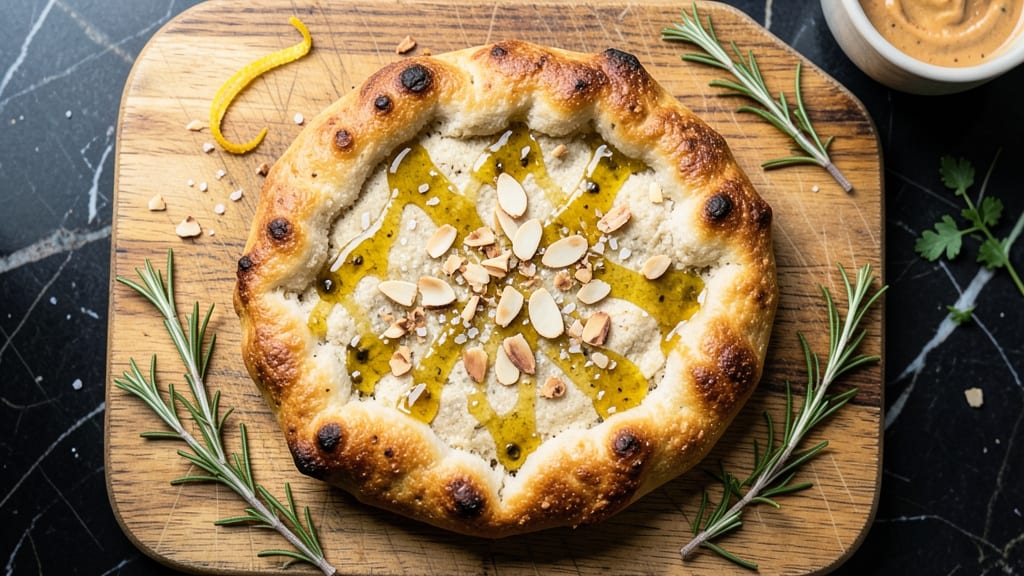
This almond flour focaccia bread recipe delivers the same golden, olive oil-drenched beauty as classic focaccia—but without gluten or yeast headaches. 🌟 The secret lies in almond flour's natural richness, which creates a tender crumb with that signature focaccia shine, all while keeping it perfectly gluten-free and egg-free.
What sets this apart is the dough's unique texture: lighter than traditional focaccia yet still chewy, with crispy edges that hold up perfectly for slicing. The recipe uses a simple mix of almond flour, yeast, water, and extra-virgin olive oil—the same star ingredient that makes classic focaccia irresistible.
No kneading required, just mix, shape, and let the yeast work its magic.
By the time it emerges from the oven, you'll have a loaf with a crackly, golden crust and an interior that's soft yet substantial—ideal for dipping in olive oil or pairing with vegan cheese. The gluten-free adaptation actually enhances the focaccia experience, making every bite rich, flavorful, and satisfyingly moist.
Top with fresh rosemary, garlic, or flaky sea salt before baking for extra depth. This focaccia is perfect for meal prep, sandwiches, or simply enjoying warm with a drizzle of olive oil and balsamic glaze. Let's get started!
Ingredients for almond flour focaccia bread
Gluten-free almond flour and yeast create this rich, golden focaccia with crisp edges and tender crumb.
| Ingredient | Amount | Notes |
|---|---|---|
| Almond Flour 🌰 | 3 cups | Finely ground, unsweetened |
| Active Dry Yeast 🍞 | 1 tbsp | Instant yeast preferred |
| Extra-Virgin Olive Oil 🫒 | ¾ cup | High-quality, fruity |
| Warm Water 💧 | 1 ¼ cups | 110°F for optimal yeast activation |
| Fine Sea Salt 🧂 | 1 ½ tsp | Diamond Crystal preferred |
| Maple Syrup 🍯 | 2 tbsp | For subtle sweetness |
| Fresh Rosemary 🌿 | ¼ cup | Finely chopped, stems removed |
| Garlic Cloves 🧄 | 4 cloves | Minced for topping |
| Flaky Sea Salt 🧂 | 1 tbsp | For finishing |
| Vegan Butter 🧈 | 2 tbsp | Melted for brushing |
The almond flour makes this focaccia uniquely rich and moist—Bob's Red Mill or Anthony's Goods are my go-tos for consistent texture. Freshly ground flour works best, but pre-packaged is fine if labeled 'finely ground.' Instant yeast dissolves faster than active dry, saving you a step. For the olive oil, California Avocado Ranch or Colavita deliver that fruity depth. Rosemary should be fresh with vibrant green needles—dried works in a pinch but lacks that bright aroma. The garlic cloves can be pre-minced from a jar if you're short on time, though fresh is always better.
No almond flour? Oat flour or coconut flour can substitute at a 1:1 ratio, but texture will differ slightly. Running low on yeast? Nutritional yeast won't work here—this needs active yeast for rise. For the olive oil, avocado oil is a neutral alternative if you're avoiding olive's flavor. Fresh rosemary too expensive? Dried rosemary at half the amount gives a milder but still pleasant flavor. The maple syrup can be swapped for agave nectar if preferred, though maple adds subtle caramel notes. Flaky sea salt is ideal for finishing, but kosher salt works if that's what you have.
The yeast mixture should bubble within 5 minutes—if not, your water might be too cold. Store almond flour in an airtight container in a cool, dark place for up to 6 months. Fresh rosemary keeps wrapped in damp paper towels for 1 week in the fridge. The baked focaccia reheats beautifully—wrap in foil and warm at 350°F for 10 minutes. Slice and freeze portions for up to 3 months—perfect for quick sandwiches or toast. For extra crispiness, bake again at 400°F for 5 minutes after slicing.
Why You'll Love This Recipe
- No Yeast Stress: I’ll be real—this dough handles yeast like a pro. Just toss in the warm water, let it sit for 10 minutes, and boom, it’s ready to shape. No kneading, no waiting hours for proofing. Honestly, my first attempt rose faster than I expected, and I nearly panicked—until I remembered almond flour’s magic.
- Nutty Crispy Magic: That first bite? Rich, buttery almond flavor with a crackly crust thanks to the olive oil. It’s not just bread—it’s like a cross between focaccia and a dessert. My husband steals slices straight from the pan, no shame.
- Weeknight Hero: Slice it for sandwiches, toast it for breakfast, or serve it with soup. It keeps well for days, so I make a big batch and forget about it. (Yes, even on a Tuesday night.) The almond flour means no staling—just fresh, satisfying bites whenever I need them.
- Budget-Friendly Luxe: Almond flour’s pricey, but a little goes far here. One batch feeds my family for days, and the olive oil adds depth without breaking the bank. Plus, no wasted dough—every scrap gets used, from crumbs to extra slices. Practical? Absolutely. Delicious? Ridiculously.
Step-by-step instructions for almond flour focaccia bread
Here's how to create a perfectly golden, crispy-crusted focaccia using only almond flour.
👨🍳 Step 1: Activate the Yeast and Mix the Dough
In a large mixing bowl, combine the 1.25 cups warm water (about 110°F) with the 1 tbsp active dry yeast and 2 tbsp maple syrup. Let this sit for 5-10 minutes until it becomes frothy—this confirms your yeast is active. If it doesn't bubble, your yeast may be dead and you'll need to start over.
Once bubbly, add the 3 cups almond flour, 0.75 cup extra-virgin olive oil, and 1.5 tsp fine sea salt to the bowl. Using a wooden spoon or dough whisk, stir vigorously for 3-4 minutes until a shaggy, sticky dough forms. The texture will be thicker than traditional wheat flour dough, but that's normal with almond flour.
🥘 Step 2: Shape and Let the Dough Rest
Line a 9x13-inch baking pan with parchment paper, leaving an overhang on the sides for easy removal. Transfer the dough to the prepared pan and spread it evenly using a wet spatula or your hands. Wet your hands first—this prevents sticking and helps create that classic focaccia dimple pattern.
Cover the pan with a damp kitchen towel and let the dough rise at room temperature for 1 hour. You'll know it's ready when it's puffed about 50% and springs back slowly when gently pressed. The rise will be less dramatic than wheat flour but still noticeable. This resting period allows the gluten-free dough to develop structure.
🔥 Step 3: Create Dimples and Bake
Preheat your oven to 375°F. Using your fingertips, gently press dimples all over the dough surface—this creates those signature focaccia pockets. Then, drizzle the remaining 2 tbsp vegan butter (melted) evenly over the top. Sprinkle the 0.25 cup chopped fresh rosemary and 4 minced garlic cloves evenly across the surface, pressing them lightly into the dough.
Bake for 25-30 minutes until the edges are deep golden brown and the center feels firm to the touch. The bread should smell rich and nutty—this is your cue that it's ready. If the top browns too quickly, tent loosely with foil after 15 minutes.
🍽️ Step 4: Finish and Serve
Remove the focaccia from the oven and immediately brush the top with any remaining olive oil from the pan. While still warm, sprinkle generously with 1 tbsp flaky sea salt, pressing it lightly into the surface. Let it cool in the pan for 10 minutes before slicing—this resting period prevents crumbling.
Slice into squares or rectangles and serve warm. The exterior should be crispy with a golden crust, while the interior remains soft and tender. Store any leftovers wrapped in the parchment paper at room temperature for up to 2 days, or freeze for longer storage. This gluten-free focaccia holds up beautifully for toast or as a base for bruschetta.
Pro Tips For Making Almond Flour Focaccia Bread
- Bloom the Yeast First: Skip mixing yeast directly into almond flour—it’ll just sit there confused. Instead, dissolve it in warm water (110°F) with a pinch of sugar for 5-10 minutes until frothy. This ensures it’s active before meeting the dry ingredients, or your focaccia might rise like a sad pancake.
- Toast Your Almond Flour: I learned this the hard way—raw almond flour can make focaccia dense and greasy. Lightly toast it in a dry pan for 5 minutes until it smells nutty and deepens in color. This removes excess moisture and adds a toasty richness that store-bought flour lacks.
- Don’t Overwork the Dough: Almond flour dough is delicate—mix just until combined, or you’ll turn it into almond paste. Overmixing develops gluten (which almond flour doesn’t have), and your focaccia will end up tough instead of tender. Stop when it’s shaggy, not smooth.
- Oil the Pan Twice: Focaccia needs that signature crisp, but almond flour sticks like glue. Brush the pan with olive oil before shaping, then after dimpling—this guarantees a golden crust without tearing. Use enough; skimping means fighting dough later.
Troubleshooting your almond flour focaccia bread
Dense Dough Issues
If your almond flour dough feels too thick or dry, add 1-2 tablespoons warm water at a time until it reaches a shaggy, cohesive consistency. Almond flour absorbs moisture differently than wheat flour—think of it like wet sand rather than traditional dough.
For extra insurance, I recommend using Bob's Red Mill almond flour, which has a finer grind and better moisture retention. 🌰
Uneven Rise
The gluten-free nature of this dough means it won’t rise as dramatically as traditional focaccia.
If your dough doesn’t puff at all after 1 hour, try these fixes: increase the yeast to 1.5 tablespoons or let it rise in a slightly warm spot (like a turned-off oven with the light on). Avoid overmixing—the dough should be sticky but not elastic.
Remember, gluten-free doughs develop structure differently, so patience is key here.
Flat or Pale Crust
A flat or pale crust usually means the dough wasn’t properly dimpled or the oven temperature wasn’t hot enough. First, ensure your oven is fully preheated to 375°F—I use an oven thermometer to confirm accuracy. Press dimples deeply with your fingertips to create surface area for browning.
For extra shine and color, brush the dough with an additional 1 tablespoon olive oil right before baking. If the top still looks pale, broil for 1-2 minutes at the end, watching closely to avoid burning.
Crumbly Texture
Crumbly focaccia often happens when the dough cools too quickly or isn’t rested properly. Let the baked focaccia cool in the pan for the full 10 minutes before slicing—this allows the crumb to set.
If you’re in a hurry, wrap it in a clean kitchen towel while it cools to retain moisture. For extra tenderness, brush warm slices with melted vegan butter before serving. This gluten-free version naturally has a different texture, so embrace its delicate crumb rather than fighting it.
Overly Nutty Flavor
If your focaccia tastes too strong or bitter, you might be using too much almond flour or low-quality olive oil. Stick to 3 cups of finely ground almond flour (no substitutions) and high-quality extra-virgin olive oil like Colavita.
For a milder flavor, reduce the rosemary to 2 tablespoons or skip it entirely. Balance the richness with a sprinkle of flaky sea salt—this enhances all the flavors without overpowering them. 🧂
Sticking to the Pan
Almond flour dough is notorious for sticking, but parchment paper is your best friend. Line your 9x13-inch pan with parchment, leaving an overhang for easy removal. If the dough still sticks, wet your hands and spatula before shaping—this creates a barrier.
For extra insurance, lightly grease the parchment with olive oil before adding the dough. Never skip the parchment, even if you’re confident—this dough is tricky! 🍞
Nutrition facts
Frequently asked questions
Why does almond flour focaccia taste different from regular focaccia?
Almond flour adds a naturally rich, slightly sweet nutty flavor that traditional wheat flour lacks. The texture is also more tender with a delicate crumb rather than the chewy, open crumb of classic focaccia. The olive oil shines through more prominently, creating a luxurious mouthfeel that's uniquely satisfying for gluten-free baking.
Can I make this focaccia without yeast?
No, this recipe requires yeast for proper rise and texture. However, you could try a quick-pickled vegetable topping instead of rosemary for flavor contrast. For a yeast-free version, consider making almond flour flatbread or a focaccia-style cake using baking powder—though the texture would be completely different.
How do I store leftovers to keep them fresh?
Wrap cooled focaccia tightly in parchment paper and store at room temperature for up to 2 days. For longer storage, slice and freeze portions for 3 months. To revive, warm slices at 350°F for 5-7 minutes wrapped in foil. For extra crispiness, toast frozen slices directly from the freezer.
What's the best way to reheat slices?
For best results, wrap slices in foil and warm at 350°F for 5 minutes until heated through. Alternatively, toast in a dry skillet over medium heat for 2 minutes per side until golden. Avoid the microwave—it makes the crust soggy. Freshly baked focaccia reheats beautifully when warm from the oven.
Can I use this dough for other recipes?
This dough works perfectly for focaccia-style appetizers like vegan cheese-stuffed squares or herb-topped bruschetta. For other recipes, the texture may be too delicate—it's best suited for quick breads that benefit from almond flour's richness. Try making almond flour biscotti with the same base ingredients for a different application.