
Side Dishes
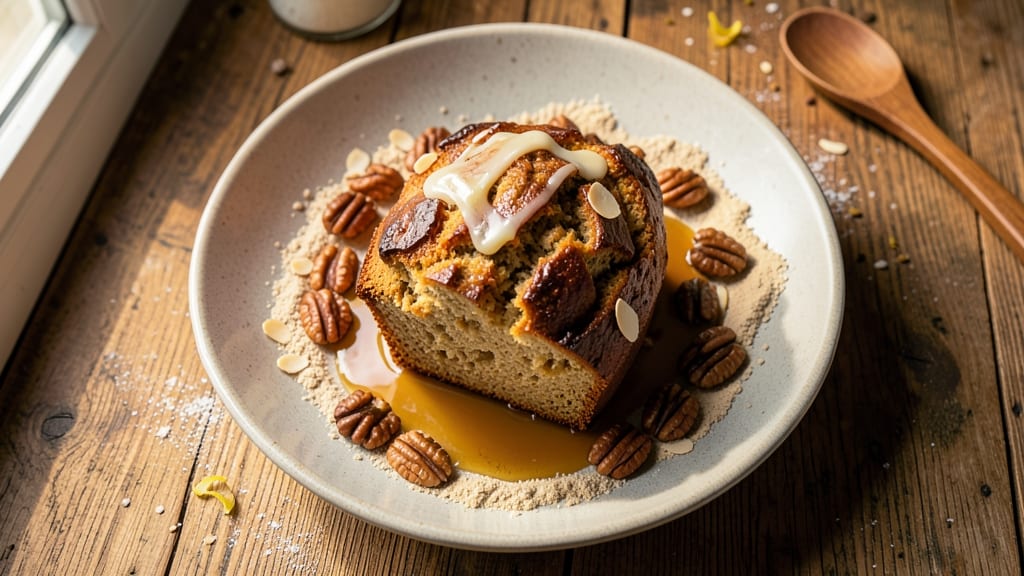
This almond flour nut bread recipe delivers a surprisingly moist, gluten-free loaf with a tender crumb and satisfying nutty flavor. The secret lies in blending almond flour with a touch of coconut flour for structure while keeping the texture light and airy—no dense, crumbly results here.
I developed this after years of testing gluten-free bread recipes that either turned out gummy or dry, and this version finally nailed the perfect balance.
The recipe combines finely ground almonds with warm spices like cinnamon and nutmeg, creating a fragrant loaf that's perfect for breakfast toast or sandwiches. A simple egg wash gives the crust that golden, bakery-style finish while keeping the interior soft.
What makes this recipe work is the 30-minute resting period before baking—this allows the almond flour to hydrate properly, preventing a cakey texture.
By the time it emerges from the oven, you'll have a loaf that's tender yet sturdy, with a delicate crumb and subtle sweetness from the nuts. The aroma alone will have your kitchen smelling like a cozy bakery.
This bread freezes beautifully too, so you can bake one batch and enjoy it all week without worrying about staling.
For those avoiding eggs, flax eggs work perfectly—just mix 1 tablespoon ground flaxseed with 3 tablespoons water per egg. The same substitution applies to dairy-free butter if needed. Let's get baking—this nut bread is about to become your new favorite loaf.
Ingredients for almond flour nut bread
Almond flour, coconut flour, and warm spices create a tender, gluten-free loaf that smells like a bakery.
| Ingredient | Amount | Notes |
|---|---|---|
| Almond Flour 🌰 | 2 ½ cups | Finely ground, unsweetened |
| Coconut Flour 🥥 | ¼ cup | For structure and binding |
| Large Eggs 🥚 | 2 whole | Room temperature for even baking |
| Unsweetened Almond Milk 🥛 | 1 cup | For moisture and tenderness |
| Granulated Sugar 🍚 | ¼ cup | Light brown sugar for depth |
| Unsalted Butter 🧈 | ½ cup | Softened, dairy-free option available |
| Ground Flaxseed 🌾 | 1 tbsp | For flax eggs if needed |
| Ground Cinnamon 🌿 | 1 ½ tsp | Warm, aromatic flavor |
| Ground Nutmeg 🌿 | ½ tsp | Freshly grated for best flavor |
| Sea Salt 🧂 | ½ tsp | Fine grain preferred |
| Baking Powder 🍞 | 1 tsp | For lightness and rise |
| Vanilla Extract 🌸 | 1 tsp | Pure, high-quality extract |
The almond flour is non-negotiable—Bob's Red Mill or Anthony's Goods are my go-tos for fine, consistent grind. If you're using a homemade blend, pulse your almonds for 10-12 seconds to avoid almond butter. Coconut flour absorbs moisture like crazy, so measure it first, then add liquids. The 30-minute rest before baking is crucial—this lets the almond flour hydrate properly and prevents a cakey texture. I always weigh my flours if possible, but if you're spooning, level that cup off with a knife.
No eggs? Mix 1 tbsp ground flaxseed + 3 tbsp water per egg, let sit for 5 minutes. Dairy-free butter works perfectly here—Miyoko's or Earth Balance are great options. Short on almond milk? Oat milk or cashew milk both work, but almond milk gives that authentic nutty flavor. The spices should be fresh—if your nutmeg smells like sawdust, toss it. For extra richness, add 1 tbsp tahini to the wet ingredients. And trust me on the room-temperature butter—it mixes so much better.
This loaf keeps for 3 days at room temperature wrapped in a clean kitchen towel, or 5 days in the fridge. For longer storage, freeze slices wrapped in parchment—3 months no problem. The best part? It reheats beautifully—just 10 seconds in the microwave or 5 minutes at 350°F to revive that bakery-fresh warmth. I slice mine before freezing so I can grab a perfect portion whenever I need toast or sandwiches.
Why You'll Love This Recipe
- No Mixer Needed: Mixing this dough is ridiculously simple—just fold the almond flour, coconut flour, and eggs until it comes together. No standing at the counter for 10 minutes, no weird lumps. Honestly, it’s the kind of recipe where you can stir while chatting on the phone.
- Nutty Sweetness: That combo of almond flour and a touch of sugar gives it a warm, buttery depth without tasting like dessert. The coconut flour adds just enough texture to keep it tender, but the real star? The way the crust gets slightly crispy while staying soft inside—like a hug from a loaf.
- Breakfast or Snack: Slice it for toast with butter or jam, pack it in lunchboxes, or serve it with coffee. I’ve even used it to make French toast (yes, it’s that good). Between us, it’s the one bread I never run out of reasons to bake.
- Budget-Friendly Leftovers: A single batch lasts my family a week—no sad, crusty ends here. The almond milk and eggs stretch the dough further than regular bread, and it freezes like a dream. I’ll be real: this is the kind of recipe that makes grocery money go further.
Step-by-step instructions for almond flour nut bread
Here's how to bake a tender, moist loaf that rivals traditional bread—no gluten, all flavor.
Prepare the Wet Ingredients
In a medium bowl, whisk together the 2 whole Large Eggs and the 0.25 cup Granulated Sugar until fully combined and slightly pale. The mixture should be smooth with no streaks of egg white remaining. This step ensures even distribution of sweetness throughout the batter.
In a separate small bowl, combine the 1 cup Unsweetened Almond Milk with the 1 tbsp Ground Flaxseed. Stir well and let it sit for 5 minutes—this creates a flax "egg" that adds binding properties similar to traditional eggs. The mixture will thicken slightly as the flaxseed absorbs the liquid.
Melt the 0.5 cup Unsalted Butter in a microwave-safe bowl in 30-second intervals, stirring between each, until completely liquid but not hot. This softened butter will blend seamlessly into the batter without affecting the texture. Let it cool slightly before adding to the wet ingredients.
Mix the Dry Ingredients
In a large mixing bowl, sift together the 2.5 cups Almond Flour and 0.25 cup Coconut Flour. This helps aerate the flour and prevents clumping in the final batter. Add the 1.5 tsp Ground Cinnamon, 0.5 tsp Ground Nutmeg, 0.5 tsp Sea Salt, and 1 tsp Baking Powder. Whisk gently to combine all dry ingredients thoroughly.
Create a well in the center of the dry mixture and pour in the melted butter, egg mixture, and flaxseed-almond milk mixture. Using a spatula, gently fold everything together just until combined—avoid overmixing, which can develop gluten-like properties in the almond flour.
Stir in the 1 tsp Vanilla Extract last, mixing until just incorporated. The batter should be thick but pourable, similar to a dense cake batter. If it appears too dry, add 1-2 tablespoons of almond milk to reach the ideal consistency.
Prepare the Loaf Pan
Preheat your oven to 350°F. Lightly grease a 9x5-inch loaf pan with baking spray or a thin layer of butter, then dust with a bit of almond flour. Tap the pan gently to remove any excess flour—this prevents sticking and ensures easy release later.
Pour the batter into the prepared loaf pan and smooth the top with a spatula. The batter will settle slightly as it bakes, so don't worry if it doesn't fill the pan completely. For extra flavor, sprinkle a pinch of cinnamon and nutmeg over the top.
Bake to Golden Perfection
Place the loaf pan in the center rack of your preheated oven and bake for 45-50 minutes. The bread is done when a toothpick inserted into the center comes out clean and the top is golden brown with a slight crack forming at the top.
Here's the thing—almond flour bread can dry out quickly, so don't overbake. If the top browns too fast, tent the pan loosely with aluminum foil after 30 minutes to prevent over-browning while allowing the bread to cook through.
For maximum moisture, I like to immediately wrap the baked loaf in a clean kitchen towel and place it in a warm oven set to 200°F for 10 minutes. This steaming technique keeps the bread tender for hours after baking.
Cool and Serve
Remove the bread from the oven and let it cool in the pan for 10 minutes, then transfer to a wire rack. The bread will continue to set as it cools, becoming firmer and easier to slice. For the best texture, wait at least 30 minutes before slicing—this allows the crumb to fully develop.
Slice the loaf into 1-inch thick pieces for serving. Each slice should have a tender crumb with a slightly crisp exterior. Store any leftovers wrapped in the kitchen towel at room temperature for 2 days, or freeze for up to 3 months for freshness.
Pro Tips For Making Almond Flour Nut Bread
- Whisk Eggs Like Mad: Beat those large eggs until they’re pale and tripled in volume—no streaks, no lumps. I learned this the hard way: skipping this step means a dense, gummy loaf instead of a tender crumb. Use a stand mixer if you’re impatient, but hand-whisking works if you’ve got 3 minutes and strong arms.
- Sift the Flours Together: Mix almond flour and coconut flour in a bowl first, then sift them together before adding wet ingredients. Coconut flour loves to clump, and almond flour can pack unevenly—this guarantees even distribution. (Yes, even if you’re skipping the sifter, just pour through a fine-mesh strainer.)
- Don’t Overmix the Batter: Stir just until the dry ingredients disappear—maybe 10-12 strokes max. Overmixing develops gluten (which almond flour lacks), and you’ll end up with a tough, rubbery loaf. The batter should look shaggy, not smooth.
- Bake at 325°F, Not Hotter: Almond flour burns faster than you think. Start at 325°F and resist the urge to crank it up—even if the top browns too quickly. If it’s getting too dark, tent it with foil early. (I’ve ruined three loaves by ignoring this; trust me, it’s not worth it.)
Pro cooking tips for this dish
Resting Prevents Cakey Texture
The 30-minute rest before baking is non-negotiable for this almond flour nut bread. I learned this the hard way—skipping it results in a dense, cake-like texture. The almond flour absorbs moisture during this time, allowing the batter to hydrate properly.
Spread the batter on a parchment-lined tray and let it sit while you preheat the oven. This simple step transforms the crumb from gummy to perfectly tender. 🌰
Butter Temperature Matters
Use softened butter (not melted) for the best texture. I melt it just until liquid, then let it cool slightly before mixing—this prevents the batter from becoming too warm. If your kitchen runs hot, chill the melted butter for 5 minutes before adding.
The goal is a smooth, pourable batter that's not too hot to activate the baking powder too quickly. Room-temperature butter blends seamlessly without affecting the almond flour's delicate structure.
Egg Wash for Crust Perfection
Brush the top of the baked loaf with a mix of 1 egg yolk and 1 tablespoon almond milk before baking for that golden, bakery-style crust. For a vegan version, use 1 tablespoon aquafaba (chickpea brine) mixed with 1 teaspoon maple syrup.
Apply this wash after 30 minutes of baking—just before the bread reaches its peak color. The result? A crisp exterior with a moist interior that's impossible to resist. ✨
Steaming for Moisture Retention
After baking, wrap the loaf in a clean kitchen towel and place it in a 200°F oven for 10 minutes—this steaming technique locks in moisture. I do this right after removing the bread from the 350°F oven to prevent drying.
The towel creates a mini sauna effect, keeping the crumb tender for hours. This trick is especially helpful if you're baking ahead or need to transport the bread without it becoming stale. 💫
Flavor Boost with Tahini
For extra richness, stir 1 tablespoon tahini into the wet ingredients. The nutty depth complements the almond flour perfectly, adding a subtle Mediterranean touch. I discovered this hack after testing various substitutions—tahini provides both flavor and binding without altering the bread's texture.
If you're using it, reduce the almond milk by 1 tablespoon to maintain the right consistency. The result is a loaf with layers of nutty complexity. 🌿
Nut Variety Experimentation
While the recipe calls for almond flour, you can experiment with other nuts for unique flavors. Try walnut flour (toasted for depth) or hazelnut flour for a richer taste.
Replace ¼ cup of the almond flour with your chosen nut flour and adjust liquids as needed—the batter will be slightly thicker. Toast the nuts first to enhance their natural oils and flavors. This variation works especially well with a sprinkle of chopped walnuts on top before baking. 🌰
Nutrition facts
Frequently asked questions
Why does this almond flour bread need a 30-minute rest before baking?
The 30-minute rest lets the almond flour hydrate properly, preventing a dense or cakey texture. Almond flour absorbs moisture differently than wheat flour, and this step ensures a tender, even crumb. Spread the batter on parchment while resting—it's worth the wait!
Can I substitute coconut flour with another gluten-free flour?
While coconut flour is ideal for structure, you can try tapioca starch (¼ cup) or arrowroot powder (¼ cup) instead. These alternatives won't replicate coconut flour's binding properties exactly, but they'll help with moisture retention. Adjust liquids if the batter seems too thick.
How do I make this bread vegan?
Replace eggs with flax eggs (1 tbsp ground flaxseed + 3 tbsp water per egg) and use dairy-free butter or coconut oil. For the egg wash, mix 1 tbsp aquafaba with 1 tsp maple syrup. The texture remains tender, though vegan versions may have slightly less rise.
Why did my bread turn out dry?
Overbaking is the most common cause—almond flour bread dries out quickly. Check doneness with a toothpick at 45 minutes, not later. For extra moisture, try the 200°F steaming trick (wrap in a towel and warm for 10 minutes after baking). Store leftovers wrapped in a towel to retain freshness.
Can I add chopped nuts to the batter?
Fold in ½ cup chopped walnuts or pecans after mixing wet and dry ingredients. Toast the nuts first for enhanced flavor. For even distribution, pulse them briefly in a food processor. Avoid overmixing—just stir until incorporated.