
Side Dishes
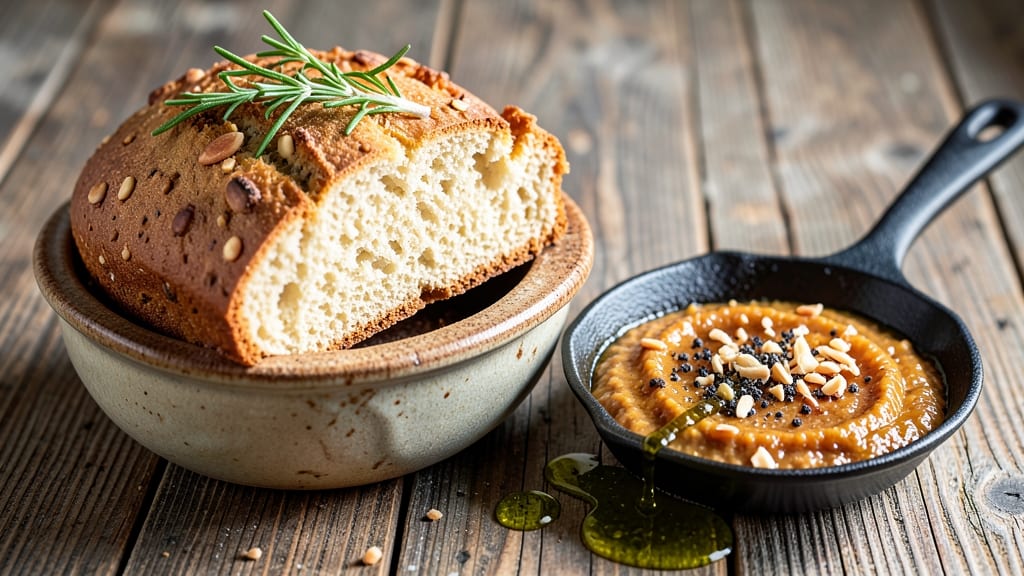
This almond pulp bread recipe transforms humble almond pulp into a nutty-sweet loaf that rivals artisanal bakery bread—with no-knead ease. 🌟 The secret lies in blending almond pulp's natural oils and fibers with simple pantry staples to create a tender crumb and subtle marzipan-like flavor.
I developed this recipe after discovering how to repurpose almond pulp (often discarded after making almond milk) into something extraordinary.
What makes this recipe special is its foolproof no-knead method, perfect for beginners or busy bakers. The dough comes together in minutes, then rests while you handle other tasks, and emerges from the oven with a golden crust and moist interior.
Unlike traditional bread, this version stays fresh for days without drying out, thanks to the almond pulp's natural moisture retention.
The result is a nutty-sweet loaf with a delicate, slightly sweet flavor and a tender crumb that's ideal for toast, sandwiches, or serving alongside soups. The almond pulp adds a subtle marzipan-like richness, while the crust develops a satisfying crunch.
This recipe is a game-changer for reducing food waste and creating something delicious from what would otherwise be discarded.
Whether you're a seasoned baker or just starting out, this almond pulp bread delivers restaurant-quality results with minimal effort. The technique is simple, but the flavor is anything but ordinary. Let's get started on creating your own nutty-sweet loaf that's sure to impress.
Ingredients for almond pulp bread
Transform discarded almond pulp into a restaurant-worthy loaf with these carefully balanced ingredients.
| Ingredient | Amount | Notes |
|---|---|---|
| Almond Pulp 🌰 | 1 ½ cups | Fresh from almond milk making, packed |
| All-Purpose Flour 🌾 | 3 cups | Unbleached, for tender crumb |
| Granulated Sugar 🍚 | ¼ cup | Light brown preferred for depth |
| Active Dry Yeast 🍞 | 1 tbsp | Or 2.25g packet, fresh |
| Warm Water 💧 | 1 cup | 110°F (43°C) for activation |
| Extra-Virgin Olive Oil 🫒 | ¼ cup | Light flavor, not strong |
| Unsweetened Almond Milk 🥛 | ½ cup | For moisture retention |
| Ground Flaxseed 🌾 | 1 tbsp | Mixed with 3 tbsp water for egg |
| Salt 🧂 | 1 tsp | Diamond Crystal preferred |
| Cinnamon 🌿 | ½ tsp | For subtle warmth |
| Vanilla Extract 🍯 | 1 tsp | Pure vanilla preferred |
| Cornmeal 🌽 | ¼ cup | For dusting loaf pan |
The almond pulp is the star here—freshly strained from homemade almond milk yields the best texture. Local health food stores often sell it for next to nothing, or make your own by blending almonds with water and straining through a nut milk bag. For flour, King Arthur unbleached is my go-to for its consistent rise. The yeast should be fresh; if it's over a month old, test it first by dissolving in warm water with a pinch of sugar—it should foam within 5-10 minutes. Olive oil matters too: Colavita or Bertolli light varieties keep the flavor neutral while adding richness. Pre-measure everything before starting to streamline the no-knead process.
No almond pulp? Substitute with 1 cup finely ground almond flour, though texture will differ slightly. Running low on flaxseed? Chia seeds work at the same ratio, but let them sit longer before using. The vanilla extract can be swapped for 1/2 tsp vanilla powder if you're out, though fresh is ideal. For a deeper marzipan flavor, add 1/4 tsp almond extract alongside the vanilla. The cinnamon is optional but enhances the nutty sweetness—Penzeys ground cinnamon has the best flavor. If your almond milk is sweetened, reduce the sugar by 1/4 cup to balance flavors. And remember: the dough will be sticky, so don't overwork it when combining.
This dough requires at least 2 hours of rest at room temperature for optimal texture. Store any unused almond pulp in an airtight container in the fridge for up to 5 days or freeze for 3 months. The finished loaf keeps well wrapped at room temperature for 3 days, or in the fridge for 5-7 days. For longer storage, slice and freeze portions—reheat directly from frozen in a toaster or oven. The crust develops best when baked in a preheated Dutch oven for 30 minutes before transferring to the oven. Leftovers make excellent toast or French toast; the almond pulp adds a delightful richness to both.
Why You'll Love This Recipe
- No-Fuss Mixing: I swear by the yeast-and-water trick here—just toss in the almond pulp, flour, and sugar, let it rise once, and boom. No kneading, no fuss, no stress. My hands stay clean while the dough does all the work.
- Nutty Sweet Crunch: That almond pulp? It’s like a secret flavor bomb—warm, toasty, and just sweet enough to make every bite feel special. Honestly, my kids fight over the last slice, and I don’t even bake it fancy.
- Weeknight Wonder: Toss a loaf in the oven while dinner simmers, and you’ve got a side that’s ready in 30 minutes flat. Slice it for toast, crumble it over yogurt, or just eat it straight—it’s my go-to when I’m too tired to plan.
- Budget-Friendly Staple: Almond pulp is the unsung hero—cheap, shelf-stable, and packed with flavor. A single bag stretches into multiple loaves, and the sugar keeps it from tasting like sawdust. My wallet (and my pantry) thank me every time.
Step-by-step instructions for almond pulp bread
Master this no-knead technique for a tender, nutty-sweet loaf with perfect texture every time.
👨🍳 Step 1: Create the Flaxseed Egg and Activate the Yeast
In a small bowl, whisk together the 1 tablespoon ground flaxseed with 3 tablespoons warm water (not hot). Let this mixture sit for 5 minutes until it thickens into a gel-like consistency—this will replace eggs in our bread. Meanwhile, in a separate bowl, combine the 1 cup warm water (about 110°F) with the 1 tablespoon active dry yeast. Let this sit for 5-10 minutes until frothy. You'll see small bubbles forming and the mixture expanding—this confirms your yeast is active and ready to work.
The flaxseed egg provides moisture and binding properties similar to traditional eggs, while the activated yeast creates the air pockets that give bread its light texture. If your yeast doesn't foam, it's dead—start over with fresh yeast. I always test yeast activity first to avoid flat, dense bread.
🍳 Step 2: Mix Wet Ingredients and Combine with Dry Components
In a large mixing bowl, combine the 1.5 cups almond pulp, 0.25 cup granulated sugar, 0.25 cup extra-virgin olive oil, 0.5 cup unsweetened almond milk, the flaxseed egg mixture, and the activated yeast mixture. Use a wooden spoon or silicone spatula to mix until just combined—you don't want to develop too much gluten at this stage. The almond pulp adds natural sweetness and moisture while keeping the bread tender.
In a separate bowl, whisk together the 3 cups all-purpose flour, 1 teaspoon salt, 0.5 teaspoon cinnamon, and 1 teaspoon vanilla extract. Gradually add the dry ingredients to the wet mixture, stirring gently until just combined. The dough will be sticky but should come together—this is normal for no-knead bread. I like to use a dough scraper here to get every last bit from the bowl. Stop mixing as soon as the flour is incorporated; overmixing develops gluten and makes the bread tough.
⏰ Step 3: Let the Dough Rest and Rise
Lightly grease a 9x5-inch loaf pan with olive oil and dust it generously with 0.25 cup cornmeal, tapping out any excess. Transfer the dough to the prepared pan and smooth the top with a wet spatula. Cover the pan tightly with plastic wrap and let the dough rise at room temperature for 1-2 hours, or until it has nearly doubled in volume and feels springy when gently pressed. You'll see the dough puff up noticeably and the edges pull away slightly from the pan.
This resting period allows the yeast to ferment properly and develop flavor. I usually place the pan in a warm spot—like near a turned-off oven with the light on—to encourage even rising. Don't skip this step; it's crucial for developing that perfect crumb structure. If your kitchen is cold, extend the rising time to 2-3 hours. The dough should feel firm but still slightly soft when pressed with a finger.
🔥 Step 4: Bake Until Golden and Hollow-Sounding
Preheat your oven to 350°F. Bake the covered loaf for 30 minutes, then remove the cover and bake for another 20-25 minutes until the top is golden brown and the internal temperature reaches 190-200°F when measured with an instant-read thermometer. Tap the top of the loaf—it should sound hollow when done. The edges should pull away cleanly from the pan, and the bread should have a beautiful caramelized crust with subtle cracks.
Here's the thing—almond pulp bread can dry out if overbaked. Start checking at the 20-minute uncovered mark and remove it when the edges are golden but the center still looks slightly underdone. The bread will continue cooking as it cools. For extra moisture, you can tent the bread loosely with foil during the last 10 minutes of baking if your kitchen tends to be dry.
⏰ Step 5: Cool and Slice for Maximum Freshness
Transfer the loaf to a wire rack and let it cool completely for at least 1 hour before slicing. I know it's tempting to cut into warm bread, but allowing it to cool prevents a gummy texture. The bread will firm up as it cools, making it easier to slice cleanly. The aroma alone will make your mouth water—warm almond pulp bread has a rich, nutty fragrance that's hard to resist.
Once cooled, slice the bread into ½-inch thick pieces. Each slice should have a tender crumb with subtle pockets of air from the yeast activity, and a slightly crisp crust that gives way to a moist interior. Store any leftovers in an airtight container at room temperature for 2-3 days or freeze for up to 3 months. This bread also makes excellent toast—just brush with melted butter and sprinkle with cinnamon sugar for a delicious treat.
Pro Tips For Making Almond Pulp Bread
- Bloom the Yeast First: Skip mixing dry yeast into flour—it’s a waste of time and often fails. Instead, dissolve it in warm water with a pinch of sugar first, then wait 5–10 minutes until it’s bubbly and frothy. If it smells like vinegar or stays flat, toss it and start over—this isn’t the step to cut corners.
- Grind Almond Pulp Fine: Lumpy almond pulp makes for a dense, uneven bread. Pulse it in a food processor until it’s almost flour-like, but not quite—tiny specks of texture add flavor. If you’re short on time, sift it after grinding to break up any stubborn clumps.
- Don’t Overmix the Dough: Once you add the flour, stop mixing the second the dough pulls away from the bowl. Overworking it develops gluten, and this bread isn’t supposed to be chewy. A sticky, shaggy dough is normal—it’ll come together during the first rise.
- Proof Until Doubled: This bread rises slower than regular yeast breads. Give it 1.5–2 hours at room temp, or until it’s just touching the sides of the bowl. Poking it leaves a slow, lazy dent? It’s not ready yet. Patience here means a lighter loaf.
Regional styles of this recipe
Italian Marzipan Twist
In Italy, almond pulp bread often gets a marzipan-inspired upgrade by adding ½ cup finely chopped candied almonds or 2 tablespoons almond paste directly to the dough. This creates a subtle sweetness that complements the nutty base.
I like to fold in 1 teaspoon almond extract alongside the vanilla for an extra aromatic boost. For presentation, dust the baked loaf with powdered sugar mixed with ground cinnamon—this mimics traditional Italian panettone flavors. 🌿
Mediterranean Olive Oil Variation
In Mediterranean regions, especially Greece and Turkey, this bread often incorporates 1 tablespoon dried orange peel (finely chopped) and 1 teaspoon cardamom into the dough. The orange peel adds a bright citrus note that balances the almond's richness, while cardamom brings warm floral complexity.
Use extra-virgin olive oil with a robust flavor, like Kalamata, and reduce the vanilla to ½ teaspoon to let the orange peel shine. The result is a fragrant loaf perfect for breakfast with Greek yogurt and honey.
American South Sweet Potato Fusion
In the American South, bakers often blend ½ cup mashed sweet potato into the almond pulp mixture for added moisture and natural sweetness. This variation pairs beautifully with 1 teaspoon pumpkin pie spice and a touch of molasses (about 1 tablespoon) in place of sugar.
The sweet potato gives the bread a moist, slightly dense crumb that's ideal for serving with chili or BBQ. For extra richness, brush the baked loaf with molasses glaze while still warm. 🍠
Scandinavian Cardamom Crust
Nordic bakers often create a cardamom-infused crust by mixing 1 teaspoon ground cardamom with 2 tablespoons melted butter and brushing it over the dough before baking. The crust develops a fragrant, slightly spiced exterior that contrasts with the tender interior.
For extra texture, sprinkle ½ cup crushed pistachios on top before baking. This version pairs perfectly with Scandinavian-inspired breakfast spreads like lingonberry jam and vegan cream cheese. The cardamom adds a unique warmth that elevates the almond's natural sweetness.
Middle Eastern Za'atar Twist
In Middle Eastern cuisine, this bread transforms into a savory-sweet loaf by adding 1 tablespoon za'atar seasoning to the dough and topping it with a mix of 2 tablespoons melted butter and 1 tablespoon sesame seeds before baking. The za'atar brings earthy, herby notes that balance the almond's sweetness.
For extra depth, fold in ½ cup finely chopped dried apricots into the dough. Serve this version warm with hummus or olive tapenade for a flavorful, nutritious meal. The combination of almond pulp and za'atar creates a unique, aromatic profile that's both comforting and sophisticated. 🌿
Nutrition facts
Frequently asked questions
What exactly is almond pulp and where can I get it?
Almond pulp is the fibrous residue left after making almond milk. You can find it at health food stores (often sold for $2-$5 per pound) or make your own by blending almonds with water and straining through a nut milk bag. The fresh pulp yields the best texture—pack it tightly when measuring.
Can I substitute almond pulp with almond flour?
Yes, but the texture will differ slightly. Use 1 cup finely ground almond flour instead of almond pulp, but reduce the almond milk by ¼ cup since almond flour is less moist. The bread will be denser but still delicious—great for toast or French toast.
Why did my bread turn out dense instead of light?
Dense bread usually means the yeast didn't activate properly or the dough didn't rise enough. Always test yeast by dissolving in warm water with sugar—it should foam within 5-10 minutes. Also ensure your kitchen is at least 70°F for rising, and don't skip the 1-2 hour rest time before baking.
How can I make this bread sweeter without adding more sugar?
Boost natural sweetness by adding ½ cup mashed sweet potato or ¼ cup unsweetened applesauce to the dough. For depth, fold in 1 teaspoon vanilla bean paste or ½ teaspoon cinnamon. The almond pulp itself has a subtle sweetness that develops more as it bakes.
Can I freeze this bread for later?
Slice the cooled loaf and freeze portions in airtight bags for up to 3 months. To reheat, toast directly from frozen or warm in a 300°F oven for 5-10 minutes until crispy. The texture remains tender when properly stored.