
Side Dishes
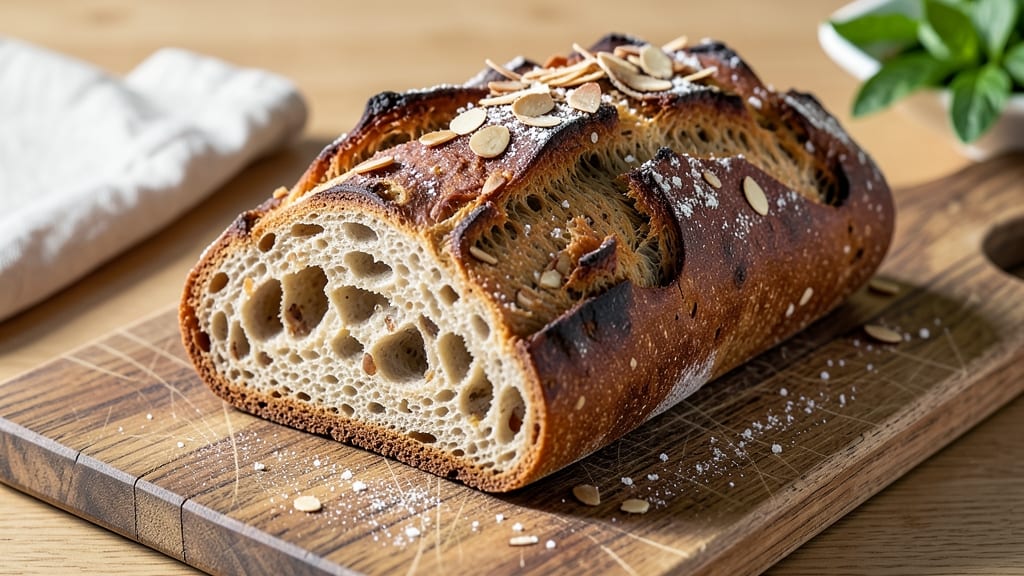
This almond sourdough bread recipe delivers a perfect balance of nutty richness and artisanal texture—crisp golden crust with a tender, airy crumb. The secret lies in incorporating almond flour into the dough, which adds depth while maintaining that signature sourdough tang.
I developed this recipe after years of experimenting with sourdough variations, and it’s become a staple in my baking rotation for its versatility and impressive results.
The process begins with a robust sourdough starter, which provides the signature tang and structure. Almond flour is folded into the dough during the final knead, ensuring even distribution for that nutty flavor in every bite.
Baking at high heat creates the coveted crisp crust, while proper proofing guarantees a light, pillowy interior. This recipe is ideal for those who love the complexity of sourdough but want a subtle nutty twist.
What makes this recipe stand out is its ability to deliver restaurant-quality bread at home—no special equipment required. The almonds enhance the flavor without overpowering the sourdough’s natural profile, making it perfect for toast, sandwiches, or serving alongside soups.
The dough is forgiving, and the instructions are designed to guide you through each step with confidence.
Once baked, this loaf stays fresh for days when stored properly, and you can even reheat slices for that just-out-of-the-oven experience. Whether you're a seasoned baker or a beginner, this recipe will elevate your bread-making game. Let’s get started on creating your perfect almond sourdough loaf.
Ingredients for almond sourdough bread
Fourteen ingredients transform into restaurant-worthy almond sourdough with that coveted nutty crust and airy crumb.
| Ingredient | Amount | Notes |
|---|---|---|
| Active Sourdough Starter 🍞 | ½ cup | 100% hydration, bubbly and active |
| All-Purpose Flour 🌾 | 3 ½ cups | King Arthur or similar |
| Almond Flour 🥜 | ½ cup | Blanched, finely ground |
| Whole Wheat Flour 🌾 | ½ cup | For added texture and nutrition |
| Granulated Sugar 🍚 | ¼ cup | White or organic cane sugar |
| Salt 🧂 | 1 ½ tsp | Diamond Crystal kosher salt |
| Instant Yeast 🍄 | ½ tsp | Bread machine yeast works too |
| Whole Milk 🥛 | ½ cup | Warmed to room temperature |
| Olive Oil 🫒 | 2 tbsp | Extra-virgin for richness |
| Water 💧 | ½ cup | Room temperature preferred |
| Cornmeal 🌽 | ¼ cup | For dusting baking sheet |
| Coarse Sea Salt 🧂 | 1 tbsp | For sprinkling on crust |
| Raw Almonds 🥜 | ¼ cup | Sliced, for topping (optional) |
The almond flour is the star here, so Bob’s Red Mill or Anthony’s Goods are my go-tos for quality. Look for finely ground, blanched almond flour—it blends seamlessly into the dough without grit. Your sourdough starter needs to be active and bubbly; if it’s sluggish, feed it an extra hour before using. King Arthur flour is my preferred all-purpose flour for its high protein content, but any bread flour works. The whole wheat flour adds subtle depth, but don’t overdo it—too much can make the dough dense. For the almond topping, raw, unblanched almonds add a delightful crunch that roasted almonds can’t match.
No almond flour? Substitute with extra all-purpose flour, but the flavor will be noticeably different. Running short on whole wheat? White whole wheat flour works just as well. The milk can be swapped for unsweetened almond milk or oat milk, though the dough may be slightly less tender. Olive oil is non-negotiable here—it contributes to that signature crisp crust. If you’re in a pinch, avocado oil works in a bind, but olive oil’s fruity notes elevate the flavor. For the yeast, active dry yeast can be used, but it needs to be dissolved in warm water first. The sugar can be swapped for maple syrup or honey, though granulated sugar promotes better browning.
This dough is best made the night before—it develops more flavor during overnight cold fermentation. Store shaped loaves in the fridge overnight, covered, for 12-16 hours before baking. Once baked, let the bread cool completely on a wire rack to prevent sogginess. For maximum freshness, wrap cooled loaves in beeswax wrap or a cotton towel and store at room temperature for up to 3 days. To revive stale slices, pop them in a 350°F oven for 5-10 minutes—they’ll taste like they just came out of the oven. The crust stays crisp for 24 hours if kept in an airtight container.
Why You'll Love This Recipe
- No-Knead Magic: I swear by this—just mix, wait, and bake. The almond flour keeps it tender without the fuss of kneading, and your starter does all the heavy lifting while you sip coffee.
- Nutty Crunch Delight: That almond flour adds a subtle richness you won’t find in plain sourdough. Honestly, the first slice with butter? Chef’s kiss. The whole wheat gives it just enough heartiness to stand up to jam or cheese.
- Weeknight & Weekend Star: I make a batch on Sundays, and it lasts me all week—perfect for toast, sandwiches, or even charcuterie boards. The sugar caramelizes beautifully, so it’s great for breakfast and dessert (yes, even on a Tuesday night).
- Budget-Friendly Luxury: Almond flour might sound fancy, but a little goes a long way, and the whole wheat stretches the dough further. Plus, your starter keeps making more bread—zero waste, all flavor. My wallet and taste buds thank me.
Step-by-step instructions for almond sourdough bread
Here's how to craft that perfect loaf with a crunchy almond crust and tender interior.
👨🍳 Step 1: Combine Wet Ingredients and Activate the Starter
In a large mixing bowl, whisk together the 0.5 cup whole milk and 0.5 cup water until completely combined. Add the 0.5 cup active sourdough starter, 2 tablespoons olive oil, 0.25 cup granulated sugar, 0.5 teaspoon instant yeast, and 1.5 teaspoons salt. Mix vigorously for 2-3 minutes until the sugar and salt fully dissolve and the mixture becomes slightly frothy.
Here's the thing—this mixture should look like a thick, glossy batter. The almond flour we'll add later will give it that signature nutty richness, but first, we need to activate the starter properly. The warm milk and sugar help jumpstart the yeast activity, which is crucial for that perfect rise later. Let this mixture sit at room temperature for 10 minutes while you prepare the dry ingredients.
👨🍳 Step 2: Incorporate Dry Ingredients for Ideal Texture
In a separate bowl, whisk together the 3.5 cups all-purpose flour, 0.5 cup almond flour, and 0.5 cup whole wheat flour. This combination gives us the perfect balance of structure and tenderness. Gradually add the dry flour mixture to the wet ingredients while mixing on low speed with a dough hook attachment (or using a wooden spoon if mixing by hand).
I like to mix just until the ingredients come together—don't overwork the dough at this stage. You're aiming for a shaggy, slightly sticky dough that pulls away from the sides of the bowl. The almond flour adds fat content that helps create that beautiful crust, while the whole wheat flour contributes a subtle nutty depth. If the dough feels too dry, add 1 tablespoon water at a time until it reaches the right consistency.
🍳 Step 3: Knead Until Elastic and Smooth
Transfer the dough to a lightly floured surface and knead for 8-10 minutes by hand, or use a stand mixer with the dough hook attachment for 5-6 minutes on medium speed. You're looking for a smooth, elastic dough that springs back when poked. The almond flour makes this dough behave differently than traditional bread dough—it's more tender and slightly less elastic.
Here's where it gets fun—the dough should be soft but not sticky. If it's too sticky, add 1 tablespoon all-purpose flour at a time until it's just right. The almond flour absorbs moisture differently, so don't be surprised if you need slightly more flour than usual. Once you've achieved the perfect consistency, place the dough in a lightly oiled bowl, cover with a damp towel, and let it rise at room temperature for 1-2 hours, or until it has roughly doubled in size.
🔥 Step 4: Shape, Proof, and Prepare for Baking
After the initial rise, gently deflate the dough and shape it into a loaf. For a classic look, create a well on one side by pressing your fingers into the dough to create a pocket for the almonds. Sprinkle the 0.25 cup raw almonds evenly over the top and around the sides. Place the shaped loaf on a parchment-lined baking sheet that's been dusted with 0.25 cup cornmeal to prevent sticking.
Let the loaf proof for another 30-45 minutes until it's noticeably puffier. This final rise is crucial for that airy crumb we're after. While it proofs, preheat your oven to 375°F. Real talk: the almonds will give your bread that gorgeous crunchy crust, but they also make the dough slightly denser, so we want to make sure it gets plenty of time to rise before baking.
🔥 Step 5: Bake to Golden Perfection
Bake the almond sourdough bread for 30-35 minutes until the crust is deep golden brown and the internal temperature reaches 190°F. For that extra-crispy crust, sprinkle 1 tablespoon coarse sea salt over the top in the last 5 minutes of baking. The salt enhances all the flavors and gives that professional bakery look.
You'll know it's done when the bread sounds hollow when tapped on the bottom. Let it cool on a wire rack for at least 1 hour before slicing—this prevents a gummy interior. The contrast between the crispy almond crust and the tender crumb inside is what makes this bread truly special. Once cooled, slice and enjoy with your favorite butter or jam—you've just made a loaf that tastes like it came from a Parisian boulangerie!
Pro Tips For Making Almond Sourdough Bread
- Sift the Almond Flour: I learned this the hard way—almond flour loves to clump like a stubborn toddler. Whisk it first, then sift it through a fine-mesh sieve directly into your mixing bowl. This keeps your dough light and prevents those annoying dense pockets where the almond flour just sits like a rock.
- Hydrate the Starter Right: Your sourdough starter should be at its peak—bubbly, jiggly, and just past its prime (about 4-6 hours after feeding). If it’s sluggish, feed it 1:1:1 (starter:water:flour) and wait another 2 hours. No one wants a bread that tastes like it’s still asleep.
- Skip the Over-Kneading: Almond flour is delicate, and this dough doesn’t need a workout. Mix just until the flour is mostly incorporated—about 2-3 minutes by hand or until no dry bits remain. Overwork it, and you’ll end up with a dense, gummy loaf. Let the gluten relax; this isn’t a baguette.
- Proof at Room Temp: Whole wheat and almond flour slow fermentation, so resist the urge to toss this dough in a warm oven. Leave it on your counter (70-75°F) for 6-8 hours, covered loosely with a towel. The slower rise lets the flavors meld—rushing it makes the bread taste like it’s still fighting for its life.
Best sauces and condiments for almond sourdough bread
Honey-Almond Glaze
This simple glaze elevates your almond sourdough to bakery-quality perfection. Warm ¼ cup honey with 1 tablespoon melted butter in a small saucepan over low heat. Add 1 teaspoon lemon juice and whisk until smooth.
Brush generously over the baked loaf while still warm—it’ll caramelize beautifully and add a sweet contrast to the nutty flavors. 🍯
Garlic-Herb Butter
For a savory twist, mix ½ cup softened butter with 2 minced garlic cloves, 1 tablespoon chopped fresh rosemary, 1 teaspoon chopped thyme, and a pinch of salt. Spread this rich compound butter on warm slices—it pairs perfectly with the almond’s natural sweetness.
I like to let it sit at room temperature for 30 minutes before serving to soften the butter just enough for easy spreading.
Spiced Whipped Cream
Whip 1 cup heavy cream with 2 tablespoons powdered sugar and ½ teaspoon cinnamon until soft peaks form. Add ½ teaspoon vanilla extract and a pinch of cardamom for warmth. This creamy topping adds a luxurious finish to toasted slices—especially when drizzled with a little extra honey.
Store in an airtight container in the fridge for up to 3 days.
Olive Oil & Sea Salt
Keep it simple with a drizzle of extra-virgin olive oil and a sprinkle of flaky sea salt. This Mediterranean-inspired combo enhances the almond’s natural richness without overpowering it.
I recommend using Colavita olive oil for its fruity notes—it’s my go-to for bread dipping. Serve immediately after slicing for the best texture.
Chocolate-Dipped Slices
For a decadent treat, melt ½ cup dark chocolate (70% cocoa) with 1 tablespoon coconut oil in a double boiler. Dip the ends of toasted bread slices into the chocolate, then place on parchment paper to set.
The contrast of bitter chocolate and sweet almond is pure magic. Store in an airtight container at room temperature for up to 2 days.
Herbed Yogurt Dip
Mix ½ cup Greek yogurt with 1 tablespoon chopped dill, 1 tablespoon chopped chives, ½ teaspoon garlic powder, and a pinch of black pepper. This tangy dip cuts through the richness of the almond sourdough beautifully.
Serve with warm slices for a refreshing contrast. It keeps well in the fridge for 3 days in an airtight container.
Nutrition facts
Frequently asked questions
Can I make this almond sourdough bread without almond flour?
Yes, but the flavor and texture will change. For a similar nutty taste, substitute with ½ cup finely ground toasted almonds (blended into a powder) or ¼ cup almond butter mixed into the wet ingredients. If you want to skip nuts entirely, replace the almond flour with ½ cup extra all-purpose flour—just know the bread will lose its signature nutty depth.
How do I know when my sourdough starter is ready for this recipe?
Your starter should be bubbly, have doubled in size within 4-6 hours after feeding, and smell tangy but pleasant (like yogurt or fresh bread). If it’s sluggish, feed it 1:1:1 (flour:water:starter) and wait another 2-4 hours before using. Pro tip: Test it by dropping a spoonful in water—if it floats, it’s ready!
Why did my almond sourdough turn out dense instead of airy?
Dense bread usually means one of three things: underproofed dough, over-kneading, or too much almond flour. First, ensure your dough doubled in size during both rises. Second, knead just until smooth—almond flour makes dough less elastic, so avoid overworking it. Finally, reduce almond flour to ¼ cup if you suspect it’s too dense.
Can I make this bread in a Dutch oven for a better crust?
Preheat your Dutch oven with the lid on for 30 minutes at 450°F. Transfer the shaped loaf (with almonds) into the hot pot, cover, and bake for 20 minutes. Then remove the lid and bake 15-20 minutes more until golden. The steam creates a crispier crust and chewier interior—perfect for almond sourdough!
How long does this bread stay fresh, and how do I reheat slices?
Wrap cooled loaves in beeswax wrap or a cotton towel and store at room temp for 3 days. For reheating, toast slices in a 350°F oven for 5-7 minutes or warm in a dry skillet over medium-low heat for 1-2 minutes** per side. The crust will crisp up beautifully, and the crumb stays soft.