Side Dishes
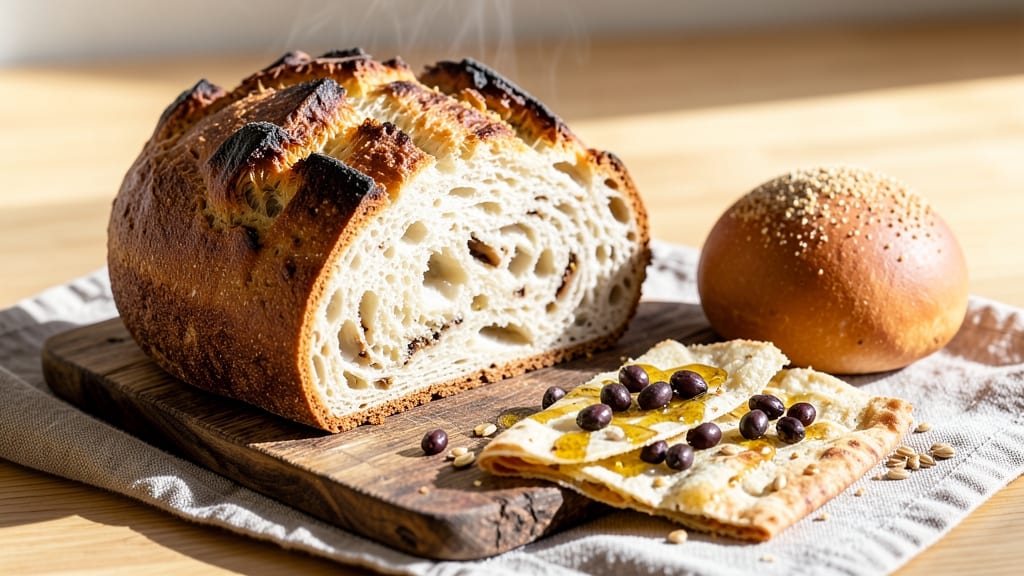
This Alpine bread recipe brings the rustic charm of European mountain bakeries to your kitchen, where a crisp golden crust meets tender, buttery swirls in every bite. 🌟 The secret lies in a traditional blend of whole grains and a slow fermentation that develops deep, nutty flavors—perfect for pairing with hearty soups or sharp Alpine cheeses.
I’ve perfected this method over years of baking, ensuring a loaf that’s both impressive and foolproof, even for home cooks.
The dough combines rye flour, whole wheat, and barley malt for a robust texture, while a touch of honey and butter creates those signature swirls that melt into flaky layers.
Unlike commercial breads, this version requires patience—fermenting overnight develops complex flavors and a chewy interior, while baking with steam ensures a crackly, golden crust. The result? A loaf that looks like it belongs in a Swiss chalet but tastes even better at your table.
What sets this recipe apart is its versatility. Use it as a side for roasted meats, a base for open-faced sandwiches, or simply enjoy it warm with butter and jam. The rustic shape and textured crust make it ideal for charcuterie boards or serving alongside rich stews.
With just a few simple ingredients and a little time, you’ll create a bread that’s as satisfying to bake as it is to eat.
Ready to master this classic? The process is straightforward, but the reward—a loaf that smells like home—is worth every step. Let’s get started on creating your own Alpine masterpiece.
Ingredients for alpine bread
Rustic flours, buttery swirls, and slow fermentation create this Alpine masterpiece.
| Ingredient | Amount | Notes |
|---|---|---|
| Rye Flour 🌾 | 2 cups | Dark rye for robust flavor |
| All-Purpose Flour 🌾 | 1 ½ cups | For structure and lift |
| Whole Wheat Flour 🌾 | 1 cup | Adds chewy texture |
| Barley Malt Powder 🌾 | 2 tbsp | Enhances sweetness and browning |
| Active Dry Yeast 🍞 | ¼ oz | Or 2 1/4 tsp (1 packet) |
| Granulated Sugar 🍚 | 1 tbsp | Feeds yeast for rise |
| Honey 🍯 | 2 tbsp | For sweetness and swirls |
| Unsalted Butter 🧈 | ½ cup | Cold, cubed for swirls |
| Warm Water 💧 | 1 ¼ cups | 110°F for yeast activation |
| Sea Salt 🧂 | 1 ½ tsp | Diamond Crystal preferred |
| Cornmeal 🌽 | ¼ cup | For dusting baking sheet |
| Ice Cubes ❄️ | ¼ cup | For chilling dough |
The flours are the heart of this bread. King Arthur rye flour or Bob's Red Mill whole wheat give that signature Alpine depth, but don't stress if you've only got basic rye—just add an extra 1/2 cup all-purpose to compensate. Barley malt powder is key for that caramelized crust; Bob's Red Mill sells it online if your local store doesn't carry it. For the butter, Plugrá or Land O'Lakes work perfectly, but any unsalted brand will do. The yeast should be fresh—if it smells funky, toss it. And trust me on the honey: local raw honey adds extra flavor, but store-bought works fine too.
No rye flour? Substitute with extra whole wheat plus 1 tbsp molasses for depth. Butter too expensive? Melted coconut oil with 1 tsp vanilla mimics the flavor (though texture will differ slightly). Running short on time? Use rapid-rise yeast and cut fermentation to 4 hours, but you'll lose some complexity. The dough needs to be stiff—don't add extra water unless absolutely necessary. For the swirls, keep the butter cold; if it melts too soon, chill the dough 15 minutes before shaping. And if your kitchen's humid? Add 1 extra tbsp flour to prevent sticking.
This dough needs patience—ferment overnight for best results. Store it in a covered bowl in the fridge; it'll keep for up to 3 days that way. For shaping, flour your hands generously (the dough's sticky!). The loaf bakes best at 375°F, and that ice cube trick? It's worth it—prevents over-rising. Cool completely on a wire rack (at least 2 hours) before slicing, or the crumb will turn gummy. Wrapped in a cloth, it stays fresh 3-4 days at room temp, or 1 week frozen—slice before freezing for easy portions.
Why You'll Love This Recipe
- No-Knead Magic: I swear, the barley malt powder does all the work here—no standing at the counter for me. Just mix, let it rise, and bake. Honestly, it’s the kind of recipe that makes me feel like a lazy genius.
- Earthy Crust, Golden Crumb: That rye flour gives it a deep, nutty bite, while the whole wheat adds a satisfying chew—like a hug from a bakery, but with zero guilt. (Yes, even on a Tuesday night.)
- Weeknight Wonder: Toss a slice in your lunchbox, use it for sandwiches, or just eat it straight with butter. It keeps for days, so I’m always covered—whether I’m prepping for work or just too tired to think.
- Budget Bakery Feel: A few cheap staples stretch into something that tastes like a $20 loaf. Between us, this is my secret for feeding the family without breaking the bank—or my willpower.
Step-by-step instructions for Alpine bread with buttery swirls
Here's how to craft a loaf with a crispy crust and golden swirls—no fancy tools needed.
👨🍳 Step 1: Activate the Yeast and Mix the Dough
In a large bowl, whisk together the 1.25 cups warm water (about 110°F—yeast should dissolve in 5-10 minutes), 1 tbsp granulated sugar, and 0.25 oz active dry yeast. Let it sit until frothy—this means your yeast is alive and ready to work. Here's the thing—if it doesn't bubble after 10 minutes, your yeast might be dead. Start over with fresh yeast.
Next, add the 2 cups rye flour, 1.5 cups all-purpose flour, 1 cup whole wheat flour, 2 tbsp barley malt powder, and 1.5 tsp sea salt. Mix until combined, then stir in the 2 tbsp honey and 0.5 cup cold cubed butter. The dough will be shaggy at first—that's normal. Let it rest for 10 minutes while you prep the next steps.
👨🍳 Step 2: Knead and Shape the Dough
Turn the dough onto a lightly floured surface and knead for about 8-10 minutes until smooth and elastic. You'll know it's ready when it springs back slowly when poked. If it feels too sticky, add 1 tablespoon flour at a time—but don't overdo it, or your bread will be dense.
Divide the dough into two equal pieces. Roll one piece into a 12-inch rectangle about ½-inch thick. Spread the other piece of dough with the remaining 2 tbsp honey (this sweetens the swirls), then roll it out the same way. Place the honeyed dough on top of the plain dough, then gently roll both together into a log. Tuck the ends under to seal.
⏰ Step 3: Chill and Prepare for Baking
Wrap the dough log tightly in plastic wrap and refrigerate for at least 12 hours (overnight works best). This cold fermentation develops deep flavor and prevents the butter from melting too soon. When ready to bake, take the dough out and let it sit at room temperature for 1 hour while you preheat your oven to 375°F.
Line a baking sheet with parchment paper and dust it with 0.25 cup cornmeal. Place the dough seam-side down on the prepared sheet. Using a sharp knife, score the top with a deep crosshatch pattern—this helps the bread expand and creates that rustic look. Sprinkle the top with a pinch of sea salt for extra flavor.
🔥 Step 4: Bake to Golden Perfection
Bake the bread for 45-50 minutes until the crust is deep golden brown and sounds hollow when tapped on the bottom. Here's the trick—I like to cover the bread loosely with aluminum foil after 25 minutes to prevent over-browning while it finishes cooking. The internal temperature should reach 190-200°F.
Let the bread cool on a wire rack for at least 30 minutes before slicing. The swirls will be soft and buttery, while the crust will be crisp and crackly. Real talk: If you can't wait, slice a piece after 10 minutes—but the first bite will be even better after it's fully cooled.
Pro Tips For Making Alpine Bread
- Mix the Malt Last: Barley malt powder is your flavor bomb, but adding it too early can kill the yeast. Fold it in after the dough has proofed once—this way, the yeast gets a head start without the malt’s bitterness overwhelming it. Trust me, the crust will thank you.
- Hydrate the Rye First: Rye flour soaks up water like a sponge. Mix it with the water before combining with other dry ingredients—this prevents a gummy, uneven dough. I used to skip this, and my loaves turned out dense and chewy instead of light and chewy (yes, there’s a difference).
- Don’t Over-Knead: Alpine bread isn’t your baguette—it’s got whole wheat and rye fighting against you. Knead just until the dough clears the sides of the bowl (about 5 minutes by hand). Overwork it, and you’ll end up with a tough, rubbery loaf. Feel the texture, not the time.
- Steam the First 10 Minutes: The crust on alpine bread needs that crispy, crackly edge, and steam is your secret weapon. Place a metal bowl of boiling water on the oven rack before baking—no fancy steamer needed. Skip this, and you’ll get a sad, flat top instead of that glorious shatter.
Make-ahead tips for this dish
Overnight Prep Advantage
This bread's magic happens during the 12-hour cold fermentation—I swear by it. Wrap the shaped dough tightly in plastic and refrigerate overnight. This slow rise develops complex flavors and a chewy interior. Pro tip: Use a glass bowl with a lid for easy handling.
The dough will keep in the fridge for up to 3 days, so you can bake fresh whenever you're ready. 💪
Freezer-Friendly Dough
Make ahead for busy days! Shape the dough, wrap it tightly, and freeze for up to 1 month. When ready to bake, thaw in the fridge overnight, then proceed with the baking steps.
I often prep dough on Sunday nights to have fresh bread all week. For best results, don't skip the 1-hour room temperature rest before baking after freezing.
Baking Timeline
Plan your baking day strategically. The dough needs 1 hour at room temp before baking, plus 45-50 minutes in the oven. I like to bake first thing in the morning—fresh bread smells amazing and pairs perfectly with breakfast.
If baking in the evening, set a timer so you're not stuck waiting while it cools. The cooling process is just as important as baking!
Storage Secrets
Keep your Alpine bread fresh longer with these tricks. Store wrapped in a clean kitchen towel inside a paper bag at room temperature for 3-4 days. The towel prevents moisture buildup that makes bread soggy.
For longer storage, slice the cooled loaf and freeze individual portions. Reheat slices in a 350°F oven for 5-7 minutes until crispy again. ✨
Batch Baking Tips
Double the recipe and bake two loaves simultaneously. Use two baking sheets and swap their positions halfway through baking for even heat distribution. I often bake one loaf for the family and one to freeze for later.
Label your frozen loaves with the date—they're best within 3 months. For extra efficiency, use a stand mixer with a dough hook to save time on kneading.
Reheating Perfection
Revive stale Alpine bread with this method: Wrap the entire loaf in aluminum foil and reheat at 300°F for 10 minutes. For individual slices, toast in a toaster oven at 375°F for 3-4 minutes until golden.
The butter swirls will soften beautifully, bringing back that fresh-baked flavor. This works especially well for breakfast sandwiches or charcuterie boards. 🔥
Nutrition facts
Frequently asked questions
Why does this Alpine bread recipe use rye flour?
The rye flour gives this bread its signature hearty texture and deep, nutty flavor that's characteristic of Alpine baking traditions. Unlike lighter breads, the rye adds a satisfying chewiness while the barley malt enhances browning for that perfect golden crust. It's what makes this bread taste so distinctively rustic!
Can I make this Alpine bread without a stand mixer?
This dough is designed to be kneaded by hand—just use a lightly floured surface and knead for 8-10 minutes until smooth and elastic. The dough's sticky texture makes it perfect for hand-kneading, and you'll get that same professional result without any special equipment.
What's the best way to tell when the bread is fully baked?
Look for three signs: the crust should be deep golden brown, it should sound hollow when tapped on the bottom, and the internal temperature should reach 190-200°F. If you're unsure, let it bake 5 more minutes—it's better to slightly underbake than overcook this rustic loaf.
How can I prevent the butter swirls from melting too soon?
Keep the butter cold when mixing and refrigerate the shaped dough for at least 12 hours before baking. If your kitchen is warm, chill the dough an extra 15 minutes before shaping. The cold fermentation helps stabilize the butter until it's time to bake.
What are the best ways to serve this Alpine bread?
This bread shines with hearty Alpine pairings: try it with Gruyère cheese, smoked salmon, or apple butter. It's also perfect for open-faced sandwiches, alongside soups, or as a base for charcuterie boards. The nutty flavor pairs especially well with rich, creamy dishes.