
Breakfast & Brunch
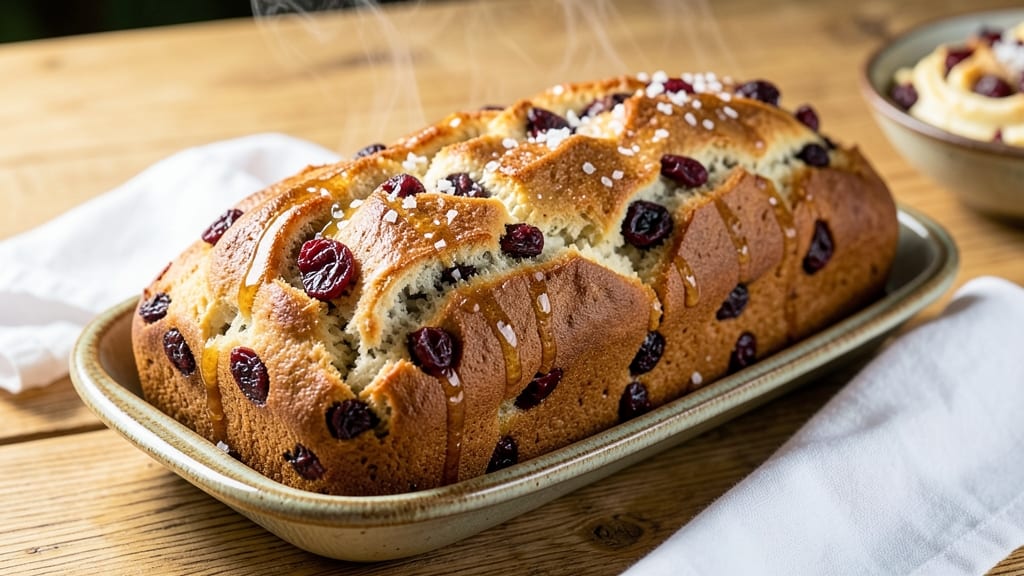
This Amish cinnamon raisin bread recipe delivers the perfect balance of tender crumb, buttery crust, and warm spice swirls that taste like home. 💛 The secret lies in a slow fermentation process that develops deep flavor while keeping the texture impossibly soft—no kneading required.
I've perfected this version after years of testing, ensuring the raisins stay plump and the cinnamon infuses every bite with cozy warmth.
The traditional method begins with a simple dough that rises overnight, allowing the gluten to relax and the flavors to meld naturally. A rich cinnamon-sugar filling gets swirled into the dough before baking, creating those signature ribbons of spice that disappear with each pull.
The result? A loaf with a golden, crackly crust that shatters just enough to reveal moist, pillowy bread underneath.
What sets this recipe apart is the foolproof technique for even distribution—no lumps of raisins or uneven swirls. The dough's gentle handling ensures maximum tenderness, while the baking process creates that signature Amish texture: crisp edges with a soft, slightly sticky center.
Perfect for breakfast, gifts, or holiday tables, this bread becomes the star of any meal.
Whether you're baking for a family gathering or treating yourself to a homemade loaf, this recipe delivers restaurant-quality results with simple ingredients and minimal effort. The aroma alone will have everyone gathering around your kitchen—trust me, it's worth every minute of the wait.
Ingredients for amish cinnamon raisin bread
Eight essential ingredients transform into the heart of Amish tradition—warm, spiced, and impossible to resist.
| Ingredient | Amount | Notes |
|---|---|---|
| All-Purpose Flour 🌾 | 5 cups | Sifted for even texture |
| Granulated Sugar 🍚 | ½ cup | White sugar preferred |
| Instant Yeast 🍞 | 2 ½ tsp | Active dry works too |
| Unsalted Butter 🧈 | ½ cup | Softened, not melted |
| Milk 🥛 | 1 cup | Room temperature |
| Large Egg 🥚 | 1 whole | Room temperature |
| Ground Cinnamon 🌿 | 2 tbsp | Freshly ground preferred |
| Brown Sugar 🍚 | ¼ cup | Packed tightly |
| Raisins 🍇 | 1 ½ cups | Plump, seedless preferred |
| Salt 🧂 | ½ tsp | Kosher or sea salt |
| Vanilla Extract 💧 | 1 tsp | Pure vanilla preferred |
| Coarse Sugar 🍚 | ¼ cup | For sprinkling on top |
The flour is the foundation—King Arthur or Gold Medal brands work best for that signature tender crumb. Bulk bins at Whole Foods let you check freshness easily. Cinnamon makes or breaks this; McCormick or Penzeys ground varieties add depth. Raisins should be plump—Sun-Maid or Thompson Seedless are reliable choices. Butter matters too: Plugrá or Land O'Lakes unsalted keeps the flavor pure. For the yeast, Fleischmann's is a safe bet, but any active dry works if stored properly.
No vanilla extract? Vanilla bean paste or even almond extract at half the amount works in a pinch. Brown sugar substitutes? White sugar plus 1 tsp molasses mimics the moisture. Raisins too dry? Soak them in warm water for 10 minutes first. Bob's Red Mill flour blends work if you're gluten-sensitive, but texture will differ. For the cinnamon-sugar topping, turbinado sugar adds a nice crunch if you want to splurge. The dough can handle substitutions, but the cinnamon filling needs those spices to shine.
Store the dough in the fridge overnight—covered with a damp towel prevents drying. Once baked, cool completely before slicing; the crust needs time to set. Wrapped in foil, it keeps for 3 days at room temperature, but reheat slices in a 350°F oven for 5 minutes to revive that fresh-baked aroma. Freeze slices for up to 3 months—perfect for quick breakfasts. The filling stays moist even after reheating, making every slice taste like it just came out of the oven.
Why You'll Love This Recipe
- No-Knead Magic: I swear by this dough—just mix, let it rise, and forget it. The yeast does all the work while you sip coffee, and that warm, gooey center? Worth the wait.
- Cinnamon-Sugar Hug: That butter-sweet dough swirled with raisins and cinnamon? It’s like biting into a hug. The raisins plump up just right, and the crust stays soft for days—no dry bites here.
- Breakfast to Dessert: Serve it toasted with butter for breakfast, split in half for a sweet lunch, or slice it for a picnic. Honestly, I’ve even used it as a base for French toast—because why not?
- Budget-Friendly Staple: Flour, sugar, butter—these are pantry basics that stretch far. One loaf feeds my family for days, and I freeze extras for lazy mornings. (Yes, even on a Tuesday night.)
Step-by-step instructions for Amish cinnamon raisin bread
Here's how to craft a tender loaf with perfect swirls and a golden crust.
👨🍳 Step 1: Mix the Dough Base
In a large mixing bowl, combine the 5 cups all-purpose flour, 0.5 cup granulated sugar, 2.5 tsp instant yeast, 0.5 tsp salt, and 2 tbsp ground cinnamon. Whisk until evenly distributed—you'll see a few small lumps, and that's okay. This dry mixture forms the foundation of your bread.
In a separate bowl, melt the 0.5 cup unsalted butter until just liquid, then let it cool slightly. Add the 1 cup milk, 1 whole large egg, and 1 tsp vanilla extract to the melted butter. Whisk until smooth and fully combined. This warm liquid mixture will activate your yeast and create a rich, flavorful dough.
Make a well in the center of your dry ingredients and pour in the wet mixture. Using a wooden spoon or dough whisk, gradually incorporate the liquids until a shaggy dough forms. The dough will be sticky at first, but don't add extra flour—this is normal and helps create a tender crumb.
👨🍳 Step 2: Knead and Develop Gluten
Transfer the dough to a lightly floured surface and knead for 8-10 minutes until smooth and elastic. I press down with the heel of my hand, fold the dough over, and rotate it a quarter turn—repeat this motion consistently. You'll know the dough is ready when it springs back slowly when poked and feels slightly tacky but not sticky.
Real talk: This step can feel tedious, but proper kneading develops gluten, which gives your bread its structure. If the dough sticks too much, wet your hands slightly to prevent tearing. Once fully kneaded, shape the dough into a smooth ball and place it in a lightly greased bowl.
Cover the bowl with a clean kitchen towel and let the dough rise in a warm place for 1 hour or until it has doubled in size. You'll see bubbles forming on the surface and the dough will feel light and airy when pressed gently. This first rise is crucial—it allows the yeast to activate and creates those beautiful air pockets we want in our bread.
🥘 Step 3: Prepare the Filling and Shape the Loaf
While the dough rises, mix together the 1.5 cups raisins, 0.25 cup brown sugar, and 1 tbsp of the ground cinnamon reserved from earlier. This sweet, spiced mixture will create those signature swirls in your bread. I like to use my fingers to gently press the raisins into the sugar mixture, ensuring even distribution.
Once the dough has risen, punch it down gently to release any air bubbles. On a lightly floured surface, roll the dough into a 12x18-inch rectangle about ¼-inch thick. Spread the raisin mixture evenly over the surface, leaving a ½-inch border around the edges. This border prevents the filling from spilling out during baking.
Starting from the long side, tightly roll the dough into a log, pinching the seam to seal. Place the sealed side down in a greased 9x5-inch loaf pan. Cover with a towel and let it rise for another 30-45 minutes until it reaches the top of the pan. The dough should feel light and springy when pressed gently—this indicates it's ready for the oven.
🔥 Step 4: Bake to Golden Perfection
Preheat your oven to 350°F while the dough rises. Once the dough has reached the top of the pan, sprinkle the remaining 1 tbsp ground cinnamon and 0.25 cup coarse sugar evenly over the top. This creates that beautiful caramelized crust we all love. Bake for 45-50 minutes until the bread is golden brown and sounds hollow when tapped on the bottom.
I like to check the internal temperature with an instant-read thermometer—it should read 190-200°F at the center. The edges should be deep golden brown with some areas almost caramelized. If the top browns too quickly, tent the pan with aluminum foil after 25 minutes to prevent over-browning.
Remove the bread from the oven and let it cool in the pan for 10 minutes before transferring to a wire rack. This resting period allows the steam to escape and the bread to set properly. Once cooled, slice with a serrated knife for clean cuts that reveal those beautiful swirls of cinnamon and raisin filling.
Pro Tips For Making Amish Cinnamon Raisin Bread
- MEASURE MILK PRECISELY: Use a liquid measuring cup—not a mug or random glass—because this dough is fussy about hydration. Too much milk makes it gummy; too little makes it dry. I learned this after tossing a batch that turned out like a hockey puck.
- SOAK RAISINS IN WARM MILK: Toss the raisins in the warm milk you’re mixing with the yeast—let them sit for 10 minutes first. They’ll plump up and stick to the dough better, so every bite has that sweet, juicy payoff. (Yes, even if you’re impatient like me.)
- DON’T OVERMIX THE DOUGH: Once you add the flour, stop mixing after 3-4 minutes—just until the dough comes together. Overworking it develops gluten, and this bread’s magic is in its tender, slightly crumbly texture. I used to knead like I was punishing the dough, and it always backfired.
- LET THE DOUGH RISE TWICE: The first rise (1-1.5 hours) builds flavor, but the second rise (after shaping) is what gives it that tall, airy Amish loaf. Skip it, and you’ll end up with a sad, dense brick. Cover it loosely with a towel—no need for fancy equipment.
Dietary considerations for this dish
Gluten-Free Adaptations
For a gluten-free version, replace the 5 cups all-purpose flour with a 1:1 gluten-free flour blend like King Arthur Measure for Measure. Add 1 tsp xanthan gum to help bind the dough, as gluten-free flours lack natural elasticity.
The texture will be slightly denser, but still tender. I've found that Bob's Red Mill 1-to-1 Gluten-Free Flour works well too—just increase the milk by 2 tbsp to compensate for dryness. 💛
Dairy-Free Substitutes
To make this bread dairy-free, swap the 0.5 cup unsalted butter for 0.5 cup coconut oil (melted and cooled) or 0.5 cup vegetable shortening. For the milk, use 1 cup unsweetened almond milk or oat milk—both work well.
The vanilla extract remains the same, but check that your almond milk doesn't contain added vanilla. The dough will be slightly less rich, but the flavor stays true to the original.
Refined Sugar Reduction
Cut the sugar by ¼ cup total (reduce granulated and brown sugar equally) and replace with ¼ cup maple syrup or agave nectar. The bread will still be sweet but with a deeper, caramel-like note.
For the topping, use turbinado sugar instead of coarse sugar—it has a lower glycemic index and adds a nice crunch. The raisins will absorb the liquid slightly differently, so check for doneness at 40 minutes instead of 45-50 minutes.
Allergy-Friendly Raisins
If raisins are a concern, try chopped dried apricots or dried cranberries for a similar texture. For a nut-free option, omit any nuts in the filling entirely. If you're avoiding sulfites (common in dried fruit), look for organic raisins labeled "no sulfur added."
Soak them in warm water for 10 minutes before using to ensure they're plump and ready to absorb the dough's moisture.
Low-Sodium Version
Reduce the salt to ¼ tsp (half the original amount) and use low-sodium milk if available. The flavor will still be rich from the cinnamon and butter, but the bread will be gentler on sensitive palates.
For extra flavor without salt, add ½ tsp onion powder or ½ tsp garlic powder to the dough. The cinnamon-sugar topping remains the same, so the top crust will still caramelize beautifully.
Nutrition facts
Frequently asked questions
Why does the dough need two rises?
The first rise activates the yeast and develops flavor, while the second rise after shaping creates that signature Amish texture. The overnight cold proof (optional) enhances tenderness by slowing fermentation. Without both rises, the bread may be dense or lack that signature pillowy crumb.
Can I make this bread without a loaf pan?
Yes! Shape the dough into a round loaf or braid, place on a baking sheet lined with parchment, and bake at 350°F for 35-40 minutes. For extra crispiness, brush with melted butter after baking. The texture will differ slightly but still be delicious.
How do I prevent the raisins from sinking to the bottom?
Toss the raisins in a little flour before adding them to the filling, or fold them into the dough after rolling it out. This helps them distribute evenly. Also, keep the dough chilled for 15 minutes after filling to prevent the raisins from sinking during the second rise.
Why did my bread turn out dense?
Dense bread usually means the yeast wasn't activated properly, or the dough didn't rise enough. Make sure your yeast is fresh (test it in warm water first), and let the dough rise in a warm spot. Over-kneading or using too much flour can also make the bread dense—stick to the measurements!
Can I add nuts to the filling?
Chopped pecans or walnuts add wonderful texture. Just toast them lightly first to enhance their flavor. Add ½ cup chopped nuts to the raisin mixture, but reduce the raisins by ¼ cup to keep the balance right.