
Side Dishes
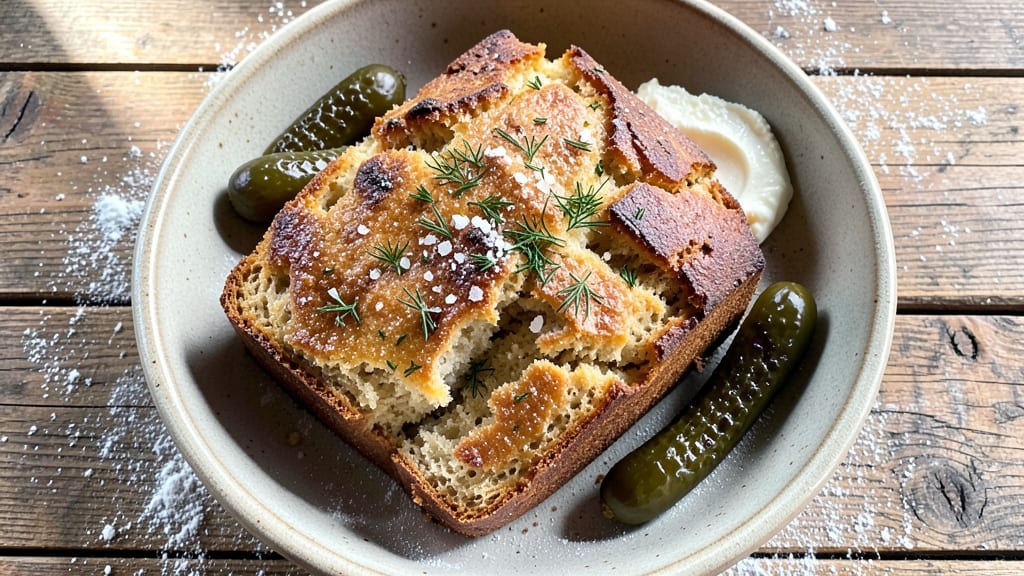
This Amish dill pickle bread recipe transforms simple ingredients into a tangy, golden loaf with a crusty exterior and pockets of briny pickle flavor. The secret lies in swirling chopped pickles into a classic bread dough, creating a texture that's both hearty and unexpectedly refreshing.
I first tried this recipe during a summer picnic when we ran out of chips, and it became an instant crowd-pleaser—especially with that perfect balance of savory and sweet.
The beauty of this recipe is its versatility—whether you're making a sandwich loaf, dinner rolls, or quick bread, the pickle swirl adds a distinctive crunch and tang that elevates ordinary bread.
Traditional Amish baking often relies on simple, pantry-friendly ingredients, and this recipe stays true to that philosophy while delivering restaurant-worthy results.
The dough comes together in just 15 minutes, and the bread bakes up with a golden crust and tender crumb, making it ideal for meal prep or serving warm from the oven.
What sets this bread apart is the pickle infusion—whether you use chopped pickles or a splash of pickle juice, the flavor is unmistakable.
The tangy notes cut through the richness of butter or spread, making it perfect for breakfast toast, sandwiches, or even as a side with soups and stews. The bread stays fresh for days, and the leftovers toast up beautifully, regaining that crusty crunch every time.
Ready to try it? This recipe is foolproof and delivers restaurant-quality results with minimal effort. The only challenge is resisting the urge to bake an extra loaf—trust me, you'll want to share (or save for later). Let's get started!
Ingredients for amish dill pickle bread
Simple pantry staples plus a jar of pickles transform into a tangy, golden loaf with pockets of briny surprise.
| Ingredient | Amount | Notes |
|---|---|---|
| All-Purpose Flour 🌾 | 4 cups | Unbleached preferred for lighter texture |
| Active Dry Yeast 🍞 | 2 ¼ tsp | Ensure yeast is fresh for best rise |
| Granulated Sugar 🍚 | ¼ cup | White or light brown preferred |
| Unsalted Butter 🧈 | ½ cup | Softened to room temperature |
| Large Eggs 🥚 | 1 whole | Room temperature for even mixing |
| Whole Milk 🥛 | ¾ cup | Warm for optimal yeast activation |
| Diamond Crystal Kosher Salt 🧂 | 1 ½ tsp | Adjust to taste after mixing |
| Dill Pickle Chips 🥒 | 1 ½ cups | Chopped finely for even distribution |
| Dill Pickle Juice 💧 | ¼ cup | Reserved from jarred pickles |
| Extra-Virgin Olive Oil 🫒 | 1 tbsp | For greasing the bowl and pan |
| Cornmeal 🌽 | ¼ cup | For dusting the baking sheet |
The flour forms the backbone of this bread, so King Arthur or Gold Medal are ideal choices—they balance structure and tenderness perfectly. For yeast, FreshPak or Red Star brands ensure reliable activation, especially in cooler kitchens. I always measure flour by weight (140g for 4 cups) for consistency, but if using volume, spoon it into the cup and level off—no packing! The butter should be soft enough to press with a finger but not greasy; Plugrá or Land O'Lakes are reliable brands. Pickles matter here—Heinz or Vlasic dill pickles work best, but any crunchy variety will do. For the juice, use freshly opened pickles; the flavor fades after a few weeks in the jar.
No dill pickle chips? Finely chopped fresh dill pickles work perfectly, though they'll release more moisture. Swap the pickle juice for 1 tablespoon apple cider vinegar plus 1 tablespoon water if needed, but the tang won't be identical. Running short on butter? Vegetable shortening or coconut oil can substitute, though texture may differ slightly. For a sweeter loaf, add 1 tablespoon honey or maple syrup to the dough. The olive oil can be omitted if you prefer, but it adds a subtle richness that complements the pickles. If your yeast isn't active, proof it in warm milk (105-110°F) for 5 minutes before mixing.
This dough is best baked immediately after mixing, but it can rest in the fridge for up to 24 hours if covered tightly. For the perfect crust, bake in a preheated Dutch oven if you have one—it traps steam for a crispier exterior. The bread stays fresh for 3 days at room temperature wrapped in a clean kitchen towel, or 1 week in the fridge. Freeze slices for up to 3 months by wrapping tightly in plastic. Reheat in a 350°F oven for 5-7 minutes to restore that golden crunch, or toast directly from frozen.
Why You'll Love This Recipe
- No-Knead Magic: I swear by this dough—just mix, let it rise, and boom. No stand mixer, no arm workout, just a bowl and patience. The yeast does all the work while you sip coffee.
- Pickle-Perfect Tang: That dill pickle juice? It’s the secret weapon. The bread gets this bright, tangy kick that cuts through rich butter or pairs perfectly with sharp cheddar. Honestly, I’d eat it plain just for the flavor.
- Breakfast to Picnic: Serve it warm with jam for a lazy Sunday, toast it for sandwiches midweek, or pack slices for a lunchbox. It’s my go-to when I need something reliable—no fancy prep, just good bread.
- Budget Stretch: Four simple ingredients, minimal waste. A single batch feeds my family for days, and the leftovers? Even better the next day when the crust gets extra crispy. My wallet and taste buds thank me.
Step-by-step instructions for Amish dill pickle bread
This recipe delivers a perfectly balanced loaf with a crisp crust and tangy pickle swirls throughout.
Activate the Yeast and Mix the Dough
In a large mixing bowl, combine the 0.75 cup warm whole milk with the 2.25 tsp active dry yeast and 0.25 cup granulated sugar. Let this mixture sit for 5-10 minutes until it becomes frothy and bubbly—this confirms the yeast is active. If it doesn't bubble, your yeast may be old, and you'll need to start over.
Once activated, add the 4 cups all-purpose flour and 1.5 tsp diamond crystal kosher salt to the bowl. Using a wooden spoon or dough whisk, stir until a shaggy dough forms. Then add the 0.5 cup softened unsalted butter and 1 whole large egg, mixing until just combined. The dough should feel slightly sticky but manageable.
Knead the Dough Until Elastic
Turn the dough onto a lightly floured surface and knead for 8-10 minutes by hand, or use a stand mixer with a dough hook attachment on medium speed for 5-6 minutes. You're looking for a smooth, elastic dough that springs back when pressed—this indicates proper gluten development. If the dough feels too sticky, add flour 1 tablespoon at a time until it becomes workable.
Shape the dough into a ball, place it back in the bowl, and lightly coat the surface with 1 tbsp extra-virgin olive oil. Cover the bowl with a damp kitchen towel and let the dough rise in a warm place for 1-1.5 hours, or until it has roughly doubled in size. The dough should feel light and airy when pressed gently.
Prepare the Pickle Swirl Filling
While the dough rises, prepare the tangy filling by combining the 1.5 cups dill pickle chips and 0.25 cup dill pickle juice in a small bowl. Chop the pickle chips into smaller pieces if they're large, ensuring even distribution throughout the bread. This step is crucial—it balances the sweetness of the dough with the signature tangy crunch.
Set the filling aside until the dough has finished rising. The pickle juice will help keep the filling moist during baking, preventing it from drying out.
Shape, Fill, and Second Rise
Once the dough has risen, punch it down to release the air and divide it into 4 equal portions. Roll each portion into a 12-inch log, about 1.5 inches thick. Using a sharp knife or bench scraper, carefully slice each log lengthwise to create a pocket. Gently stuff each pocket with an equal amount of the pickle filling, then seal the edges by pressing them together.
Place the filled logs seam-side down in a 9x5-inch loaf pan that has been lightly greased with olive oil and dusted with 0.25 cup cornmeal. Cover the pan with a damp towel and let the dough rise for another 30-45 minutes, until the tops are slightly domed and the filling is visible through the dough.
Bake to Golden Perfection
Preheat your oven to 375°F. Bake the bread for 30-35 minutes, until the crust is deep golden brown and the internal temperature reaches 190°F. The bread should sound hollow when tapped on the bottom. If the top browns too quickly, tent it loosely with aluminum foil to prevent over-browning.
Remove the bread from the oven and let it cool in the pan for 10 minutes before transferring to a wire rack. This resting period allows the bread to set and makes slicing easier. Serve warm for the best texture—each slice should reveal a swirl of tangy pickle chips and a crisp, golden crust.
Pro Tips For Making Amish Dill Pickle Bread
- Use Warm Butter for Mixing: Mixing the dough with softened (not melted) butter at 65°F (18°C) keeps the texture tender without making it greasy. I learned this the hard way—using melted butter turns the bread dense, and that’s a crime for this recipe.
- Proof the Yeast in Pickle Juice: Skip the water—proof the yeast in ¼ cup of the dill pickle juice from your jar. The acidity wakes it up faster, and the tang mirrors the flavor you’re building toward. (Yes, even if you’re impatient like me, let it bubble for 5 minutes.)
- Don’t Overwork the Dough: This isn’t pizza dough—handle it just until the flour comes together. Over-kneading develops gluten, and that’ll make your bread tough instead of light and pillowy. Two minutes by hand or 3-4 pulses in a mixer is plenty.
- Chill the Dough Before Shaping: Let the dough rest in the fridge for 30 minutes after mixing. It’ll be easier to shape, rise evenly, and hold its form when baking. I skip this when I’m lazy, but the crust gets uneven and the crumb denser—your future self will notice.
Flavor customization for this dish
Sweet & Tangy Twist
Balance the briny pickle flavor by adding 1 tablespoon honey or 1 teaspoon maple syrup to the dough while mixing. This sweetens the crust slightly, creating a perfect contrast with the tangy filling.
I often use local wildflower honey for a floral note that pairs beautifully with the dill pickles. 🍯
Spicy Kick Option
For a bold variation, mix ½ teaspoon smoked paprika and ¼ teaspoon cayenne pepper into the dough. The heat complements the pickles while adding depth. If you prefer milder heat, try 1 teaspoon dill pickle relish instead of juice—it adds subtle spice without overpowering. 🌶️
Herb-Infused Filling
Boost the filling with 1 tablespoon finely chopped fresh dill or 1 teaspoon dried dill weed. The herb enhances the pickle flavor while adding a bright, fresh aroma. For extra richness, stir in 1 tablespoon cream cheese into the filling before stuffing the dough. 🌿
Cheesy Swirl Layer
Add a layer of melted flavor by mixing ½ cup shredded cheddar cheese into the pickle filling. The cheese melts during baking, creating pockets of gooey goodness. I love using sharp white cheddar for a tangy bite that mirrors the pickles.
For a creamy option, swap in ½ cup cream cheese mixed with the pickles. 🧀
Everything Bagel Seasoning
Sprinkle 1 tablespoon everything bagel seasoning over the dough before the final rise. The sesame seeds and poppy seeds add crunch and nuttiness, while the garlic and onion powders deepen the savory profile. This variation works especially well with the spicy kick option. 🌰
Garlic & Onion Boost
Infuse the dough with 1 minced garlic clove and 1 tablespoon finely chopped red onion during mixing. The aromatics blend seamlessly with the pickles, adding complexity. For extra convenience, use 1 teaspoon garlic powder and 1 teaspoon onion powder instead. 🧄
Nutrition facts
Frequently asked questions
Can I make this bread without a loaf pan?
For a rustic look, shape the filled dough into a freeform loaf on a baking sheet lined with parchment paper. Brush with olive oil and sprinkle with cornmeal before baking. If making individual rolls, divide the dough into 8-10 portions, shape each into balls, stuff with a small amount of filling, seal, and bake on a sheet pan for 15-18 minutes at 375°F. The texture will be slightly denser but still delicious!
Why does my dough smell like pickles but not taste tangy?
The pickle flavor develops during baking, so don't worry if the raw dough tastes mild. For stronger tang, add 1 extra tablespoon of pickle juice to the filling or mix 1 teaspoon apple cider vinegar into the dough. Baking time also matters—ensure the bread reaches an internal temp of 190°F for full flavor infusion. The crust should be golden brown with visible pickle bits!
How do I store leftovers to keep them fresh?
Wrap cooled slices tightly in plastic wrap or store in an airtight container with a slice of bread or paper towel to absorb moisture. At room temp, it stays fresh for 3 days. For longer storage, freeze slices wrapped individually for up to 3 months. To revive, toast in a 350°F oven for 5-7 minutes until crispy again. The filling stays moist and flavorful when properly stored!
Can I substitute sweet pickles for dill pickles?
While traditional, dill pickles work best for their tangy, briny flavor. Sweet pickles will make the bread taste overly sweet and lack the signature contrast. If you must use them, reduce the sugar in the dough to 0.125 cup and add 1 teaspoon lemon juice to balance. For authenticity, stick with dill pickles—they're the secret to this recipe's magic!
What's the best way to serve this bread?
Warm slices make perfect sandwiches with cream cheese or butter, or serve as a side with soups and chili. For breakfast, toast thick slices and top with scrambled eggs and hot sauce. The crusty exterior holds up well to grilled cheese! For a party, cut into 1-inch cubes and serve as a savory snack with cheese dip. The possibilities are endless!