
Side Dishes
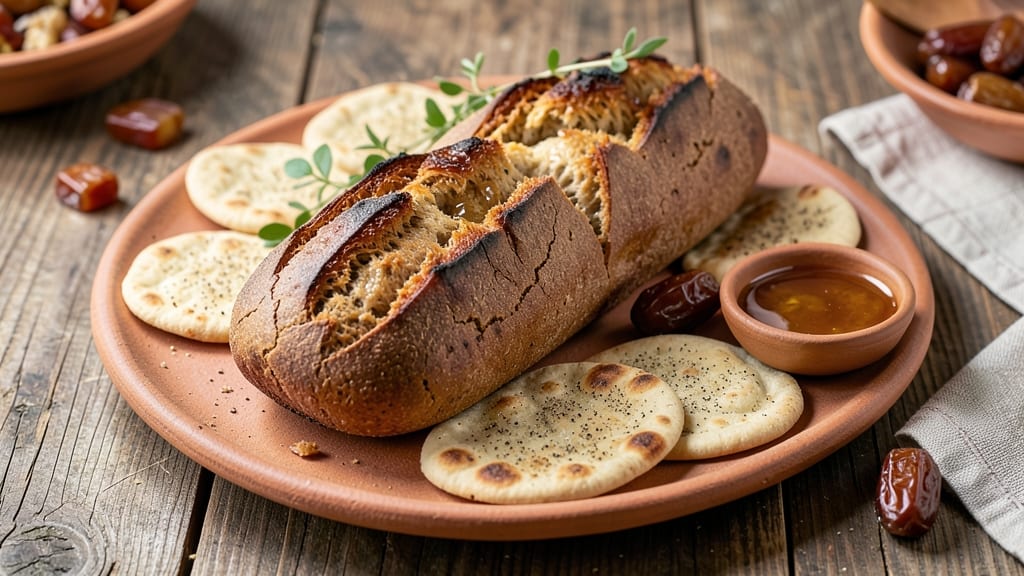
This ancient Egyptian bread recipe brings the flavors of the Nile to your kitchen with its crispy, golden edges and tender interior—just as it would have been baked 3,000 years ago. 🌟 The secret lies in using emmer wheat or barley flour, combined with a touch of honey and beer for leavening, a technique that mirrors the methods of early Egyptian bakers.
Unlike modern breads, this flatbread relies on simple ingredients and traditional fermentation, creating a dish that’s both rustic and deeply satisfying.
The process begins with a dough that’s mixed, kneaded, and left to ferment naturally—no yeast packets here. This slow rise develops complex flavors and a texture that’s crispy on the edges while remaining soft inside, much like the breads archaeologists have uncovered in tombs.
The honeyed spice blend, inspired by ancient Egyptian recipes, adds a subtle sweetness that balances the earthy tones of the grain.
What you’ll achieve is a bread that’s not just edible but transportive—each bite carries the essence of a civilization’s culinary heritage.
The aroma of baking flatbread, infused with the faint sweetness of honey and the warmth of spices, fills your kitchen just as it would have filled the homes of ancient Egyptians gathering for a meal.
Perfect for pairing with stews, dips, or simply enjoying on its own, this bread is a testament to how little has changed in the art of baking over millennia. Let’s bring history to your table with this authentic, crispy flatbread.
Ingredients for ancient egypt bread
Simple ancient grains and honey create this crispy, golden flatbread straight from Egypt's past.
| Ingredient | Amount | Notes |
|---|---|---|
| Emmer Wheat Flour 🌾 | 2 cups | Or barley flour for authenticity |
| Warm Water 💧 | 1 ½ cups | 110-115°F for ideal dough |
| Honey 🍯 | 2 tbsp | Raw honey preferred for flavor |
| Beer 🍺 | ½ cup | Non-alcoholic if preferred |
| Salt 🧂 | ½ tsp | Fine sea salt preferred |
| Ground Cumin 🌿 | ½ tsp | For earthy Egyptian flavor |
| Ground Coriander 🌿 | ½ tsp | Freshly ground preferred |
| Olive Oil 🫒 | 1 tbsp | For dough and brushing |
| Sesame Seeds 🌻 | 1 tbsp | Optional for topping |
| Semolina Flour 🌾 | ¼ cup | For dusting work surface |
Emmer wheat flour is the star here—it’s the ancient grain used in Egyptian tombs. Bob’s Red Mill sells it online, but if you can’t find it, barley flour works perfectly (just add 1 extra tbsp water). The beer isn’t just for flavor—it’s the traditional leavening agent Egyptians used instead of yeast. Non-alcoholic beer works just as well, and most grocery stores carry it. Honey should be raw if possible, but regular works in a pinch. For the spices, Penzeys Spices has great bulk bins if you want to stock up.
No emmer wheat? Whole wheat or all-purpose flour will work, but the texture won’t be quite as crispy. Short on beer? Warm water with 1 tsp sugar mimics the fermentation. The spices can be swapped—cardamom or cinnamon add nice warmth too. Olive oil matters here: Use extra-virgin for richer flavor. If you’re feeling fancy, toast the sesame seeds in a dry pan first—they’ll smell amazing and add extra crunch. The semolina is key for that crispy edge, but all-purpose flour dusted lightly works if you’re out.
This dough needs time—let it ferment 4-6 hours at room temp for best flavor. Store any leftovers wrapped in a towel for 2 days, or freeze the dough balls for up to 1 month. Reheat wrapped in foil at 375°F for 5-7 minutes. Pro tip: Bake extra—they’re perfect cold the next day for wraps or snacks.
Why You'll Love This Recipe
- No-Knead Magic: Mixing the dough takes all of two minutes—just flour, water, and a pinch of salt. The beer and honey do the work while you wait, so you’re not stuck babysitting dough all day. Honestly, I’ve made this while scrolling through my phone.
- Honey-Beer Crunch: That first bite? Sweet, slightly tangy, with a crackly crust thanks to the beer’s bubbles. The honey caramelizes just enough to make it taste like you slaved over it, even though you didn’t.
- Pantry Staple Power: You already have everything—no weird ingredients or last-minute grocery runs. Between us, this bread is my go-to for sandwiches, toast, or even crumbled over soups. (Yes, even on a Tuesday night.)
- Lasts a Week: Seriously, this stuff doesn’t go stale. I’ve wrapped it in a towel and left it on the counter for days—still fresh, still delicious. Perfect for when you forget to bake or just don’t feel like it.
Step-by-step instructions for ancient Egyptian flatbread
Here's how to make crispy, golden flatbread just like the ancient Egyptians enjoyed.
👨🍳 Step 1: Mix the Dough with Egyptian Flavor
In a large bowl, combine the 2 cups emmer wheat flour with the 0.5 tsp salt, 0.5 tsp ground cumin, and 0.5 tsp ground coriander. Mix these dry ingredients together until evenly distributed—this ensures every bite gets that authentic Egyptian spice blend.
Make a well in the center and add the 1.5 cups warm water (around 110-115°F), 2 tbsp honey, 0.5 cup beer, and 1 tbsp olive oil. The beer adds subtle depth while keeping the bread moist—don't skip this traditional touch. Mix everything with a wooden spoon until a shaggy dough forms.
🍳 Step 2: Knead Until Smooth and Elastic
Turn the dough onto a lightly floured surface dusted with 0.25 cup semolina flour (this prevents sticking and gives a nice texture). Knead for 8-10 minutes until the dough becomes smooth and elastic. You'll know it's ready when it springs back slightly when pressed.
Real talk: Don't rush this step. Proper kneading develops gluten, which gives your bread that perfect crispy-yet-chewy texture. If the dough feels too sticky, add just a little more semolina flour—about 1 tablespoon at a time. Wrap the dough in plastic wrap and let it rest for 30 minutes at room temperature.
🔥 Step 3: Shape and Cook for Crispy Perfection
Divide the rested dough into 4 equal portions (about 6 ounces each). Roll each portion into a ¼-inch thick circle on a lightly floured surface. The thinner you roll it, the crispier it'll get—aim for even thickness all the way through.
Heat a dry skillet or griddle over medium-high heat until it's hot enough that a drop of water sizzles and evaporates instantly. Cook each flatbread for 2-3 minutes per side until golden brown spots appear. You'll see the edges start to crisp—that's your signal to flip carefully with a spatula.
🍽️ Step 4: Finish with Honey and Sesame
Transfer the cooked flatbreads to a clean cloth or paper towel to drain any excess oil. While still warm, brush each piece lightly with a little more honey (about ½ teaspoon per flatbread) and sprinkle with sesame seeds. This gives that signature sweet-spiced finish the ancient Egyptians loved.
Serve immediately while crispy. These flatbreads are best enjoyed fresh—they'll soften as they cool. Pair with dates, spiced meats, or simply enjoy with a bowl of lentil stew for an authentic Egyptian meal.
Pro Tips For Making Ancient Egypt Bread
- STIR THE BATCH HARD: Ancient Egyptian dough needs serious muscle—knead this emmer wheat mix for at least 10 minutes by hand (or 5 in a stand mixer) until it’s smooth and elastic. I used to skimp here, and the bread turned out dense and chewy. The gluten in emmer is stubborn; don’t let it fool you into thinking it’s done too soon.
- USE LUKEWARM BEER: The beer in this recipe isn’t just flavor—it’s science. Warm it to about 80°F (27°C) before mixing; cold beer halts fermentation, and hot beer kills the yeast. I learned this after my first batch sat lumpy for hours. A quick microwave check (test on your wrist) keeps things moving without cooking the yeast.
- SALT THE WATER: Yes, even if the recipe calls for salt later. Dissolve the full amount in the warm water first—this ensures even distribution and prevents dry pockets. I once added salt to the dough only to find uneven crumb texture. The beer’s natural sweetness masks saltiness, so don’t hold back.
- BAKE IN A CLOTH: Line your baking surface (or Dutch oven) with a damp linen towel. This mimics the moist clay ovens of ancient Egypt and keeps the crust from cracking too fast. I tried skipping it once—my bread looked like a sad, overbaked brick. The towel adds 2–3 minutes to bake time, but the texture is worth it.
Dietary considerations for this dish
Gluten-Free Adaptations
While traditional Egyptian bread relies on emmer wheat, you can adapt this recipe for gluten-free diets using a 1:1 gluten-free flour blend like King Arthur Measure for Measure. Replace the emmer wheat flour with 2 cups gluten-free blend and add 1 extra tbsp xanthan gum for structure.
The dough will be stickier, so use more semolina flour when kneading. Ferment time may need extending to 6-8 hours for proper rise. 🌾
Dairy-Free Considerations
This recipe is naturally dairy-free, but if you're avoiding honey (due to allergies or vegan preferences), substitute with maple syrup or agave nectar—use 1 tbsp less liquid since these are thicker. The beer remains dairy-free, but check labels if using non-alcoholic versions.
For extra richness, brush with olive oil instead of honey during the final step. This keeps the authentic Egyptian flavor profile intact.
Low-Sodium Options
Ancient Egyptians used salt sparingly, so if you're watching sodium, reduce the 0.5 tsp salt to 0.25 tsp or omit entirely. The spices—cumin and coriander—will still provide depth.
For extra flavor without salt, add 1 tsp lemon zest to the dough or brush the cooked bread with a mix of 1 tbsp olive oil + ½ tsp garlic powder. The beer's natural tanginess helps balance the flavor even without added salt. 🧂
Allergen-Friendly Swaps
For sesame-free versions, skip the topping entirely or use poppy seeds or toasted cumin seeds instead. If olive oil is an issue, substitute with avocado oil or ghee (though ghee isn't vegan).
For nut-free kitchens, ensure all ingredients (like honey) are processed in nut-free facilities. Always check labels on beer and spices—many brands process products in shared facilities. 🌿
Historical Dietary Notes
Ancient Egyptian bread often included honey or dates, which provided natural sweetness and energy. If you're avoiding all animal products (vegan), replace honey with date paste or fruit puree (like apple or apricot).
The beer wasn't just for leavening—it was a staple in their diet, providing fermented probiotics. For a truly historical touch, use pomegranate molasses instead of honey in the final brushing step. 🍯
Nutrition facts
Frequently asked questions
Why does this recipe use beer instead of yeast?
Ancient Egyptians didn't have commercial yeast—they used beer as a natural leavening agent! The fermentation process creates air bubbles, giving the bread its light texture. Non-alcoholic beer works perfectly and keeps the authentic flavor. The beer also adds subtle depth that yeast can't replicate.
Can I make this bread without emmer wheat?
Yes! If you can't find emmer wheat, use barley flour for authenticity or whole wheat flour as a substitute. For a lighter texture, mix 1 cup whole wheat + 1 cup all-purpose flour. Just note the bread may be slightly denser than traditional versions.
How do I know when the flatbread is fully cooked?
Look for golden brown spots and crispy edges—this happens after 2-3 minutes per side. The bread should puff slightly at the edges when ready. Press gently: if it springs back, it's done. Overcooking makes it tough, so watch closely!
What's the best way to store leftover bread?
Wrap cooled flatbreads in a clean kitchen towel to maintain crispiness. Store at room temperature for 2 days or freeze for 1 month. To reheat, wrap in foil and warm at 375°F for 5 minutes. Never microwave—it makes bread soggy!
Can I make this bread in a modern oven instead of a skillet?
Preheat oven to 425°F and bake for 8-10 minutes on a parchment-lined tray. Brush with olive oil before baking for extra crispiness. For even browning, flip halfway through using a pizza peel. The texture will be slightly different but still delicious!