
Side Dishes
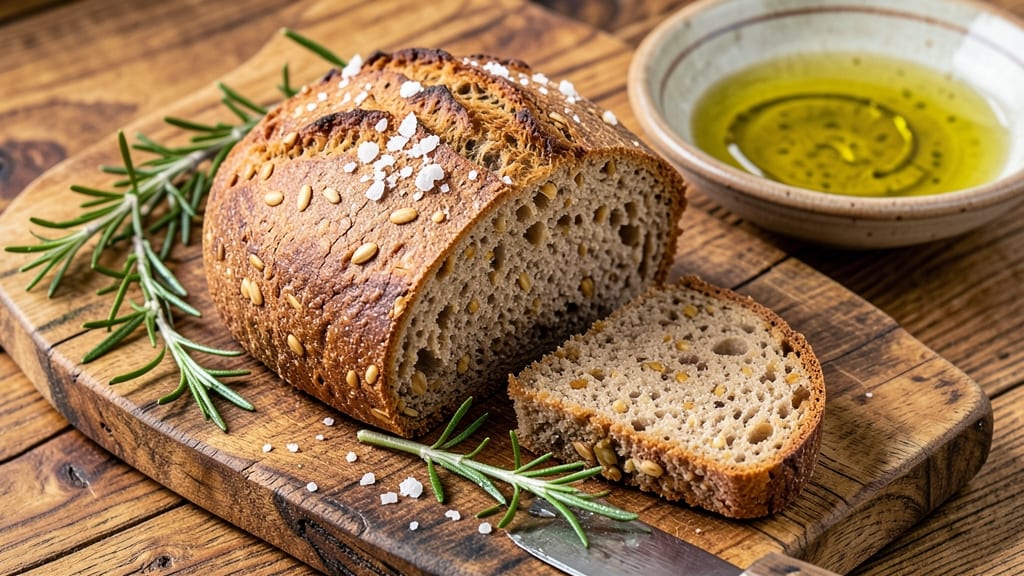
This ancient Greek barley bread recipe brings the flavors of antiquity to your kitchen, recreating the rustic artos that fed Greek warriors and families alike. 🌾 The secret lies in barley flour’s nutty depth and the slow fermentation that develops complex, earthy notes—just as it would have in a clay oven 2,500 years ago.
What makes this loaf special is its simplicity: just flour, water, yeast, olive oil, and salt, yet it delivers a crusty exterior and tender crumb that’s both satisfying and historically authentic.
The traditional method involves kneading the dough by hand (or with a stand mixer) until it develops elasticity, then letting it rise slowly—this patience pays off with a loaf that’s fragrant and light.
I’ve adapted the technique for modern kitchens, using a Dutch oven to mimic the even heat distribution of an ancient oven. The result? A bread with a crisp, golden crust and a soft, slightly chewy interior that’s perfect for dipping in olive oil or pairing with stews.
What you’ll end up with is a loaf that tastes like a piece of history—nutty, hearty, and deeply flavorful. The barley flour gives it a satisfying weight and a subtle sweetness that balances the saltiness of the crust.
This bread isn’t just a side; it’s a centerpiece that transports you to the streets of ancient Athens with every bite.
Whether you’re baking for a historical reenactment, a themed dinner, or simply craving something with ancient roots, this recipe delivers. The process is straightforward, but the reward—a loaf that’s both rustic and refined—is unforgettable. Let’s get started on recreating this timeless staple.
Ingredients for ancient greek barley bread
Five simple ingredients transform into a loaf that tastes like ancient Greece—nutty, hearty, and full of history.
| Ingredient | Amount | Notes |
|---|---|---|
| Barley Flour 🌾 | 3 ½ cups | Medium or pearled barley flour preferred |
| All-Purpose Flour 🌾 | ½ cup | For lighter texture |
| Active Dry Yeast 🍞 | ¾ tsp | Or 2.25g for accuracy |
| Warm Water 💧 | 1 ¼ cups | 110°F/43°C for activation |
| Extra-Virgin Olive Oil 🫒 | ¼ cup | High-quality, fruity variety |
| Sea Salt 🧂 | 1 ½ tsp | Fine grain preferred |
| Honey 🍯 | 1 tbsp | Or maple syrup for vegan option |
| Cornmeal 🌽 | ¼ cup | For dusting Dutch oven |
| Ice Water ❄️ | ½ cup | For stiffening dough |
Barley flour is the star here, so King Arthur or Bob's Red Mill are your best bets for quality. The medium or pearled variety gives that authentic texture without being too dense. If you can't find barley flour, substitute half with whole wheat flour—it's not the same, but it'll work in a pinch. The yeast needs to be fresh, so check the expiration date. Trader Joe's sells it in small jars that last longer than those giant cans. For the honey, grab local if you can—it adds subtle floral notes that pair perfectly with the barley's nuttiness.
No barley flour? Whole wheat flour plus a splash of malt powder mimics some of the flavor, though it won't be identical. The olive oil matters—California Avocado Ranch or Colavita are great choices. If you're short on time, you can use melted butter (though it won't be authentic), but trust me, the olive oil makes this taste like a Greek taverna. The cornmeal? Any kind works, but fine-ground gives the best texture on the crust. And that ice water? Don't skip it—it keeps the dough from sticking when you handle it later.
This dough is a patient one—it needs time to develop flavor. Let it rise overnight in the fridge if you can, then bake straight from cold. The loaf keeps well wrapped at room temp for 3 days, or you can freeze slices for up to 3 months. Toast it lightly before serving to bring back that ancient oven crispness. I always make two loaves—one for the table, one for freezing. That way, you're always ready for stew night or historical reenactments.
Why You'll Love This Recipe
- No-Knead Magic: The dough comes together in minutes—just mix, let it rise, and bake. No stand mixer, no fancy tools, just your hands and a bowl. Honestly, I’ve made this while chatting on the phone; it’s that unfussy.
- Earthy & Golden: That barley flour gives it a nutty depth, while the olive oil keeps it rich without being heavy. Between us, the first bite reminds me of a Greek taverna loaf—crust crackling, inside tender. (Yes, even on a Tuesday night.)
- Meal Prep MVP: Bake a big batch on Sunday, and you’ve got dinner covered all week. Toast it for breakfast, tear it for salads, or serve with olive oil and feta. My kids grab it straight from the fridge—no judgment here.
- Budget-Friendly Staple: Barley flour is cheap, yeast is dirt, and olive oil stretches far. I’ve fed six people for under $5 with this—plus, it keeps for days. Not the prettiest, but the taste makes up for it every time.
Step-by-step instructions for ancient Greek barley bread
Here's how to bake this nutty, crusty loaf just like the ancient Greeks—simple steps for a bread that transports you back in time.
👨🍳 Step 1: Activate the Yeast with Warm Water and Honey
In a large mixing bowl, combine the 1.25 cups warm water (around 110°F) with the 1 tbsp honey and 0.75 tsp active dry yeast. Let it sit for 5-10 minutes until you see plenty of bubbles forming on the surface. This tells you the yeast is alive and ready to work—no bubbles means you need to start over with fresh yeast.
I like to use a glass bowl for this step so I can easily spot the bubbles. If your kitchen is cold, warm the water slightly more (up to 115°F) to help activate the yeast faster. The honey not only feeds the yeast but also adds subtle sweetness that balances the earthy barley flavor.
👨🍳 Step 2: Mix the Dough with Barley and All-Purpose Flour
Add the 3.5 cups barley flour and 0.5 cup all-purpose flour to the yeast mixture. Stir with a wooden spoon until a shaggy dough forms—it'll be sticky, but that's perfect for barley bread. Sprinkle in 1.5 tsp sea salt and mix it in thoroughly.
Now add the 0.25 cup extra-virgin olive oil and mix again until fully incorporated. The dough should still feel tacky but manageable. If it's too wet and sticks to your fingers, add 1 tablespoon of barley flour at a time until it comes together. This dough is different from regular bread dough—it's supposed to be on the sticky side because barley flour absorbs more moisture.
🥘 Step 3: Knead and Rest the Dough
Turn the dough out onto a lightly floured surface and knead for about 5 minutes until it becomes smoother and more cohesive. You won't get the same elastic texture as wheat bread, and that's okay—barley dough is naturally denser. Shape it into a rough ball and place it back in the bowl.
Cover the bowl with a damp towel and let the dough rest at room temperature for 1 hour. This first rise allows the gluten to relax and the flavors to develop. I like to set a timer so I don't forget—barley dough can rise quickly, especially in warm kitchens. After resting, the dough should have puffed up noticeably but still feel dense.
🔥 Step 4: Shape and Preheat for Baking
Preheat your oven to 425°F and place a Dutch oven in it to heat for 30 minutes. While it heats, dust a baking sheet with 0.25 cup cornmeal. Shape the dough into a round loaf (about 8 inches in diameter) and place it on the prepared sheet.
Here's where it gets interesting: the ancient Greeks didn't have ovens like we do. They baked their bread on hot stones or in clay ovens. While we can't replicate that exactly, the Dutch oven comes close by trapping steam and creating that perfect crust. Brush the top of the loaf with a little water—this helps create that beautiful crusty exterior we're after.
🔥 Step 5: Bake with Steam for Crusty Perfection
Carefully transfer the shaped dough (along with the baking sheet) to the preheated Dutch oven. Cover with the lid and bake for 30 minutes. After 30 minutes, remove the lid and bake for another 15-20 minutes until the bread is deep golden brown and sounds hollow when tapped on the bottom.
If the top browns too quickly, tent it loosely with foil. The internal temperature should reach 190-200°F. When you're done, let the bread cool on a wire rack for at least 30 minutes—this prevents it from becoming gummy inside. The crust should be crisp and nutty, while the interior remains tender with a slight chewiness that's characteristic of barley bread.
Pro Tips For Making Ancient Greek Barley Bread
- Bloom the Yeast First: Skip mixing yeast directly into wet ingredients—it’s a gamble with barley flour’s heaviness. Instead, dissolve the yeast in warm water (about 110°F/43°C) with a pinch of sugar (or a splash of olive oil) and let it foam for 5-10 minutes. This guarantees it’s active before committing to the dough, especially since barley flour can dull yeast’s edge if it’s sluggish.
- Mix Olive Oil Last: Barley flour absorbs moisture like a sponge, so add the 2-3 tablespoons of extra-virgin olive oil after combining flours and water. Stir it in just until the dough comes together—overmixing turns this into a dense brick. (Yes, even if you’re impatient like me.)
- Don’t Rush the Rest: Let the dough rise in a warm spot (like a turned-off oven with a bowl of hot water inside) until it’s almost doubled—barley flour’s weight makes it rise slower than all-purpose. Poke it: if the dent fills in under 2 seconds, it’s ready. Overproofing here turns your bread into a sad, flat pancake.
- Brush, Don’t Drown: Before baking, brush the top with just enough olive oil to glaze—not a pool. Barley bread dries out faster than regular bread, so a light coat adds flavor without turning it greasy. (I learned this after one batch tasted like a Mediterranean fry-up.)
Best sauces and condiments for this recipe
Olive Oil Drizzle
The simplest yet most authentic pairing for this barley bread is a generous drizzle of extra-virgin olive oil directly from the bottle.
Use a high-quality Greek olive oil like Kolios or Kalamata—their fruity, peppery notes complement the bread’s nutty barley flavor beautifully. 🫒 Drizzle 1-2 tablespoons over a warm slice and serve immediately for that classic Greek taverna experience.
Whole-Grain Mustard
A dollop of whole-grain mustard (like French’s Classic Yellow or Anchovy & Mustard) adds tangy depth that cuts through the bread’s earthiness. Mix 1 tablespoon with 1 teaspoon honey to balance the sharpness, then spread on toasted slices.
This combo works especially well with grilled lamb chops or tzatziki for a full ancient Greek meal.
Garlic-Herb Compote
Simmer 3 minced garlic cloves, 2 tablespoons chopped fresh parsley, 1 tablespoon chopped dill, and 1 tablespoon red wine vinegar in 2 tablespoons olive oil for 5 minutes.
Spread this fragrant paste on warm bread slices—it’s like a Greek tzatziki cousin with a bold, herby kick. 🌿 Perfect for dipping or topping with feta cheese crumbles.
Honey and Walnuts
For a sweet-savory contrast, drizzle 1 teaspoon honey over a slice and sprinkle with crushed walnuts (a nod to ancient Greek sopita, a barley bread with nuts).
Toast the walnuts in a dry pan for 2 minutes until fragrant. This pairing feels luxurious and transports you straight to a Greek symposium table.
Spiced Yogurt Dip
Blend ½ cup Greek yogurt, 1 teaspoon dried oregano, ½ teaspoon ground cumin, 1 minced garlic clove, and a pinch of sea salt.
Serve chilled as a dip for bread slices. The yogurt’s creaminess contrasts the bread’s crusty texture, while the spices echo flavors from ancient Greek meze spreads. 🧈
Smoked Paprika Spread
Mix 2 tablespoons olive oil, 1 teaspoon smoked paprika, ½ teaspoon garlic powder, and a pinch of cayenne pepper into a paste. Spread on toasted bread and broil for 2 minutes to crisp the edges.
This smoky, slightly spicy topping pairs wonderfully with roasted vegetables or grilled halloumi cheese.
Nutrition facts
Frequently asked questions
Why does barley bread taste different from regular wheat bread?
Barley flour has a naturally nutty, earthy flavor that wheat lacks, plus it's denser and slightly sweeter. The lack of gluten in barley also creates a chewier texture rather than the soft, airy crumb of wheat bread. Ancient Greeks loved it for its hearty qualities—perfect for dipping in olive oil or pairing with stews.
Can I make this bread without a Dutch oven?
Yes! If you don’t have a Dutch oven, bake the loaf on a preheated baking sheet at 425°F for 40-45 minutes, covering with foil halfway through to prevent over-browning. For extra crustiness, try baking on a stone or cast-iron skillet—just brush with water before baking to mimic steam.
How do I store leftover barley bread?
Wrap cooled slices in a beeswax wrap or cloth napkin to keep them fresh for 3 days at room temperature. For longer storage, freeze slices for up to 3 months. Toast before serving to restore that ancient oven crispness—it’s the secret to reviving stale bread!
What’s the best way to revive stale barley bread?
Preheat your oven to 350°F, wrap the bread in foil, and bake for 5-10 minutes until warm. For extra crunch, broil for 1-2 minutes after unwrapping. The heat reactivates the starches, making it taste fresh again—just like the bakeries of ancient Athens!