
Side Dishes
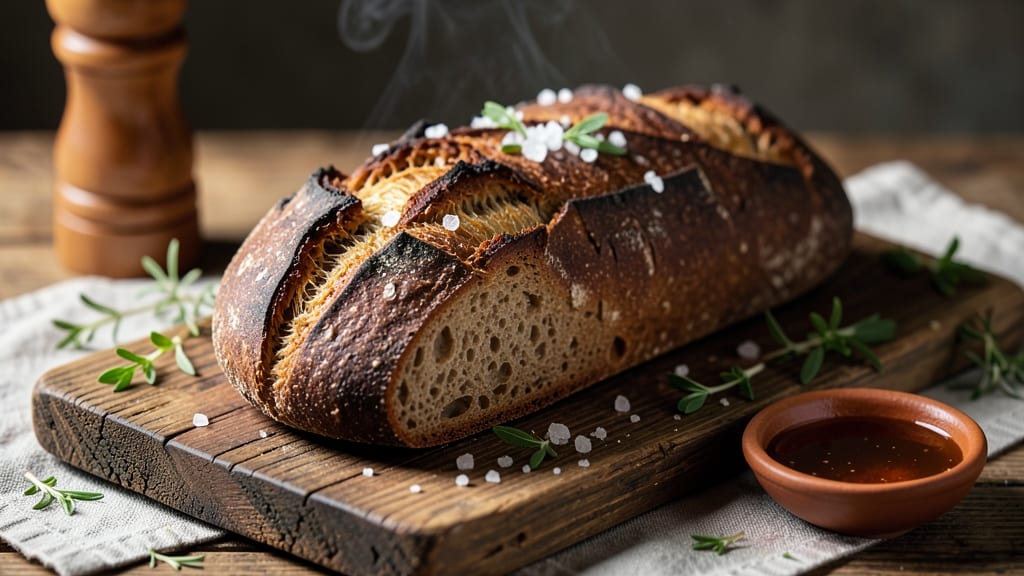
This Anglo-Saxon bread recipe transports you to medieval England with its hearty texture and rustic charm. 🌾 The secret lies in combining barley malt, rye flour, and a touch of honey—a nod to the grains and sweeteners available centuries ago.
Unlike modern breads, this version embraces a denser, chewier crumb that was practical for preserving and serving in a time before refrigeration.
The dough requires a slow fermentation (overnight, ideally) to develop deep, nutty flavors and a sturdy structure. Medieval bakers relied on wood-fired ovens, but we’ll adapt with a home oven for consistent results.
The crust develops a satisfying crackle, while the interior remains moist and substantial—perfect for dipping in broth or pairing with stews.
What makes this bread truly special is its historical authenticity without sacrificing modern convenience. The barley malt adds a subtle sweetness, while rye flour contributes a robust, earthy depth.
No yeast? No problem—this recipe uses a natural leavening method that mimics medieval techniques, ensuring a loaf that’s both educational and delicious.
Once baked, the bread’s aroma fills your kitchen with the scent of ancient hearths, and its texture—crisp yet yielding—makes every slice worth the effort. Whether you’re recreating a medieval feast or simply craving bread with soul, this recipe delivers a taste of history in every bite.
Ingredients for anglo saxon bread
Barley malt, rye flour, and honey—these ancient grains and sweeteners create bread fit for medieval feasts.
| Ingredient | Amount | Notes |
|---|---|---|
| Barley Malt Flour 🌾 | 1 ½ cups | For subtle sweetness and fermentation |
| Rye Flour 🌾 | 2 cups | Dark rye for robust earthy flavor |
| All-Purpose Flour 🌾 | 1 cup | For structure and lightness |
| Honey 🍯 | ¼ cup | Wildflower for depth of flavor |
| Warm Water 💧 | 1 ½ cups | 105°F for ideal fermentation |
| Salt 🧂 | 1 ½ tsp | Diamond Crystal preferred |
| Active Dry Yeast 🍞 | ¼ tsp | Optional for faster rise |
| Olive Oil 🫒 | 1 tbsp | Extra-virgin for richness |
| Whole Wheat Flour 🌾 | ½ cup | For added texture and nutrition |
| Cornmeal 🌽 | 2 tbsp | For dusting and crisp crust |
Barley malt is the star here. Bob's Red Mill makes a great organic version, but any malt powder works—just make sure it's fresh. Rye flour can vary wildly in color and flavor; King Arthur has a reliable dark rye that's perfect for this recipe. The honey should be raw and unfiltered—Mad Honey or local wildflower honey adds the most complexity. If you're feeling ambitious, you can even make your own malt by sprouting barley, but that's a project for another day. The yeast is optional but helps speed up fermentation if you're short on time—Saf-Instant is my go-to brand.
No barley malt? Substitute with 1 extra tablespoon of honey and use a bit more rye flour to compensate. Running low on rye? Whole wheat flour at half the amount adds earthiness, though it won't be identical. The honey can be swapped for maple syrup if you're avoiding it for dietary reasons, though the flavor will shift slightly. For the oil, avocado oil works just as well as olive oil—just avoid anything with a strong flavor like sesame or walnut. And if you're making this for a crowd, double the batch—just be prepared for the dough to be heavy and dense.
This dough needs time—at least 8 hours, ideally overnight. Store it in a warm spot, like your oven with the light on, to encourage fermentation. The longer it ferments, the more complex the flavor. Once shaped, let it rise another 1-2 hours before baking. The bread keeps well for 3-4 days in a bread box, but it's even better the next day as the flavors meld. For longer storage, wrap tightly in foil and freeze—it'll stay fresh for up to 3 months. The crust gets crispier as it cools, so slice it while it's still warm if you're impatient.
Why You'll Love This Recipe
- No-Knead Magic: I swear by this dough—just mix, let it rise, and bake. The barley malt flour does all the heavy lifting while I sip tea, no stand mixer required.
- Honeyed Earthy Richness: That first bite? Warm, caramelized honey cutting through the deep, nutty rye and barley malt—like a medieval feast in your mouth. (Yes, even on a Tuesday night.)
- Lunchbox Legend: Slice it thick for sandwiches or toast it crisp for breakfast—it’s my go-to for meal prep. Keeps for days, stays fresh, and kids won’t swap it for store-bought.
- Pocketbook Hero: Rye and barley malt flour stretch my budget further than white bread, and honey adds sweetness without breaking the bank. A loaf costs less than takeout but tastes like a treat.
Step-by-step instructions for ancient grain crust with rustic chew
This bread brings medieval baking to life with a crisp crust and hearty interior.
👨🍳 Step 1: Activate the Yeast and Mix Wet Ingredients
In a small bowl, combine the 1.5 cups warm water (around 105°F) with the 0.25 cup honey and 1 tbsp olive oil. Stir until the honey dissolves completely—this sweetener helps feed the yeast and adds subtle depth. Sprinkle the 0.25 tsp active dry yeast over the surface and let it sit for 5-10 minutes until it becomes foamy. You'll see tiny bubbles forming at the surface—that's your yeast waking up!
If you notice no activity after 10 minutes, your yeast might be expired. In that case, skip it entirely—this bread will still rise, just more slowly. The honey and warm water will still create a flavorful base for your dough. Once the yeast is active (or if you're skipping it), add the 1.5 tsp salt and mix well to dissolve completely.
👨🍳 Step 2: Combine Dry Ingredients for Perfect Texture
In a large mixing bowl, whisk together the 2 cups rye flour, 1.5 cups barley malt flour, 1 cup all-purpose flour, and 0.5 cup whole wheat flour. The rye gives that authentic earthy flavor, while the barley malt adds subtle sweetness and helps with fermentation. Give everything a good stir to break up any flour lumps—this ensures even distribution when we add the wet ingredients.
Create a well in the center of the dry ingredients and pour in the yeast mixture. Using a wooden spoon or your hands, gradually incorporate the wet ingredients into the dry, mixing just until a shaggy dough forms. Don't overmix yet—we want to preserve some gluten development for that rustic chew. The dough should be sticky but manageable, with a few dry spots still visible.
🥘 Step 3: Knead and Develop Gluten for Structure
Lightly flour a clean surface and turn out the dough. Sprinkle a thin layer of 2 tbsp cornmeal on the surface—this prevents sticking and adds a nice crisp texture to the final crust. Knead the dough for about 8-10 minutes, using a fold-and-turn motion. You're looking for a smooth, slightly tacky dough that springs back slowly when poked—that's your gluten developing properly.
Here's the thing—this isn't a perfectly smooth bread dough. The ancient grains and whole wheat will make it slightly irregular, and that's exactly what we want. When the dough feels elastic but still has some resistance, you're good to go. If it's too sticky to handle, sprinkle a little more cornmeal on your surface and knead for another minute or two.
⏰ Step 4: First Rise for Flavor Development
Lightly grease a large bowl with olive oil and place the dough inside. Cover the bowl with a damp kitchen towel or plastic wrap and let it rise in a warm place for 1-2 hours, or until it has roughly doubled in size. The dough should feel puffy and jiggly when you gently press it with a finger—this indicates proper fermentation.
I like to place my bowl on top of my oven with the light on (not the heat) for consistent warmth. If your kitchen is cold, you might need the extra heat. Don't rush this step—the longer the rise, the more complex flavors develop. The rye and barley will contribute nutty, slightly sweet notes that really shine after proper fermentation.
🔥 Step 5: Shape and Second Rise for Crisp Crust
Turn the dough out onto a lightly cornmeal-dusted surface and gently shape it into a round loaf. Don't overwork it—just enough to bring the edges together. Place the shaped loaf seam-side up on a parchment-lined baking sheet, brush the top with a little water, and sprinkle with additional cornmeal for that classic crust texture.
Let the loaf rise for another 30-45 minutes until it has puffed up noticeably. The surface should look slightly domed and feel firm to the touch. Preheat your oven to 375°F during this final rise—you want everything ready to go when the timer goes off. This second rise is crucial for that open crumb structure we're after.
🔥 Step 6: Bake for Crisp Crust and Rustic Interior
Bake the loaf for 40-45 minutes until it's deep golden brown and sounds hollow when tapped on the bottom. The crust should be crisp and slightly crackled—this is where the cornmeal really shines. If the top browns too quickly, tent it loosely with foil after 20 minutes to prevent over-browning while the interior finishes baking.
Real talk: your first loaf might not be perfect, and that's okay. The beauty of this ancient recipe is its forgiving nature. When you tap the bottom and hear that hollow sound, it's ready. Transfer to a wire rack to cool completely before slicing—this allows the crust to set properly and prevents a gummy interior.
Pro Tips For Making Anglo Saxon Bread
- Mix the Malt First: Barley malt flour is finicky—it clumps like a stubborn child. Wet it with a splash of warm water before adding the rest of the liquid. This keeps your dough smooth and prevents lumps that turn into dense pockets in the bread. (Yes, I’ve fought with this ingredient for years.)
- Use Rye’s Full Weight: Rye flour absorbs moisture like a sponge, so don’t skimp on the warm water. Add it gradually until the dough reaches a thick, sticky consistency—about 1½ times the flour’s volume. Too little water, and your loaf will crack like a dried riverbed.
- Steam the First 15 Minutes: This bread’s crust needs a head start. Place a metal bowl of boiling water in your oven before baking, then slide the loaf in. The steam locks in moisture and gives that deep, golden-brown crust the Anglo-Saxons would’ve envied. (I learned this after my first batch turned out like a hockey puck.)
- Skip the Honey Until Last: Add honey after kneading—it’s sticky enough to gum up your dough if mixed in early. Brush it on the loaf right before baking for a glossy finish and that caramelized sweetness. Trust me, your bread will taste like it was baked in a medieval hearth, not a modern oven.
Creative variations of anglo saxon bread
Medieval Herb Version
Add 1 tablespoon dried rosemary and 1 teaspoon thyme directly to the dry ingredients for an authentic medieval twist. These herbs were staples in Anglo-Saxon kitchens and add a fragrant, earthy depth that pairs beautifully with the rye and barley.
For extra authenticity, use wild thyme if available—it has a more complex flavor profile. 🌿
Sweetened Fruit Loaf
Incorporate ½ cup chopped dried figs or raisins into the dough during the kneading stage for a sweeter, fruit-infused loaf. This variation was common in medieval times when fresh fruit was scarce.
The dried fruit adds natural sweetness that complements the honey and barley malt, creating a loaf perfect for breakfast or dessert. Warm the fruit in 2 tablespoons warm water for 5 minutes to soften before mixing.
Whole Grain Boost
Replace ½ cup of the all-purpose flour with ½ cup buckwheat flour or spelt flour for a nuttier, more complex flavor. These ancient grains were widely used in medieval Europe and add a satisfying chewiness.
Buckwheat brings a slightly bitter note that balances the sweetness of the honey, while spelt offers a milder, sweeter flavor. For best results, use freshly ground flour if possible—pre-ground varieties can lose some of their flavor.
Savory Seed Topping
Before baking, sprinkle 1 tablespoon poppy seeds and 1 tablespoon sesame seeds on the loaf for added texture and a subtle nutty flavor. Poppy seeds were a common medieval ingredient, often used in breads and pastries.
Toast the seeds in a dry pan for 2-3 minutes until fragrant before sprinkling to enhance their flavor. This topping adds visual appeal and a delightful crunch with every bite.
Spiced Rum Variation
Replace 2 tablespoons of the warm water with 2 tablespoons spiced rum (like Captain Morgan or Bulldog) for a boozy twist. The alcohol enhances fermentation and adds warm, aromatic notes of cinnamon and cloves.
This variation was inspired by medieval monastic recipes where alcohol was often used to preserve bread and enhance flavor. Let the dough ferment for an extra 30 minutes to allow the alcohol to mellow.
Crispy Cornbread Hybrid
Increase the cornmeal to 3 tablespoons and reduce the all-purpose flour by ¼ cup for a loaf with a sweeter, corn-infused flavor. This hybrid version was inspired by Anglo-Saxon influences in early American cuisine.
The extra cornmeal creates a crisper crust and a slightly coarser crumb. Brush the baked loaf with melted butter for added richness and serve warm with honey butter for dipping.
Nutrition facts
Frequently asked questions
Why does this bread use barley malt instead of regular flour?
Barley malt was a staple in medieval Anglo-Saxon diets and adds natural sweetness while acting as a gentle leavening agent. The enzymes in malt help break down starches, creating a more open crumb structure and enhancing fermentation. It also gives the bread that authentic historical flavor profile that sets it apart from modern recipes.
Can I make this bread without yeast?
This recipe is designed to work with or without yeast. The honey and warm water create a natural fermentation that will still make the dough rise, though it may take 24-48 hours for full development. For faster results, use the yeast but reduce fermentation time to 8-12 hours total.
What's the best way to store leftover Anglo-Saxon bread?
Wrap cooled slices tightly in beeswax wrap or foil to preserve freshness for 3-4 days at room temperature. For longer storage, freeze individual slices wrapped in parchment paper—they'll stay fresh for up to 3 months. The crust actually gets crisper when reheated in a 350°F oven for 5 minutes.
How do I know when the bread is fully baked?
Look for a deep golden brown crust and tap the bottom—it should sound hollow like a drum. The internal temperature should reach 190°F. If the top browns too quickly, tent with foil after 20 minutes to prevent over-browning while the center finishes baking.
What's the difference between this and regular rye bread?
This recipe combines rye with barley malt and whole wheat for a denser, heartier texture than commercial rye bread. The lack of commercial yeast and longer fermentation create a deeper, nuttier flavor profile that's more authentic to medieval baking traditions. The crust is also significantly crispier thanks to the cornmeal topping.