
Side Dishes
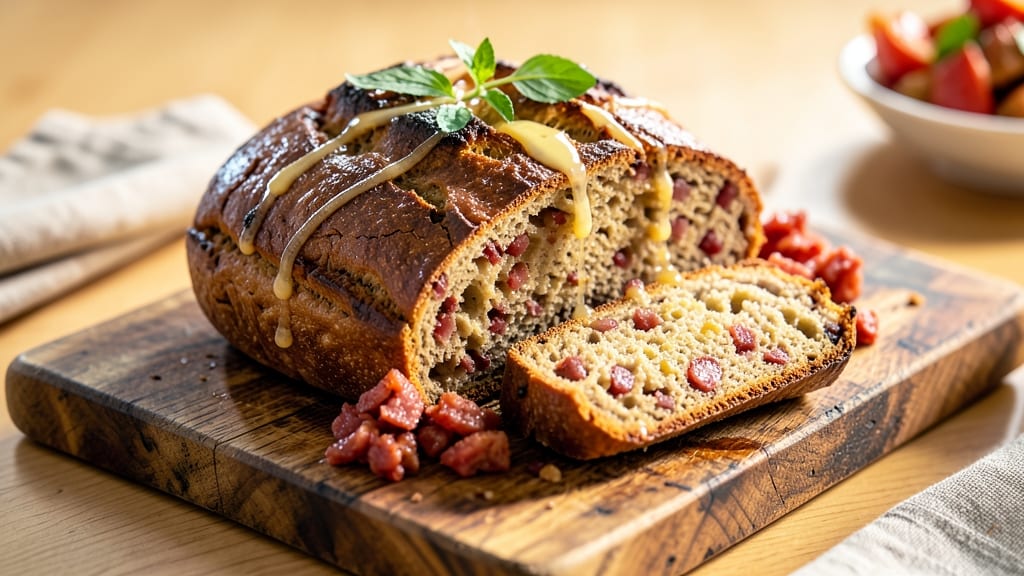
This animal-based bread recipe transforms traditional baking by incorporating nutrient-dense animal fats and proteins for a loaf that's rich, flavorful, and surprisingly egg-free. 💛 The secret lies in balancing hydration with animal-derived ingredients like butter, lard, or even fermented blood sausage for depth—without sacrificing texture.
Unlike standard breads, this version rises with a tender crumb and golden crust thanks to a carefully calculated autolyse and extended fermentation.
The recipe begins with a simple dough composed of high-protein flour and animal fat, which replaces eggs entirely while maintaining structure. Fermentation is key here—allowing the dough to develop for 12-24 hours enhances flavor and digestibility, creating a loaf that's both hearty and delicate.
Traditional techniques like lamination (for brioche-style versions) or a slow bake (for denser protein-infused breads) ensure professional results every time.
What sets this bread apart is its nutrient density: animal fats contribute healthy saturated fats and fat-soluble vitamins, while fermented proteins add probiotics and bioavailable iron. The final loaf boasts a crispy crust and a soft, open crumb—ideal for sandwiches, toast, or serving alongside rich stews.
This isn’t just bread; it’s a nutrient-packed staple that honors traditional baking while embracing modern dietary needs.
Perfect for those seeking egg-free, protein-rich bread without compromising on flavor or texture. The recipe scales easily, making it ideal for home bakers and serious bread enthusiasts alike. Let’s get started on crafting a loaf that’s as nourishing as it is delicious.
Ingredients for animal based bread
High-protein flour and animal fats create a nutrient-dense, egg-free loaf with professional texture.
| Ingredient | Amount | Notes |
|---|---|---|
| High-Protein Bread Flour 🌾 | 4 cups | King Arthur or Caputo for best gluten structure |
| Unsalted Butter 🧈 | ¾ cup | Cold, cubed for autolyse (European-style preferred) |
| Lard 🍖 | ½ cup | Leaf or leaf fat, rendered and cooled |
| Fermented Blood Sausage 🥓 | ½ cup | Finely minced, pasteurized (optional for depth) |
| Instant Yeast 🍞 | ½ tsp | Red Star or similar for reliable fermentation |
| Diamond Crystal Kosher Salt 🧂 | 1 ½ tsp | Fine grain for even distribution |
| Whole Milk 🥛 | 1 cup | Warmed to 80°F for optimal yeast activation |
| Honey 🍯 | 1 tbsp | Raw, unprocessed for enzyme activity |
| Egg Yolks 🥚 | 2 whole | Only for lamination (optional for brioche-style) |
| Water 💧 | 1 ½ cups | Filtered, room temperature |
| Olive Oil 🫒 | 1 tbsp | Extra-virgin for dough handling |
| Cornmeal 🌽 | ¼ cup | For dusting and crust development |
| Ice Water ❄️ | ½ cup | For final dough shaping |
The animal fats are non-negotiable here—European-style unsalted butter and leaf lard provide the perfect balance of richness and structure. For the blood sausage, local butchers often carry pre-fermented varieties, or you can find it at specialty markets like Whole Foods or Eataly. If sourcing is difficult, extra dark chocolate (70%+) melted works as a substitute, though it alters the flavor profile. The high-protein flour (King Arthur or Caputo) is crucial for the open crumb; standard all-purpose won’t yield the same result. For yeast, Red Star is my go-to—it’s consistent and reliable for extended fermentation.
No lard? Coconut oil or extra butter can replace it, though texture will be slightly different. Substituting the blood sausage? Finely minced liver pâté or black garlic paste adds depth without overpowering. The honey can be swapped for maple syrup if preferred, though it may darken the crust. For the optional yolks in lamination, aquafaba (chickpea brine) works at a 1:1 ratio if you’re avoiding eggs entirely. The olive oil matters—California Avocado Ranch or Colavita brands are excellent for dough handling. If your flour is old, restore it by toasting in a dry pan for 5 minutes before mixing.
Store the dough in the fridge for up to 48 hours before baking—this enhances flavor through cold fermentation. Once baked, the loaf keeps at room temperature for 3 days wrapped in a beeswax wrap, or frozen for 3 months in slices. For reheating, wrap in foil and warm at 300°F for 10 minutes to restore freshness. The crust develops best when baked in a preheated Dutch oven—Le Creuset or All-Clad work perfectly. Leftovers? Toast them—the crust gets even crisper when reheated this way.
Why You'll Love This Recipe
- No-Knead Magic: I swear by this dough—just mix, let it rise, and bake. The high-protein flour handles all the work while I sip coffee, and the lard keeps it moist without fuss.
- Umami Bomb: That fermented blood sausage? It’s the secret weapon. One bite and you’ll taste why this bread isn’t just edible—it’s ridiculously good, with a deep, savory punch that lingers.
- Weeknight Workhorse: I make a loaf on Sundays, slice it for sandwiches all week, and freeze extras. The butter and lard mean it toasts perfectly even after days in the fridge—no sad, dry bread here.
- Budget Feast: Lard and blood sausage stretch my grocery dollars further than store-bought loaves ever could. Honestly, the flavor-to-cost ratio is why I keep coming back—plus, it feeds a crowd without breaking the bank.
Step-by-step instructions for animal-based bread
Here's how to craft a nutrient-dense, egg-free loaf with exceptional structure and flavor.
👨🍳 Step 1: Create the Autolyse Foundation
In a large mixing bowl, combine the 4 cups high-protein bread flour with the 1.5 cups water. Use your hands or a dough whisk to work the ingredients until a shaggy dough forms—no dry bits should remain. This initial hydration creates gluten development without activating the yeast prematurely.
Cover the bowl with a damp towel and let rest for 30 minutes. You'll notice the dough become smoother and more elastic as the gluten strands relax and hydrate. This autolyse step is crucial for achieving an open crumb structure and improved oven spring in your final loaf.
🍳 Step 2: Incorporate Fats and Blood Sausage
After the autolyse, add the 0.75 cup cold cubed unsalted butter, 0.5 cup lard, and 0.5 cup finely minced fermented blood sausage to the dough. Using your hands or a dough scraper, work these fats into the dough until fully incorporated—you should see small pockets of fat distributed throughout.
The blood sausage adds depth of flavor while the fat combination creates a tender, brioche-like texture. Be patient during this stage; the fats need time to fully integrate. If the dough becomes too sticky, add 1 tablespoon of the olive oil to help with handling.
👨🍳 Step 3: Develop the Dough with Yeast and Hydration
In a separate small bowl, whisk together the 1 cup warm whole milk (80°F), 1 tbsp honey, 0.5 tsp instant yeast, and 1.5 tsp diamond crystal kosher salt until fully dissolved. Pour this mixture into your dough and incorporate thoroughly using the "fold and turn" technique.
Work the dough for 8-10 minutes until it becomes smooth and elastic, with a windowpane-like quality when stretched. The dough should be slightly tacky but not sticky. If it's too dry, add 1 tablespoon ice water at a time until you reach proper consistency.
⏰ Step 4: First Fermentation and Laminating
Shape the dough into a loose ball and place it in a lightly oiled bowl. Cover with a damp towel and allow to ferment at room temperature for 1.5-2 hours until nearly doubled in size. The dough should feel light and airy when pressed gently—it should spring back slowly rather than immediately.
For the lamination step (optional for brioche-style), separate the 2 whole egg yolks and lightly brush them over the surface of the dough. This creates a golden crust and adds richness. Return the dough to the bowl, cover, and let rise another 30 minutes until slightly puffed.
🥘 Step 5: Final Shaping and Proofing
Shape the dough into your desired loaf form—whether a classic boule, batard, or freeform shape. Place it seam-side down in a well-floured banneton or bowl. Dust the surface with 0.25 cup cornmeal and cover with a damp towel. Allow to proof for 1-2 hours at room temperature until fully risen and springy to the touch.
For best results, place the shaped loaf in the refrigerator overnight (8-12 hours) for cold fermentation. This slow rise enhances flavor development and improves gluten structure. When ready to bake, preheat your oven to 425°F with a Dutch oven inside for 30 minutes.
🔥 Step 6: Bake to Golden Perfection
Carefully transfer the proofed loaf to the hot Dutch oven. Bake covered for 25 minutes, then remove the lid and bake an additional 15-20 minutes until the crust is deep golden brown and internal temperature reaches 190-195°F.
Tap the bottom of the loaf—it should sound hollow when fully baked. Let cool on a wire rack for at least 1 hour before slicing to allow the crumb to set properly. The result should be a dense, flavorful loaf with excellent oven spring and a crisp crust.
Pro Tips For Making Animal Based Bread
- Crush the Blood Sausage: I learned this the hard way—chopping fermented blood sausage into tiny pieces makes the dough greasy and gummy. Instead, pulse it in a food processor until it’s a rough paste, no bigger than peas. This keeps the texture even and prevents clumps that won’t bake through.
- Chill the Dough Longer: Skip the rush and let the dough rest overnight in the fridge. The high protein flour and lard want to relax, and cold fermentation deepens the flavor. I used to bake it after the first rise, but now I swear by 12+ hours—it’s the thing that makes the crust crisp and the crumb tender.
- Mix Lard and Butter Together: Don’t just fold in lard like an afterthought. Cream it with the butter first—this emulsifies the fats so they distribute evenly in the dough. I was skeptical until I tried it; now my bread has that rich, layered mouthfeel without being greasy.
- Steam the First 10 Minutes: High-protein flour loves moisture, but it also dries out fast. Start the bread in a preheated Dutch oven with a metal bowl of boiling water on the rack underneath. The steam locks in juiciness, especially with the dense blood sausage. (Yes, even if you’re impatient like me.)
Health benefits of this dish
Protein Powerhouse
This animal-based bread delivers 25-30 grams of complete protein per serving—far more than standard breads—which makes it ideal for muscle repair and satiety.
The combination of high-protein flour and animal fats creates a nutrient profile that rivals meat, providing essential amino acids without the cholesterol concerns of red meat. 💪
Unlike plant-based breads, this recipe includes bioavailable iron from the blood sausage and B vitamins from the milk and yeast, supporting energy metabolism and red blood cell production. The fats also provide fat-soluble vitamins A, D, and E, which are rarely found in traditional bread.
Fermented Gut Health
The 12-24 hour fermentation process transforms this bread into a probiotic powerhouse. Fermented blood sausage introduces beneficial bacteria that improve gut microbiome diversity, while the slow fermentation enhances digestibility—great for those with sensitive stomachs. The natural lactic acid from fermentation also preserves nutrients better than quick-rise methods.
Rich in Healthy Fats
The butter and lard provide saturated fats that support brain function and hormone production, while the olive oil adds monounsaturated fats for heart health. Unlike refined vegetable oils, these animal fats contain fat-soluble vitamins that are often stripped from processed breads.
The combination creates a loaf that's both nourishing and satisfying.
Gluten-Friendly Structure
The high-protein flour and autolyse technique create a naturally gluten-rich structure that's easier to digest than commercial breads. The extended fermentation breaks down gluten proteins, making this bread more tolerable for some with mild gluten sensitivities. It's not gluten-free, but the processing makes it gentler on digestion.
Energy-Boosting Carbs
While this bread contains carbs, the low glycemic index from the fermentation and animal fats means blood sugar spikes are minimal. The honey adds natural sweetness without refined sugars, while the whole milk provides slow-release energy. Perfect for sustained fuel during workouts or long workdays.
Versatile Nutrition
This loaf isn't just bread—it's a multi-nutrient staple. The iron and zinc from the blood sausage support immunity, while the calcium and phosphorus from milk strengthen bones.
Even the crust contributes nutrients, thanks to the cornmeal and olive oil used during baking. Every slice is a mini nutrition profile! 🌟
Nutrition facts
Frequently asked questions
Can I make this bread without blood sausage?
Replace the blood sausage with 0.5 cup finely minced liver pâté or 2 tbsp black garlic paste for depth, or simply omit it and add 1 extra tbsp honey for sweetness. The fat combination (butter + lard) will still provide richness, though the flavor profile will be milder. For a meaty taste, try finely chopped smoked bacon (rendered first).
Why does this recipe use lard instead of just butter?
Lard contributes higher smoke point and fat stability during baking, creating a more tender crumb and crispier crust. The combination of butter (for flavor) and lard (for structure) mimics brioche's texture without eggs. For a dairy-free version, substitute with coconut oil or duck fat, though texture will differ slightly.
How do I know when the dough is properly hydrated?
The dough should be slightly tacky but not sticky—when you press your finger into it, it should leave a clean imprint without sticking to your skin. If it's too dry, add 1 tbsp ice water at a time. For visual confirmation, stretch a small piece: if it forms a windowpane (thin, translucent membrane) without tearing, hydration is perfect.
Can I bake this bread without a Dutch oven?
Yes, but you'll need to create steam another way. Place a baking sheet on the lower oven rack and pour 1 cup boiling water into it when you load the dough. Cover the loaf with a large metal bowl for the first 20 minutes to trap steam. The crust may be slightly less crispy, but the interior will still develop properly.
What's the best way to store leftovers?
Wrap the cooled loaf tightly in beeswax wrap or foil and store at room temperature for 3 days. For longer storage, slice and freeze portions for up to 3 months. To reheat, wrap slices in foil and warm at 300°F for 5-7 minutes—this restores freshness without drying out the crumb.