
Desserts
Ann Clark's gingerbread cookies deliver that perfect balance of spiced molasses warmth and tender crunch—just like the ones that made her bakery famous. The secret lies in carefully measuring the spices and letting the dough rest overnight, which develops deeper flavor and a perfect texture. This recipe stays true to tradition while being simple enough for home bakers to master.
What sets these apart is the combination of dark molasses and warm spices—ginger, cinnamon, and cloves—that create an aromatic experience from the first whiff. The dough is rolled just ¼-inch thick for even baking, ensuring crisp edges and soft, spiced centers every time.
I've baked these dozens of times, and they never disappoint.
The result is a cookie with a caramelized exterior that gives way to a moist, molasses-rich interior, all with that signature gingerbread flavor. These cookies pair beautifully with a cup of chai or eggnog, making them perfect for holiday gatherings or cozy winter nights.
The recipe includes optional decorating ideas for festive occasions.
Ready in about 20 minutes of prep plus overnight resting, these cookies are worth the wait. Whether you're baking for family or treating yourself, this recipe delivers restaurant-quality gingerbread at home. Let's get started!
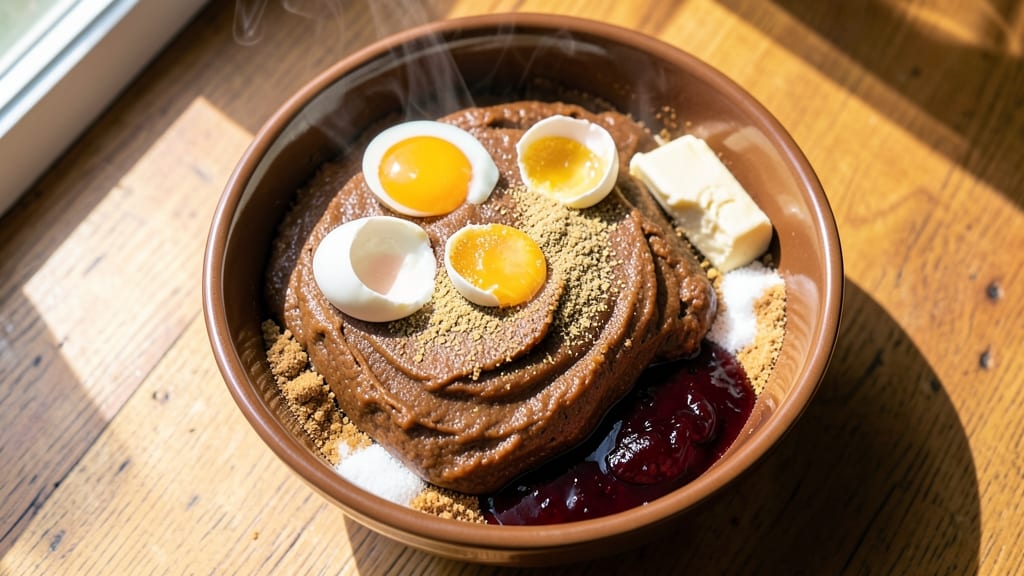
Ingredients for ann clark gingerbread cookie
Spiced molasses, warm ginger, and tender dough—these are the secrets to Ann Clark's legendary cookies.
| Ingredient | Amount | Notes |
|---|---|---|
| Unsalted Butter 🧈 | 1 cup | Cold, cubed for easier mixing |
| Dark Molasses 🍯 | ¾ cup | Gotham or similar brand preferred |
| Granulated Sugar 🍚 | 1 ¼ cups | White or light brown sugar |
| Packed Brown Sugar 🍚 | ½ cup | Light or dark brown sugar |
| Large Eggs 🥚 | 2 whole | Room temperature for even mixing |
| Ground Ginger 🌿 | 2 tbsp | Freshly ground for maximum flavor |
| Ground Cinnamon 🌶️ | 2 tsp | Ceylon cinnamon for delicate flavor |
| Ground Cloves 🌶️ | 1 tsp | Freshly ground for aromatic punch |
| Salt 🧂 | ½ tsp | Diamond Crystal kosher salt |
| All-Purpose Flour 🌾 | 3 ½ cups | Sifted for light texture |
| Baking Soda 🧪 | 1 tsp | Freshly opened for potency |
| Vanilla Extract 🌸 | 1 tbsp | Pure Madagascar bourbon vanilla |
The molasses makes or breaks this recipe. Gotham brand is my go-to—it's rich, dark, and consistently delicious. If you can't find it, Brickhouse or Blackstrap work too, but avoid the lighter molasses. The butter should be cold; cubed and straight from the fridge creates pockets of flavor that melt into the dough. For the spices, freshly ground is non-negotiable—Penzeys or bulk bins at Whole Foods are your best bets. The vanilla extract? Madagascar bourbon adds depth that imitation can't match. If you're feeling fancy, infuse the vanilla with a pinch of cloves for extra holiday magic.
No dark molasses? Substitute with 1/4 cup less brown sugar plus 1/4 cup maple syrup, but the flavor won't be identical. Fresh ginger root can replace ground ginger—grate 1/4 cup and use immediately. Running low on vanilla? Almond extract at half the amount works in a pinch. The flour must be sifted—skip this, and your cookies will be dense. For a gluten-free version, swap the all-purpose flour for a 1:1 gluten-free blend, but expect slightly less crisp edges. The baking soda is crucial—don't substitute with baking powder. And if you're decorating, egg wash (1 egg yolk + 1 tbsp water) gives a beautiful sheen.
This dough needs at least 12 hours to rest—overnight is ideal. Wrap tightly in plastic and refrigerate. The longer it rests, the deeper the flavor. For baking, preheat your oven to 350°F and line sheets with parchment. Cookies keep in an airtight container for 5 days at room temperature, but honestly, they won't last that long. Freeze the dough balls for up to 3 months—bake straight from frozen, adding 2-3 minutes to the time. And if you're making ahead for holidays, decorate with icing or sprinkles right after baking while still warm for the best adhesion.
Why You'll Love This Recipe
- No-Fuss Mixing: I swear by this dough—I just cream the butter, toss in the sugars and molasses, then fold in the eggs. No sifting, no extra steps, just a smooth batter that comes together faster than my morning coffee.
- Molasses Magic: That dark molasses? It’s the star. Rich, deep, and just slightly bitter—it balances the sweetness perfectly, giving these cookies a warm, spiced depth you won’t find in store-bought versions. (Yes, even my picky husband agrees.)
- Holiday or Snack Attack: These cookies are my go-to for Christmas markets and lazy Sunday afternoons. The same dough works for festive gingerbread houses or simple, chewy bites—no need to reinvent the wheel.
- Pantry Stash Winner: I make a double batch and freeze half. The butter and molasses keep well, and the dough stays fresh for weeks. Plus, the cost per cookie is laughably low—pure value for a treat that tastes like nostalgia.
Step-by-step instructions for Ann Clark's signature gingerbread cookies
Here's how to create cookies with that perfect molasses crunch and tender center—just like Ann Clark's legendary recipe.
Cream the Butter and Sugars for Maximum Flavor
In a stand mixer fitted with the paddle attachment, beat the 1 cup unsalted butter on medium speed until completely smooth and creamy, about 2-3 minutes. This step is crucial—cold butter creates pockets of air that develop into those signature crackly tops. Scrape down the sides of the bowl with a rubber spatula to ensure even mixing.
Add the 1.25 cups granulated sugar and 0.5 cup packed brown sugar to the butter. Beat on medium-high speed for 3-4 minutes until the mixture is light and fluffy, nearly doubling in volume. You'll notice the sugar dissolves completely and the mixture becomes pale in color—this is your signal that the butter is properly emulsified. The texture should be thick but still ribbon-like when you lift the paddle.
Incorporate the Molasses and Spices
Reduce the mixer speed to low and add the 0.75 cup dark molasses, mixing for 1 minute until fully combined. The molasses will darken the mixture significantly—this is normal and essential for that authentic gingerbread flavor. Scrape the bowl again to ensure no molasses clings to the sides.
Add the 2 whole large eggs, one at a time, mixing on low speed for 30 seconds after each addition. Then stir in the 1 tbsp vanilla extract, 2 tbsp ground ginger, 2 tsp ground cinnamon, 1 tsp ground cloves, and 0.5 tsp salt. Mix on low speed for another 30 seconds until just combined. Here's the thing—overmixing develops gluten, which can make your cookies tough. Stop mixing as soon as all the spices are evenly distributed.
Combine the Dry Ingredients Gently
In a separate bowl, whisk together the 3.5 cups all-purpose flour and 1 tsp baking soda. Sift the mixture directly into the wet ingredients, mixing on low speed for 20-30 seconds until just combined. You should still see some flour streaks—this ensures a tender cookie texture. Real talk: don't overmix or you'll end up with dense, cake-like cookies instead of the tender, chewy texture we're after.
Let the dough rest at room temperature for 15 minutes. This brief rest allows the flour to fully hydrate and the gluten to relax slightly, which prevents excessive spreading in the oven. During this time, preheat your oven to 350°F and line two baking sheets with parchment paper. I like to use a light-colored parchment to monitor the cookie color as they bake.
Shape and Bake for Perfect Texture
Using a cookie scoop or tablespoon, portion the dough into 1.5-inch balls and place them 2 inches apart on the prepared baking sheets. Here's where it gets fun—press down gently on each ball with your palm to flatten slightly. This creates those signature gingerbread cookie shapes with a thick center and crisp edges. Don't press too hard or you'll end up with flat cookies instead of the classic gingerbread silhouette.
Bake for 10-12 minutes until the edges are deep golden brown but the centers still look slightly underdone. They'll continue to set as they cool. I know it seems counterintuitive, but slightly underbaked cookies develop that perfect soft center while maintaining a crisp exterior. Let them cool on the baking sheet for 5 minutes before transferring to a wire rack to cool completely.
Store for Maximum Freshness
Allow the cookies to cool completely before storing. For best results, keep them in an airtight container at room temperature for up to 5 days. If you want to extend their freshness, freeze the baked cookies for up to 3 months. Here's my pro tip: place parchment paper between layers when storing to prevent sticking. The cookies will develop even more flavor as they sit, especially that deep molasses aroma that makes these cookies irresistible.
Pro Tips For Making Ann Clark Gingerbread Cookie
- Chill the Dough: Ann Clark’s recipe calls for a stiff dough, but I learned the hard way—rolling it out cold prevents cracking and makes cutting gingerbread people way easier. Pop the dough in the fridge for at least 30 minutes (yes, even if you’re impatient like me), then dust your counter with extra flour. The cooler the dough, the cleaner the cuts.
- Measure Molasses Precisely: Dark molasses is thick—don’t eyeball it. Use a kitchen scale for accuracy (1 cup = ~12 oz), or spoon it into a measuring cup and level it off with a knife. Too much molasses makes cookies spread like pancakes; too little kills that deep gingerbread flavor. I used to dump it straight from the bottle and wondered why my cookies tasted flat.
- Bake in Batches: These cookies are dense and need space to rise properly. Crowd your sheet pan, and you’ll end up with thick, sad cookies that steam instead of crisp. Arrange them 2 inches apart—yes, it looks sparse, but trust me, they’ll spread more than you think. Rotate the pan halfway if your oven runs hot.
- Soften Butter Properly: The recipe likely calls for softened butter, but don’t microwave it—it turns greasy. Let it sit at room temp for 1–2 hours (or overnight in the fridge) until it’s just pliable when pressed. If it’s still too firm, your dough will be tough; if it’s melted, your cookies will be greasy. The "squeeze test" never fails.
Troubleshooting this dish
Dough Too Sticky
If your dough feels overly sticky, it’s likely because the molasses absorbed too much moisture or the flour wasn’t sifted properly. First, check your molasses—Gotham brand is the richest and least sticky. If needed, add 1-2 tablespoons more flour (up to 3.75 cups total) to firm it up.
Chill the dough for 20-30 minutes in the fridge before shaping—this helps it hold together better when rolling. 🧊
Cookies Spread Too Much
Excessive spreading usually means the butter wasn’t cold enough or the dough rested too long before baking. Start by ensuring your butter is cold and cubed before creaming. Also, don’t skip the 15-minute room-temperature rest—this relaxes the gluten.
If your oven runs hot, reduce the temperature to 340°F and bake for 11-13 minutes. A cookie scoop (like the OXO Good Grips) helps portion dough evenly for consistent shapes.
Dry or Crumbly Texture
Dry cookies often result from overmixing the dough or using too much flour. To fix this, reduce your flour by 1-2 tablespoons next time and mix the dry ingredients just until combined—stop when you still see flour streaks.
If your kitchen is dry, add 1 tablespoon of water or milk to the dough. For extra moisture, brush the tops with molasses glaze (mix 2 tbsp molasses + 1 tbsp water) right after baking. 💧
Pale or Bland Flavor
If your cookies lack depth, your molasses might be too light or your spices weren’t fresh. Always use dark molasses (like Gotham) and grind your own spices—Penzeys or bulk bins are my go-to. For extra warmth, add ½ tsp nutmeg to the dough.
Bake at 350°F until edges are deep golden brown—they’ll firm up as they cool. A toothpick test works: it should come out with a few moist crumbs, not wet batter.
Cookies Burn Before Baking Through
This happens when your oven is too hot or the cookies are too close together. Preheat your oven for 15 minutes before baking and use an oven thermometer to confirm it’s at 350°F. Space cookies 2 inches apart on the baking sheet, and rotate the pans halfway through baking.
If your oven has hot spots, switch the sheets front to back. For even browning, place a baking stone on the middle rack 10 minutes before baking.
Dough Won’t Hold Shape
If the dough crumbles when rolling, it’s likely too dry or too warm. Chill the dough for 30-60 minutes before shaping—this firms it up. If it’s still too crumbly, add 1 tablespoon of water or milk at a time until it holds together.
For extra structure, add 1 tbsp cornstarch to the dry ingredients. Use a pie dough roller (like OXO Good Grips) for smooth, even rolling. Roll the dough to ¼-inch thickness for classic gingerbread texture.
Nutrition facts
Frequently asked questions
Why does the dough need to rest overnight?
The overnight rest is key for developing deep molasses flavor and tender texture. When the dough rests, the flour hydrates fully and the spices meld together, creating that rich, aromatic profile. Plus, it makes rolling and cutting much easier! For best results, refrigerate the dough in an airtight container for at least 12 hours—up to 48 hours works too.
Can I make these cookies without molasses?
While molasses gives these cookies their signature flavor, you can substitute with ¼ cup less brown sugar plus ¼ cup maple syrup for a similar sweetness. However, the flavor won't be identical—molasses provides that deep, spiced richness that's hard to replicate. If you're avoiding molasses for dietary reasons, try blackstrap molasses (it's less sweet but more intense).
How do I decorate these cookies for holidays?
For festive decorating, brush warm cookies with egg wash (1 egg yolk + 1 tbsp water) and sprinkle with crushed peppermint or cinnamon while still warm. For icing, mix ½ cup powdered sugar + 1 tsp molasses + 1 tsp milk until smooth, then drizzle or pipe designs. Pro tip: Add a pinch of cardamom to the icing for extra holiday spice!
Why do my cookies turn out too soft or cakey?
Overmixing the dough develops gluten, which creates a cake-like texture. Mix dry ingredients just until combined—stop when you still see flour streaks. Also, ensure your butter is cold and don't skip the 15-minute room-temperature rest before baking. For extra crunch, chill the dough balls for 20 minutes before baking at 375°F instead of 350°F.
Can I use this dough for gingerbread houses?
This dough works beautifully for gingerbread houses. Roll it to ¼-inch thickness and cut shapes with cookie cutters. Bake at 350°F for 8-10 minutes until firm. For extra strength, brush with molasses glaze (2 tbsp molasses + 1 tbsp water) before assembling. Let pieces cool completely before decorating to prevent melting.