
Snacks
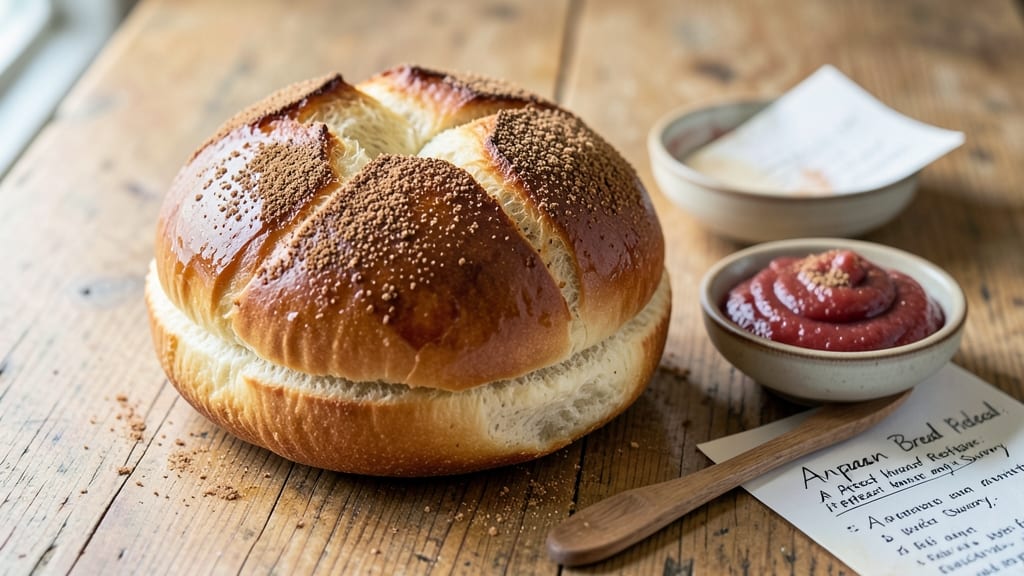
This Anpan bread recipe brings the comforting flavors of Japan's beloved street snack into your kitchen with its signature sweet red bean filling encased in flaky, golden layers. 💛 The combination of tender dough and rich, slightly sticky anko (red bean paste) creates a texture that's both satisfying and nostalgic, perfect for breakfast or afternoon tea.
What sets this recipe apart is the balance between traditional technique and home-baking simplicity. The dough achieves that signature crisp crust while remaining soft inside, while the red bean filling—sweetened just enough to complement the bread—is made from scratch for maximum flavor.
No special equipment is needed, just patience for the dough to rise properly and a gentle hand when assembling.
By the time you pull this bread from the oven, you'll have a loaf with a crusty exterior that gives way to tender, pillowy layers filled with velvety red bean paste.
The aroma alone will transport you to bustling Japanese bakeries, where these treats are sold by the slice. Each bite delivers that perfect contrast of textures and flavors.
The beauty of anpan lies in its versatility—while the classic version uses sweet red bean paste, you can easily experiment with matcha, black sesame, or even chocolate for modern twists. This recipe delivers the authentic experience while giving you room to make it your own. Let's get started!
Ingredients for anpan bread
Fourteen simple ingredients transform into Japan's beloved sweet bread with flaky layers.
| Ingredient | Amount | Notes |
|---|---|---|
| All-Purpose Flour 🌾 | 3 cups | Sifted for light texture |
| Granulated Sugar 🍚 | ¼ cup | White or brown preferred |
| Active Dry Yeast 🍞 | 0.01 oz | 1 packet (2.25g) |
| Unsalted Butter 🧈 | ½ cup | Cold, cubed for dough |
| Milk 🥛 | ½ cup | Room temperature |
| Large Eggs 🥚 | 1 whole | Room temperature |
| Salt 🧂 | ½ tsp | Fine sea salt |
| Dried Red Bean Paste (Anko) 🍡 | 1 ½ cups | Store-bought or homemade |
| Honey 🍯 | 2 tbsp | For bean paste sweetness |
| Water 💧 | ¼ cup | For bean paste consistency |
| Vanilla Extract 🌿 | ½ tsp | Optional, for bean paste |
| Egg Wash 🥚 | 1 whole | 1 egg beaten for brushing |
| Sesame Seeds 🌰 | 2 tbsp | Toasted for topping |
The red bean paste is the heart of anpan, so don't cut corners here. Store-bought anko from Asian markets is perfect—look for brands like Koyo or Marukome for that authentic texture. If making your own, soak the dried azuki beans overnight for best results. For the dough, King Arthur flour gives the best rise, but any high-quality all-purpose works. The butter should be cold when mixing to prevent overdevelopment—pull it straight from the fridge. Honey is key for balancing the sweetness of the bean paste, so grab a good local variety if possible.
No anko? Sweetened mashed beans (canned, drained, and mashed with honey) work in a pinch, though texture will differ. Short on sesame seeds? Toasted poppy seeds add a different but lovely crunch. The vanilla extract enhances the bean paste, but if you skip it, just add a pinch more honey. For the dough, if you're in a hurry, instant yeast works at double the amount (0.02 oz). The milk should be room temperature—cold milk slows yeast activation. And if you're feeling adventurous, swap half the red bean paste for matcha powder mixed with sugar for a modern twist.
The dough needs time to rise properly—plan for at least 2 hours (or overnight in the fridge). Wrap it tightly in plastic wrap to prevent drying. Once shaped, let the anpan rest 30 minutes before baking for cleaner slices. Store wrapped at room temperature for 2 days or freeze for 3 months. To reheat, wrap in foil and warm at 350°F for 10 minutes. The filling stays fresh for 1 week in the fridge if stored separately. And if you're making a batch, double the dough and halve the filling—these freeze beautifully for quick breakfasts.
Why You'll Love This Recipe
- No-Knead Magic: I swear by this dough—just mix, let it rise, and boom, fluffy bread with zero elbow grease. The yeast and butter do all the heavy lifting while I sip my coffee.
- Sweet & Savory Balance: That caramelized sugar crust? Pure bliss. The soft, buttery interior pairs perfectly with the filling (red bean paste, anyone?), making every bite feel like a little treat.
- Packable Lunch Hero: Between us, this is my go-to for meal prep. Slice it, wrap it, and toss it in a bag—no soggy sandwiches here. Even my picky kid grabs one for school lunches.
- Budget-Friendly Staple: Flour, sugar, butter—these are pantry basics that stretch far. Make a big batch, freeze extras, and you’ve got fresh bread for days without breaking the bank.
Step-by-step instructions for anpan bread
Here's how to make this Japanese classic with a perfectly balanced dough and rich anko filling.
👨🍳 Step 1: Prepare the Anko Filling
In a medium bowl, combine the 1.5 cups dried red bean paste (anko) with 2 tablespoons honey and 0.5 teaspoon vanilla extract. If using store-bought anko, you can skip the honey and vanilla, but I like to add them for extra sweetness and depth. Add 0.25 cup water and mix until the filling reaches a smooth, spreadable consistency—it should be thick but not dry. Here's the thing—this step is where the flavor magic happens, so don't rush it.
Taste the mixture and adjust sweetness if needed. You want it to be rich but not cloying. Cover the bowl and set aside while you prepare the dough. The filling should sit at room temperature for at least 10 minutes before using—this ensures even distribution when you fill the bread later.
👨🍳 Step 2: Mix the Dough Base
In a large mixing bowl, combine 3 cups all-purpose flour and 0.25 cup granulated sugar. Make a well in the center and add 0.01 oz active dry yeast, 0.5 cup cold cubed unsalted butter, 0.5 cup room temperature milk, 1 whole large egg, and 0.5 teaspoon salt. This is where it gets fun—you'll want to mix just until the ingredients come together into a shaggy dough.
I use a wooden spoon for this initial mixing because it helps distribute the butter evenly without overworking the dough. Once everything is combined, turn the dough onto a lightly floured surface and knead for about 5-7 minutes until smooth and elastic. You'll know it's ready when it springs back slightly when pressed. Don't worry if it feels a bit sticky—this is normal for anpan dough.
🍳 Step 3: Shape and Fill the Anpan
Divide the dough into 4 equal portions (about 1 pound each for 4 servings). Roll each portion into a 12-inch circle on a floured surface—keep the circles thin but not paper-thin, about ¼-inch thick. Here's the moment that matters: spread ¼ of the prepared anko filling evenly over each circle, leaving a 1-inch border around the edges. This border prevents the filling from leaking during baking.
Gently fold the dough over the filling to create a half-moon shape. Seal the edges by pinching them together firmly. Place the filled anpan on a parchment-lined baking sheet, seam-side down. Cover with a clean kitchen towel and let them rest for 20 minutes—this allows the dough to relax and the filling to settle properly.
🔥 Step 4: Proof and Bake to Golden Perfection
Preheat your oven to 375°F. Brush the tops of the anpan with 1 whole egg wash (beaten egg) and sprinkle generously with 2 tablespoons toasted sesame seeds. For the proofing step, place the baking sheet in a warm spot (like a turned-off oven with the light on) for 30-45 minutes until the dough has risen noticeably and looks puffy. You'll see the edges expand and the filling push slightly against the dough—this is what you're aiming for.
Bake for 20-25 minutes until the crust is deep golden brown and sounds hollow when tapped on the bottom. The filling should be warm but not liquidy—it should hold its shape when cut. If the tops brown too quickly, tent with foil after 15 minutes to prevent over-browning. Let the anpan cool on a wire rack for 10 minutes before slicing—this prevents the filling from oozing out when you cut into them.
Pro Tips For Making Anpan Bread
- Use Room-Temp Butter: Cold butter pockets in dough will fight you later. Let that block sit out for 30-45 minutes until it’s soft enough to press into the dough with your fingers—no more than 65°F. I learned this the hard way when my first batch of anpan dough cracked like a dried riverbed.
- Weigh Your Flour: Scooping flour from the bag is the fastest way to dense, dry anpan. Use a kitchen scale and measure to 140g (plus/minus 5g) for the dough—pack it lightly but don’t press. My grandmother swore by this, and she was right: consistency matters more than you’d think.
- Steam the Dough: Skip the direct oven heat at first. Place your shaped anpan on a baking sheet, cover with a damp towel, and let it proof for 15 minutes before baking. This traps steam, giving you a crackly crust without drying out the filling—yes, even if you’re impatient like me.
- Fill Just Before Baking: Stuffing the anpan too early turns the sweet red bean paste into a sad, watery mess. Wait until the dough is fully proofed and right before baking to add the filling. The heat seals it instantly, keeping that jammy texture intact—no more soggy centers.
Dietary considerations for anpan bread
Gluten-Free Adaptations
For a gluten-free version, replace the all-purpose flour with a 1:1 gluten-free baking flour blend like Bob's Red Mill or King Arthur Measure for Measure. Add ½ teaspoon xanthan gum to help bind the dough—this is crucial for maintaining structure.
The dough will be stickier, so use extra flour on your surface and knead just until combined. Proofing times may increase slightly, so check after 45 minutes. 🌾
Vegan Options
To make this vegan, swap the unsalted butter for vegan butter (like Miyoko's) or coconut oil. Use flax eggs (1 tbsp ground flaxseed + 3 tbsp water per egg) instead of chicken eggs.
For the anko filling, ensure your red bean paste is vegan—check labels as some contain honey or dairy. The dough will still rise, but expect a slightly denser texture. 🌱
Nut-Free Alternatives
Sesame seeds are a classic topping, but if you're avoiding nuts, try toasted poppy seeds or crushed pistachios for a similar crunch. For the filling, ensure your red bean paste doesn’t contain trace nuts—some brands process in facilities with tree nuts.
If making homemade anko, use a nut-free sweetener like maple syrup instead of honey. Always double-check labels for cross-contamination warnings. 💡
Lower Sugar Versions
Reduce the granulated sugar in the dough to 2 tablespoons and use ½ cup honey in the filling. For a lower-sugar anko, blend 1 cup cooked azuki beans with 1 tablespoon maple syrup and ½ teaspoon vanilla.
This keeps the sweetness balanced while cutting calories. If your filling seems too dry, add 1 teaspoon water at a time until spreadable. 🍯
Allergy-Friendly Tips
For egg-free anpan, use aquafaba (chickpea brine) for the egg wash—whisk 3 tbsp with 1 tsp vinegar until frothy. If avoiding dairy, ensure your butter substitute is 100% plant-based with no milk solids. Always store allergy-friendly versions in airtight containers to prevent cross-contamination. Label clearly if sharing with others. ✨
Nutrition facts
Frequently asked questions
Can I make anpan bread without yeast?
Yes, but the texture will differ significantly. For a yeast-free version, use 1 teaspoon baking powder and ½ teaspoon baking soda instead of yeast. Replace the milk with ½ cup buttermilk for acidity, which helps activate the baking agents. The bread will be denser but still delicious—great for those with yeast sensitivities!
How do I store leftover anpan?
Wrap cooled anpan tightly in plastic wrap or place in an airtight container to keep it fresh for 2 days at room temperature. For longer storage, freeze individual portions for up to 3 months. To reheat, wrap in foil and warm at 350°F for 10 minutes or microwave for 20-30 seconds—just enough to soften the crust.
Why did my anpan filling leak during baking?
This usually happens when the dough isn't thick enough or the filling isn't properly sealed. Always leave a 1-inch border of dough around the edges and pinch the seams tightly. If your dough feels too thin, roll it slightly thicker (about ⅓-inch) before adding filling. Chill the assembled anpan for 20 minutes before baking to help the dough hold its shape.
Can I use canned red beans instead of anko?
Drain and mash 1 can (15 oz) red beans with 2 tablespoons honey and 1 teaspoon vanilla. For a smoother texture, blend briefly. The flavor will be slightly different but still delicious. If you want a closer match to traditional anko, simmer the beans with ¼ cup sugar and ½ cup water for 20 minutes until thickened.
What's the best way to slice anpan?
Use a serrated knife and cut the anpan while it's still slightly warm (after 10 minutes of cooling). Dip the knife in hot water between slices to prevent sticking. For even slices, mark the dough with a toothpick before baking. Serve warm with a dusting of powdered sugar or a drizzle of honey for extra flair!