
Side Dishes
This anti-inflammatory sourdough bread recipe transforms traditional baking into a gut-health powerhouse, blending ancient grains with science-backed fermentation. The slow-rise process not only enhances digestibility but also creates a crust packed with fiber and natural probiotics—perfect for reducing inflammation.
I developed this version after discovering how traditional sourdough's natural fermentation aligns with modern anti-inflammatory diets, using flaxseed and whole grains to boost nutritional benefits without sacrificing texture.
The magic lies in the fermentation—letting the dough rise for 24 hours at room temperature activates beneficial bacteria and enzymes that break down gluten, making it easier to digest while creating that signature tang.
Unlike quick breads, this method develops complex flavors and a crispy-yet-tender crumb that rivals artisanal loaves. The addition of ground flaxseed and turmeric adds anti-inflammatory properties while maintaining the bread's structural integrity.
What you'll end up with is a golden-brown loaf with a crackly crust and airy interior, infused with nutty, slightly tangy notes from the fermentation. Each slice delivers gut-friendly fiber, omega-3s from flax, and antioxidants from turmeric—all while tasting like the freshest bakery bread.
This isn't just bread; it's a functional food that supports digestive health and reduces inflammation with every bite.
The best part? This recipe accommodates dietary needs while delivering restaurant-quality results. Serve it toasted with olive oil and herbs, or use it as a base for anti-inflammatory sandwiches. Let's bake bread that nourishes as much as it satisfies.
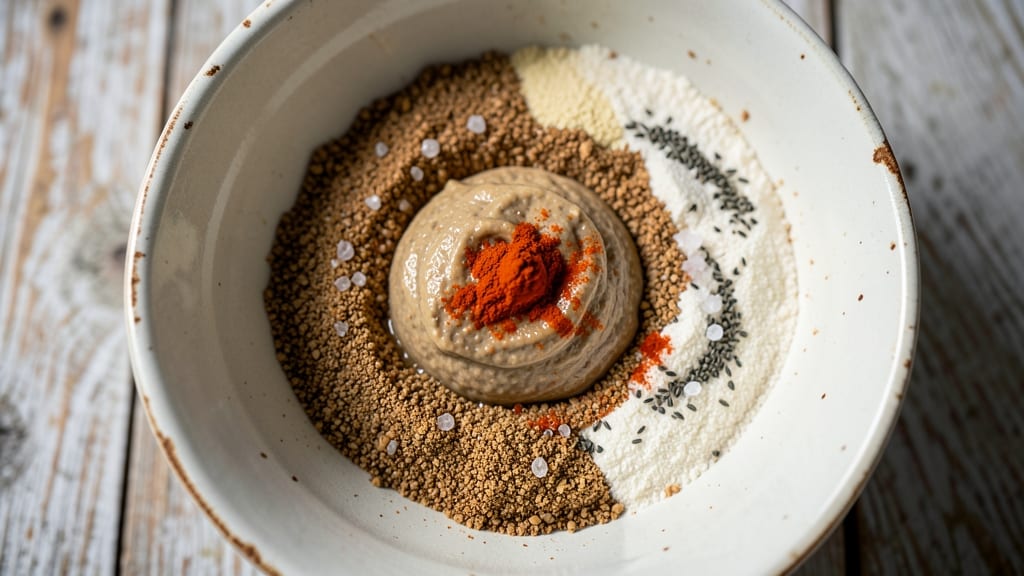
Ingredients for anti inflammatory sourdough bread
Ancient grains, gut-friendly fermentation, and anti-inflammatory powerhouse ingredients for a loaf that nourishes as much as it satisfies.
| Ingredient | Amount | Notes |
|---|---|---|
| Active Sourdough Starter 🍞 | ½ cup | Unfed, 100% hydration, bubbly |
| Organic Whole Wheat Flour 🌾 | 2 cups | High-protein, freshly milled preferred |
| Organic White Whole Wheat Flour 🌾 | 1 ½ cups | Subtle sweetness, enhances digestibility |
| Ground Flaxseed 🌰 | ½ cup | Milled fresh for maximum omega-3s |
| Turmeric Powder 🌿 | 1 tsp | Curcumin-rich, anti-inflammatory |
| Sea Salt 🧂 | 1 ½ tsp | Fine grain, uniodized preferred |
| Filtered Water 💧 | 1 ½ cups | Room temperature, chlorine-free |
| Extra-Virgin Olive Oil 🫒 | 2 tbsp | Cold-pressed, fruity variety |
| Raw Honey 🍯 | 1 tbsp | Local, unprocessed preferred |
| Psyllium Husk Powder 🌿 | 1 tbsp | Boosts fiber content, improves texture |
| Ground Cinnamon 🌿 | ½ tsp | Ceylon preferred, anti-glycemic |
| Cornmeal 🌽 | 2 tbsp | For dusting, enhances crust texture |
The sourdough starter is the foundation—look for a bubbly, active starter with a tangy aroma. King Arthur or Bob's Red Mill organic flours are ideal for their high protein content, which improves gluten development while maintaining digestibility. For the flaxseed, Bob's Red Mill ground flaxseed is my go-to, as it's milled fresh and retains maximum omega-3 content. Turmeric should be bright orange and finely powdered—avoid clumpy varieties that haven't been properly ground. The psyllium husk is non-negotiable for texture; Now Foods brand is widely available and reliable. For water, if your tap water has a strong chlorine taste, use filtered or bottled water to avoid flavor interference.
No whole wheat flour? Substitute with a 50/50 mix of bread flour and spelt flour for a lighter texture, though digestibility will be slightly reduced. Flaxseed can be omitted if you're allergic, but replace with an extra 0.25 cup ground chia seeds for fiber. Turmeric can be substituted with equal parts ground ginger, though the flavor profile will differ slightly. For honey, maple syrup or agave nectar work in a 1:1 ratio, though the bread will have a subtly different sweetness. Psyllium husk is tricky to substitute—extra psyllium husk powder or ground chia seeds can help, but texture may vary. The cinnamon can be omitted entirely if you prefer, though it adds subtle warmth and complements the turmeric's earthiness.
The starter and dough should be stored in glass containers with loose lids to allow gas exchange while preventing contamination. Once mixed, the dough requires 24 hours at room temperature for optimal fermentation—place it in a warm, draft-free location like the oven with the light on. After shaping, the dough can be refrigerated for up to 48 hours before baking, allowing for more controlled fermentation. The baked loaf keeps well at room temperature for 3-4 days when wrapped in a clean kitchen towel, or frozen for up to 3 months for long-term storage. For reheating, wrap slices in foil and warm in a 350°F oven for 5-7 minutes to restore freshness.
Why You'll Love This Recipe
- No-Fuss Ferment: This bread comes together with just five ingredients—no fancy techniques, no stress. I mix the flaxseed and turmeric right into the dough, let the starter do the work, and boom: golden crust in 24 hours. Honestly, the hardest part is waiting for the oven to preheat.
- Earthy, Golden Richness: That first bite? Warm, slightly tangy from the starter, with a subtle nuttiness from the whole wheat flours. The turmeric adds a whisper of warmth, while the flaxseed gives it a satisfying toothsome texture—like a hug for your taste buds.
- Weeknight Workhorse: Slice it for toast in the morning, pack it for lunch, or use it to soak up soups all week. Between us, I’ve even charred a few pieces for a smoky twist on grilled cheese—works every time. It’s the kind of bread that disappears fast.
- Budget-Boosting Staple: Whole wheat flours and flaxseed might sound pricier, but they stretch further than refined flour. A single batch feeds my family for days, and the starter keeps going indefinitely. I’ve saved enough on store-bought bread to buy organic spices guilt-free.
Step-by-step instructions for anti-inflammatory sourdough bread
This method combines ancient grains, fermented benefits, and anti-inflammatory spices for a bread that supports gut health.
Prepare the Sourdough Leaven
In a medium bowl, combine the 0.5 cup active sourdough starter, 2 cups organic whole wheat flour, and 1.5 cups filtered water at room temperature. Mix thoroughly with a wooden spoon until no dry flour remains and the mixture reaches a thick, shaggy consistency. Cover loosely with a damp kitchen towel and allow to ferment at room temperature for 4-6 hours or until it exhibits significant volume increase and bubbles form along the surface.
This fermentation stage is critical for developing the bread's probiotic properties. The starter should rise by about 50% and exhibit a slightly tangy aroma. If using freshly milled whole wheat flour, you may notice a denser batter—this is normal due to the higher protein content and bran particles. The fermentation process activates the flour's natural enzymes, which will later contribute to better digestibility and reduced gluten sensitivity.
Develop the Dough with Ancient Grains
In a separate large mixing bowl, whisk together 1.5 cups organic white whole wheat flour, 0.5 cup ground flaxseed, 1 tsp turmeric powder, 1.5 tsp sea salt, 1 tbsp psyllium husk powder, 0.5 tsp ground cinnamon, and 1 tbsp raw honey. The psyllium husk will create a gel-like consistency when hydrated, which improves the dough's structure and fiber content. Create a well in the center and add the fermented leaven from Step 1 along with 2 tbsp extra-virgin olive oil.
Using a dough whisk or your hands, gradually incorporate the dry ingredients into the wet until a shaggy dough forms. The ground flaxseed will add a nutty flavor and omega-3 content, while the turmeric and cinnamon provide their anti-inflammatory benefits. Allow the dough to rest for 10 minutes before the next step—this helps the psyllium husk fully hydrate and develop its gelling properties. The dough should be sticky but manageable, with a slightly coarse texture from the ground flaxseed.
Autolyse and Knead for Optimal Texture
After the 10-minute rest, perform a 5-minute autolyse by folding the dough over itself 3-4 times. This initial kneading develops gluten gently while incorporating air. Transfer the dough to a lightly floured surface and knead for 8-10 minutes until smooth and elastic. The addition of psyllium husk powder makes the dough behave differently than traditional sourdough—it will be more cohesive but slightly firmer due to the fiber content.
During kneading, you'll notice the dough becomes increasingly smooth and less sticky as the psyllium absorbs moisture. The turmeric will give the dough a subtle golden hue. Divide the dough into 4 equal portions (about 120g each) and shape into loose boules. Place each boule seam-side up in a lightly greased pullman pan or directly on a parchment-lined baking sheet. Cover with a damp towel and allow to proof at room temperature for 1-2 hours or until the dough has risen by about 30-50%.
Final Proof and Bake with Anti-Inflammatory Benefits
Preheat your oven to 375°F with a Dutch oven inside for 30 minutes to create a steam environment. While the oven heats, dust the tops of the boules with 2 tbsp cornmeal—this creates a crispy, textured crust while adding subtle sweetness. The cornmeal also helps prevent the dough from sticking to the baking surface during the initial steam phase.
Carefully transfer the dough (still in the pullman pan or on parchment) to the preheated Dutch oven. Bake covered for 30 minutes, then remove the lid and bake for an additional 15-20 minutes until the crust is deep golden brown and the internal temperature reaches 205-210°F. The bread should sound hollow when tapped on the bottom. The turmeric will contribute to the bread's golden color while providing its anti-inflammatory properties, and the cinnamon adds warmth to complement the nutty flaxseed flavor.
Cool and Store for Maximum Freshness
Remove the bread from the oven and transfer to a wire rack to cool completely for at least 2 hours before slicing. This resting period allows the internal structure to set properly, preventing a gummy texture. The psyllium husk and flaxseed will contribute to a slightly denser crumb compared to traditional sourdough, but with improved moisture retention and fiber content.
For best results, store the bread in an airtight container at room temperature for up to 3 days or freeze for up to 3 months. The fermentation process enhances digestibility, making this bread particularly suitable for those with sensitive digestive systems. Each slice contains a balanced combination of ancient grains, anti-inflammatory spices, and probiotic benefits from the sourdough fermentation.
Pro Tips For Making Anti Inflammatory Sourdough Bread
- Hydrate the Flaxseed: DESCRIPTION:
- Proof at Room Temp: DESCRIPTION:
- Turmeric Stains Everything: DESCRIPTION:
- Shape Tightly, Bake Slow: DESCRIPTION:
Serving suggestions for anti inflammatory sourdough bread
Morning Toast Ritual
Start your day with anti-inflammatory toast by spreading 2 tbsp almond butter on warm slices, then drizzle with 1 tsp raw honey and sprinkle ½ tsp cinnamon. The flaxseed in the bread adds omega-3s, while the cinnamon supports blood sugar balance.
For extra protein, top with ¼ cup Greek yogurt and a handful of blueberries—this combo keeps you full for hours. 💛
Mediterranean-Inspired Platter
Create a gut-friendly spread by pairing slices with hummus (made with chickpeas and tahini), sliced cucumbers, and kalamata olives. The olive oil in the bread complements the Mediterranean flavors while adding healthy fats.
Add marinated artichoke hearts and a sprinkle of fresh parsley for a vibrant, anti-inflammatory meal. This works as a light lunch or appetizer.
Anti-Inflammatory Sandwich
Build a nutrient-packed sandwich using 2 slices as your base. Layer with avocado mash, sprouted hummus, and sliced turkey breast. Add arugula and shredded carrots for crunch.
The turmeric in the bread pairs perfectly with the avocado's creamy texture, while the flaxseed adds fiber. Wrap in parchment paper for an easy grab-and-go option that supports digestion. ✨
Dipping Bread Bowl
Turn your bread into a functional bowl by hollowing out the center and filling it with roasted sweet potatoes, black beans, and avocado chunks. The sturdy crust holds up perfectly, and the fermented bread adds probiotics to your meal.
Top with pico de gallo and a drizzle of extra-virgin olive oil for a complete, anti-inflammatory dish.
Evening Snack Board
Assemble a gut-healthy snack board with 4-5 slices as the base. Add whipped goat cheese, sliced apples, walnuts, and dried cranberries.
The cinnamon in the bread enhances the apple's sweetness, while the flaxseed provides omega-3s. This board is perfect for post-dinner cravings or a light evening meal that supports digestion. 🍏
Fermented Toppings Boost
Elevate your bread by adding fermented toppings like sauerkraut or kimchi for extra probiotics. The tangy flavors complement the bread's natural sourness, while the fermentation process doubles the gut-friendly benefits.
Spread 2 tbsp cashew cream on a slice, top with sauerkraut, and finish with sesame seeds for a savory, anti-inflammatory snack. 💪
Nutrition facts
Frequently asked questions
Why does this bread use flaxseed instead of eggs?
Flaxseed replaces eggs as a plant-based binder while adding omega-3 fatty acids and fiber—both powerful anti-inflammatory compounds. The ground flaxseed creates a gel-like consistency when mixed with water, helping the dough hold its shape during fermentation. Plus, it eliminates the cholesterol found in eggs while providing more heart-healthy fats.
Can I make this bread without psyllium husk?
You can try, but psyllium husk is essential for the bread's structure and fiber content. Without it, the crumb will be denser and may crumble more easily. For a substitute, use 1 extra tablespoon of ground chia seeds mixed with 3 tablespoons of water (let it gel for 10 minutes first). The texture won't be identical, but it will still improve moisture retention.
How long should I ferment the dough for maximum anti-inflammatory benefits?
For optimal gut health benefits, ferment the dough at room temperature for 24 hours in a warm, draft-free spot. This extended fermentation time breaks down gluten proteins, increases probiotic activity, and enhances digestibility. If your kitchen is cold, place the dough in a turned-off oven with the light on for consistent warmth.
Will this bread work for gluten-sensitive diets?
While this recipe uses whole wheat flours, the fermentation process partially breaks down gluten proteins, making it easier to digest than regular bread. For a gluten-free version, replace all flours with a 1:1 gluten-free flour blend (like Bob's Red Mill 1-to-1) and add 1 extra teaspoon of xanthan gum to improve texture. The anti-inflammatory benefits will remain similar.
Why does my dough smell stronger than expected?
The strong aroma comes from the fermentation process and the addition of turmeric and ground flaxseed. The longer fermentation (especially with whole wheat flour) produces more lactic acid, giving it a tangy, slightly funky smell—this is normal and actually indicates active probiotic development! If the smell is overly sour or rotten, your fermentation may be too long.