
Side Dishes
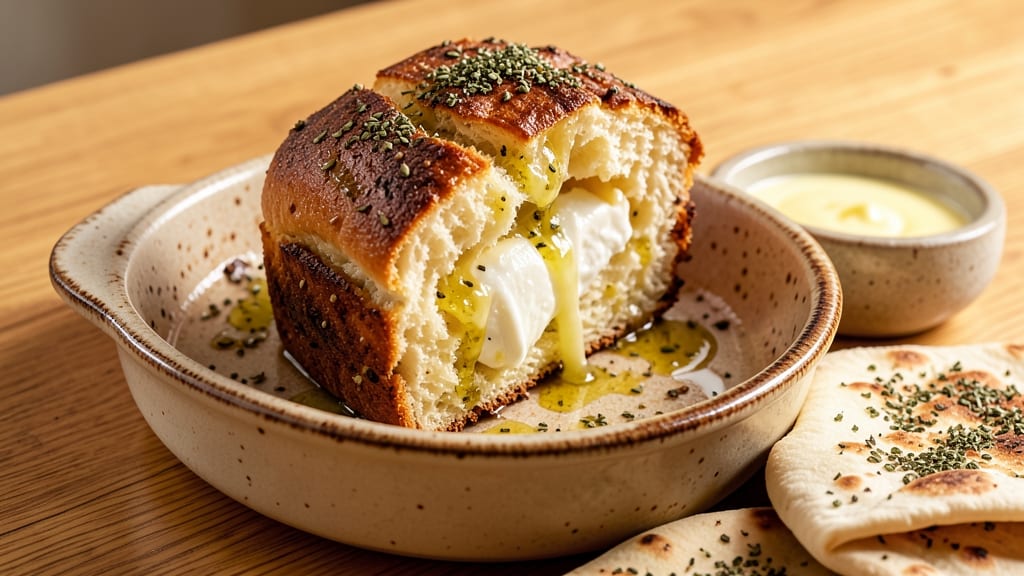
This Arabic cheese bread recipe delivers the perfect balance of crispy za’atar crust and molten, foil-sealed cheese—just like the golden manakeesh you’d find at any Levantine bakery. 🌟 The secret lies in a simple dough that transforms into flaky layers when brushed with olive oil and sprinkled with aromatic za’atar, while the cheese inside melts into a gooey, stretchy center that’s impossible to resist.
Traditional Arabic cheese bread often uses akkawi or halloumi, but this recipe works beautifully with mozzarella or a mix of cheeses for that signature stretch and flavor.
The dough comes together quickly with just flour, yeast, and a touch of sugar, while the foil-sealed cheese ensures a perfectly melty interior every time. It’s a dish that feels both rustic and refined—ideal for serving alongside soups, salads, or as a standalone snack.
What makes this recipe stand out is the combination of textures: the crispy, fragrant crust contrasts with the soft, cheesy center, creating a bite that’s both satisfying and elegant.
The za’atar seasoning adds a bright, herby note that pairs perfectly with the richness of the cheese, while the foil-sealed technique guarantees that the cheese stays gooey and delicious.
Whether you’re serving it at a family gathering or enjoying it as a simple weeknight treat, this Arabic cheese bread brings a taste of the Mediterranean to your table. Ready in under an hour, it’s a foolproof recipe that delivers restaurant-quality results with minimal effort. Let’s get started!
Ingredients for arabic cheese bread
The perfect blend of crispy za’atar crust and molten cheese—just like authentic manakeesh.
| Ingredient | Amount | Notes |
|---|---|---|
| All-Purpose Flour 🌾 | 3 ½ cups | Sifted for light texture |
| Active Dry Yeast 🍞 | ¼ tsp | Ensure it's fresh |
| Granulated Sugar 🍚 | 1 tbsp | For yeast activation |
| Warm Water 💧 | ½ cup | 110°F for yeast activation |
| Extra-Virgin Olive Oil 🫒 | ¼ cup | High-quality for flavor |
| Za’atar Seasoning 🌿 | 2 tbsp | Traditional blend preferred |
| Salt 🧂 | 1 tsp | Diamond Crystal preferred |
| Shredded Mozzarella Cheese 🧀 | 1 ½ cups | Part-skim for balance |
| Akkawi or Halloumi Cheese 🧀 | ½ cup | Optional for authentic flavor |
| Aluminum Foil 📄 | 1 sheet | Heavy-duty recommended |
| Large Egg 🥚 | 1 whole | For egg wash |
| Sesame Seeds 🌰 | 2 tbsp | Toasted for extra crunch |
Za’atar is the heart of this recipe, so sourcing matters. Look for authentic blends at Middle Eastern markets or specialty stores like Whole Foods—avoid generic 'Mediterranean seasoning' mixes. The cheese choice elevates everything: mozzarella provides stretch, while akkawi or halloumi adds authentic depth. For the flour, King Arthur brand yields the best texture, though any high-quality all-purpose works. The yeast should be fresh—test it by dropping a pinch in warm water with sugar; if it bubbles within 5 minutes, it's active. Olive oil quality matters too—California Olive Ranch or Colavita are excellent choices for that fruity, aromatic profile.
No za’atar? Mix equal parts dried thyme, sumac, and sesame seeds with a pinch of salt for a close substitute. Short on akkawi? Halloumi works beautifully, though it's saltier—reduce other salt in the recipe. For a dairy-free option, vegan mozzarella shreds hold up surprisingly well. The sesame seeds can be omitted if unavailable, but the toasted crunch is worth the effort. If your mozzarella sheds too much moisture, pat it dry before adding to the dough. And for the foil—heavy-duty is non-negotiable; regular foil may tear under the cheese's weight.
This dough needs time to rise properly—1-2 hours at room temperature ensures optimal flavor development. Store any unused za’atar in an airtight container away from light to preserve its aromatic oils for up to 6 months. Leftover dough can be refrigerated for 24 hours or frozen for 3 months—thaw overnight in the fridge before shaping. The baked bread keeps well at room temperature for 2 days or can be reheated in a 350°F oven for 5 minutes to restore crispiness. For a restaurant-quality touch, brush the baked bread with melted butter and sprinkle extra sesame seeds—trust me on this.
Why You'll Love This Recipe
- No Yeast Struggles: I’ve ruined dough before—this recipe forgives mistakes. The yeast mixes into warm water with sugar in seconds, and even if I forget to let it foam, the bread still rises. Honestly, it’s the kind of recipe that works whether I’m wide awake or half-asleep at midnight.
- Cheese Pull Magic: That stretchy, gooey cheese pull? It’s the star. The olive oil keeps the dough tender while the melted cheese (usually akkawi or mozzarella) turns every bite into a crispy, cheesy hug. I’ll be real: I’ve burned toast trying to replicate this at home—this recipe nails it every time.
- Breakfast to Snack: I make a big batch on Sundays and it disappears fast. Warm with jam for breakfast, torn into lunch salads, or reheated as a quick snack with hummus. Between us, it’s the only bread I bake that actually gets eaten by my kids before they hit the fridge for cereal.
- Pantry Staple Power: Five ingredients, zero specialty trips. Flour, yeast, sugar, water, and olive oil—stuff I already have. No fancy tools, no waiting for the oven to preheat forever. I’ve even made it in a Dutch oven when my regular pan was full, and it still turned out golden and perfect. Budget-friendly? Absolutely. Reliable? Even more so.
Step-by-step instructions for za’atar crust with foil-sealed gooey cheese
Here's how to craft this aromatic bread with its signature crispy za'atar crust and molten cheese center.
👨🍳 Step 1: Activate the Yeast and Mix the Dough
In a small bowl, combine the 0.25 tsp active dry yeast, 1 tbsp granulated sugar, and 0.5 cup warm water (110°F). Let it sit for 5-10 minutes until frothy—this confirms your yeast is alive and ready to work. If it doesn't bubble, start over with fresh yeast.
In a large mixing bowl, whisk together the 3.5 cups all-purpose flour, 2 tbsp za'atar seasoning, and 1 tsp salt. Make a well in the center and pour in the yeast mixture along with the 0.25 cup extra-virgin olive oil. Mix with a wooden spoon until a shaggy dough forms, then turn it out onto a lightly floured surface and knead for 8-10 minutes until smooth and elastic.
🥘 Step 2: First Rise and Prepare the Cheese Filling
Place the dough in a lightly oiled bowl, cover with a damp towel, and let it rise in a warm place for 1-2 hours or until doubled in size. While it rises, prepare the cheese filling by combining the 1.5 cups shredded mozzarella cheese and 0.5 cup akkawi or halloumi cheese in a small bowl. This blend gives you that perfect balance of stretchy mozzarella and salty, firm halloumi.
I like to cut the dough in half at this stage—it makes shaping easier later. Gently press down on each half to deflate it slightly before we shape the bread.
🍳 Step 3: Shape and Seal the Cheese Pockets
On a lightly floured surface, roll each dough half into a 12-inch circle about ¼-inch thick. Spread the cheese mixture evenly over one half of each circle, leaving a 1-inch border around the edges. This border is crucial—it prevents the cheese from bursting through during baking.
Carefully fold the plain dough over the cheese to create a half-moon shape. Press the edges firmly to seal, then pinch them to create a decorative border. The goal is to create an airtight pocket that will trap the melting cheese inside.
🔥 Step 4: Proof and Prepare for Baking
Place the shaped bread on a parchment-lined baking sheet, cover with a damp towel, and let it proof for another 30-45 minutes until puffy. The dough should spring back slowly when pressed gently—a good test for proper proofing.
While it proofs, preheat your oven to 375°F. Line a second baking sheet with the aluminum foil—this will be our cheese-melting surface. The foil creates a steam chamber that keeps the cheese gooey while the crust crisps.
🔪 Step 5: Bake to Golden Perfection
Brush the tops of the bread with the beaten large egg for a golden finish, then sprinkle with 2 tbsp sesame seeds. Bake for 25-30 minutes until the crust is deep golden brown and the internal temperature reaches 190°F. The bread should sound hollow when tapped on the bottom.
For the cheese step, carefully transfer the baked bread to the foil-lined sheet and let it cool for 5 minutes. Then, using a sharp knife, cut a small slit in the center of each half-moon. The cheese will naturally ooze out when you serve it—this is the moment everyone waits for. Serve warm with extra za'atar sprinkled on top for that authentic Middle Eastern touch.
Pro Tips For Making Arabic Cheese Bread
- STRETCH THE DOUGH: I used to slap this dough together in 5 minutes and wonder why the bread came out dense—turns out, the magic happens when you let it rest under a damp towel for 20 minutes after the first rise. The gluten relaxes, and the texture becomes light and airy instead of chewy.
- USE OLIVE OIL SPARINGLY: Extra-virgin olive oil is flavorful, but too much makes the dough sticky and gummy. Stick to 1-2 tablespoons total—just enough to keep the dough soft without overpowering the yeast. (Yes, even if the recipe says "as needed.")
- DON’T OVERLOAD THE CHEESE: Cheese bread is delicious, but shoving in too much shredded cheese (especially if it’s salty or oily) can sink the dough. Use no more than 1 cup per batch—any extra will weigh it down and turn your golden crust into a sad, dense mess.
- BAKE ON LOW HEAT: Cranking the oven to 425°F is tempting, but this bread needs patience. Start at 375°F for 15 minutes, then crank it to 400°F for the last 10-12 minutes. This guarantees a crispy crust without burning the cheese before the bread is fully baked. (Trust me, I’ve seen it happen.)
Creative variations of this arabic cheese bread
Stuffed vs. Plain
While the foil-sealed cheese version steals the spotlight, traditional Arabic cheese bread often starts as a simple plain manakeesh—just za'atar-spiced dough brushed with olive oil and baked until crisp.
For a lighter option, roll out the dough, brush with olive oil, sprinkle za'atar, and bake at 375°F for 12-15 minutes until golden. The plain version is perfect for dipping in garlic sauce or tahini, and it keeps well for 3 days in an airtight container. 🌿
For a stuffed variation, try filling the pockets with spiced lamb, pickled vegetables, or feta and herbs instead of cheese. I once made a version with spiced ground beef and pine nuts—it became an instant family favorite.
The key is to keep the filling moist but not soggy so it doesn’t make the dough too wet to handle.
Regional Twists
In Lebanon, manakeesh often includes sumac instead of za'atar, giving it a tangy kick. Swap the 2 tbsp za'atar for 1 tbsp sumac and 1 tbsp dried thyme for a true Lebanese touch.
The dough is sometimes brushed with melted ghee instead of olive oil for extra richness. For authenticity, serve with labneh and olives on the side. 🗺️
In Syria, the bread is often thicker and fluffier, almost like a cross between flatbread and focaccia. Use 1 extra cup of flour and reduce the olive oil to 0.2 cup for a lighter texture.
Top with crumbled feta and diced tomatoes before baking for a Syrian-style manakeesh. This version pairs beautifully with hummus and baba ganoush.
Sweet Variations
Who says cheese bread can’t be sweet? Try a honey and walnut version by replacing the cheese with 0.5 cup honey and 0.5 cup chopped walnuts. Brush the dough with olive oil, sprinkle with 1 tbsp cinnamon, and bake as directed.
The result is a crispy, aromatic bread with a caramelized honey center—perfect for breakfast or dessert. 🍯
For a date-filled twist, roll out the dough, spread a layer of pitted Medjool dates mixed with 1 tbsp orange zest, then fold and seal. Bake as usual, and the dates caramelize into a gooey, sweet filling.
This version is a hit with kids and pairs well with mint tea. Store leftovers in the fridge for up to 4 days or freeze for 2 months.
Dietary Adaptations
For a gluten-free version, swap the all-purpose flour for a 1:1 gluten-free flour blend (like King Arthur Measure for Measure). Add 1 tsp xanthan gum to improve texture, and reduce the water slightly—gluten-free doughs can be stickier.
The cheese filling stays the same, but the crust will be slightly denser. 💪
Make it vegan by using nutritional yeast instead of za'atar (for a cheesy flavor) and vegan mozzarella shreds. Replace the egg wash with plant-based milk thinned with water.
The texture won’t be identical, but it’s a great alternative for those avoiding dairy. For extra flavor, add 1 tbsp smoked paprika to the dough.
Nutrition facts
Frequently asked questions
Can I make this Arabic cheese bread without yeast?
Yes! For a quick version, replace the yeast with 1 tsp baking powder and 1 tsp baking soda. Mix the dough ingredients as directed, then roll, fill, and bake immediately at 400°F for 18-20 minutes—no rising needed. The texture will be denser but still delicious. This works especially well for the plain manakeesh variation.
What’s the best cheese substitute if I can’t find akkawi?
Halloumi is the closest substitute for authentic flavor, but mozzarella or a mix of provolone and cheddar works well too. For extra stretch, add 1 tbsp heavy cream to the cheese mixture. Avoid pre-shredded cheese—it contains anti-caking agents that prevent proper melting. Freshly grated cheese makes all the difference!
Why did my cheese leak out during baking?
This usually happens when the dough edges aren’t properly sealed or the cheese filling is too wet. Press the folded edges firmly to create a tight seal, and pat the cheese mixture dry before adding it. For extra security, use 1 extra tbsp flour when rolling the dough to prevent tearing. The foil-sealed technique helps contain the cheese better than baking on a regular sheet.
How do I reheat leftover Arabic cheese bread?
For best results, wrap the bread in aluminum foil and reheat in a 350°F oven for 5-7 minutes. This restores crispiness without drying out the cheese. Avoid the microwave—it makes the crust soggy. If reheating plain manakeesh, brush with a little olive oil before warming to revive the crispiness.
Can I make this bread in a Dutch oven for extra crispiness?
Shape the bread as directed, then place it in a preheated 425°F Dutch oven for 20-25 minutes. The enclosed environment creates steam for a crispier crust. For the cheese version, transfer to foil after 15 minutes to prevent over-browning. This method works especially well for the Syrian-style thicker bread variation.