
Side Dishes
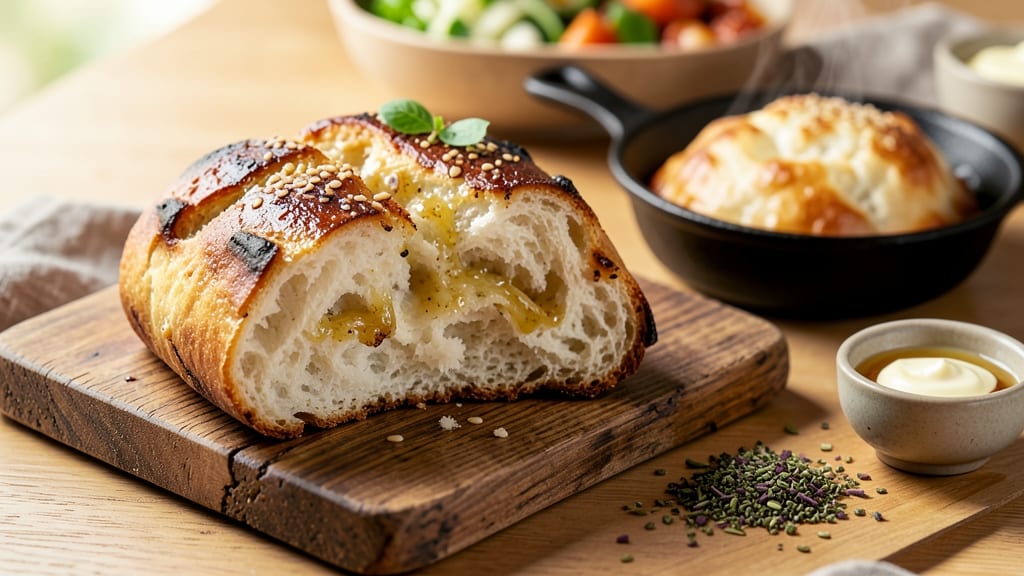
This Arabic shawarma bread recipe delivers the perfect balance of soft, pillowy texture and golden-brown char—ideal for wrapping shawarma, falafel, or hummus. 🌟 The secret lies in a simple dough of flour, yeast, and a touch of oil, kneaded just enough to create tender layers that stay warm and flaky.
Traditional Middle Eastern bakeries use tandoor ovens, but a cast-iron skillet or griddle works beautifully at home.
The dough rests for at least an hour, allowing the yeast to develop flavor and the gluten to relax, making it easier to shape into rounds or cones. Once rolled out thin, the bread cooks quickly over medium-high heat, forming a crispy exterior while staying soft inside.
The aroma alone—warm, buttery, and slightly smoky—will have everyone at the table reaching for seconds.
What makes this recipe special is its versatility. Serve it fresh with your favorite shawarma fillings, use it as a wrap for sandwiches, or even enjoy it plain as a side.
The dough is forgiving, so don’t worry about perfection—just focus on the process. With just a few simple ingredients and a little patience, you’ll have restaurant-quality flatbread in under 30 minutes.
For extra flavor, brush the cooked bread with melted butter or garlic oil before serving. The result? A crispy, buttery layer that complements any dish while keeping the inside tender and inviting. Let’s get started—your next meal is about to get an upgrade.
Ingredients for arabic shawarma bread
Simple dough, big flavor—just these ingredients transform into crispy, buttery shawarma bread.
| Ingredient | Amount | Notes |
|---|---|---|
| All-Purpose Flour 🌾 | 3 ½ cups | Spooned and leveled for accuracy |
| Active Dry Yeast 🍞 | ¼ tsp | Or 1 packet (2.25 tsp) |
| Granulated Sugar 🍬 | 1 tbsp | Feeds the yeast |
| Salt 🧂 | ½ tsp | Kosher or fine sea salt |
| Unsalted Butter 🧈 | ¼ cup | Cold, cubed (not melted) |
| Warm Water 💧 | 1 cup | 110°F, not hot |
| Vegetable Oil 🫒 | 1 tbsp | For dough and cooking |
| Ground Cinnamon 🌿 | ¼ tsp | Optional, for warmth |
| Ground Cardamom 🌿 | ¼ tsp | Optional, traditional spice |
The yeast is the MVP here. Bob's Red Mill active dry yeast is my go-to, but any brand works if it's fresh. Test it by dropping a pinch in warm water with a pinch of sugar—if it foams in 5 minutes, it's good. The butter should be cold when you cube it (trust me, melted butter = dense bread). For the flour, King Arthur is my favorite, but any all-purpose brand is fine. The spices? Cardamom and cinnamon are traditional, but skip them if you don't have them—this bread is still delicious without.
No cinnamon? Extra pinch of nutmeg works in a pinch. Butter too expensive? Coconut oil gives a similar richness, though it has a slight coconut taste. The dough gets sticky—don't panic. Wet your hands or use a dough scraper. Rolling it out thin is key for that crispy texture, but don't stress if it's uneven. The bread cooks fast, so have your skillet or griddle ready over medium-high heat. For extra flavor, brush the cooked bread with garlic-infused oil or melted butter mixed with a pinch of salt.
This dough keeps for 24 hours in the fridge, covered with a damp towel. For longer storage, shape the dough into balls, freeze them on a tray, then transfer to a bag. Thaw overnight in the fridge before using. The cooked bread stays fresh for 3 days wrapped in a clean towel. Pro tip: Warm it in a dry skillet for 30 seconds on each side to revive the crisp. Leftovers? Toss them in a baggie and freeze for up to 1 month—perfect for quick meals.
Why You'll Love This Recipe
- No-Knead Magic: I swear by this dough—just mix, let it rise, and boom. No standing at the counter, no overworking the butter, just a simple stretch-and-fold that even my sleepy Sunday mornings can handle.
- Crispy Butter Love: That moment when you pull it out of the oven—golden, flaky layers with butter so rich it melts into the dough like a hug. Honestly, the butter is the star here, and it’s worth every tablespoon.
- Weeknight Flex: Breakfast? Lunch? Snack attack? This bread plays nice with everything—stuff it with shawarma, slather it with jam, or just eat it plain. I’ve had it all, and it never lets me down.
- Budget Stretch: Four ingredients, endless possibilities. A single batch feeds my family for days, and the leftovers? They freeze like a dream. My wallet thanks me every time I make it.
Step-by-step instructions for warm spiced flatbread
Let's create soft, buttery layers with aromatic spices that make every bite irresistible.
👨🍳 Step 1: Activate the Yeast for Fluffy Layers
In a small bowl, combine the 1 cup warm water (about 110°F) with the 1 tbsp granulated sugar and 0.25 tsp active dry yeast. Let it sit for 5-10 minutes until it becomes foamy and bubbly—this means your yeast is alive and ready to work. If it doesn't bubble, your yeast might be dead, and you'll need to start over.
While waiting, I like to sprinkle the 0.25 tsp ground cinnamon and 0.25 tsp ground cardamom into the bowl. These warm spices will infuse the dough with that authentic Middle Eastern aroma. Give them a quick stir to distribute evenly.
👨🍳 Step 2: Mix and Knead the Dough
In a large mixing bowl, combine the 3.5 cups all-purpose flour and 0.5 tsp salt. Make a well in the center and pour in the yeast mixture. Add the 0.25 cup cold cubed unsalted butter and 1 tbsp vegetable oil to the well. Using a wooden spoon, mix everything together until a shaggy dough forms.
Turn the dough onto a lightly floured surface and knead for 8-10 minutes until smooth and elastic. You'll know it's ready when it springs back slightly when pressed. If the dough feels too sticky, add just a bit more flour—about 1 tablespoon at a time. The goal is a soft, pliable dough that's easy to handle.
⏰ Step 3: Let the Dough Rise
Lightly oil a large bowl, place the dough inside, and cover it with a damp kitchen towel or plastic wrap. Let it rise in a warm place for 1-2 hours, or until it has doubled in size. I usually place my bowl near the oven with the light on to create a warm environment—this helps the dough rise faster without needing to wait all day.
Here's the thing—don't rush this step. A proper rise gives you that light, airy texture that makes shawarma bread so special. You'll see bubbles forming on the surface and the dough will feel spongy when pressed gently. If your kitchen is cold, give it extra time to rise fully.
🍳 Step 4: Shape and Cook the Flatbreads
Punch down the risen dough to release any air bubbles, then divide it into 4 equal portions. On a floured surface, roll each portion into a 12-inch circle, about ¼-inch thick. I like to use a rolling pin, but you can also press the dough with your hands if you're short on tools—just make sure it's evenly thick.
Heat a skillet or griddle over medium heat and cook each flatbread for 2-3 minutes per side, until golden brown spots appear. The edges should puff up slightly, and you'll smell that buttery, spiced aroma filling your kitchen. Don't walk away—keep an eye on them to prevent burning. Transfer to a clean kitchen towel to keep them warm while you cook the rest.
🥘 Step 5: Serve Warm with Buttery Layers
Once all flatbreads are cooked, brush the warm flatbreads lightly with melted butter for that extra-rich flavor. I like to stack them slightly overlapping for presentation, but they're delicious served individually too. The perfect shawarma bread should be soft and pillowy inside with a slightly crisp exterior—each bite should reveal those buttery layers and aromatic spices.
Here's where it gets fun—serve them immediately with your favorite shawarma fillings. The warmth of the bread and the buttery layers make every bite unforgettable. If you have leftovers, store them in an airtight container for up to 2 days, but honestly, they're best enjoyed fresh.
Pro Tips For Making Arabic Shawarma Bread
- Use Warm Butter: Cold butter in the dough makes the final bread dense and heavy. Take that unsalted butter out of the fridge 10 minutes before mixing—just long enough to soften but not melt. Trust me, your shawarma bread will be flaky and light, not a brick.
- Let Yeast Bloom First: Skip dissolving yeast in warm water first, and you’re asking for trouble—uneven rise, flat bread. Mix the yeast with sugar and water, then wait 5-7 minutes until it bubbles like a tiny champagne party. If it doesn’t, toss it and start fresh.
- Knead Until Silky: This isn’t a sprint—knead the dough for 8-10 minutes by hand (or 5-6 on a stand mixer) until it’s smooth, elastic, and springs back when poked. I learned this the hard way: under-kneaded dough tears when rolled, and overworked dough gets tough. Find that sweet spot.
- Roll Thin, Not Perfect: Shawarma bread needs to be paper-thin (about 1/8-inch) for that crispy, soft texture. Don’t stress about edges—just stretch and roll with a rolling pin, even if it’s lopsided. It’s about surface area, not symmetry. (Yes, even if you’re impatient like me.)
Storing and reheating your arabic shawarma bread
Refrigerator Storage
Store freshly cooked shawarma bread in an airtight container or wrapped in a clean kitchen towel to maintain moisture. Keep it in the fridge for up to 3 days—the spices and butter flavors actually deepen over time.
I like to stack them with parchment paper between layers to prevent sticking. Always let the bread cool completely before storing to avoid condensation. 🌿
Freezing for Later
For longer storage, freeze cooked flatbreads in a single layer on a baking sheet for 1 hour to prevent sticking. Transfer to a freezer-safe bag with all air removed, then store for up to 1 month.
To reheat, thaw overnight in the fridge and warm in a dry skillet over medium heat for 30 seconds per side until crispy. Avoid microwaving—it makes the bread soggy.
Reviving Stale Bread
If your shawarma bread loses its crispiness, revive it by placing it in a 350°F oven for 5-7 minutes until warmed through. For extra crunch, brush with melted butter and toast in the oven for 2-3 minutes post-reheating.
I also use a cast-iron skillet on medium heat for 1 minute per side—this restores that perfect char without drying it out.
Portion Control Tips
Divide dough into 4 equal portions before cooking to make reheating easier. Store each portion separately in quart-sized freezer bags for individual servings. Label with dates to track freshness.
When reheating, only warm what you need—these breads are best enjoyed fresh and crispy. A toaster oven works well for small batches at 375°F for 3-4 minutes.
Butter Brushing Secrets
For maximum flavor revival, brush reheated bread with melted butter mixed with a pinch of salt and ½ tsp ground cinnamon. The warmth of the bread melts the butter instantly, creating that signature buttery layer.
I also drizzle garlic-infused oil for an extra aromatic kick. This step transforms stale bread into something restaurant-quality in seconds. 🥖
Nutrition facts
Frequently asked questions
Can I make this shawarma bread without yeast?
While traditional shawarma bread relies on yeast for its light, airy texture, you can create a flatbread alternative using 1 tsp baking powder instead. Replace the yeast with warm water and sugar, then add 1 tsp baking powder to the flour. The result will be denser but still delicious—great for quick meals!
How do I shape the bread for shawarma wraps?
For perfect shawarma wraps, roll the dough into a 10-inch circle (about 1/8-inch thick) instead of 12 inches. Cook until golden, then fold into a cone or triangle for easy filling. Pro tip: Keep the bread warm in a 200°F oven while assembling wraps to prevent sogginess.
Why did my bread turn out dense instead of fluffy?
Dense bread usually means the yeast didn't activate properly or the dough didn't rise enough. Double-check your water temperature (110°F) and yeast freshness. Also, ensure the dough doubled in size during rising—if your kitchen is cold, try a warm spot like the oven with the light on. Over-kneading can also make bread tough.
Can I add herbs like parsley or mint to the dough?
Finely chop 1 tbsp fresh parsley or mint and mix it into the dough after kneading. The herbs add freshness that pairs beautifully with shawarma flavors. For extra vibrancy, sprinkle chopped herbs on top before brushing with butter. The flavors will infuse during cooking.
What's the best way to cook these if I don't have a griddle?
Use a cast-iron skillet or even a nonstick pan over medium heat. For extra crispiness, try cooking in a 400°F oven for 8-10 minutes on a baking sheet lined with parchment. A pizza stone also works well—just place the rolled dough directly on it and bake for 5-7 minutes.