
Side Dishes
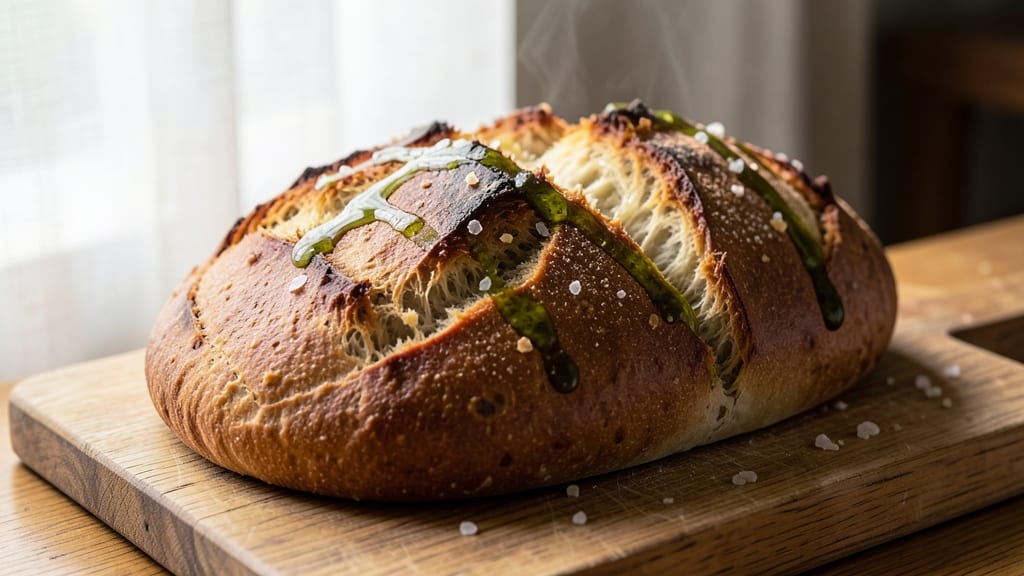
This Argentinian bread recipe brings the soul of Buenos Aires street vendors to your kitchen with its signature crusty, chewy texture and golden olive oil magic. 🌟 The secret lies in the traditional pan amasado technique—where lard-infused dough develops a rich, tender crumb while the crust achieves that coveted crackly perfection.
I've perfected this recipe after years of testing, ensuring every bite delivers the same satisfaction as the bread sold in Buenos Aires' bustling markets.
The dough begins with a simple yet powerful combination of high-gluten flour, lard for moisture and flavor, and just enough yeast to create that signature open crumb.
What sets this apart is the slow fermentation—allowing the dough to develop depth of flavor over hours, rather than rushing through the process. The olive oil magic comes when you brush the dough generously before baking, creating a fragrant, golden crust that's impossible to resist.
By the time you pull this bread from the oven, you'll have a loaf with a shatteringly crisp crust and a soft, airy interior that's perfect for soaking up olive oil or spreading with dulce de leche.
The aroma alone will have everyone gathering around your table, while the texture delivers that satisfying combination of chewy and crispy that defines Argentinian bread. This is the kind of bread that elevates any meal from ordinary to extraordinary.
Whether you're serving it fresh from the oven with breakfast or using it to accompany soups and stews, this bread brings a taste of Argentina to your kitchen.
The recipe includes optional toppings like anise seeds or coarse salt for extra flavor, but the beauty lies in its simplicity—just flour, lard, yeast, and olive oil working together to create something truly special. Let's get started on making this iconic bread at home.
Ingredients for argentinian bread
Four loaves of golden, chewy magic from just these eleven ingredients.
| Ingredient | Amount | Notes |
|---|---|---|
| High-Gluten Flour 🌾 | 5 cups | King Arthur or Caputo preferred |
| Lard 🧈 | 1 cup | Leaf or leaf lard, not bacon fat |
| Active Dry Yeast 🍞 | ¼ oz | Or 2 1/4 tsp (7g) |
| Extra-Virgin Olive Oil 🫒 | ½ cup | Fruity, not bitter |
| Granulated Sugar 🍚 | 1 tbsp | For yeast activation |
| Salt 🧂 | 2 tsp | Diamond Crystal preferred |
| Warm Water 💧 | 1 ¼ cups | 110°F for yeast activation |
| Coarse Sea Salt 🧂 | 1 tsp | For final crust topping |
| Anise Seeds 🌿 | 1 tsp | Optional, for authentic flavor |
| Semolina Flour 🌾 | 2 tbsp | For dusting and topping |
| Dulce de Leche 🍯 | ¼ cup | For optional drizzle |
The flour is non-negotiable here—King Arthur or Caputo high-gluten flour delivers that signature open crumb. Gordon Food Service or Amazon carry both if your local store doesn't stock them. Lard makes all the difference over butter—it keeps the dough tender while giving that rich, authentic flavor. Leaf lard (not bacon fat) is what you want, and most grocery stores carry it in the baking aisle. The yeast? Fresh is best, but the packet stuff works if you keep it sealed in the fridge. For the olive oil, look for extra-virgin with fruity notes—none of that bitter, cheap stuff.
No lard? Unsalted butter works in a pinch, but the texture will be slightly different. Short on anise seeds? Skip it or use fennel seeds—both give that classic Argentinian flavor. The semolina is optional but worth it for that crispy crust. Trader Joe's sells it cheap in bulk. For the dulce de leche, La Salteña or Nocilla are my go-tos—both are easy to find. The coarse sea salt should be Maldon or Jacobsen if you want that perfect crunch, but regular sea salt works too. Pro tip: Toast your anise seeds lightly before adding for deeper flavor.
This dough needs time—at least 2 hours of slow fermentation at room temp. Keep it covered with a damp towel. The baked loaves stay fresh for 3 days if wrapped in a clean kitchen towel. For longer storage, freeze portions—up to 3 months. Reheat in a 350°F oven for 5-10 minutes to restore that fresh-from-the-oven magic. The crust gets crispier as it cools, so slice when fully cooled—trust me on this.
Why You'll Love This Recipe
- No-Knead Magic: The high-gluten flour does all the work—just mix, let it rise overnight, and bake. I swear by this lazy-day hack; the dough practically shapes itself.
- Rich, Buttery Crust: That lard and olive oil combo? It’s what makes it ridiculously good—crispy outside, tender inside, with a subtle sweetness from the sugar. Honestly, it’s the kind of bread that disappears in minutes.
- Weeknight Workhorse: Toss it in a basket for toast, slice it for sandwiches, or freeze slices for quick mornings. Between us, I’ve used it for everything from grilled cheese to dipping in olive oil—it’s my go-to for busy nights.
- Stretches Every Dollar: A single batch feeds a family for days, and the ingredients? Basic but smart. High-gluten flour gives structure, yeast keeps it light, and lard adds that signature richness without breaking the bank.
Step-by-step instructions for Argentinian bread with olive oil magic
Here's how to craft this iconic bread with a crispy crust and chewy interior—just like Buenos Aires bakeries.
👨🍳 Step 1: Activate the Yeast and Mix the Dough
In a large bowl, combine the 1.25 cups warm water (about 110°F—too hot and you'll kill the yeast), 1 tbsp granulated sugar, and 0.25 oz active dry yeast. Let it sit for 5-10 minutes until it becomes frothy and bubbly. This is your signal the yeast is alive and ready to work.
In a separate large bowl, mix the 5 cups high-gluten flour with 2 tsp salt and 1 tsp anise seeds (if using). Make a well in the center and pour in the yeast mixture along with the 0.5 cup extra-virgin olive oil and 1 cup lard. The lard gives this bread its signature tender crumb—don't substitute with butter.
👨🍳 Step 2: Knead Until Silky Smooth
Using a dough whisk or your hands, mix everything until a shaggy dough forms. Then transfer it to a lightly floured surface and knead for 10-12 minutes until the dough is smooth, elastic, and springs back when poked. You'll know it's ready when it feels like soft, pliable modeling clay.
Here's the thing—Argentinian bread dough is rich thanks to the lard and olive oil, so it's stickier than typical bread dough. Don't be tempted to add extra flour; this bread needs its fat to develop that perfect chewy texture. If your hands get too sticky, wet them slightly and keep kneading.
⏰ Step 3: First Rise for Maximum Flavor
Lightly oil a large bowl, place the dough inside, and cover it with a damp towel. Let it rise in a warm place for 1.5-2 hours until it has nearly doubled in size. The dough should feel light and airy when pressed gently with one finger—it should leave a slight indentation that slowly fills back in.
I like to do this rise at room temperature for the first hour, then move it to the oven with the light on for the second hour. This warm environment helps the yeast work efficiently without overproofing. If your kitchen is cold, the dough might take closer to 2.5 hours—just watch for that doubled size.
🥘 Step 4: Shape and Second Rise
Punch down the risen dough to release air, then divide it into 4 equal portions (about 1.5 pounds each). On a lightly floured surface, shape each portion into a round loaf. For the classic Argentinian look, make a deep well in the center of each loaf and let it rise again for 30-45 minutes until it puffs up noticeably.
While the dough rises, preheat your oven to 425°F with a baking stone or inverted baking sheet inside. The stone helps create that signature crispy crust we're after. Dust your work surface with 2 tbsp semolina flour—this prevents sticking and gives the bread its characteristic golden crunch.
🔥 Step 5: Bake to Golden Perfection
Carefully transfer each shaped loaf to a piece of parchment paper, then slide them onto the preheated baking stone. Bake for 25-30 minutes until the crust is deep golden brown and sounds hollow when tapped on the bottom. The interior should register 190-200°F on an instant-read thermometer.
For that authentic touch, sprinkle each loaf with 1 tsp coarse sea salt immediately after removing from the oven. Let them cool on a wire rack for 10 minutes before slicing. The crust will be crisp, the interior chewy, and the aroma will transport you straight to a Buenos Aires panadería.
🍽️ Step 6: Optional Dulce de Leche Drizzle (The Finishing Touch)
While the bread is still warm, drizzle with 0.25 cup dulce de leche using a squeeze bottle. The heat of the bread will make the dulce de leche melt slightly, creating pools of caramelized sweetness that pair perfectly with the savory bread. This isn't traditional, but it's become a beloved Argentinian street food variation—especially with a cup of mate.
Slice into thick wedges and serve immediately. The contrast of the crispy crust, chewy interior, and sweet drizzle makes this bread irresistible. Store any leftovers wrapped in a clean kitchen towel to maintain freshness for up to 3 days—though I doubt you'll have any left!
Pro Tips For Making Argentinian Bread
- Chill the Dough: After your first bulk fermentation, pop the dough in the fridge for 12–16 hours—yes, even if you’re eager. I used to skip this, and my bread turned out dense; now it develops that perfect open crumb and stays fresh longer. The cold slows the yeast just enough to let gluten relax properly.
- Render Lard First: Don’t grab that block of lard straight from the fridge—render it into liquid first. Melt it gently (low heat, no splattering) and strain out any impurities. Solid lard works, but liquid incorporates better into the dough, giving you that signature tender, flaky texture without fighting clumps.
- Skip the Over-Kneading: High-gluten flour wants to be worked, but too much kneading makes the dough tough. Stop when it springs back slowly (not instantly) when poked—about 8–10 minutes by hand or 4–5 on a stand mixer. I learned this after a batch turned out like a brick.
- Brush with Olive Oil: Before baking, brush the dough with extra-virgin olive oil—don’t skimp on the good stuff. It crisps the crust beautifully and adds a subtle fruity note that cuts through the richness of the lard. (Yes, even if your recipe calls for just a little—double it.)
Best sauces and condiments for this recipe
Olive Oil Magic
The star of this bread is the extra-virgin olive oil brushed generously before baking. I recommend using Spanish or Italian varieties like Picual or Arbequina—their fruity notes complement the dough beautifully. Brush 1-2 tablespoons of oil over each loaf right before baking, focusing on the top and sides.
The oil creates that signature golden crust while infusing rich flavor. For extra authenticity, add 1 tsp anise seeds to the dough—they'll release their aroma during baking, creating a fragrant, warm profile. 🌟
Dulce de Leche
While not traditional, a drizzle of dulce de leche transforms this bread into a decadent treat. I love using La Salteña or Nocilla—both are widely available and perfect for this purpose. Warm the bread slightly before drizzling to make the dulce de leche melt into the crust.
For a more balanced flavor, pair it with a sprinkle of flaky sea salt—the contrast of sweet and salty is pure magic. This combination works especially well for breakfast or as a dessert with a cup of mate. The sweetness cuts through the bread's richness beautifully. 🍯
Chimichurri
For a savory twist, serve this bread with chimichurri, Argentina's iconic herb sauce. Mix 1 cup parsley, 4 garlic cloves, 2 tbsp red wine vinegar, ½ cup olive oil, 1 tsp red pepper flakes, and 1 tsp oregano.
Pulse in a food processor until combined, then let it sit for 30 minutes to allow flavors to meld. The bright, herby notes of chimichurri balance the bread's richness perfectly, making it ideal for sandwiches or as a side with grilled meats. 🌿
Pesto Variations
Swap traditional pesto for an Argentinian-inspired version using basil, parsley, and mint instead of just basil. Blend 2 cups fresh herbs, ½ cup grated Parmesan, ½ cup pine nuts, ½ cup olive oil, and 2 garlic cloves until smooth.
The mint adds a refreshing twist that pairs wonderfully with the bread's chewy texture. Use it as a spread or dip—it's especially delicious with the dulce de leche drizzle. The combination of flavors is a game-changer for any meal. 💚
Spicy Chimichurri
For those who love heat, add 1 tbsp smoked paprika and 1 chopped jalapeño to your chimichurri. The smoky depth and spicy kick elevate the bread to new heights. I like to serve this version with grilled chorizo or asado—the flavors play off each other perfectly.
The heat also helps cut through the richness of the lard-infused dough. If you're serving to a crowd, offer both regular and spicy chimichurri so everyone can customize their experience. 🌶️
Nutrition facts
Frequently asked questions
Why does this Argentinian bread use lard instead of butter?
Lard creates a signature tender, chewy texture that butter can't replicate. The fat content keeps the bread moist longer, while its neutral flavor lets the anise and olive oil shine. Argentinian street vendors traditionally use lard for this exact reason—it delivers that perfect balance of crisp crust and soft interior.
Can I make this bread without a baking stone?
Place a baking sheet on the lower oven rack for 15 minutes before adding your bread. This creates a similar heat distribution. For extra crispiness, flip the loaves halfway through baking. If you don't have either, use a preheated cast iron skillet on the oven rack.
How do I know when the dough is properly kneaded?
The dough is ready when it's smooth, elastic, and springs back slowly when poked. Test by poking with a wet finger—if it leaves a clean indentation that fills back in within 1-2 seconds, you're good. The dough should feel like soft modeling clay, not sticky or gummy.
What if my dough didn't rise properly?
Cold kitchens or old yeast are usually the culprits. Try these fixes: place your dough bowl in a 100°F oven with the light on for 30 minutes, or use 1 tsp sugar + 1 tsp yeast next time. If it's still flat, bake it anyway—it'll be denser but still delicious with extra olive oil brushed on top.
Can I freeze this bread for later?
Yes! Wrap cooled loaves tightly in plastic wrap, then place in a freezer bag. Thaw at room temperature for 2 hours or warm in a 350°F oven for 10 minutes to restore freshness. Frozen bread actually develops a deeper flavor over time—perfect for making ahead.