
Side Dishes
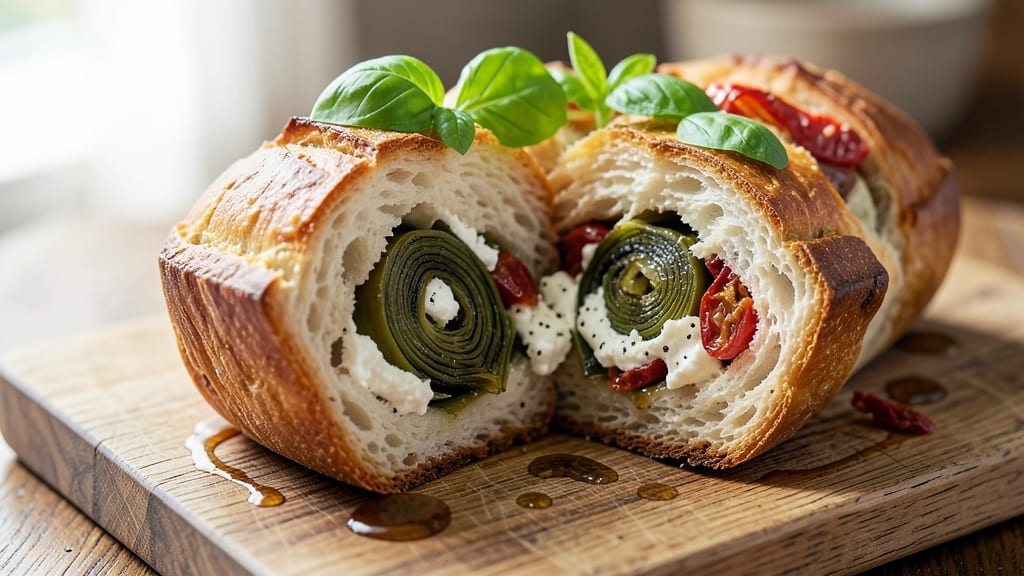
This artichoke-stuffed bread recipe delivers a crispy crust that hides a surprising herbed artichoke filling—perfect for elevating any meal. 💛 The secret lies in balancing a simple yeast dough with a flavorful artichoke mixture that stays tender while the bread bakes to golden perfection.
I developed this recipe after years of experimenting with stuffed breads, and it never fails to impress. The dough comes together in just 20 minutes of active time, with a 1-hour rise that develops rich flavor.
The filling—chopped artichoke hearts, garlic, herbs, and cheese—gets tucked inside before the bread bakes at 375°F for 25-30 minutes, creating a crispy exterior and a warm, herby surprise within. It’s the kind of dish that feels special but requires minimal effort.
What you’ll end up with is a loaf that’s crispy on the outside, soft and fragrant on the inside, with pockets of artichoke and herbs that melt into every bite.
The aroma alone will have everyone asking for seconds, and the texture contrast makes it impossible to eat just one slice. Serve warm with olive oil for dipping or alongside soups and salads. Here’s how to make it!
Ingredients for artichoke stuffed bread
Fourteen simple ingredients transform into a golden, crispy bread with herbed artichoke surprises inside.
| Ingredient | Amount | Notes |
|---|---|---|
| All-Purpose Flour 🌾 | 4 cups | Spooned and leveled for accuracy |
| Active Dry Yeast 🍞 | 2 ¼ tsp | Ensure yeast is fresh and active |
| Granulated Sugar 🍚 | 1 tbsp | For yeast activation |
| Warm Water 💧 | 1 cup | 110°F for ideal yeast activation |
| Unsalted Butter 🧈 | ½ cup | Softened for dough mixing |
| Large Egg 🥚 | 1 whole | Room temperature for even mixing |
| Marinated Artichoke Hearts 🌿 | 1 cup | Chopped, drained and patted dry |
| Garlic Cloves 🧄 | 3 cloves | Minced for intense flavor |
| Fresh Parsley 🌿 | ¼ cup | Chopped, stems removed |
| Shredded Mozzarella Cheese 🧀 | 1 cup | Part-skim for balance |
| Extra-Virgin Olive Oil 🫒 | 2 tbsp | Plus extra for brushing |
| Kosher Salt 🧂 | 1 ½ tsp | Divided for dough and filling |
| Black Pepper 🌶️ | ½ tsp | Freshly ground for warmth |
| Dried Oregano 🍃 | ½ tsp | For Mediterranean depth |
The artichoke hearts make this recipe shine—look for marinated hearts in olive oil at the grocery store's canned vegetable aisle. Trader Joe's and Whole Foods carry high-quality options that stay tender when baked. Fresh parsley is ideal, but dried parsley at half the amount works in a pinch. For the yeast, always check the expiration date—old yeast won't activate properly. The mozzarella should be shredded yourself for best texture; pre-shredded cheese contains anti-caking agents that prevent proper melting.
No marinated artichokes? Chopped canned artichoke hearts (drained and patted dry) work perfectly. Want extra flavor? Add 1 tbsp capers or sun-dried tomatoes to the filling. The olive oil matters here—use extra-virgin for richness, and don't skimp on the amount for brushing the dough. For the dough, if you're short on time, instant yeast can be used at the same amount. The garlic should be fresh—jarred minced garlic lacks the depth of freshly minced cloves. If you prefer milder flavor, reduce the garlic to 2 cloves.
The dough can be prepared up to 24 hours ahead and stored in the fridge, wrapped tightly in plastic. The filled bread should bake immediately after shaping to maintain crispiness. Once cooled, it keeps well at room temperature for 2 days or can be frozen for 3 months. To reheat, wrap in foil and warm at 350°F for 10 minutes. The filling reheats beautifully, making this perfect for meal prep—just slice and serve with extra olive oil for dipping.
Why You'll Love This Recipe
- No-Knead Magic: I swear by this dough—just mix the flour, yeast, sugar, and warm water, let it rise while I answer emails. The butter gets worked right in, so you’re not chasing a stiff dough. Honestly, my hands stay cleaner than when I try fancy kneading.
- Golden Crisp Secrets: That butter baked into the dough? It turns the crust into shatteringly crisp edges while keeping the inside soft. Stuffed with artichokes, it’s like a warm hug for your taste buds—herby, savory, and just salty enough to make you reach for seconds.
- Weeknight Hero: Between us, this is my go-to when I need something impressive but zero-stress. Toss in pre-marinated artichokes (or jarred, no judgment) and bake while you throw together a simple salad. Dinner’s served before the kids start complaining they’re hungry.
- Budget-Friendly Feast: Flour, yeast, butter—these are pantry staples that stretch across meals. The dough makes two loaves, and leftovers toast into crispy, buttery croutons. I’ll be real: my grocery budget thanks me every time I pull this out.
Step-by-step instructions for artichoke-stuffed bread
Here's how to create a golden crust hiding a flavorful artichoke surprise.
👨🍳 Step 1: Activate the Yeast and Mix the Dough
In a small bowl, combine the 1 cup warm water (about 110°F) with the 1 tbsp granulated sugar and 2.25 tsp active dry yeast. Let it sit for 5-10 minutes until frothy—you'll see small bubbles forming on the surface. This confirms your yeast is active and ready to work.
In a large bowl, whisk together the 4 cups all-purpose flour and 1 tsp kosher salt (reserve the remaining 0.5 tsp salt for later). Make a well in the center and add the yeast mixture, 0.5 cup softened butter, and 1 whole large egg. Using a wooden spoon or dough whisk, mix until a shaggy dough forms.
Transfer the dough to a lightly floured surface and knead for 8-10 minutes until smooth and elastic. The dough should spring back slowly when poked. If it feels too sticky, add 1 tablespoon flour at a time until it reaches the perfect consistency. This kneading develops gluten, which gives your bread its structure and that satisfying chew.
🥘 Step 2: Prepare the Artichoke Filling
While the dough rests, prepare the filling by combining the 1 cup chopped marinated artichoke hearts, 3 cloves minced garlic, 0.25 cup chopped fresh parsley, 1 cup shredded mozzarella cheese, 0.5 tsp black pepper, and 0.5 tsp dried oregano in a small bowl. Mix well to distribute all the flavors evenly.
Taste the filling and adjust seasoning if needed. I often add a pinch more salt here since the marinated artichokes might already contain some. The filling should be vibrant green from the parsley and have a bright, herby aroma that makes your mouth water. This is the flavor surprise your crispy crust will hide so beautifully.
🍳 Step 3: Shape the Dough and Add Filling
Divide the rested dough into 4 equal pieces (about 8 ounces each) and roll each into a 12-inch circle on a lightly floured surface. I use a rolling pin to keep the thickness even—about ¼ inch thick. If the dough resists, let it rest another 5 minutes to relax the gluten.
Place ¼ of the artichoke filling onto each circle, leaving a 1-inch border around the edges. Fold the dough over the filling to create a half-moon shape, then seal the edges by pinching them tightly together. The goal is to completely enclose the filling so it stays hidden during baking. Brush the tops with 1 tbsp extra-virgin olive oil to ensure a golden crust.
🔥 Step 4: Proof and Bake for Maximum Crispiness
Place the stuffed dough pieces on a parchment-lined baking sheet, seam-side down, and let them proof for 1-1.5 hours until nearly doubled in size. The dough should look puffy and have gentle rises along the seams. I like to proof at room temperature for the best flavor development—just don't let them touch each other.
Preheat your oven to 375°F with a baking stone or inverted baking sheet on the middle rack. This creates steam that helps develop that perfect crispy crust. Bake the bread for 25-30 minutes until the crust is deep golden brown and sounds hollow when tapped on the bottom. The internal temperature should reach 190°F.
For extra crispiness, transfer the baked bread to a wire rack and let it cool for 10 minutes before slicing. The contrast between the crispy exterior and creamy, herby filling is what makes this bread truly special. Serve warm with a side of marinara sauce for dipping—it's the perfect way to enjoy every bite.
Pro Tips For Making Artichoke Stuffed Bread
- Test Yeast First: Skip the guesswork—mix 1 teaspoon yeast with ¼ cup warm water and 1 teaspoon sugar. If it bubbles within 5 minutes, your yeast is alive. If not, toss it and start fresh. I’ve wasted enough dough waiting for dead yeast to work its magic.
- Soften Butter Properly: Don’t melt it—cut the unsalted butter into small cubes and let them sit at room temperature for 20 minutes before mixing into the dough. Cold butter creates pockets for the artichokes, while melted butter makes the bread dense. Trust me, your pockets will thank you.
- Knead Until Smooth: Stop when the dough springs back slowly after pressing it (about 8-10 minutes by hand). Over-kneading develops gluten, which can make the bread tough. I used to go overboard, and the texture suffered—now I check with my fingers instead of my ego.
- Stuff Generously: Pack the artichoke filling (whether store-bought or homemade) into the dough before the final shaping. This keeps the filling secure and prevents leaks during baking. I learned this after watching my first batch ooze artichoke goo all over the pan.
Troubleshooting great artichoke stuffed bread
Dough Too Sticky?
If your dough feels overly sticky during kneading, don't panic—this is common with yeast doughs. Gradually add 1 tablespoon flour at a time while kneading until the dough reaches a smooth, slightly tacky but manageable consistency.
Overworking it with too much flour can make the bread dense, so stop as soon as it springs back when poked. I've found that using bread flour instead of all-purpose can also reduce stickiness, though it will make the crust slightly chewier. 💫
Filling Leaking?
If your artichoke filling leaks during baking, your dough pieces might be too thin or the edges weren't sealed properly. For a foolproof seal, pinch the edges tightly together in ½-inch intervals and use a little water to "glue" the seams shut.
Another trick is to press the edges with a fork after pinching. Also, ensure your filling isn't too wet—pat chopped artichokes thoroughly dry before mixing. I once used jarred minced garlic that added extra moisture, so switching to fresh minced cloves solved my leaking problem. 🌿
Uneven Baking
For perfectly even baking, rotate your bread halfway through the baking time using a parchment-lined baking sheet. If one side browns too quickly, cover it loosely with aluminum foil.
I've also noticed that placing bread too close together can cause uneven rising—leave at least 2 inches of space between pieces. Another tip: If your oven runs hot, reduce the temperature to 350°F and bake for 5-10 minutes longer.
Always preheat with a baking stone or sheet for consistent heat distribution. 🔥
Dense Texture
A dense loaf usually means the dough didn't rise properly or was overworked. First, check your yeast—it should foam within 5-10 minutes when mixed with warm water. If not, your yeast may be old. Also, avoid over-kneading—stop when the dough springs back slowly.
For extra lift, let the dough rise in a warm place (like a turned-off oven with a bowl of hot water inside). I've also found that adding 1 teaspoon baking powder to the dough can lighten the texture without affecting flavor. 💡
Filling Not Cooked Through
If your artichoke filling stays cold or undercooked, it's likely because the bread baked too quickly. Lower the oven temperature to 350°F and bake for 35-40 minutes instead. Also, ensure your filling is distributed evenly—thicker areas will take longer to cook.
I've had success by adding ¼ cup grated Parmesan to the filling, which helps it brown faster. Always check the internal temperature with a thermometer—it should reach 165°F at the center of the filling. 🌡️
Crust Too Pale
A pale crust often means the bread didn't bake long enough or the oven wasn't hot enough. Brush the tops with an extra 1 tablespoon olive oil before baking for a richer color. For a deeper golden hue, broil for 1-2 minutes at the end of baking.
I've also found that using whole wheat flour (replacing 1 cup of all-purpose) gives a darker crust. Just be careful not to burn the edges—watch closely during broiling. 💛
Nutrition facts
Frequently asked questions
Can I make this artichoke bread without yeast?
Yes! For a quick version, substitute the yeast dough with 2 cups all-purpose flour, 1 tsp baking powder, ½ tsp salt, ¼ cup olive oil, and ½ cup warm water. Mix into a stiff dough, roll out, add filling, and bake at 375°F for 20-25 minutes. The texture will be denser but still delicious.
How do I store leftover artichoke bread?
Wrap cooled slices tightly in plastic wrap or store in an airtight container. It stays fresh at room temperature for 2 days or in the fridge for 5 days. For longer storage, freeze slices for up to 3 months. Reheat in a 350°F oven for 5-10 minutes or microwave for 20 seconds for best texture.
What's the best way to serve this bread?
Slice warm and serve with olive oil for dipping, alongside soups, or with a charcuterie board. For a hearty meal, pair with roasted vegetables or a simple tomato-basil salad. The crispy crust holds up well to dipping sauces like garlic aioli or marinara.
Can I substitute other vegetables in the filling?
Try sun-dried tomatoes, roasted bell peppers, or spinach for variety. For a Mediterranean twist, add kalamata olives or feta cheese. Just adjust moisture levels—pat all veggies thoroughly dry to prevent leaking.
Why did my bread turn out flat?
Flat bread usually means the yeast didn't activate properly or the dough didn't rise enough. Double-check your yeast (it should foam within 5-10 minutes in warm water). Also, ensure your dough rises in a warm spot (like a turned-off oven with a bowl of hot water). For extra lift, let it rise for 1.5 hours instead of 1 hour.