
Side Dishes
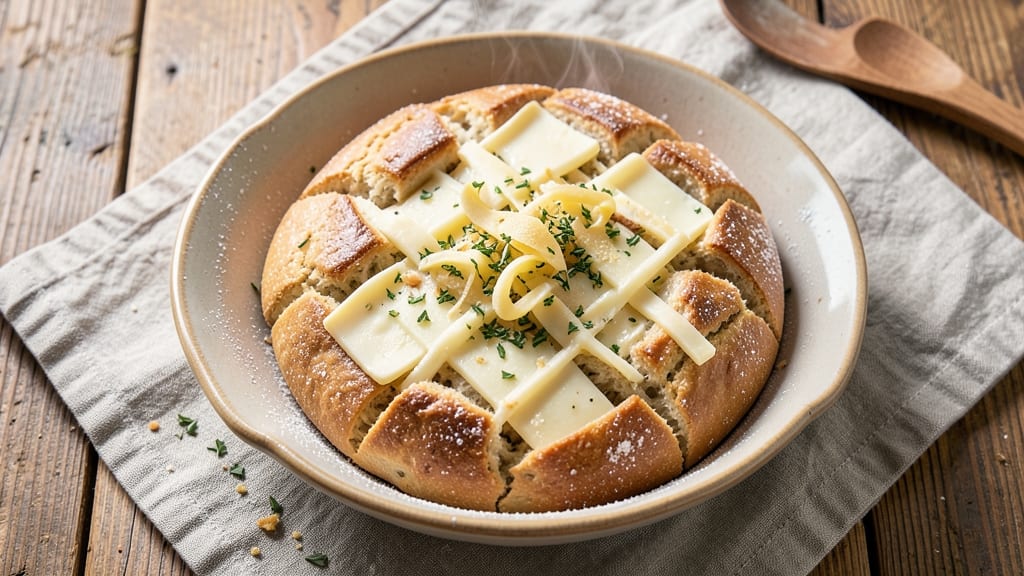
This artisan asiago cheese bread delivers the perfect balance of crispy golden crust and melty, pull-apart cheese pockets that disappear faster than you can say "garlic butter."
The secret lies in slow fermentation, which develops deep flavor and a tender crumb that holds up to the rich, nutty asiago—no shortcuts here. I've perfected this recipe over years of baking, and the difference between this and store-bought versions is night and day.
The dough starts with a simple but precise ratio of flour, water, and yeast, but it's the asiago cheese that truly elevates it.
Shredded and folded into the dough, it creates those signature pockets of gooey, savory goodness that make every bite irresistible. Pro tip: Use freshly grated asiago for maximum flavor, and don't skip the proofing time—this is where the magic happens.
The slow rise allows the gluten to relax and the flavors to meld, resulting in a bread that's both sturdy and tender.
By the time it emerges from the oven, you'll have a loaf with a crackly crust that gives way to a soft, chewy interior studded with pockets of melted asiago.
The aroma alone will have everyone gathering around the table, and the first pull-apart bite delivers that perfect combination of crispy, chewy, and melty. This isn't just bread—it's a showstopper side dish that pairs beautifully with soups, salads, or as a standalone appetizer.
For extra depth, consider adding garlic powder or dried herbs to the dough, or brush the baked loaf with olive oil and sprinkle with flaky sea salt for a restaurant-quality finish.
Serve warm with marinara for dipping, or let it cool slightly for cleaner slices. The possibilities are endless, but the foundation—slow fermentation and quality asiago—is what makes this recipe truly special.
Ingredients for artisan asiago cheese bread
Golden crust, melty asiago pockets, and a dough that sings with slow fermentation—just 12 ingredients.
| Ingredient | Amount | Notes |
|---|---|---|
| All-Purpose Flour 🌾 | 4 cups | Spooned and leveled, not packed |
| Instant Yeast 🍞 | ¼ tsp | Active dry works too |
| Granulated Sugar 🍚 | 1 tbsp | For yeast activation |
| Warm Water 💧 | 1 ¼ cups | 110°F, not boiling |
| Asiago Cheese 🧀 | 2 cups | Freshly grated, block preferred |
| Unsalted Butter 🧈 | ½ cup | Cold, cubed for dough |
| Garlic Powder 🧄 | 1 tsp | For extra depth |
| Dried Parsley 🌿 | 1 tsp | Or 1 tbsp fresh chopped |
| Diamond Crystal Kosher Salt 🧂 | 1 ½ tsp | Adjust to taste |
| Olive Oil 🫒 | 2 tbsp | For dough and brushing |
| Flaky Sea Salt 🧂 | 1 tsp | For final sprinkle |
| Cornmeal 🌽 | ¼ cup | For dusting parchment |
The asiago is non-negotiable here. Grab a wedge from the deli counter—pre-shredded gets clumpy and lacks that rich, nutty flavor. Whole Foods or local specialty shops usually carry the best blocks, but any quality grocery store should have it. If you're in a pinch, Parmigiano-Reggiano works in a bind, but asiago's distinct taste is what makes this bread special. For the flour, King Arthur or Gold Medal are my go-tos—they handle the cheese without getting gummy. And don't even think about skipping the slow rise; that's where the magic happens.
No asiago? Parmigiano-Reggiano or sharp white cheddar can step in, but the flavor won't be the same. Short on garlic powder? Fresh minced garlic at half the amount adds a whole new dimension. The butter must be cold when you cut it into the dough—pull it from the fridge right before mixing. If you're feeling fancy, add a pinch of nutmeg or black pepper to the dough for extra depth. And for the love of bread, measure your flour properly—spoon it in, don't scoop. Trust me, your crust will thank you.
This dough needs time to shine—at least 2 hours at room temp, then another 1 hour in the fridge if you're prepping ahead. The longer it ferments, the better it gets. Brush that baked loaf with olive oil and sprinkle with flaky sea salt while it's still warm—do it right out of the oven. Keeps 3 days wrapped at room temp, but honestly? It disappears faster than that. Freeze half the dough before shaping for up to 3 months—just let it come to room temp before baking.
Why You'll Love This Recipe
- Five-Ingredient Magic: I swear by this recipe because it’s that simple—just flour, yeast, sugar, water, and asiago. No fancy techniques, no waiting for dough to chill overnight. Honestly, I’ve made it on days when I forgot to take bread out of the freezer.
- Cheese Pulls Every Time: That sharp, nutty asiago? It melts into gooey pockets while keeping just enough bite. The warm water activates the yeast perfectly, so every slice has that fresh-baked crunch and a creamy, tangy finish—like a hug in bread form.
- Weeknight & Picnic Hero: Between us, this bread is my go-to for sandwiches (hello, grilled chicken) or just tearing into with butter. It reheats beautifully, so I bake a loaf on Sundays and use it all week. (Yes, even on a Tuesday night.)
- Leftovers on Lock: One batch feeds my family for days—sliced for toast, cubed for salads, or tossed into pasta. The asiago keeps it interesting, so no one skips seconds. I’ll be real: I’ve frozen extras for lazy mornings, and they thaw like they were just baked.
Step-by-step instructions for artisan asiago cheese bread
Here's how to make a bread with a crispy crust and gooey cheese pulls that'll make you the hero of any meal.
Activate the Yeast and Mix the Dough
In a large bowl, whisk together the 4 cups all-purpose flour, 1.5 tsp diamond crystal kosher salt, 1 tsp garlic powder, and 1 tsp dried parsley. Set aside. In a separate bowl, combine the 1.25 cups warm water (about 110°F), 1 tbsp granulated sugar, and 0.25 tsp instant yeast. Let it sit for 5 minutes—you should see bubbles form on top. If not, your yeast might be inactive, and you'll need to start over.
Once bubbly, pour the yeast mixture into the dry ingredients and stir with a wooden spoon until a shaggy dough forms. Add the 0.5 cup cold unsalted butter, cut into small cubes, and the 2 cups asiago cheese. Mix until the butter is fully incorporated and the cheese is evenly distributed. The dough will be sticky, but that's normal.
Knead the Dough Until Smooth
Turn the dough onto a lightly floured surface and knead for 8-10 minutes by hand, or use a stand mixer with a dough hook for 5-6 minutes on medium speed. The dough should become smooth and elastic, pulling away from the sides of the bowl. If it's still sticky, add 1-2 tablespoons of flour at a time until it's just manageable—don't overdo it, or the bread will be dense.
Shape the dough into a round loaf and place it back in the bowl. Cover with a damp towel and let it rise in a warm place for 1 hour, or until it has roughly doubled in size. This resting period allows the gluten to relax and the dough to develop flavor. If your kitchen isn't warm, place the bowl near the oven with the light on to help it rise evenly.
Shape and Let the Dough Rise Again
Once the dough has risen, punch it down gently to release any air bubbles. Divide it into 6 equal portions (about 6 ounces each) and shape each into a small round loaf. Place them on a baking sheet lined with parchment paper, spacing them about 2 inches apart. Cover loosely with a damp towel and let them rise for another 30-45 minutes until puffy. The dough should spring back slowly when pressed gently with a finger.
While the dough rises, preheat your oven to 375°F. Line another baking sheet with parchment paper and dust it lightly with 0.25 cup cornmeal. This will prevent the bread from sticking and add a subtle crunch to the bottom.
Bake to a Golden, Crispy Perfection
Brush the tops of the loaves with 2 tbsp olive oil and sprinkle generously with 1 tsp flaky sea salt. Bake for 18-22 minutes until the bread is deep golden brown and sounds hollow when tapped on the bottom. The cheese should be melted and pulling slightly at the edges, but not so much that it's runny.
For extra crispiness, transfer the baked loaves to a wire rack and let them cool for 5 minutes. Serve warm, straight from the oven, with a side of marinara sauce or a simple garlic butter for dipping. The crust should be crisp enough to shatter slightly, while the inside remains soft and cheesy. Enjoy while it's still warm—this bread is best fresh out of the oven!
Pro Tips For Making Artisan Asiago Cheese Bread
- MEASURE THE CHEESE BY VOLUME: Shred your asiago before measuring—packed cubes lie. Use a standard measuring cup (not the shredded cheese’s own container) and level it off; you’ll need roughly 2 cups for most recipes. I learned this the hard way when my first batch turned out denser than a brick.
- LET THE DOUGH RISE UNTIL IT’S Almost Too Big: Stop shaping when the dough hits the top of the bowl and springs back slowly when poked—about 1.5 to 2 hours at room temp. Overproofing is easy here, but underproofing means a gummy, sad loaf. (Yes, even if you’re impatient like me.)
- SHRED CHEESE FINE, NOT FINE: Use the large holes of a box grater—tiny cheese bits melt into glue, not pockets of gooey goodness. Aim for rice-sized shreds; they distribute better and stay distinct in the crumb. My grandmother swore by this, and she was right: uneven shreds = uneven flavor.
- DON’T SKIP THE SUGAR WATER BATH: Brush the shaped loaf with warm water (not hot) before baking—it mimics a steam bath and guarantees a crisp crust. Skip this, and you’ll end up with a chewy, pale loaf. (Your future self will thank you.)
Serving suggestions for this recipe
Dipping Sauces
Warm marinara sauce is the classic pairing—its acidity cuts through the richness of the asiago. I like to simmer 1 cup San Marzano tomatoes, 2 cloves minced garlic, and 1 tsp red pepper flakes for 20 minutes until thickened.
For something lighter, blend ½ cup Greek yogurt with 1 tbsp lemon juice and ½ tsp dried oregano—this tangy dip keeps the bread fresh. 🍅
Cheese Board Pairings
This bread shines alongside a curated cheese board. I recommend aged Gouda for its caramel notes, sharp white cheddar for a bold contrast, and provolone for a milder option. Add prosciutto slices, roasted nuts, and fig jam to balance the savory flavors. The asiago's nuttiness ties everything together beautifully.
Salad Accompaniments
Serve alongside a simple arugula salad dressed with lemon vinaigrette—the peppery greens complement the bread's richness. For a heartier option, toss mixed greens with cherry tomatoes, red onion slices, and balsamic glaze. The bread's crispy crust adds a satisfying crunch to any leafy salad. 🥗
Soup Pairings
This bread is a match made in heaven with creamy tomato basil soup or roasted garlic soup. The asiago's nutty flavor enhances the soup's depth, while the bread's crust soaks up every last drop.
For a lighter option, pair with minestrone—the bread's cheesy goodness balances the vegetable medley perfectly.
Wine and Beer Suggestions
A crisp Italian Pinot Grigio or Sauvignon Blanc cleanses the palate between bites. For beer lovers, a Belgian witbier like Hoegaarden adds a refreshing citrus note. Avoid heavy reds—they overpower the bread's delicate flavors. 🍷
Breakfast Twist
Turn this bread into a brunch star by topping warm slices with scrambled eggs, crispy bacon, and hot sauce. The asiago adds a savory depth that elevates simple breakfast plates. Serve with turkey sausage or smoked salmon for a protein-packed morning meal. 🍳
Nutrition facts
Frequently asked questions
Can I make this bread without a stand mixer?
This recipe works perfectly by hand. After mixing the dough, knead it on a lightly floured surface for 8-10 minutes until smooth and elastic. The dough should pull away cleanly when you poke it. If it feels too sticky, add just 1 tablespoon of flour at a time. Patience is key—hand-kneading develops gluten just as effectively as a mixer.
What if my dough doesn't rise properly?
Check your yeast first—it should be fresh (test it by dissolving ½ tsp in ¼ cup warm water for 5 minutes; if no bubbles form, replace it). Also ensure your water is 110°F (too hot kills yeast, too cold slows it). For a slow kitchen, place the bowl near the oven with the light on to create warmth. If all else fails, let it rise in the fridge overnight for deeper flavor.
Can I substitute asiago with another cheese?
Yes, but the flavor will change. Parmigiano-Reggiano works best as a close second, though it's saltier. For a milder option, try sharp white cheddar, but asiago's nutty sweetness is irreplaceable. Avoid pre-shredded cheese—it contains anti-caking agents that prevent proper melting. If you must substitute, grate your own cheese for the best texture.
How do I store leftovers?
Keep bread at room temperature in an airtight container for 2-3 days. For longer storage, freeze shaped dough portions (unbaked) for up to 3 months, or freeze baked bread wrapped tightly for 1 month. To reheat, warm slices in a 350°F oven for 5-7 minutes until crispy again. Never microwave—it makes the crust soggy.
Why does my bread taste bland?
Slow fermentation is key! If your bread lacks flavor, try letting the dough rise overnight in the fridge for deeper development. Also check your salt—1.5 tsp kosher salt is crucial for flavor balance. For extra depth, add ½ tsp nutmeg or 1 tsp dried herbs (like thyme or rosemary) to the dough. Freshly grated asiago makes a difference too—pre-shredded lacks flavor intensity.