
Side Dishes
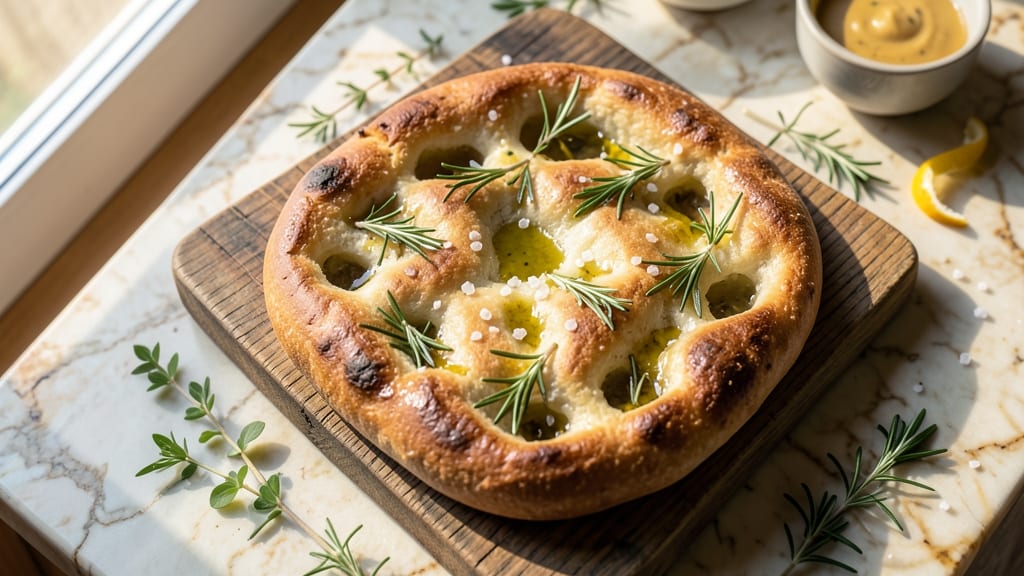
This artisan focaccia bread recipe delivers the golden, olive oil-pooled crust and pillowy heart you crave without requiring professional skills. The secret lies in a long, slow fermentation that develops deep flavor and an open crumb structure—no fancy equipment needed.
I’ve perfected this method over years of baking, ensuring every batch rises beautifully with those signature dimples and aromatic rosemary topping.
The process begins with a simple dough of flour, water, yeast, and salt, kneaded just until combined—no overworking required.
After the first rise, you’ll press the dough into a pan and dimple it with your fingers, then generously pool it with extra-virgin olive oil and sprinkle with flaky sea salt and fresh rosemary.
The second rise transforms the dough into a light, airy loaf with a crisp exterior and tender interior.
Baking at 425°F for 20-25 minutes yields a focaccia with a caramelized crust that pools with golden oil and a soft, fluffy crumb beneath. The aroma alone—warm, herby, and slightly sweet—will fill your kitchen, making it impossible to resist slicing into the still-warm loaf.
This is the kind of focaccia that turns simple meals into special occasions.
Perfect for serving alongside soups, salads, or as a base for bruschetta, this recipe scales easily for gatherings. The dough can be made ahead, and the proofing times are flexible, so you can bake it when it suits your schedule.
Let’s create something truly exceptional—no shortcuts, just authentic artisan quality.
Ingredients for artisan focaccia bread
Eight essential ingredients transform simple flour into golden, olive oil-pooled focaccia perfection.
| Ingredient | Amount | Notes |
|---|---|---|
| All-Purpose Flour 🌾 | 4 cups | High-protein preferred for chewiness |
| Instant-Acting Yeast 🍞 | 1 tbsp | Ensures reliable fermentation |
| Extra-Virgin Olive Oil 🫒 | 1 ½ cups | Fruity, low-acidity preferred |
| Warm Water 💧 | 1 ½ cups | 105-110°F for ideal yeast activation |
| Diamond Crystal Kosher Salt 🧂 | 1 ½ tsp | Fine grain for even distribution |
| Fresh Rosemary 🌿 | ¼ cup | Finely chopped, stems removed |
| Flaky Sea Salt 🧂 | 2 tsp | For final sprinkling |
| Large Eggs 🥚 | 2 whole | Optional for egg wash |
| Semolina Flour 🌾 | 2 tbsp | For dusting baking sheet |
| Granulated Sugar 🍚 | 1 tsp | Optional for slight sweetness |
The flour and yeast are your foundation—King Arthur or Caputo Tipo 00 make all the difference for that signature open crumb. Instant yeast works best here since you're not waiting for full activation. For the olive oil, California Extra Virgin or Italian DOP oils give that fruity, aromatic punch. If your rosemary looks sad, toss it in warm water for 10 minutes to revive it. The key is using freshly chopped rosemary—dried just won't cut it for that authentic aroma. For the salt, Maldon Flaky Sea Salt melts beautifully, but any flaky salt works.
No instant yeast? Active dry yeast needs 5 minutes in warm water first. Running short on rosemary? Fresh thyme or oregano adds lovely depth. The eggs are truly optional—this focaccia shines without them, but if you're feeling fancy, that egg wash gives a gorgeous sheen. For the olive oil, avocado oil works in a pinch, though it lacks the fruity notes. The sugar is completely optional—skip it if you prefer a more savory focaccia. If your kitchen is chilly, warm the water to 110°F to ensure the yeast activates properly. And if you're making this ahead, proof the dough overnight in the fridge for even deeper flavor development.
This dough keeps beautifully—2 days refrigerated or 3 months frozen. For freezing, shape the dough before the first rise, wrap tightly in plastic, and thaw overnight in the fridge. The focaccia itself reheats best at 350°F for 5-10 minutes to restore that crisp crust. I always make a double batch—one for fresh eating, one to freeze for lazy weeknights. Store leftovers wrapped at room temperature for 2 days, or freeze sliced portions for 1 month. The crust stays crispy even when reheated, making it perfect for bruschetta or serving alongside soups.
Why You'll Love This Recipe
- I’ll be real: this dough takes zero effort. Just mix flour, yeast, olive oil, and water—no punching, no rolling, no stress. The olive oil does all the work, giving it that signature tender crumb without a single stretch of my arm.
- No-Knead Magic: I’ll be real: this dough takes zero effort. Just mix flour, yeast, olive oil, and water—no punching, no rolling, no stress. The olive oil does all the work, giving it that signature tender crumb without a single stretch of my arm.
- Olive Oil Euphoria: That first bite of crispy, golden crust with a soft, airy center? It’s all thanks to the extra-virgin olive oil. Drizzle it generously, and you’ve got a bread so rich and satisfying, it’ll make you forget store-bought ever existed.
- Weeknight to Weekend: This bread works everywhere. Tear it for breakfast with jam, use it as a base for bruschetta, or freeze slices for toast later. Honestly, I’ve even served it at potlucks—no one ever asks what’s in it, just how to get the recipe.
Step-by-step instructions for artisan focaccia bread
Here's how to craft restaurant-quality focaccia with a golden, oil-pooled crust and airy interior.
Activate the Yeast and Mix the Dough
In a large mixing bowl, combine the 1.5 cups warm water (between 105-110°F) with the 1 tbsp instant-acting yeast and 1 tsp granulated sugar. Let this sit for 5-10 minutes until frothy—this confirms your yeast is active. If it doesn't bubble, your yeast may be dead or the water too hot.
Add the 4 cups all-purpose flour and 1.5 tsp Diamond Crystal kosher salt to the bowl. Using a wooden spoon or dough whisk, mix until a shaggy dough forms. Then gradually drizzle in 1 cup of the extra-virgin olive oil while mixing. The dough will begin to come together but may still look dry.
Knead and Rest the Dough
Turn the dough onto a lightly floured surface and knead for 5-7 minutes until smooth and elastic. You're looking for a dough that springs back slowly when poked. If it feels too sticky, add 1 tablespoon of flour at a time until it's just manageable.
Place the dough in a lightly oiled bowl, cover with plastic wrap, and let it rest at room temperature for 1 hour. This initial rest allows the gluten to relax, making the dough easier to shape later. I like to give it a gentle stretch every 15 minutes to encourage even gluten development.
Shape and First Rise
After the rest, transfer the dough to a 9x13-inch baking pan that's been lightly greased with olive oil. Press the dough gently into the pan until it reaches all edges—about 2-3 minutes of stretching and folding. The dough should be about ½-inch thick in places but not too thin.
Cover the pan with a damp towel and let it rise for 1-1.5 hours until it's puffed and nearly doubled in size. You'll know it's ready when the dough feels light and springs back slowly when pressed. This is where the magic happens—the dough develops its signature airy texture.
Create the Olive Oil Pool and Second Rise
Preheat your oven to 425°F. Generously drizzle ½ cup of extra-virgin olive oil over the risen dough, spreading it evenly to the edges. Use your fingers to create dimples all over the surface—this is what creates those beautiful pockets for oil pooling.
Sprinkle the 0.25 cup finely chopped fresh rosemary evenly over the top, pressing it gently into the dimples. Cover again and let rise for another 30-45 minutes until the dough has puffed noticeably. The rosemary should be fragrant and the dough should feel firm to the touch.
Bake to Golden Perfection
Bake the focaccia for 20-25 minutes until the edges are deep golden brown and the top is crispy. The oil should pool beautifully in the dimples, creating that signature shimmer. For extra browning, I like to broil for 1-2 minutes at the end, watching carefully to avoid burning.
Remove from the oven and immediately sprinkle with 2 tsp flaky sea salt. Let it cool for 5 minutes before slicing—this allows the flavors to settle and prevents a gummy texture. If you used the 2 whole eggs for an egg wash, brush them on just before baking for an extra glossy finish.
Pro Tips For Making Artisan Focaccia Bread
- STRETCH THE DOUGH: After the first rise, don’t be afraid to punch down the dough and let it rest another 15–20 minutes before shaping. This relaxes the gluten, making it easier to stretch into that signature dimpled texture—no fancy tools needed, just your hands and patience.
- SALT THE OIL: Mix your olive oil and salt before adding water to the flour. The salt dissolves better into the oil first, then distributes evenly when you mix—no clumpy salt pockets in your dough. (Yes, even if you’re using Diamond Crystal, which is already fine.)
- SKIP THE OVER-KNEAD: Artisan focaccia isn’t about punching and folding until your arm falls off. After mixing, just do a quick 30-second stretch-and-fold to combine, then let the yeast do the work. Overworking it tightens the crumb, killing that airy, open-cell texture you’re after.
- USE A BAKING STEEL: Placing your focaccia on a cold baking steel (or even a heavy cast-iron skillet) conducts heat more evenly, giving you a crisp bottom without burning the top. No steel? A pizza stone works, but preheat it longer—at least 45 minutes—to avoid steam pockets.
Wine and beer pairings for this artisan focaccia bread
White Wine Pairings
For this rich, herby focaccia, I recommend a crisp Italian Vermentino from Sardinia—its bright citrus and mineral notes cut through the olive oil's richness beautifully. A Pinot Grigio from Alto Adige also works wonderfully, offering a clean, refreshing contrast to the rosemary's earthiness.
The acidity in these wines helps balance the focaccia's buttery texture, making each bite feel lighter. 🍷
Light Red Options
If you prefer red wine, opt for a light-bodied Chianti or Sangiovese with high acidity. These wines complement the focaccia's herbal notes without overpowering its delicate olive oil flavor.
Look for a wine with 12-13% alcohol and bright cherry or plum undertones—these will harmonize perfectly with the focaccia's crust and rosemary aroma.
Beer Pairings
A crisp Italian lager like Peroni or Birra del Borgo is my go-to beer pairing—its subtle maltiness and effervescence cleanse the palate between bites. For craft beer lovers, a Belgian Witbier (like Hoegaarden) adds a lovely citrus and peppery contrast.
Avoid heavy stouts or IPAs, as their bold flavors can clash with the focaccia's delicate balance of olive oil and herbs. 🍺
Sparkling Wine
For a festive touch, serve your focaccia with a dry Prosecco or Cava. The bubbles and acidity make the focaccia taste even lighter, while the slight sweetness in Prosecco enhances the olive oil's fruity notes.
This pairing is perfect for brunch or holiday gatherings when you want something celebratory but still simple. The effervescence also helps cut through the richness of any toppings you might add later.
Non-Alcoholic Options
Don’t overlook sparkling water with a splash of lemon juice—it’s a refreshing alternative that still enhances the focaccia’s herbal and citrusy notes. For something more substantial, try a rosemary-infused iced tea (steep fresh rosemary in hot water, then chill).
The herbal echo ties beautifully back to the focaccia’s topping, creating a cohesive flavor experience without alcohol. ✨
Nutrition facts
Frequently asked questions
Why does my focaccia turn out dense instead of light and airy?
Dense focaccia usually means the dough didn't rise properly. Make sure your yeast is fresh (it should bubble within 5-10 minutes in warm water), and keep the water temperature between 105-110°F. Also, don't skip the 1-hour rest after kneading—this relaxes the gluten for better rise. If your kitchen is cold, try placing the dough in a slightly warm spot for proofing.
Can I make focaccia without a 9x13-inch pan?
Use a 9x12-inch or 8x12-inch pan instead—the dough will spread to fit. For a smaller batch, try a 7x11-inch pan, but reduce the dough to 3 cups flour and 1 cup olive oil. Just adjust baking time (15-20 minutes) since smaller pans bake faster. The key is to press the dough to the edges of whatever pan you use.
How do I store focaccia to keep it fresh?
For best results, store focaccia at room temperature in an airtight container for up to 2 days. To revive stale crust, wrap slices in foil and reheat at 350°F for 5-10 minutes. For longer storage, freeze individual slices wrapped in plastic—they'll stay fresh for 1 month. The secret to crispy focaccia is reheating it properly!
What's the best way to add toppings besides rosemary?
Try cherry tomatoes halved and pressed into dimples, garlic cloves for extra flavor, or sun-dried tomatoes for a tangy twist. For sweet variations, sprinkle with coarse sugar before baking. The key is to add toppings after the second rise and just before baking so they stick to the oil. Press them gently into the dimples for even coverage.
Can I make focaccia in a Dutch oven for extra crispiness?
Yes! Shape the dough into a round and bake in a preheated Dutch oven at 450°F for 25-30 minutes. The enclosed space traps steam, creating an even crispier crust. For best results, place a baking sheet under the Dutch oven to catch any overflow. This method works especially well for garlic-infused focaccia or when you want a more rustic, free-form shape.