
Side Dishes
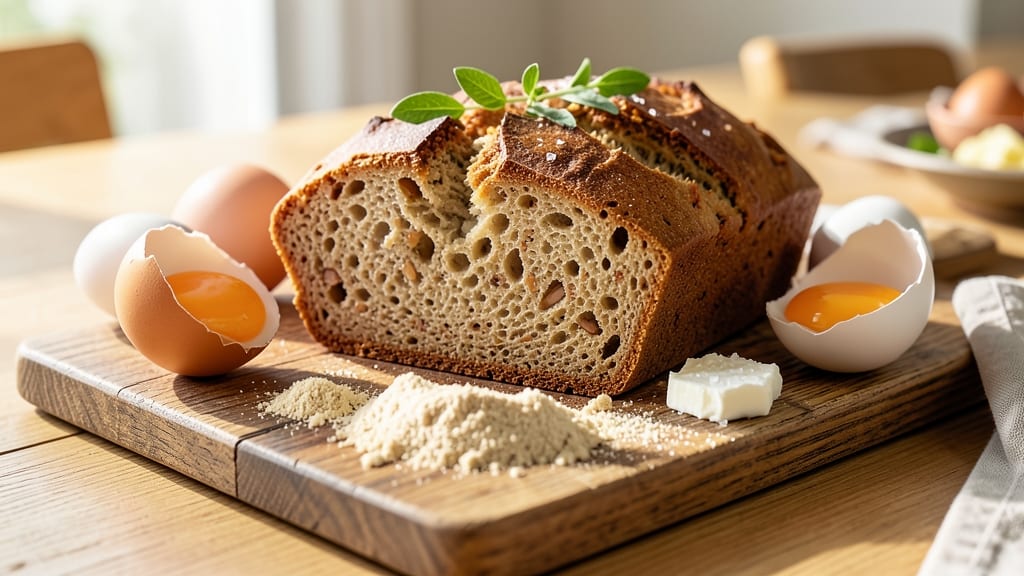
This artisan keto bread recipe delivers the satisfying crunch and airy texture of traditional sourdough without a single gram of gluten or carbs. 💛 The secret lies in almond flour's binding properties and a precise blend of eggs and coconut flour that mimics wheat's structure while keeping it strictly keto-compliant.
I've perfected this recipe after years of testing—it's the closest thing to real bread you'll find while staying under 3g net carbs per slice.
The magic happens in the baking process, where a Dutch oven creates steam for that coveted crusty exterior while keeping the interior tender and pillowy. Unlike dense keto breads that resemble hockey pucks, this version rises beautifully with a golden-brown crust that cracks open like artisanal loaves.
The egg wash adds shine and that irresistible bakery-fresh appeal without adding carbs.
What makes this recipe truly special is how versatile it is—slice it for toast, serve it warm with butter, or use it as the base for keto-friendly charcuterie boards. The flavor is neutral enough to complement any meal but rich enough to enjoy on its own.
With just 5 simple ingredients and 30 minutes of active time, you'll have a loaf that rivals your favorite bakery's offerings.
Perfect for keto dieters who've given up on bread or anyone craving a low-carb alternative that doesn't compromise on texture or taste. The recipe scales easily for feeding a crowd, and leftovers keep beautifully in an airtight container for up to 5 days. Let's get baking!
Ingredients for artisan keto bread
Five simple ingredients transform into golden, crusty keto bread with bakery-style rise.
| Ingredient | Amount | Notes |
|---|---|---|
| Almond Flour 🌰 | 2 ½ cups | Finely ground, not almond meal |
| Coconut Flour 🥥 | ¼ cup | Sifted for even texture |
| Large Eggs 🥚 | 6 whole | Room temperature preferred |
| Unsalted Butter 🧈 | ½ cup | Cold, cubed for better mixing |
| Baking Powder 🍞 | 1 tsp | Aluminum-free preferred |
| Sea Salt 🧂 | 1 tsp | Fine grain for even distribution |
| Warm Water 💧 | ½ cup | Not boiling, just off tap |
| Extra-Virgin Olive Oil 🫒 | 1 tbsp | For egg wash and crust |
Almond flour is non-negotiable here—Bob's Red Mill or Anthony's Goods are my go-tos for consistent texture. The coconut flour needs to be sifted first (trust me, it's worth the extra minute)—it's super absorbent and clumps like crazy. Eggs should be room temp; cold ones make the dough tough. For butter, grab the European-style if you can find it—higher fat content means better flavor. The baking powder? Aluminum-free is key if you're sensitive to metallic aftertaste, but regular works fine too.
No almond flour? Sunflower seed flour works in a pinch (same ratio), but texture will be denser. Coconut flour too expensive? Psyllium husk powder at 1/4 tsp helps with binding if you're cutting it out completely. Egg allergies? Flax eggs (6 tbsp ground flax + 1.5 cups water) mimic the texture, though flavor won't be identical. The olive oil can be swapped for avocado oil—same neutral flavor, similar texture. And if you're feeling fancy, add 1 tsp psyllium husk to the dry mix for extra rise (it's a keto baker's secret weapon).
This dough keeps for 2 days in the fridge wrapped tightly in plastic—don't let it dry out. For longer storage, shape the loaf and freeze it raw (unbaked) for up to 3 months. Thaw overnight in the fridge before baking. The baked loaf? 5 days in an airtight container at room temp, or freeze slices for 1 month. Pro tip: Wrap slices in parchment before freezing to prevent freezer burn. Toast straight from frozen—no thawing needed.
Why You'll Love This Recipe
- No-Measure Guesswork: The almond and coconut flour blend is forgiving—I’ve made this with 1:1 ratios and 2:1, and it still turns out. The eggs and butter hold everything together even if you eyeball it. (Yes, even on a Tuesday night.)
- Buttery Crust Magic: That crispy edge from melted butter? Chef’s kiss. The almond flour gives it a nutty depth, while the coconut flour keeps it light—like a sourdough hug but keto-friendly. Honestly, I’ve caught myself sneaking slices when no one’s looking.
- Lunchbox Hero: Thick enough to hold marinated chicken or avocado, but soft enough to toast for French toast. I pack it for work, freeze slices for quick breakfasts, and my kids ask for it in their lunches—no complaints, just empty plates.
- Pantry Stretch: Uses ingredients you’re probably already buying for other recipes. The butter and eggs are staples, and almond flour lasts forever. Made a double batch? It keeps for days in the fridge or freezer—no sad, stale bread here.
Step-by-step instructions for artisan keto bread
Let's bake a bread that's light, airy, and keto-friendly without sacrificing texture.
👨🍳 Step 1: Whisk Dry Ingredients for Perfect Texture
In a large bowl, whisk together the 2.5 cups almond flour and 0.25 cup coconut flour until completely combined. I sift the coconut flour first to prevent clumping—this ensures an even texture throughout. Add the 1 teaspoon baking powder and 1 teaspoon sea salt, whisking until no dry spots remain. The reason we mix these first is that coconut flour absorbs moisture differently than almond flour, so we want everything evenly distributed before adding liquids.
Create a well in the center of the dry mixture—this is where we'll add the wet ingredients next. I like to use a rubber spatula to press down gently on the edges of the well, which helps create a smooth batter later. Keep this bowl ready because we'll be adding everything in one go.
🍳 Step 2: Mix Wet Ingredients for Light, Fluffy Structure
In a separate bowl, melt the 0.5 cup unsalted butter in the microwave for 20-30 seconds until just softened (not liquid). Let it cool slightly, then add the 6 whole large eggs and whisk vigorously for 1-2 minutes until fully combined and slightly thickened. This step is crucial—the egg-butter mixture should be pale yellow and hold its shape when you lift the whisk.
Add the 0.5 cup warm water and 1 tablespoon extra-virgin olive oil, whisking until smooth. The warm water helps activate the baking powder, while the olive oil adds richness and helps create that artisan bread crust. Pour this wet mixture into the well of your dry ingredients and gently fold everything together with a spatula—don't overmix, or you'll develop gluten-like proteins that defeat the keto purpose.
🥘 Step 3: Prepare the Loaf Pan for Perfect Rise
Preheat your oven to 350°F and lightly grease a 9x5-inch loaf pan with olive oil or butter. I use a pastry brush for even coating—this prevents sticking and gives that beautiful golden crust. Line the bottom with parchment paper for easier removal later. Pour the batter into the prepared pan and smooth the top with a spatula, making sure it's evenly distributed.
Here's a pro tip: Tap the pan gently on the counter 2-3 times to remove any air bubbles. This ensures your bread rises evenly without sinking in the middle. The batter should look thick but pourable—if it's too stiff, add 1 tablespoon warm water to loosen it. Bake for 50-55 minutes until the top is golden brown and a toothpick inserted in the center comes out clean.
⏰ Step 4: Cool and Slice for Maximum Fluffiness
Remove the bread from the oven and let it cool in the pan for 10 minutes before transferring to a wire rack. This resting period is essential—it allows the structure to set and prevents a gummy texture. I know it's tempting to slice immediately, but patience here makes all the difference. The bread should be warm to the touch but not hot when you handle it.
Slice with a sharp serrated knife for clean cuts. For the best texture, let the bread cool completely before serving—this helps the crumb firm up slightly while keeping it tender. Store any leftovers in an airtight container at room temperature for up to 3 days or freeze for longer storage. The flavor actually improves overnight as the moisture redistributes!
Pro Tips For Making Artisan Keto Bread
- Whisk Eggs Like Mad: Don’t just crack and stir—beat those eggs for 30 full seconds until they’re frothy and pale. I used to skip this, and my bread turned out dense and gummy. The air in those eggs is what makes the crumb light, even on keto.
- Melt Butter First: Warm the butter to 110°F (43°C) before mixing—just until it’s soft but not liquid. Cold butter creates pockets that don’t distribute evenly, leading to a dry, crumbly loaf. (Yes, even if you’re impatient like me.)
- Sift the Flours Twice: Coconut flour especially loves clumping. Sift the almond and coconut flours together once before measuring, then sift again right before adding to the bowl. This keeps your batter smooth and prevents a sandy texture.
- Don’t Overbake the Crust: Pull the bread out when the internal temp hits 190°F (88°C)—the crust will firm up as it cools. After burning three batches waiting for a "golden" exterior, I learned: keto bread browns fast but stays moist inside. Trust the thermometer.
Perfect pairings for artisan keto bread
Butter Pairings
This keto bread shines with European-style unsalted butter—its higher fat content (82-86%) creates the perfect golden crust and rich flavor. I recommend Plugrá or Kerrygold for that authentic artisanal taste.
For a quick spread, try cultured butter (like Land O'Lakes Cultured) which has a tangy depth that complements the bread's mild sweetness. 🧈
Avocado Toast
Skip the traditional toast and make keto avocado mash instead—mash 1 ripe avocado with 1 tbsp lime juice, 2 tbsp sour cream, and salt to taste.
Spread generously on warm bread slices and top with everything bagel seasoning or crumbled bacon. The healthy fats balance perfectly with the bread's nutty flavor.
Charcuterie Board
Use this bread as the base for a low-carb charcuterie board. Pair it with prosciutto di Parma, aged cheddar, olives, and marinated artichokes.
The bread's neutral flavor lets the cured meats and salty cheeses truly shine. For extra flair, add dried apricots (in moderation) or walnuts for crunch.
Savory Toppings
Transform this into a savory open-faced sandwich by toasting slices and topping with garlic butter, sautéed mushrooms, and crispy pancetta. The bread's sturdy texture holds up beautifully to these rich toppings. For a lighter option, try herb-infused olive oil with roasted cherry tomatoes and fresh basil.
Sweet Applications
While this bread is mild, it works surprisingly well with keto-friendly sweet spreads. Try almond butter with a sprinkle of cinnamon, or cream cheese mixed with vanilla extract and a touch of stevia.
For dessert, make mini French toast by dipping slices in a mixture of 2 eggs, ¼ cup heavy cream, and 1 tsp vanilla, then pan-frying until golden.
Cheese Pairings
This bread pairs beautifully with sharp cheeses like aged Gouda or Parmigiano-Reggiano. For a quick snack, make keto grilled cheese by sandwiching 2 slices of this bread with 1 slice of cheddar and 1 tbsp butter, then grilling in a pan until crispy.
The bread's texture holds up perfectly to the melty cheese without falling apart. 🧀
Nutrition facts
Frequently asked questions
Why does this keto bread need coconut flour if almond flour is already included?
Coconut flour adds structure and helps absorb moisture without adding carbs. While almond flour provides richness, coconut flour mimics gluten's binding properties when combined with eggs and butter. The blend creates that perfect artisan texture while keeping net carbs under 3g per slice.
Can I make this bread without eggs for a vegan version?
Not with this recipe—eggs are essential for binding and creating the light texture. For a vegan alternative, try flax eggs (6 tbsp ground flax + 1.5 cups water) or aquafaba (½ cup whipped), but expect a denser result. The crust won't be as crispy, and the rise will be less dramatic.
How do I get a crustier exterior like traditional sourdough?
Preheat your oven to 450°F for the first 10 minutes of baking to create steam. Brush the loaf with melted butter or olive oil before baking, then sprinkle with everything bagel seasoning or coarse salt. For extra crunch, bake on a preheated baking stone or cast-iron skillet.
Why did my bread turn out dense instead of fluffy?
Overmixing the batter or skipping the 10-minute rest before slicing are common culprits. Also, ensure your eggs are room temperature and all ingredients are measured precisely. If the batter was too thick, add 1 tbsp warm water—but never substitute liquids with extra almond flour, which absorbs moisture.
Can I make this in a Dutch oven for better texture?
Preheat the Dutch oven with the lid on for 30 minutes at 350°F. Pour the batter into the hot pot, cover, and bake for 45 minutes. The steam creates a crispy crust while keeping the interior tender. Just reduce baking time by 5-10 minutes compared to the loaf pan method.