
Side Dishes
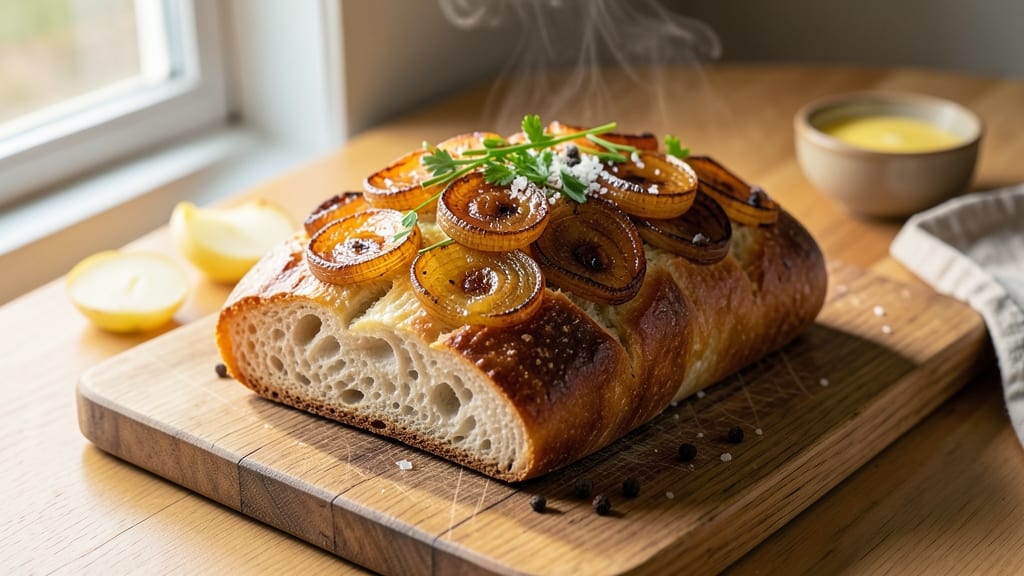
This artisan onion bread recipe delivers a golden, crispy crust and layers of caramelized sweetness that make every bite irresistible. The secret lies in slow-cooked onions infused with thyme and garlic, baked directly into a rustic loaf that's perfect for soaking up soups or pairing with charcuterie.
I've perfected the hydration ratio and kneading technique to ensure a tender crumb and that signature crackly exterior.
The process starts with caramelizing onions until deeply sweet and jammy, then incorporating them into a well-hydrated dough that develops gluten for structure. Proofing at the right temperature is critical—too cold and it won't rise properly; too warm and the yeast will overproof.
The shaping technique creates those beautiful air pockets that give artisan bread its signature texture.
What you'll end up with is a loaf with a crispy, crackly crust that gives way to soft, airy layers infused with onion flavor. The aroma alone will have everyone gathering around your table, and each bite delivers that perfect balance of sweet, savory, and buttery richness.
This bread is worth the effort—it's the kind of loaf that makes homemade baking feel like a true accomplishment.
Serve warm with olive oil and flaky sea salt, or use it to elevate soups, stews, or as a base for open-faced sandwiches. The recipe scales beautifully for gatherings, and leftovers keep well for days wrapped in a clean towel. Let's get started on creating your perfect loaf.
Ingredients for artisan onion bread
The secret to this golden, crispy loaf lies in sweet onions and perfect dough hydration.
| Ingredient | Amount | Notes |
|---|---|---|
| Yellow Onions 🧅 | 3 lb | Sweet variety like Vidalia |
| Active Dry Yeast 🍞 | ¼ oz | Or 2 1/4 tsp (1 packet) |
| All-Purpose Flour 🌾 | 5 cups | Plus 1 cup for shaping |
| Granulated Sugar 🍚 | ½ cup | For yeast activation |
| Unsalted Butter 🧈 | ½ cup | Cold, cubed for dough |
| Large Eggs 🥚 | 1 whole | Room temperature |
| Whole Milk 🥛 | 1 cup | Warm for dough |
| Kosher Salt 🧂 | 1 ½ tsp | Plus extra for dough |
| Fresh Thyme Leaves 🌿 | 1 tbsp | Or 1 tsp dried thyme |
| Garlic Cloves 🧄 | 3 cloves | Minced for caramelizing |
| Olive Oil 🫒 | ½ cup | For dough and brushing |
| Flaky Sea Salt 🧂 | ¼ cup | For finishing crust |
Those onions are everything. Sweet yellows like Vidalia caramelize beautifully, but any yellow onion will work. King Arthur or Bob's Red Mill flour gives the best texture—don't skimp on quality here. The butter should be cold when mixed in; Plugrá or Land O'Lakes work perfectly. For the yeast, Fresh & Easy or Bob's Red Mill brands stay potent longer. Caramelize the onions until deep amber—about 45 minutes—and don't rush this step. The garlic and thyme should be added when onions are nearly done to prevent burning. I always double-check my yeast is fresh by plopping a pinch in warm water; if it bubbles within 5 minutes, it's good to go.
No sweet onions? Regular yellows work fine—just caramelize longer. Out of fresh thyme? Dried works at 1/3 the amount. The milk can be swapped for warm water plus 1 tbsp melted butter if needed. For a richer dough, add 2 tbsp sour cream along with the milk. The olive oil matters—use a fruity, peppery variety for brushing the crust. No flaky sea salt? Diamond Crystal kosher salt works in a pinch. The dough will be sticky; don't add extra flour or it'll get tough. Instead, wet your hands slightly when shaping.
This dough needs 2 hours of cold proofing—wrap it tightly in plastic and refrigerate. The caramelized onions keep for 5 days in the fridge, so make them ahead if possible. Shape the loaf in a 9x5-inch loaf pan for easy slicing. Brush the crust with olive oil and sprinkle with flaky salt right after baking—it'll melt into the crust while still warm. Leftovers? Store wrapped in a clean kitchen towel to keep them soft. Freeze slices for 3 months by wrapping individually in parchment.
Why You'll Love This Recipe
- No-Knead Nightmare Solved: I swear by this dough—just mix, let it rise, and forget it. The yeast does all the work while I’m scrolling or watching a show, and by the time I slice, that golden crust is begging to be buttered.
- Onion Love Bomb: Caramelized yellow onions folded right into the dough? It’s like biting into a sweet, savory hug. The sugar in the dough turns them into little pockets of jammy perfection—no extra prep, just pure flavor.
- Weeknight to Weekend: This bread is my lazy Sunday morning staple, but it’s also the hero of my charcuterie board or a quick sandwich fix. Freeze half the batch for when I’m too tired to bake, and thaw it straight into toast.
- Budget Crust Magic: A single onion and a stick of butter stretch farther than you’d think. I make two loaves for the price of a single bakery buy, and the leftovers? Toasted for breakfast, turned into croutons, or stuffed with cheese for a snack. Zero waste, all win.
Step-by-step instructions for artisan onion bread
Here's how to craft a golden, caramelized masterpiece with a crisp crust and sweet onion filling.
Caramelize the Onions to Perfection
Slice the 3 lb yellow onions into ¼-inch thick rounds—about 12-15 slices per onion. In a large, heavy-bottomed pot, melt the ½ cup unsalted butter over medium-low heat. Add the onions and the 3 minced garlic cloves, stirring occasionally. Cook for 45-60 minutes, letting them soften and release moisture.
Once the onions begin to brown at the edges, reduce heat to low and continue cooking for another 30-40 minutes, stirring every 10 minutes. You're aiming for deep golden caramelization—when the onions are tender, sweet, and have reduced to about 2 cups. Let them cool completely before using; this prevents the yeast from dying in the warm dough.
Mix the Dough for Maximum Flavor
In a large mixing bowl, whisk together the 5 cups all-purpose flour, 1.5 tsp kosher salt, and 1 tbsp fresh thyme leaves. In a separate bowl, dissolve the 0.25 oz active dry yeast in ½ cup warm whole milk (about 110°F) with ½ cup granulated sugar. Let it sit for 5-10 minutes until foamy.
Add the 1 whole large egg and ½ cup olive oil to the yeast mixture, then pour everything into the dry ingredients. Mix with a wooden spoon until a shaggy dough forms. Turn onto a floured surface and knead for 8-10 minutes until smooth and elastic. The dough should be slightly sticky but not wet—add a little more flour if needed.
Shape the Loaves with Caramelized Filling
Divide the dough into 4 equal pieces (about 1 lb each). Roll each piece into a 12-inch rectangle and spread ½ cup of the cooled caramelized onions evenly over the surface, leaving a ½-inch border. Fold the dough over the onions and seal the edges tightly, then roll into a 12-inch log. Place seam-side down on a parchment-lined baking sheet.
Cover the loaves with a clean kitchen towel and let them rise in a warm place for 1-1.5 hours, or until doubled in size. The dough should spring back slowly when poked—this ensures a light, airy crumb. Preheat your oven to 375°F while the dough rises.
Bake for a Crispy, Golden Crust
Brush the risen loaves with a little olive oil and sprinkle generously with ¼ cup flaky sea salt. Bake for 25-30 minutes until the crust is deep golden brown and sounds hollow when tapped. For extra crispiness, broil for 1-2 minutes at the end.
Let the bread cool on a wire rack for 10 minutes before slicing—this prevents the filling from oozing out. The crust should crackle with each bite, while the caramelized onions inside melt into sweet, savory pockets. Serve warm with extra flaky sea salt for the ultimate artisan experience.
Pro Tips For Making Artisan Onion Bread
- CARAMELIZE ONIONS LOW: Skip the high-heat rush—simmer those onions on medium-low for 30-40 minutes until deep amber. I used to blast them on high, and they’d burn before sweetening properly. Patience here makes the flavor sing, even if it feels slow.
- TEST YEAST FIRST: Mix 1 tsp yeast + ¼ cup warm water + pinch of sugar. Wait 10 minutes—if it doesn’t bubble, toss it and start fresh. I’ve wasted dough waiting for dead yeast to activate, and you won’t thank me for that.
- KNEAD JUST ENOUGH: Stop when the dough springs back slowly (not instantly) when poked. Over-kneading develops gluten but dries out the crumb—this bread’s magic is in its tender, moist bite. Feel the resistance, then call it done.
- BRUSH BUTTER COLD: Use softened (not melted) butter for the final brush—it’ll melt into a golden crust without steaming the dough. I learned this after a batch turned soggy; now I keep it in the fridge until the last second.
Best sauces and condiments for this dish
Classic Garlic-Herb Butter
The perfect pairing for this onion bread is a garlic-herb butter that complements its caramelized sweetness. Mix ½ cup softened unsalted butter with 2 minced garlic cloves, 1 tbsp chopped fresh parsley, ½ tsp flaky sea salt, and a pinch of black pepper.
Spread this on warm slices just before serving—it melts beautifully into the soft crumb while adding a rich, savory depth. 🧈
Spicy Honey Mustard
For a tangy-sweet contrast, try a spicy honey mustard that cuts through the bread's richness. Whisk together ¼ cup Dijon mustard, 2 tbsp honey, 1 tbsp apple cider vinegar, ½ tsp smoked paprika, and ¼ tsp cayenne pepper.
Drizzle over slices or use as a dip for extra flavor. The heat and sweetness balance the caramelized onions perfectly.
Whipped Feta Dip
A whipped feta dip adds creamy, salty contrast to the bread's sweetness. Mix 1 cup crumbled feta cheese with ¼ cup Greek yogurt, 1 tbsp lemon juice, 1 minced garlic clove, and 2 tbsp chopped dill.
Serve chilled with warm bread slices—it's the ultimate pairing for dipping or spreading. The tanginess enhances the onion's natural sweetness. 🧀
Olive Oil & Balsamic
For a simple but elegant touch, drizzle high-quality extra-virgin olive oil over warm slices and finish with a few drops of aged balsamic glaze. The fruity, peppery notes of the olive oil complement the caramelized onions, while the balsamic adds a touch of acidity.
Use a Californian-style olive oil like Corto for the best flavor. 🫒
Smoked Paprika Aioli
This smoked paprika aioli brings a creamy, smoky dimension that pairs beautifully with the bread. Mix ½ cup mayonnaise with 1 tsp smoked paprika, ½ tsp garlic powder, 1 tbsp lemon juice, and a pinch of cayenne pepper.
Spread on slices or serve as a dipping sauce—the smokiness enhances the caramelized onions without overpowering them. 🌶️
Warm Apple Butter
For a sweet-savory balance, serve the bread with warm apple butter. Heat ¼ cup apple butter in a small saucepan with 1 tsp cinnamon and 1 tsp brown sugar until smooth. Spread on toasted slices—the fruity sweetness complements the caramelized onions beautifully. Store-bought or homemade works equally well. 🍏
Nutrition facts
Frequently asked questions
Can I make this bread without caramelizing the onions?
The caramelized onions are what make this bread truly special—they add deep sweetness and jammy texture that pairs perfectly with the crust. If you're short on time, you could sauté the onions until soft (10-15 minutes) instead, but they won't develop the same rich flavor. For best results, I recommend committing to the full caramelization process.
How do I know when the dough is properly kneaded?
The dough is ready when it's smooth, elastic, and springs back slowly when poked. To test, do the "windowpane test": stretch a small piece of dough until it's thin enough to see light through (about ¼-inch thick). If it doesn't tear, your dough is properly developed. Kneading should take about 8-10 minutes by hand.
Why did my bread turn out dense instead of airy?
Dense bread usually means one of three things: the yeast was old or inactive, the dough didn't rise long enough, or it was over-kneaded. First, check your yeast by testing it in warm water with sugar—it should bubble within 5 minutes. Second, ensure the dough doubled in size during proofing (about 1-1.5 hours). Finally, avoid adding extra flour during kneading unless absolutely necessary.
Can I make this recipe in a stand mixer?
Use the dough hook attachment to mix the ingredients for 2-3 minutes until combined, then knead on medium speed for 5-6 minutes. The dough should pull away from the sides of the bowl and be smooth. Just be careful not to overmix—artisan dough benefits from a bit of manual handling for texture. Let it rest for 10 minutes before shaping.
How should I store leftovers to keep them fresh?
Wrap cooled slices in a clean kitchen towel or beeswax wrap, then store in an airtight container at room temperature for up to 3 days. For longer storage, freeze slices individually wrapped in parchment paper for up to 3 months. To reheat, warm in a 350°F oven for 5-7 minutes until crispy again.