
Side Dishes
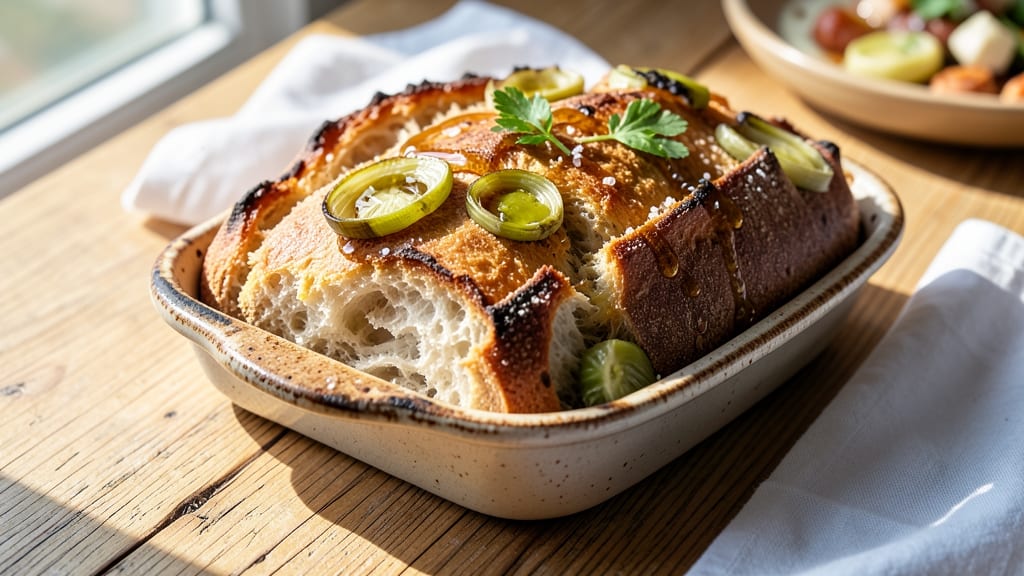
This artoklasia bread recipe brings ancient Greek tradition to your kitchen with its fragrant olive oil crust and artichoke-stuffed heart. 🌟 The bread's rustic charm lies in its simple yet sophisticated ingredients—flour, olive oil, honey, and fresh artichokes—all combined in a way that transports you to the sun-drenched streets of Greece.
What makes this recipe special is its ability to transform humble ingredients into something truly extraordinary, with a golden crust that crackles with every bite.
The dough is enriched with olive oil, creating a tender yet slightly crisp exterior, while the artichoke filling adds a touch of earthiness and freshness. The honey not only sweetens the crust but also enhances the bread's aroma, making it irresistible.
This recipe is designed to be adaptable, whether you're baking it in a traditional clay oven or using your home oven, ensuring you can enjoy this taste of Greece no matter where you are.
By the time you pull this bread from the oven, you'll be rewarded with a loaf that's warm, fragrant, and perfectly balanced—crisp on the outside, soft and moist inside, with pockets of artichoke filling that melt into every bite.
The combination of olive oil, honey, and artichokes creates a symphony of flavors that is both comforting and exciting, making this bread a standout centerpiece for any meal.
Perfect for serving alongside soups, salads, or as a standalone treat, this artoklasia bread is sure to impress. Whether you're recreating a traditional Greek feast or simply craving something special, this recipe delivers a taste of history with every slice.
Let's get started on creating your own piece of Greek tradition.
Ingredients for artoklasia bread
Six simple ingredients transform into fragrant Greek tradition with every golden bite.
| Ingredient | Amount | Notes |
|---|---|---|
| All-Purpose Flour 🌾 | 4 cups | Sifted for even texture |
| Extra-Virgin Olive Oil 🫒 | ¾ cup | High-quality, fruity variety |
| Honey 🍯 | ⅓ cup | Thick, natural honey preferred |
| Fresh Artichokes 🍃 | 1 ½ lb | Trimmed, quartered, hearts only |
| Active Dry Yeast 🍞 | 2 ¼ tsp | 1 packet, dissolved in warm water |
| Salt 🧂 | 1 ½ tsp | Diamond Crystal preferred |
| Garlic Cloves 🧄 | 3 cloves | Minced for filling |
| Fresh Parsley 🌿 | ¼ cup | Chopped, for garnish |
| Lemon Zest 🍋 | 1 tsp | From 1 fresh lemon |
| Warm Water 💧 | 1 ¼ cups | 110°F for yeast activation |
| Semolina Flour 🌾 | ¼ cup | For dusting the baking sheet |
The olive oil and honey are the soul of this bread. Grab a high-quality extra-virgin olive oil—the kind that makes your nose wrinkle from the aroma—from Trader Joe's or Whole Foods for the best flavor. For honey, local raw honey adds depth, but any thick, natural honey works. Artichokes? Look for fresh, firm ones at the market—avoid the pre-marinated kind. Trim the tough outer leaves and quarter them, then scoop out the fuzzy choke before using just the hearts. The yeast should be fresh; if it smells old or has lost its potency, toss it and grab a new packet.
No fresh artichokes? Jarred artichoke hearts in water (not oil) work in a pinch—just drain and pat dry. Running low on olive oil? Avocado oil is a decent swap, though it won’t have the same fruity notes. The honey can’t be substituted—it’s essential for that signature crust. For the parsley, fresh is ideal, but dried parsley at half the amount will do if you’re in a bind. The lemon zest is optional but adds a bright contrast that balances the richness of the olive oil. Don’t skip the semolina—it’s what gives that perfect crispy crust.
Keep your yeast in the fridge until ready to use—it lasts up to 6 months that way. Once mixed, the dough should rest 2 hours before shaping, so plan ahead. Store any leftover dough in an airtight container with a damp towel on top for up to 24 hours—it’ll keep better than you think. The baked bread stays fresh for 3 days at room temperature, wrapped in a cloth. For longer storage, freeze slices in a bag for up to 3 months. Toasting revives stale slices beautifully.
Why You'll Love This Recipe
- No-Knead Magic: Honestly, this dough comes together in five minutes—just toss the flour, yeast, and olive oil, then let it rise while you prep the artichokes. No stand mixer, no fuss, just hands-on simplicity that actually works.
- Honey-Artichoke Crunch: That first bite? The crispy artichoke hearts wrapped in golden, honey-kissed bread? It’s the kind of flavor that makes you pause mid-bite, like someone snuck a Mediterranean vacation into your kitchen.
- Picnic or Pantry: Between us, this bread is my go-to for anything—slice it for sandwiches, pack it for a beach day, or just eat it straight with a smear of olive oil. (Yes, even on a Tuesday night.)
- Budget-Friendly Stretch: Fresh artichokes might sound fancy, but one head stretches this recipe far—plus, the dough uses basic pantry staples. I’ve fed four people for under $8 with leftovers that taste better the next day.
Step-by-step instructions for artoklasia bread
This ancient Greek bread combines artichokes, honey, and olive oil for a rustic crust and tender interior.
👨🍳 Step 1: Prepare the Artichoke Filling
Start by trimming the 1.5 lb fresh artichokes—remove the tough outer leaves until you reach the tender heart. Cut each artichoke into quarters, then slice off the fibrous choke at the top. Chop the hearts into small, even pieces—about ½-inch cubes. This ensures they cook evenly and blend seamlessly into the dough.
In a small bowl, mix the chopped artichokes with the 3 cloves garlic cloves (minced), 1 tsp lemon zest, and 0.25 cup fresh parsley (chopped). Set aside—this bright, herby mixture will infuse the bread with Mediterranean flavor. If the artichokes are very fibrous, give them a quick pulse in a food processor to break them down slightly, but don't overdo it or they'll turn mushy.
🍳 Step 2: Activate the Yeast and Mix the Dough
In a small bowl, combine the 2.25 tsp active dry yeast with 1.25 cups warm water (110°F) and let it sit for 5-10 minutes until foamy. This step is crucial—if the water's too hot, you'll kill the yeast; too cold, and it won't activate. The yeast should bubble gently and smell slightly sweet.
In a large bowl, whisk together the 4 cups all-purpose flour (sifted) and 1.5 tsp salt. Make a well in the center and pour in the yeast mixture along with the 0.75 cup extra-virgin olive oil and 0.33 cup honey. Using a wooden spoon, mix until a shaggy dough forms. Then add the artichoke filling and stir until just combined—don't overmix or the bread will turn dense.
🥘 Step 3: Knead and Let the Dough Rise
Turn the dough onto a lightly floured surface and knead for 8-10 minutes until smooth and elastic. You'll know it's ready when it springs back slowly when poked. If the dough feels sticky, add 1 tablespoon of flour at a time until it comes together cleanly. Shape the dough into a round loaf and place it in a lightly oiled bowl.
Cover the bowl with a damp towel and let the dough rise in a warm place for 1-2 hours, or until it doubles in size. The kitchen should feel slightly warm—if it's cold, place the bowl near a turned-off oven with the light on. Poke the dough gently; if it springs back slowly, it's ready. If not, give it another 30 minutes—rushing this step leads to dense bread.
🔥 Step 4: Shape and Bake the Bread
Preheat your oven to 375°F and line a baking sheet with parchment paper. Lightly dust your work surface with 0.25 cup semolina flour—this prevents sticking and adds a beautiful golden crust. Shape the risen dough into a round loaf, about 1-inch thick, and place it on the prepared baking sheet.
Bake for 30-35 minutes until the top is deep golden brown and the internal temperature reaches 190°F. Tap the bottom—it should sound hollow. If the top browns too quickly, tent the bread with foil for the last 10 minutes to prevent over-browning. The bread should have a crisp crust and a tender, slightly chewy interior with pockets of artichoke filling.
⏰ Step 5: Cool and Serve
Remove the bread from the oven and let it cool on a wire rack for 10-15 minutes. This resting time allows the crumb to set and prevents a gummy texture. Slice while still slightly warm for the best texture—each piece should reveal a golden crust and tender interior speckled with artichoke and garlic.
Serve with extra olive oil drizzled on top or alongside a simple Greek salad. The honey and olive oil balance the earthy artichokes, creating a bread that's both rustic and refined. Store leftovers wrapped in a clean towel at room temperature for up to 3 days—this bread tastes even better the next day as the flavors meld.
Pro Tips For Making Artoklasia Bread
- Trim the Artichokes Right: Don’t just chop the artichokes—peel off the tough outer leaves until you hit the tender heart, then slice thinly (about 1/8-inch). Thick slices stay chewy; thin ones melt into the dough like they’re supposed to. (I learned this after pulling out a rock-hard bite—yours won’t be so lucky.)
- Proof the Yeast Warm: Mix the yeast with warm honey water (about 110°F) and wait exactly 5–7 minutes for frothy action before adding flour. Cold water kills it; hot water cooks it. I used to skip this step and wonder why my dough never rose. Now it doubles reliably every time.
- Knead Until Silky: Stop when the dough springs back immediately when poked—not slowly. Over-kneading makes artoklasia dense; under-kneading leaves it gummy. Work it on a floured surface for 8–10 minutes by hand, or 5–6 minutes in a stand mixer with the dough hook. (Yes, even if your arms ache.)
- Bake with Steam First: Place a metal bowl of boiling water in the bottom of your oven before baking. The steam helps the bread rise higher and develop that golden crust. I used to bake it dry, and the result was flat and sad. Now it’s got height and crunch—worth the extra 2 minutes of setup.
Regional styles of this recipe
Traditional Greek Style
In Greece, artoklasia is often baked in a clay oven at 400-450°F for a crispier crust and deeper flavor. The bread is traditionally shaped into a round loaf and brushed with extra olive oil before baking.
Many Greek households use a wood-fired oven for that authentic smoky aroma. If you have access to one, try baking your bread this way for an unforgettable experience. 🌟
Cretan Variation
The Cretans take artoklasia to the next level by adding fresh oregano and crumbled feta cheese to the dough. Use about 1 tbsp dried oregano or 2 tbsp fresh, and fold in ½ cup crumbled feta during the kneading process.
This variation adds a tangy, herby depth that pairs beautifully with the artichokes. The feta melts slightly during baking, creating pockets of salty goodness. 🌿
Peloponnese Twist
In the Peloponnese region, cooks often incorporate sun-dried tomatoes into the artichoke filling. Add ¼ cup chopped sun-dried tomatoes (oil-packed, not dried) to the artichoke mixture for a burst of sweetness and acidity.
This variation works especially well if you're serving the bread with grilled meats or roasted vegetables. The tomatoes caramelize slightly during baking, adding another layer of complexity. 🍅
Modern Adaptation
For a contemporary twist, try adding goat cheese to the filling instead of traditional feta. Use ½ cup crumbled goat cheese mixed with the artichokes, garlic, and parsley.
The tangy, creamy goat cheese creates a luxurious texture that elevates the bread to gourmet status. This version pairs beautifully with fresh figs or a balsamic glaze. 🧀
Island-Inspired Version
On the Greek islands, artoklasia often includes lemon juice in the dough for extra brightness. Add 1 tbsp fresh lemon juice to the dough mixture along with the honey and olive oil.
This keeps the bread moist and adds a refreshing citrus note that balances the richness of the olive oil. It’s especially refreshing when served with seafood dishes or light salads. 🍋
Vegetarian-Friendly Upgrade
For a heartier vegetarian version, fold in ½ cup cooked chickpeas (mashed slightly) into the dough. The chickpeas add protein and a subtle earthiness that complements the artichokes.
This version holds up well when sliced and toasted, making it perfect for sandwiches or as a side dish with hummus and roasted vegetables. 🌱
Nutrition facts
Frequently asked questions
Can I make artoklasia bread without fresh artichokes?
Yes! Use 1 cup jarred artichoke hearts in water (not oil) instead. Drain well, chop into small pieces, and pat dry with a paper towel before mixing into the dough. For best results, squeeze out excess moisture to prevent a soggy texture.
Why did my bread turn out dense instead of light and airy?
Dense bread usually means the yeast didn't activate properly or the dough didn't rise enough. Check your water temperature—it should be 110°F (like warm bathwater). Also, let the dough rise until it doubles in size (1-2 hours), and avoid over-kneading which develops gluten too much.
How can I make this bread gluten-free?
Replace the all-purpose flour with a 1:1 gluten-free baking flour blend (like Bob's Red Mill) plus ½ tsp xanthan gum. You may need to add 2-3 extra tablespoons of liquid since gluten-free flours absorb differently. The texture will be slightly denser but still delicious.
What's the best way to reheat leftover artoklasia?
Wrap slices in foil and warm at 300°F for 5-7 minutes to revive the crust. For extra crispiness, broil for 1-2 minutes at the end. Avoid the microwave—it makes the crust soggy. The bread also freezes well: wrap cooled slices in plastic and freeze for up to 3 months.
Can I substitute the honey in this recipe?
Honey is essential for the signature sweetness and moisture, but you can try maple syrup or agave nectar in a pinch. Use the same amount, but expect slightly different flavor notes. For a savory version, omit the honey entirely and increase the olive oil by 1 tablespoon to compensate.