
Side Dishes
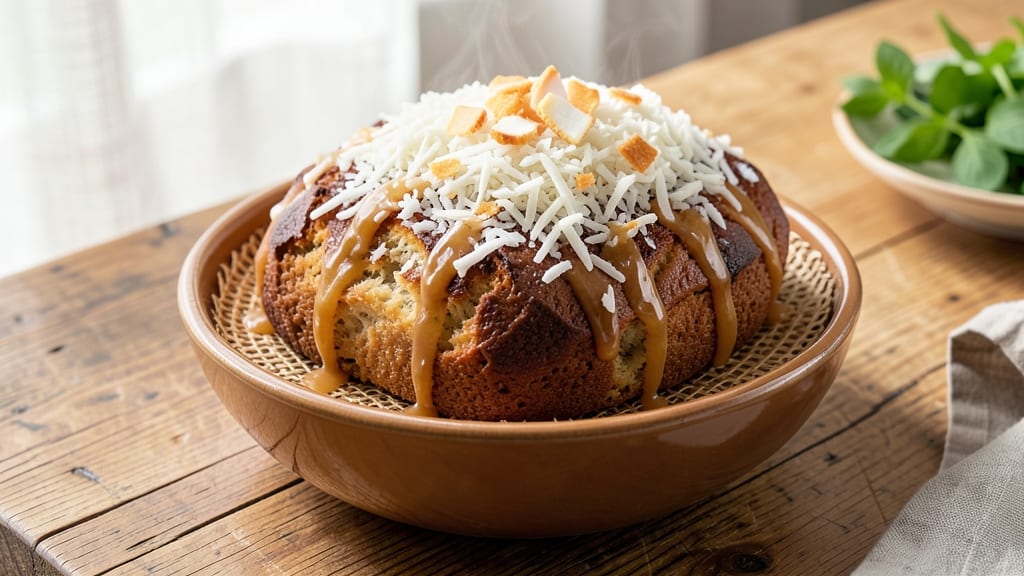
This Asian coconut bread recipe delivers the perfect balance of tropical sweetness and a crispy crust that’s impossible to resist. 🌴 The secret lies in combining shredded coconut with a touch of pandan extract for that signature aromatic flair, while yeast and warm milk create a tender, fluffy interior.
I’ve perfected this recipe over years of baking, ensuring every slice stays moist for days—ideal for breakfast, desserts, or even as a festive treat.
The process is straightforward but rewarding: mix, knead, proof, and bake until golden brown. You’ll need all-purpose flour, yeast, coconut milk, and a generous handful of sweetened coconut flakes for that irresistible texture. The bread’s aroma alone will fill your kitchen with warmth, making it a crowd-pleaser for any occasion.
Whether you’re serving it toasted with butter or drizzled with honey, the contrast of crispy crust and soft crumb is pure comfort.
What sets this recipe apart is the crispy crust—achieved by brushing the loaf with coconut milk before baking. The result? A golden, crackly exterior that gives way to a tender, slightly sweet interior infused with coconut flavor.
This bread is versatile too: add matcha powder for a vibrant twist or keep it classic with just coconut and vanilla. Perfect for beginners and seasoned bakers alike, it’s a recipe that delivers every time.
Once baked, let it cool slightly before slicing—this ensures clean cuts and prevents crumbling. Store leftovers in an airtight container, and you’ll have delicious bread for days.
Pair it with tea, coffee, or even as a side to savory dishes for a unique flavor profile. Ready to bake? Let’s get started!
Ingredients for asian coconut bread
Four cups flour, tropical flavors, and a crispy crust—this bread needs just 12 ingredients.
| Ingredient | Amount | Notes |
|---|---|---|
| All-Purpose Flour 🌾 | 4 cups | Sifted for lighter texture |
| Active Dry Yeast 🍞 | 2 ¼ tsp | Fresh yeast preferred |
| Granulated Sugar 🍚 | ¼ cup | For yeast activation |
| Sweetened Shredded Coconut 🥥 | 1 ½ cups | Unsweetened works too |
| Coconut Milk 🥛 | 1 cup | Full-fat for richness |
| Warm Whole Milk 🥛 | ½ cup | 110°F for activation |
| Pandan Extract 🌿 | ½ tsp | Or 1 tsp pandan powder |
| Vanilla Extract 🍯 | 1 tsp | Pure vanilla preferred |
| Large Eggs 🥚 | 2 whole | Room temperature preferred |
| Unsalted Butter 🧈 | ½ cup | Melted, full-fat |
| Salt 🧂 | ½ tsp | Diamond Crystal preferred |
| Baking Powder 🍞 | 1 tsp | For crispy crust |
The coconut milk and shredded coconut are non-negotiable for that signature tropical flavor. Trader Joe's has the best-priced full-fat coconut milk, and their sweetened flakes are perfect too. If you can't find pandan extract, Bob's Red Mill pandan powder works great—just use half the volume. The yeast matters here: if your pantry yeast is old, test it first in warm water with sugar to ensure it bubbles. For the butter, Land O'Lakes unsalted melts beautifully and keeps its flavor.
No coconut milk? Substitute with equal parts evaporated milk and coconut oil, but the texture won't be quite the same. Fresh yeast not an option? RapidRise yeast works at half the amount. Want to skip the pandan? Double the vanilla and add 1 tsp lemon zest for a citrusy twist. The baking powder is key for that crispy crust—don't skip it. For the eggs, if you're avoiding them, replace with 2 tbsp ground flaxseed + 6 tbsp water (let sit 5 minutes), though the texture will be slightly denser.
This bread keeps beautifully—3-4 days in an airtight container at room temperature, or 1 week in the fridge. For longer storage, freeze slices wrapped in plastic for up to 3 months. I always bake an extra loaf—it disappears fast. The crust stays crispy for about 2 hours after baking, so slice and serve warm. Leftovers? Toast them for breakfast or use in French toast—game-changer.
Why You'll Love This Recipe
- No Yeast Struggles: I’ve made this bread a dozen times—no proofing anxiety, no failed rises. Just toss in the yeast, let it sit for 10 minutes, and you’re golden. That’s it. The coconut milk keeps it light without fuss.
- Tropical Twist: The moment you bite into that toasted crust, you get this perfect crunch followed by a soft, almost custardy center—thanks to the coconut milk. Honestly? It’s like a hug in bread form, but with actual flavor.
- Breakfast or Snack: I’ve served this warm with butter for breakfast, sliced for lunchbox treats, and even as a dessert with a drizzle of honey. It’s that kind of bread—versatile enough to work at any hour without feeling out of place.
- Budget-Friendly Stretch: Sweetened shredded coconut isn’t cheap, but a little goes a long way here. I’ve made this last my family for days—sandwiches, toast, or even crumbled over oatmeal. Plus, the dough keeps well, so no wasted ingredients.
Step-by-step instructions for Asian coconut bread
Here's how to make this tropical bread with a golden crust and moist interior.
👨🍳 Step 1: Activate the Yeast and Mix Wet Ingredients
In a small bowl, combine the 0.5 cup warm whole milk (about 110°F) with the 2.25 tsp active dry yeast and 0.25 cup granulated sugar. Let it sit for 5-10 minutes until frothy—this means your yeast is alive and ready to work. If it doesn't bubble, your yeast might be dead, and you'll need to start over.
In a separate large bowl, whisk together the 2 whole large eggs, 0.5 tsp pandan extract, 1 tsp vanilla extract, 0.5 cup melted unsalted butter, and the yeast mixture. The pandan extract adds that signature floral aroma, while the vanilla rounds out the coconut flavor. The melted butter keeps everything creamy, so don't skip this step.
👨🍳 Step 2: Combine Dry Ingredients and Form the Dough
In a separate bowl, sift together the 4 cups all-purpose flour, 1 tsp baking powder, and 0.5 tsp salt. Sifting ensures a light, airy texture—no lumps here! Gradually add the dry ingredients to the wet mixture, stirring gently with a wooden spoon until just combined. Then fold in the 1.5 cups sweetened shredded coconut and 1 cup coconut milk.
Turn the dough onto a lightly floured surface and knead for 5-7 minutes until smooth and elastic. You'll know it's ready when it springs back when poked. If it feels sticky, add a little more flour, but don't overdo it—too much flour makes the bread dense. Here's the thing—this dough is a bit sticky, but that's what gives it that moist, tender crumb.
🥘 Step 3: Let the Dough Rise for Flavor and Texture
Place the dough in a lightly greased bowl, cover it with a damp kitchen towel, and let it rise in a warm place for 1-2 hours or until it doubles in size. I like to place my oven on its lowest setting with a bowl of hot water inside to create a warm, humid environment—this speeds up the process. The dough should feel light and airy when pressed gently.
Punch down the risen dough to release any air bubbles, then shape it into a loaf. Place it in a greased 9x5-inch loaf pan, cover it again, and let it rise for another 30-45 minutes. This second rise ensures the bread has that perfect height and texture. Don't skip this step—it's what gives the bread its signature fluffy crumb.
🔥 Step 4: Bake Until Golden and Crispy
Preheat your oven to 350°F. Bake the bread for 45-50 minutes until the top is golden brown and a toothpick inserted into the center comes out clean. The edges should pull away from the pan easily, and the crust should be crispy to the touch. If it's browning too quickly, tent it loosely with foil to prevent over-browning.
Here's a pro tip: For extra crispiness, brush the top with a little melted butter after 30 minutes of baking. The butter adds a beautiful sheen and enhances that tropical flavor. Let the bread cool in the pan for 10 minutes before transferring it to a wire rack to cool completely. This resting time ensures the bread sets properly and doesn't fall apart.
Pro Tips For Making Asian Coconut Bread
- Bloom the Yeast Right: Skip the warm-water guesswork—use a thermometer to confirm your liquid is 105–110°F before activating the yeast. I learned this the hard way after three failed batches where my "warm enough" water was actually tepid, leaving me with flat, dense bread. If it doesn’t foam in 5–10 minutes, your yeast is dead or your water was too cold.
- Toast the Coconut: Lightly brown your shredded coconut in a dry pan for 2–3 minutes before mixing it into the dough. This deepens its flavor and prevents it from turning mushy during baking—something that always happened when I skipped this step. Use a spoon to stir constantly; burned coconut ruins everything.
- Don’t Overmix the Dough: Stop folding in the coconut milk and flour as soon as the dough just comes together. Overworking it develops gluten, which makes the bread dense instead of light and airy. My first few attempts were brick-hard because I kept kneading until it looked "perfect." Let the yeast do the work—it’ll rise properly if you resist the urge to overhandle.
- Use Full-Fat Coconut Milk: The canned stuff with cream on top makes all the difference—it adds richness and moisture that light coconut milk can’t match. I was skeptical until I tried it, and now I won’t go back. Save the watery stuff for smoothies; your bread deserves the good stuff. Shake the can well before measuring.
Pro cooking tips for this recipe
Yeast Activation Test
Always test your yeast before mixing—this simple step saves time and frustration. Combine 1 tsp yeast with ¼ cup warm milk (110°F) and 1 tsp sugar in a small bowl. If it doesn’t foam within 5-10 minutes, your yeast is dead and needs replacing.
I keep a small jar of FreshActive yeast in my fridge for reliable results every time. 🍞
Dough Consistency Secrets
The dough will be sticky—that’s normal! Avoid over-flouring, which can make the bread dense. Instead, wet your hands slightly when handling it. For extra moisture, add 1 tbsp coconut milk if the dough feels too dry.
I like using a stand mixer with a dough hook for 3-4 minutes on low speed to avoid overworking the gluten.
Crust Perfection Tricks
For that signature crispy crust, brush the loaf with melted butter or coconut milk after 30 minutes in the oven. The high heat will caramelize it beautifully.
Another trick? Place a small bowl of water on the oven rack during baking to create steam—this keeps the crust tender while it browns. 🌟
Rising Like a Pro
Create a warm environment for rising by turning on your oven light or placing the dough near a warm spot in your kitchen. If using a bowl, cover it with a damp towel to prevent drying.
The dough should double in size—if it doesn’t, let it rise longer or check your yeast. For a tighter crumb, punch down the dough after the first rise to release air bubbles.
Baking Time Adjustments
Ovens vary, so watch your bread closely after 40 minutes. If the edges brown too quickly, tent with foil. For a darker crust, broil for 1-2 minutes at the end.
I always bake until the internal temperature reaches 190°F—this ensures doneness without over-baking. Let it cool in the pan for 10 minutes before removing for cleaner slices.
Storage Hacks
Store slices in an airtight container with a paper towel to absorb moisture. For extra crispiness, reheat slices in a 350°F oven for 3-5 minutes or toast in a pan with butter.
I freeze slices wrapped in plastic for up to 3 months—just thaw at room temperature before serving. The bread stays fresh longer if you slice it while still warm. ❄️
Nutrition facts
Frequently asked questions
Can I make this bread without pandan extract?
If you can't find pandan extract, double the vanilla extract to 2 teaspoons and add 1 teaspoon lemon zest for a bright citrus-coconut flavor. For a more Asian-inspired taste without pandan, try ½ teaspoon matcha powder instead—it adds earthy notes that pair beautifully with coconut. The bread will still be delicious!
Why is my coconut bread dense instead of fluffy?
Dense bread usually means over-kneading or too much flour. This dough should be slightly sticky—resist the urge to add extra flour. Also, ensure your yeast is active by testing it first (mix with warm milk and sugar; it should foam in 5-10 minutes). If your oven runs hot, reduce the temperature to 325°F and bake longer for even rising. A stand mixer on low speed for 3-4 minutes works better than hand-kneading.
How can I make this bread sweeter or less sweet?
For a sweeter loaf, add 2-3 tablespoons of honey or brown sugar to the dough. For a less sweet version, reduce the granulated sugar to ¼ cup and use unsweetened shredded coconut. You can also balance sweetness by adding ½ teaspoon cinnamon or ¼ teaspoon cardamom—these spices enhance coconut flavor without extra sugar. Adjust to taste!
Can I use this dough for other shapes besides a loaf?
Yes! Shape the dough into buns for coconut milk buns, cinnamon rolls (add a swirl of cream cheese filling), or even twists for a festive touch. For buns, divide the dough into 8 equal pieces, shape into balls, and let rise on a baking sheet before baking at 375°F for 12-15 minutes. The coconut flavor works beautifully in all these forms!
How do I store leftovers to keep them fresh?
Store slices in an airtight container with a paper towel to absorb moisture. At room temperature, it stays fresh for 3-4 days, while the fridge extends this to 1 week. For longer storage, freeze slices wrapped in plastic for up to 3 months. To revive stale bread, warm slices in a 350°F oven for 3-5 minutes or toast in butter until crispy again.