
Desserts
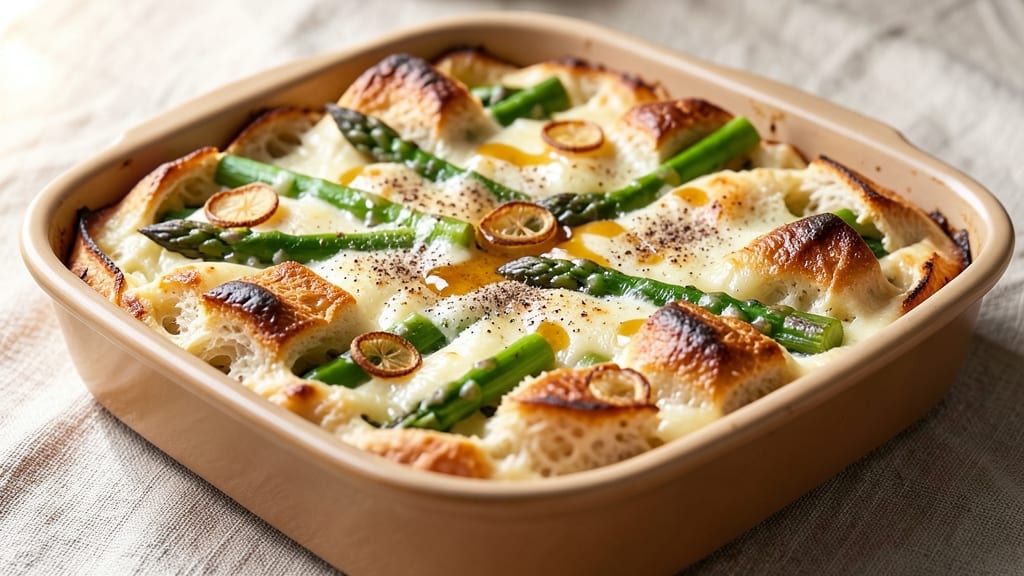
This asparagus bread pudding recipe transforms spring's brightest green into a dessert that's equal parts comforting and unexpected. The secret lies in puréeing tender asparagus into the custard, creating a vibrant yet creamy center that surprises with every bite.
I developed this version after realizing how well asparagus's natural sweetness balances the richness of bread pudding.
The preparation is straightforward but requires attention to texture—sautéing the asparagus until just tender preserves its delicate flavor, while the custard mixture (with a touch of vanilla and nutmeg) ensures that signature gooey consistency.
The bread should be slightly stale for perfect absorption, and baking until golden brown creates that irresistible crust.
What you'll end up with is a dessert that's visually stunning—bright green swirls throughout golden pudding—while delivering all the comforting qualities of classic bread pudding. The asparagus adds subtle earthiness that cuts through the richness, making each bite feel both indulgent and balanced.
This is the kind of dessert that feels special enough for company but simple enough for weeknight treats.
Make it ahead for even better flavor development, or add a sprinkle of toasted breadcrumbs on top before serving. The recipe works beautifully with either traditional custard or a vegan alternative, proving that comfort food can be both innovative and inclusive. Let's get baking!
Ingredients for asparagus bread pudding
Spring's vibrant green meets classic comfort in this unexpected dessert masterpiece.
| Ingredient | Amount | Notes |
|---|---|---|
| Fresh Asparagus 🥬 | 1 ½ lb | Trimmed, woody ends removed |
| Day-Old Baguette 🍞 | 1 whole | Crust removed, cubed |
| Large Eggs 🥚 | 6 whole | Room temperature preferred |
| Whole Milk 🥛 | 2 cups | Full-fat for creaminess |
| Pure Vanilla Extract 🌿 | 1 tbsp | High-quality preferred |
| Ground Nutmeg 🌶️ | ½ tsp | Freshly grated preferred |
| Granulated Sugar 🍚 | ¾ cup | Light brown sugar works too |
| Unsalted Butter 🧈 | ½ cup | Cold, cubed for custard |
| Heavy Cream 🥛 | 1 cup | 35% fat for best texture |
| Diamond Crystal Kosher Salt 🧂 | ½ tsp | Adjust to taste |
| Toasted Breadcrumbs 🍞 | ¼ cup | Panko works well |
| Freshly Grated Parmesan Cheese 🧀 | ¼ cup | For garnish |
The asparagus is the star—look for bright green stalks with tight tips at Whole Foods or your local farmers' market. Harvest-time asparagus has the best sweetness, but even regular grocery store spears work if they're crisp. Trim the woody ends (about 1 inch) and discard. For the bread, day-old is ideal—it absorbs custard perfectly. If you can't find stale bread, toast a fresh baguette and let it cool completely. The eggs should be room temperature for even baking, so take them out of the fridge 30 minutes before using.
No vanilla extract? Seeds from 1 vanilla bean work beautifully, or use 1 tsp vanilla sugar if you have it. Running short on butter? Olive oil at the same quantity maintains moisture, though texture will differ slightly. The nutmeg is crucial—it balances the asparagus's earthiness. If you don't have freshly grated, pre-ground works but loses potency after 3 months. For a vegan version, replace eggs with 6 tbsp flax eggs (6 tbsp ground flax + 1.5 cups water) and use coconut milk instead of dairy milk and cream.
Prepped ingredients keep for 2 days in the fridge, but assemble the pudding same day for best texture. The custard mixture can be made ahead and refrigerated for up to 24 hours—just bake straight from cold. For make-ahead serving, bake the pudding 1 hour ahead, then reheat at 300°F for 15 minutes. Store leftovers covered at room temperature for 2 hours max—this isn't a dish that reheats well. The breadcrumbs and Parmesan should be toasted fresh before serving for maximum crunch.
Why You'll Love This Recipe
- Honestly, the prep is so simple: chop asparagus, tear bread, whisk eggs and milk. That’s it. No fancy layers or baking skills required—just dump, bake, and enjoy.
- Uses Day-Old Bread: I always have a stale baguette lurking in my pantry, and this recipe turns it into something ridiculously good—no waste, just golden perfection.
- One-Bowl Magic: Honestly, the prep is so simple: chop asparagus, tear bread, whisk eggs and milk. That’s it. No fancy layers or baking skills required—just dump, bake, and enjoy.
- Budget Breakfast Win: Eggs, milk, and a baguette? Check. Asparagus in season? Even cheaper. It’s my go-to for quick breakfasts or a fancy brunch without the grocery splurge.
Step-by-step instructions for asparagus bread pudding
Transform spring's finest asparagus into a rich, custardy dessert with this refined baking technique.
Prepare the Asparagus and Bread Base
Preheat your oven to 350°F and line a 9x13-inch baking dish with parchment paper, leaving an overhang for easy removal. Trim the 1.5 lb fresh asparagus, removing the woody bottoms and cutting the spears into ½-inch pieces. Blanch the asparagus in boiling salted water for 2 minutes until vibrant green, then immediately plunge into ice water to stop cooking. Drain well and set aside.
Cut the 1 whole day-old baguette into ½-inch cubes, removing the crust. Spread the bread cubes evenly across the prepared baking dish, creating a single layer. This foundational step ensures even baking and prevents a dense center.
Create the Custard Mixture
In a large mixing bowl, whisk together the 6 whole large eggs, 2 cups whole milk, 1 cup heavy cream, 0.75 cup granulated sugar, 1 tbsp pure vanilla extract, 0.5 tsp ground nutmeg, and 0.5 tsp diamond crystal kosher salt until completely smooth. The mixture should be pale yellow and homogeneous.
Gently fold in the blanched asparagus pieces and 0.25 cup toasted breadcrumbs using a spatula, being careful not to deflate the air incorporated during whisking. This careful incorporation preserves the custard's light texture while distributing the asparagus evenly throughout.
Assemble and Bake the Pudding
Pour the custard mixture evenly over the bread cubes in the baking dish, pressing down gently to ensure full saturation. Dot the surface with 0.5 cup cold unsalted butter cut into small cubes, which will melt into the custard during baking, creating a luscious texture.
Bake for 45-50 minutes until the edges are golden brown and the center just begins to set. The pudding should spring back slowly when gently pressed - this indicates it's ready. If the top browns too quickly, loosely tent with aluminum foil after 30 minutes.
Finish and Serve
Remove from the oven and let the pudding rest for 10 minutes before sprinkling with 0.25 cup freshly grated parmesan cheese. The cheese adds a delightful salty contrast to the sweet custard. Serve warm, accompanied by a dollop of whipped cream or a scoop of vanilla ice cream for an elevated presentation.
This bread pudding delivers the perfect balance of textures - a crispy exterior, custardy center, and tender asparagus spears throughout. The nutmeg and vanilla infuse warmth, while the parmesan adds a sophisticated finish that transforms this into a restaurant-worthy dessert.
Pro Tips For Making Asparagus Bread Pudding
- ROAST ASPARAGUS FIRST: DESCRIPTION: Don’t just toss raw asparagus into the bread pudding—roast it at 400°F (200°C) for 12–15 minutes until tender and caramelized. The concentrated sweetness and texture change everything, and it cooks down into the custard instead of staying crunchy. (Yes, even if you’re impatient like me, resist the urge to cut prep time here.)
- CUT BAGUETTE IN EVEN SLICES: DESCRIPTION: Use a serrated knife and cut the day-old baguette into ½-inch (1.25 cm) slices—no thicker, no thinner. Uneven slices mean uneven baking, and you’ll end up with some parts dry and others undercooked. A quick run through a bread slicer if you have one saves your hands and your patience.
- WHISK EGGS VIGOROUSLY: DESCRIPTION: Beat the eggs and milk until the mixture is completely smooth—no streaks, no lumps. I learned this the hard way when my first batch had a weird texture. A quick pulse in a blender if you’re lazy (but honest) makes it foolproof. The smoother the custard, the lighter the pudding.
- BAKE UNTIL GOLDEN, NOT JUST SET: DESCRIPTION: Skip the urge to pull it out when it’s "mostly done." Bake the bread pudding until the top is deep golden brown—about 350°F (175°C) for 30–35 minutes, or until a toothpick comes out clean. The extra time caramelizes the edges and makes the whole thing taste richer. (Your future self will notice the difference.)
Make-ahead tips for this recipe
Prep Ahead Strategy
Assemble the bread pudding up to 24 hours before baking and refrigerate covered. The flavors meld beautifully overnight, and you can bake straight from the fridge for 5-10 minutes longer to ensure even cooking.
I like to prep mine the night before—it's one less thing to do the next morning. 💡
Baking Timeline
For gatherings, bake the pudding 1 hour before serving. It reheats beautifully at 300°F for 15 minutes—just cover it loosely with foil to prevent over-browning. The internal temperature should reach 160°F when reheated. This timing works perfectly for brunch or dinner parties.
Storage Solutions
Store leftovers in an airtight container at room temperature for 2 hours max—this isn't a dish that reheats well. For longer storage, refrigerate for up to 3 days, but the texture becomes slightly denser.
I recommend freezing individual portions in quart-sized freezer bags for up to 2 months—thaw overnight in the fridge before reheating.
Make-Ahead Garnishes
Toast your breadcrumbs and Parmesan fresh before serving to preserve texture. For a shortcut, store them separately in the freezer and toast them straight from frozen in a dry skillet over medium heat for 3-4 minutes. The nutty aroma wakes up your kitchen instantly. ✨
Spring Prep Shortcuts
When asparagus is in season, blanch and freeze the asparagus pieces in 1-inch portions of ice water for up to 3 months. This saves time during busy weeks.
Just thaw and drain before folding into your custard. I also keep pre-cubed day-old bread in the freezer—it thaws in 10 minutes at room temperature.
Portioning for Crowds
For large groups, bake in two 9-inch round pans instead of one sheet pan. This reduces baking time to 35-40 minutes and makes serving easier. I use individual ramekins for single servings—just scale the recipe down to 1/6th per ramekin and bake at 325°F for 25 minutes.
Perfect for holiday brunches!
Nutrition facts
Frequently asked questions
Why does the recipe call for day-old bread instead of fresh?
Day-old bread creates the perfect texture for this dessert! Fresh bread absorbs too much custard and becomes soggy, while slightly stale bread soaks up the mixture just right, creating that signature tender yet sturdy crumb. If you only have fresh bread, toast it lightly and let it cool completely before cubing.
Can I use frozen asparagus instead of fresh?
Yes, but there's a trick: thaw and drain frozen asparagus first, then pat it completely dry with paper towels. This prevents excess moisture from making your custard watery. Fresh asparagus gives the best flavor, but frozen works in a pinch—just avoid overcooking it during the blanching step.
How do I know when the bread pudding is fully cooked?
The pudding is done when it's golden brown around the edges and the center just begins to set. Insert a toothpick near the center—it should come out with a few moist crumbs, not liquid. If the top browns too quickly, tent with foil after 30 minutes of baking.
What's the best way to reheat leftovers?
This dessert isn't ideal for reheating, but if needed, cover it loosely with foil and warm at 300°F for 15 minutes. For best results, bake fresh portions from scratch—leftovers lose their signature gooey texture when reheated. Store any leftovers in an airtight container for up to 2 hours at room temperature.
Can I make this recipe vegan?
Replace the eggs with 6 tbsp flax eggs (6 tbsp ground flax + 1.5 cups water), use coconut milk instead of dairy milk and cream, and add 1 tsp apple cider vinegar to balance flavors. The texture will be slightly denser but still delicious. The asparagus's natural sweetness shines even in vegan versions!