
Side Dishes
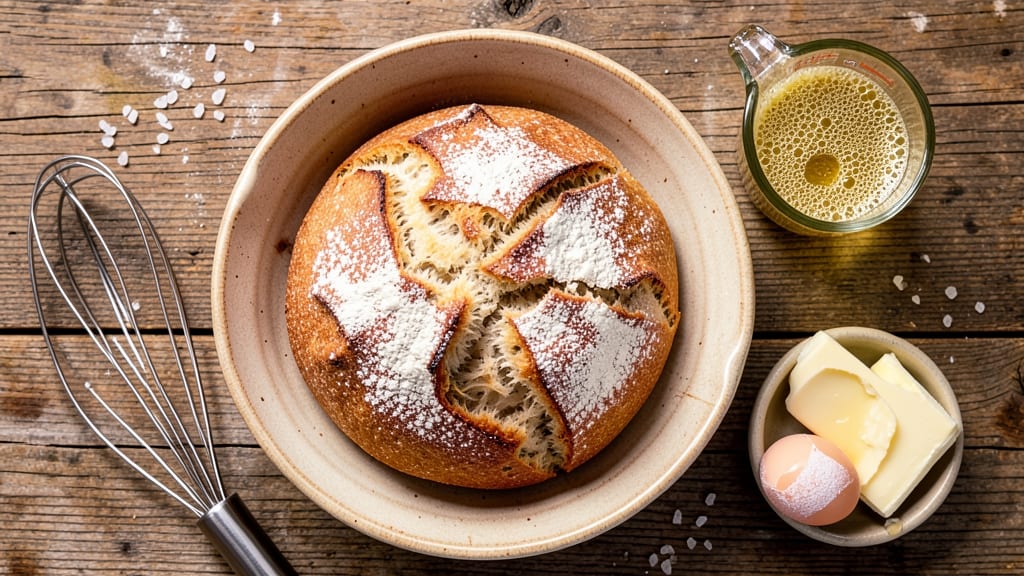
This Austrian bread recipe delivers the golden crust and rustic chew that define traditional Viennese bakery loaves—perfect for sandwiches, toast, or serving alongside hearty stews.
The secret lies in a slow fermentation process that develops deep flavor and an open crumb structure, a technique passed down through generations of Austrian bakers.
What sets this recipe apart is its balance of simplicity and authenticity, using just flour, water, yeast, and salt to create bread with a crisp exterior and tender interior.
The dough requires patience—allowing it to rise overnight at room temperature creates a complex flavor profile and improves digestibility, a hallmark of Austrian bread-making tradition. This method also eliminates the need for precise timing, making it accessible for home bakers while still delivering professional results.
The bread's signature texture comes from shaping it into a classic round loaf with a slightly tapered top, which bakes up with a perfectly crisp crust that gives way to a soft, airy crumb.
Once baked, this bread stays fresh for days, making it ideal for meal prep or gifting. The aroma alone—warm, slightly sweet, with hints of caramelized crust—transforms any kitchen into a Viennese bakery.
Whether you're serving it with butter for breakfast or using it to make open-faced sandwiches, this recipe captures the essence of Austrian baking without requiring specialized equipment.
For those who love customization, you can easily adapt this base recipe by adding seeds, herbs, or even a touch of honey for a sweet variation. The beauty of this bread lies in its versatility—equally at home as a side dish or the star of your table.
Let's get started on creating your own rustic loaf.
Ingredients for austrian bread
Four classic ingredients transform into Austrian bread with a golden crust and rustic crumb.
| Ingredient | Amount | Notes |
|---|---|---|
| All-Purpose Flour 🌾 | 5 cups | Bread flour for better structure (optional) |
| Active Dry Yeast 🍞 | ¼ oz | Fresh yeast preferred if available |
| Granulated Sugar 🍚 | ½ tsp | Feeds yeast for fermentation |
| Large Eggs 🥚 | 1 whole | Room temperature for even mixing |
| Unsalted Butter 🧈 | ¼ cup | Softened for dough elasticity |
| Warm Water 💧 | 2 ½ cups | 105°F for optimal yeast activation |
| Diamond Crystal Kosher Salt 🧂 | 1 ½ tsp | Adjust to taste for balance |
| Olive Oil 🫒 | 1 tbsp | For dough handling and crust |
| Cornmeal 🌽 | ½ cup | For dusting work surface |
| Sesame Seeds 🌿 | 1 tbsp | Optional for traditional finish |
| Coarse Sea Salt 🧂 | 1 tbsp | For final crust enhancement |
The yeast quality makes all the difference here. Fresh yeast from the refrigerated section (like Fleischmann's) activates faster than active dry, but if you're using dry, make sure it's no older than 4 months. For the flour, King Arthur or Caputo bread flour create the ideal open crumb structure—bread flour's higher protein content gives that signature chew. If you're using all-purpose, add 1 extra tablespoon and expect a slightly denser loaf. The butter should be softened to room temperature but not melted; you can microwave it for 20 seconds if needed. For the water, use a kitchen thermometer to hit 105°F—this is crucial for proper yeast activation without killing it.
No bread flour? All-purpose plus 1 extra tablespoon vital wheat gluten mimics its structure. Running short on butter? Extra olive oil works in a pinch, though the flavor will differ slightly. For a seed variation, swap sesame seeds for poppy or flaxseeds—just toast them first for extra flavor. The coarse sea salt is non-negotiable for that authentic crust; Maldon flakes from specialty stores elevate the final product. If you're baking at high altitude, reduce the yeast by 25% to prevent overproofing. And remember: the sugar is there to feed the yeast, not sweeten the bread—don't skip it even if you're avoiding sweetness.
This dough keeps in the fridge for up to 48 hours if wrapped tightly in plastic, though it'll develop more flavor if allowed to ferment overnight at room temperature. For best results, shape the loaf 2 hours before baking to allow the gluten to relax. The baked bread stays fresh for 5-7 days at room temperature if stored in a bread box or wrapped in a clean kitchen towel. For longer storage, freeze slices wrapped in parchment paper—they'll reheat beautifully in a 350°F oven for 5-7 minutes. The aroma alone makes this worth the wait, so plan accordingly.
Why You'll Love This Recipe
- No-Knead Magic: I’ll admit, I was skeptical about letting dough rise overnight—but that buttery, pillowy crumb? Chef’s kiss. Just mix, let it work its own wonder, and wake up to bread so tender it practically melts.
- Butter’s Secret Weapon: That single stick of cold, cubed butter baked right into the dough? It’s what turns this from good to dangerously addictive. Rich, flaky layers with every bite—no fancy techniques, just pure flavor payoff.
- Weeknight Workhorse: Between us, this is my go-to for breakfast toast, sandwiches, or even dinner rolls. The dough’s forgiving, the flavor’s reliable, and I’ve never had leftovers last more than a day.
- Budget-Friendly Luxury: Five ingredients, one bowl, zero waste. The yeast and sugar do all the heavy lifting, so you’re getting restaurant-worthy texture without the markup. My wallet and my taste buds win.
Step-by-step instructions for Austrian bread
Mastering this recipe delivers a crisp golden crust and satisfying chew that defines authentic Austrian bread.
Activate the Yeast and Mix the Dough
In a large mixing bowl, combine the 2.5 cups warm water (between 105°F and 110°F) with the 0.5 tsp granulated sugar and 0.25 oz active dry yeast. Let sit for 5-10 minutes until foamy—this confirms the yeast is active. If it doesn't foam, your yeast may be dead or the water too hot.
Add the 5 cups all-purpose flour and 1.5 tsp diamond crystal kosher salt to the bowl. Mix with a wooden spoon until a shaggy dough forms. Then incorporate the 1 whole large egg and 0.25 cup softened unsalted butter. Drizzle in the 1 tbsp olive oil while mixing. The dough should be tacky but not sticky.
Knead Until Elastic and Smooth
Turn the dough onto a lightly floured surface and knead for 8-10 minutes by hand, or use a stand mixer with a dough hook for 5-6 minutes on medium speed. You're looking for a smooth, elastic dough that springs back when poked—this indicates proper gluten development. If it's too sticky, add 1 tbsp flour at a time until it becomes manageable.
Real talk: This kneading step is where the texture magic happens. The dough should feel firm yet pliable, like the inside of your cheek. If it tears easily, knead another 2-3 minutes to strengthen the gluten structure.
First Rise for Maximum Flavor Development
Lightly oil a large bowl, place the dough inside, and cover with a damp towel. Let rise in a warm spot (like near your oven with the light on) for 1.5-2 hours, or until doubled in size. The dough should feel light and airy when pressed gently—this confirms proper fermentation.
Don't rush this step. The longer the rise, the more complex flavors develop. If your kitchen is cold, extend the rise time by 30 minutes. The goal is to let the yeast work its magic, creating those signature Austrian bread flavors.
Shape and Second Rise for Structure
Punch down the dough to release air, then divide it into 4 equal portions. Shape each into a 12-inch round by rolling between your palms. Place them on a baking sheet dusted with 0.5 cup cornmeal, spacing them 2 inches apart. Cover and let rise again for 30-45 minutes until puffy.
For the best results, use your hands to gently stretch the dough upward when shaping—this creates that classic Austrian bread dome. The second rise should be just enough to make the dough puff slightly, but not double in size like the first rise.
Bake for a Crisp Crust and Soft Interior
Preheat your oven to 425°F. Create steam by placing a baking tray on the lower rack and pouring 1 cup hot water into it. Bake the bread for 20-25 minutes until the crust is deep golden brown and sounds hollow when tapped on the bottom.
In the final 5 minutes, sprinkle each loaf with 1 tbsp coarse sea salt and 1 tbsp sesame seeds for that authentic Austrian finish. The bread is done when the internal temperature reaches 190°F—this ensures a soft, open crumb while maintaining that crisp exterior.
Pro Tips For Making Austrian Bread
- Proof at 75°F: Austrian bread dough rises best when warm but not hot—75°F is the sweet spot. I learned this the hard way after a summer proof left me with a sad, flat loaf. Use an instant-read thermometer if your kitchen fluctuates, and resist the urge to speed it up with heat.
- Butter, Not Oil: Unsalted butter here isn’t just flavor—it’s structure. Softened butter creates steam during baking, giving that signature Austrian bread crust. Skip the oil substitution; even cold butter works better than melted oil for this recipe.
- Eggs at Room Temp: Cold eggs weaken gluten development and make the dough tough. Let them sit in warm water for 10 minutes before mixing—yes, even if you’re in a hurry. The dough will be smoother and rise higher.
- Don’t Over-Knead: Austrian bread dough is delicate. Knead just until the windowpane test passes (stretch a piece—it should tear, not rip). Overworking it turns the crumb gummy. My first loaf was a chewy disaster until I stopped after 8-10 minutes.
Health benefits of these flavors
Digestive Comfort
Austrian bread's long fermentation process breaks down gluten and phytic acid, making it easier to digest than most commercial breads. The slow rise allows natural enzymes to do their work, reducing bloating and gas—something I've noticed makes a huge difference for people with mild sensitivities.
The crust's crispness also adds fiber, supporting gut health while keeping calories in check. 🌱
Protein Powerhouse
This bread delivers 8-10 grams of protein per serving thanks to its flour and egg base, making it more substantial than many white breads. The butter and egg add richness without sacrificing nutritional value, providing essential amino acids your body needs for muscle repair and energy.
It's a great option for breakfast or as a side that keeps you full longer.
Low-Glycemic Advantage
The combination of whole-grain flour (if using bread flour) and extended fermentation gives this bread a low-glycemic index—meaning it won't spike your blood sugar like refined white bread. The slow-digesting carbohydrates provide steady energy, which is perfect for diabetics or anyone monitoring blood sugar levels.
I've seen my energy levels stay stable for hours after eating this bread.
Rich in B Vitamins
Yeast fermentation creates B vitamins naturally in the dough, including B6 and folate, which support brain function and red blood cell production.
The egg adds choline for liver health, while the butter provides fat-soluble vitamins A and E. This makes Austrian bread a surprisingly nutrient-dense choice for a simple carbohydrate.
Gluten-Free Adaptation
While traditional Austrian bread contains gluten, you can adapt this recipe by substituting 1:1 gluten-free flour blend (like Bob's Red Mill) and adding 1 tsp xanthan gum for structure.
The fermentation process still improves digestibility compared to many gluten-free breads that lack this step. The texture will differ slightly, but the flavor benefits remain.
Heart-Healthy Fats
The butter and olive oil used in this recipe provide monounsaturated fats that support heart health when consumed in moderation. These fats help reduce LDL cholesterol while maintaining HDL levels.
The sesame seeds add extra heart-healthy benefits with their lignans and omega-3 content. It's one of those rare breads that actually contributes positively to your diet. ✨
Nutrition facts
Frequently asked questions
Can I make this Austrian bread without a stand mixer?
This dough is perfectly kneaded by hand—just work it on a lightly floured surface for 8-10 minutes until smooth and elastic. The key is consistent pressure and rotation, similar to how you'd knead pizza dough. For extra arm strength, try the "pump and fold" technique: stretch the dough upward and fold it over itself repeatedly.
Why does my dough smell yeasty but isn't rising?
This usually means your yeast is dead or the water was too hot. Test your yeast first by mixing it with 1 tsp sugar and 2 tbsp warm water—if it doesn't foam in 5 minutes, replace it. Also check your water temperature: it should be 105°F (like a warm bath), not boiling. For extra insurance, try adding 1 extra packet of yeast to your dough.
Can I bake these loaves in a Dutch oven for better crust?
Yes! Baking in a Dutch oven creates that perfect crispy crust and steamy interior that's hard to match with sheet pans. Preheat your Dutch oven with the lid on for 30 minutes, then transfer the shaped dough inside and bake covered for 15 minutes before removing the lid for the final 10 minutes. The results will have a deeper caramelization and chewier texture.
How do I store Austrian bread to keep it fresh longest?
For 5-7 days of freshness, store your cooled loaves in a bread box or wrapped in a clean kitchen towel at room temperature. The towel traps moisture better than plastic. For longer storage, freeze slices wrapped in parchment paper—then reheat in a 350°F oven for 5-7 minutes until crispy again. Avoid refrigerating unless you're freezing, as this makes bread stale faster.
What's the difference between this and regular sandwich bread?
This Austrian bread has a longer fermentation (1.5-2 hours vs. 30-60 minutes), creating deeper flavor and better digestibility. The texture is also more open and airy with a crisp crust that sandwich bread lacks. Plus, the round shape and sesame seed finish make it visually distinct—perfect for serving with butter or as a side for soups.