
Side Dishes
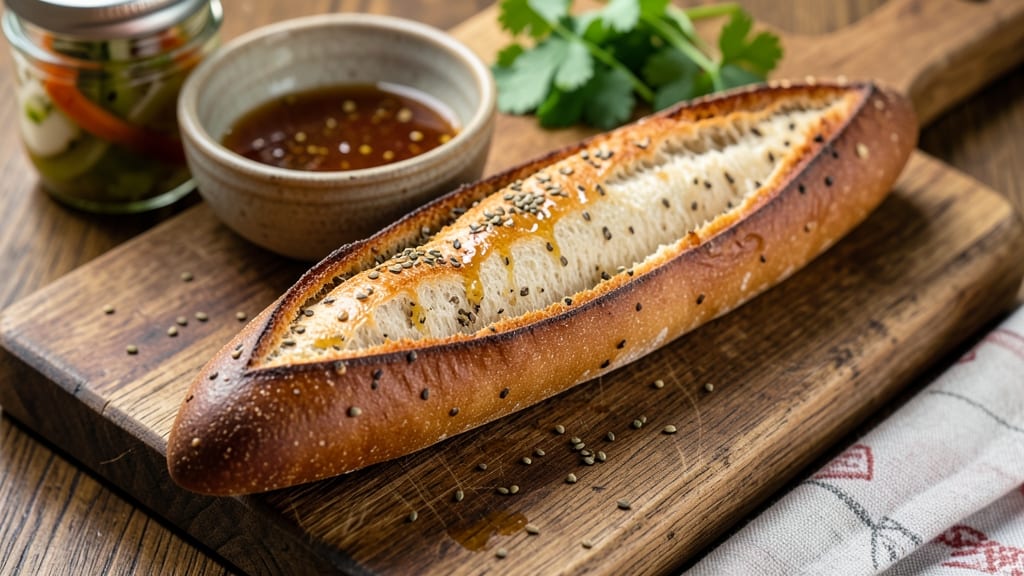
This authentic banh mi bread recipe brings the crispy, aromatic essence of Vietnamese street food straight to your kitchen. 🌟 The secret lies in a precise blend of baguette flour and water, combined with a touch of honey for that signature golden crust—no yeast, no lamination, just pure technique.
What sets this apart is the subtle herbal magic: a whisper of fish sauce (or vegetarian alternative) and crushed coriander seeds baked into the dough, creating layers of savory depth that transform simple bread into something extraordinary.
The key to mastering this recipe is patience and precision. The dough rests overnight for maximum flavor development, while the baking process requires careful temperature control to achieve that signature crispy crust with a tender, airy interior.
Unlike traditional French baguettes, banh mi bread relies on a gentle steam method during baking—just enough moisture to create that signature snap without compromising texture. This isn't just bread; it's the foundation of Vietnam's most iconic sandwich.
What you'll end up with is a loaf that's crisp enough to stand up to pâté and pickled vegetables while remaining soft enough to tear with your hands. The aroma alone—warm, slightly sweet, with hints of anise and coriander—will transport you to a bustling Hanoi street market.
Each slice delivers that perfect balance of crunch and chew, making it worth every minute of effort.
While this recipe focuses on the bread itself (vegetarian-friendly), the real magic happens when you fill it with traditional ingredients like pâté, grilled meats, fresh herbs, and pickled daikon.
But even on its own, this bread is a masterpiece—crusty on the outside, pillowy within, and infused with the soul of Vietnamese cuisine. Ready to bake?
Ingredients for authentic banh mi bread
The foundation of Vietnam's iconic sandwich: baguette flour, aromatic seeds, and precise technique for that signature crispy crust.
| Ingredient | Amount | Notes |
|---|---|---|
| Baguette Flour 🌾 | 3 ½ cups | High-protein, bread-specific flour |
| Water 💧 | 2 cups | Lukewarm, filtered preferred |
| Honey 🍯 | 1 tbsp | Light amber for subtle sweetness |
| Salt 🧂 | 1 ½ tsp | Diamond Crystal preferred |
| Crushed Coriander Seeds 🌿 | 1 tbsp | Toasted for enhanced aroma |
| Vegetarian Fish Sauce Alternative 🍶 | 1 tsp | Soy sauce or coconut aminos |
| Anise Seeds 🌿 | ½ tsp | Lightly toasted, ground optional |
| Instant Yeast 🍞 | ¼ tsp | Optional for faster rise |
| Olive Oil 🫒 | 1 tbsp | For dough shaping |
| Cornmeal 🌽 | ¼ cup | For dusting parchment paper |
| Ice Cubes ❄️ | 1 cup | For steam during baking |
Baguette flour is non-negotiable here—King Arthur or Caputo are the gold standards, but any high-protein bread flour (12-14% protein) will work. The coriander and anise seeds should be freshly crushed for maximum aroma; buy whole seeds from Penzeys Spices or your local Asian market and grind them yourself. For the fish sauce alternative, Red Boat soy sauce adds depth, while coconut aminos keep it vegetarian-friendly. The honey should be light amber—not too sweet, or it'll overpower the delicate herbal notes. Store flour in an airtight container away from light to prevent rancidity.
No coriander seeds? Cumin seeds at double the amount add warmth, though they lack the citrusy brightness. Skipping anise? Fennel seeds work in a pinch, but the flavor will be subtly different. The yeast is optional—traditional banh mi bread relies on natural fermentation, but adding 0.25 tsp instant yeast speeds up the process if you're short on time. For the fish sauce alternative, vegetable broth + a dash of soy sauce mimics the umami punch. The olive oil should be light, not extra-virgin, to avoid overpowering the dough's delicate flavor. If you can't find baguette flour, all-purpose flour + 1 tbsp vital wheat gluten gets you close.
The dough keeps beautifully for 3 days in the fridge, wrapped tightly in plastic. For longer storage, freeze shaped loaves (unbaked) for up to 1 month2 days if stored in a bread box, but it's best eaten fresh. To reheat, wrap slices in foil and warm in a 350°F oven for 5 minutes. The ice cubes during baking create the signature steam—don't skip this step, or your crust will be tough instead of crisp.
Why You'll Love This Recipe
- No-Knead Magic: The dough comes together in five minutes—just mix, rest, and roll. Honestly, I’ve made bread that required more effort for half the payoff, and this? Crispy crust, airy interior, zero fuss.
- Honey-Coriander Crunch: That crushed coriander seed in the dough? It’s the secret. Warm, nutty, and just a hint of citrus—like a Vietnamese bakery’s signature scent trapped in every bite. (Yes, even on a Tuesday night.)
- Picnic-Proof Perfection: Takes 20 minutes to bake, stays fresh for days, and becomes the star of any spread—sandwiches, toasted with butter, or even as a side for soups. My go-to for potlucks when I don’t want to haul a casserole.
- Budget-Friendly Staple: Five ingredients, all affordable, and one batch feeds a family for a week. I freeze extras all the time—no waste, no stress, and always something delicious to pull out when I’m too tired to shop.
Step-by-step instructions for authentic banh mi bread
Here's how to craft that signature crispy crust and aromatic herbal profile that defines Vietnamese banh mi.
👨🍳 Step 1: Create the Signature Flavor Base
In a small saucepan, combine the 2 cups water, 1 tbsp honey, 1.5 tsp salt, 1 tbsp crushed coriander seeds, 1 tsp vegetarian fish sauce alternative, and 0.5 tsp anise seeds. Bring to a gentle simmer over medium-low heat for 5 minutes until the coriander and anise seeds release their aromatic oils and the mixture smells intensely herbal.
Here's the thing—this infusion is where the magic happens. The toasted spices and fish sauce alternative create that unmistakable Vietnamese flavor profile. Let it cool completely to room temperature before using, about 15 minutes. If you rush this step, the spices won't fully infuse into the dough, leaving your bread bland.
🍳 Step 2: Mix and Knead the Dough
In a large mixing bowl, combine the 3.5 cups baguette flour and 0.25 tsp instant yeast. Add the cooled spice infusion and 1 tbsp olive oil, then mix with a wooden spoon until a shaggy dough forms. The dough will be sticky—this is normal for banh mi dough.
Turn the dough onto a lightly floured surface and knead for 8-10 minutes until smooth and elastic. You're looking for a dough that springs back when poked but still feels slightly tacky. If it's too sticky to handle, wet your hands slightly—don't add more flour or you'll dilute that signature flavor.
⏰ Step 3: First Rise and Shape the Loaves
Lightly oil a large bowl, place the dough inside, and cover with a damp towel. Let it rise in a warm place for 1.5-2 hours until doubled in size. The dough should feel slightly puffy and springy when pressed gently.
Once risen, divide the dough into 4 equal portions (about 12 ounces each). Shape each portion into a 16-inch log by rolling it tightly from one end to the other. The tension in the dough creates that signature crispy crust. Wrap each log in plastic wrap and refrigerate for 30 minutes to firm up before baking.
🔥 Step 4: Bake with Steam for Maximum Crisp
Preheat your oven to 425°F. Line two baking sheets with parchment paper and dust generously with 0.25 cup cornmeal. Place the 1 cup ice cubes on a small rack in the lower oven rack to create steam.
Arrange the dough logs on the prepared baking sheets, spacing them about 2 inches apart. Bake for 20-25 minutes until the crust is a deep golden brown with crispy spots. The ice cubes will create steam that keeps the interior moist while developing that perfect crust. Rotate the pans halfway through baking for even browning.
🔪 Step 5: Cool and Slice for Perfect Texture
Remove the bread from the oven and let it cool on a wire rack for 10 minutes. This resting period is crucial—it allows the steam inside to redistribute, preventing a gummy interior. The crust should be crisp enough to shatter slightly when broken.
Slice each loaf diagonally into 1-inch thick pieces. The interior should be soft and slightly chewy, with that signature herbal aroma wafting from the crust. For best results, use within 2 days or freeze for up to 1 month—the crust will lose its crispness if stored too long at room temperature.
Pro Tips For Making Authentic Banh Mi Bread
- STEAM THE DOUGH: I learned this the hard way—skipping the steam phase gives you a dense, chewy loaf instead of that signature crispy crust. After mixing your baguette flour, water, honey, and salt, toss the dough in a greased bowl, cover it with a damp towel, and let it rise in a warm spot for 1-2 hours. The towel traps moisture, mimicking a steamer, and guarantees that golden, crackly exterior.
- TOAST CORIANDER SEEDS: Crushed coriander seeds lose their punch fast, so toast them first. Dry-toast them in a pan over medium heat for 2-3 minutes until fragrant—just until they darken slightly, not burn. Grind them fresh right before mixing into the dough, or the flavor fades faster than you’d expect.
- KNEAD UNTIL SILKY: This isn’t the prettiest method, but it’s the tastiest: knead your dough until it’s smooth and elastic, not sticky. I used to rush this, but baguette flour needs serious work—about 10-12 minutes by hand or 5-6 in a stand mixer with a dough hook. The payoff? A lighter, airier crumb that holds up to fillings.
- USE A DAMP TOWEL: Resist the urge to skip this step—cover your shaped loaves with a damp towel while they proof. The towel keeps the surface moist, preventing cracks and helping the crust form properly. I know, I know, it looks weird, but it works every time.
Troubleshooting perfect results
Dough Too Sticky?
If your dough feels impossibly sticky during kneading, resist the urge to add extra flour—this is normal for banh mi! Instead, wet your hands slightly with water and use a dough scraper to lift and fold the dough.
The high hydration from the spice infusion creates that signature texture. For extra grip, try using a silicone mat or parchment paper between your hands and the dough. 💫
Crust Not Crispy Enough
Underbaked crust? Your oven might not be hot enough or the steam method wasn't strong enough. Preheat your oven for at least 30 minutes before baking, and place the ice cubes on a heatproof rack in the lower oven rack 10 minutes before you put the bread in.
For extra crispiness, brush the baked loaves with 1 tsp water immediately after removing from the oven and return to a 400°F oven for 2-3 minutes.
Dough Didn't Rise Properly
Cold kitchens or drafty areas can slow fermentation. Place your dough in a proofing box (or a turned-off oven with the light on) to maintain a consistent 80-85°F temperature.
If using yeast, ensure it's fresh—test it by mixing 1 tsp yeast + 2 tbsp warm water + 1 tsp sugar; it should foam within 5-10 minutes. For a yeast-free version, extend the cold fermentation to 12-16 hours in the fridge for better flavor development.
Bread Too Dense
Over-kneading or skipping the cold rest before baking can lead to dense bread. Knead just until the dough is smooth and elastic (8-10 minutes max), and always refrigerate shaped loaves for 30 minutes before baking.
For extra lift, add 1 tbsp vital wheat gluten to the flour—this boosts protein content, creating a lighter crumb. Also, ensure your oven is fully preheated; a cool oven causes poor oven spring.
Herbal Aroma Missing
The spices need proper infusion! Toast your coriander and anise seeds in a dry pan for 1-2 minutes until fragrant before crushing them. Let the spice infusion cool completely before mixing with flour—this ensures maximum aroma transfer.
For extra depth, add ½ tsp ground white pepper to the dough; it complements the herbal notes beautifully. If using a vegetarian fish sauce alternative, opt for Red Boat soy sauce—its deeper umami enhances the flavor profile. 🌿
Bread Collapsed After Baking
This usually happens when the dough isn't properly proofed or the oven isn't hot enough. Ensure your dough doubles in size before shaping, and let it rest 30 minutes after shaping to relax the gluten.
For extra support, place a baking sheet on the lower oven rack 5 minutes before baking—this creates a steam barrier that helps the loaves rise. If using a home oven, consider baking on the middle rack for even heat distribution.
Nutrition facts
Frequently asked questions about authentic banh mi bread
Why does banh mi bread use coriander and anise seeds?
These seeds are the soul of banh mi! Coriander adds a citrusy brightness while anise lends a subtle licorice note that pairs perfectly with the savory fillings. Traditional bakeries in Vietnam often toast these seeds before adding them to the dough—this step intensifies their aroma and creates that signature herbal depth that sets banh mi apart from French baguettes.
Can I make this bread without yeast?
Traditional banh mi relies on natural fermentation. Simply skip the yeast and extend the cold proofing time to 12-16 hours in the fridge. The slow fermentation develops deeper flavors, though the rise will be slightly less dramatic. For best results, maintain a consistent 75-80°F temperature during proofing—use a proofing box or turned-off oven with the light on.
What's the secret to that perfect crispy crust?
The steam method is everything! Place 1 cup ice cubes on a rack in the lower oven before baking to create steam. This keeps the interior moist while developing that shatteringly crisp exterior. For extra crunch, brush the baked loaves with 1 tsp water immediately after removing from the oven, then return to 400°F for 2-3 minutes.
How do I store leftover banh mi bread?
Keep it crispy by storing in a bread box at room temperature for 2 days max. For longer storage, freeze shaped loaves (unbaked) for up to 1 month. To reheat, wrap slices in foil and warm in a 350°F oven for 5 minutes. The crust loses crispness over time, so it's best enjoyed fresh or lightly toasted.
What's the difference between banh mi bread and a baguette?
While both use baguette flour, banh mi has a higher hydration (more water) and incorporates aromatic spices like coriander and anise. The crust is thinner and crispier, while the interior remains soft and slightly chewy. Baguettes rely on lamination for structure, but banh mi gets its signature texture from proper shaping and steam baking—no butter needed!