
Side Dishes
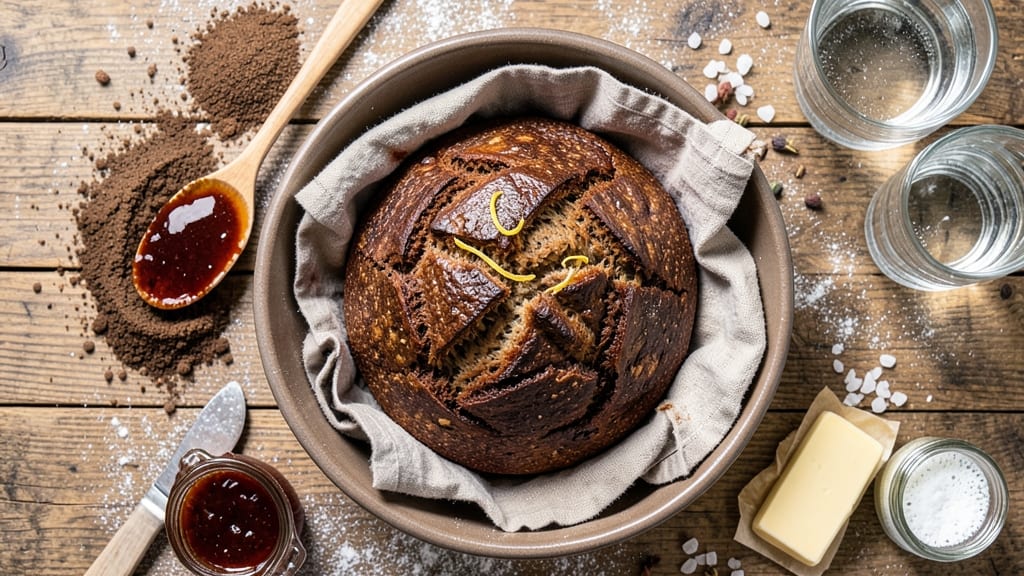
This authentic German pumpernickel bread recipe delivers the dense, deeply malty crust and rich sweetness that makes it a staple in German households. The secret lies in a slow fermentation process and traditional ingredients like rye flour and molasses, which develop complex flavors over time.
Unlike many bread recipes, this one requires minimal effort—just mix, rest, and bake—but the results are anything but ordinary.
The key to authentic pumpernickel is patience. The dough ferments overnight, allowing the rye flour to develop its signature nutty, slightly sweet flavor. Molasses or honey adds depth, while a touch of baking soda ensures a tender crumb.
The bread bakes slowly in a covered loaf pan, creating that signature dark crust and moist interior that keeps well for days.
Once baked, you’ll have a loaf with a crust so dark it’s almost black, a texture that’s both dense and slightly chewy, and a flavor that’s rich, malty, and subtly sweet.
This bread isn’t just for toasting—it pairs beautifully with sharp cheeses, smoked fish, or even a simple butter spread. The no-knead method makes it accessible, while the traditional approach ensures authenticity.
Perfect for holiday tables, charcuterie boards, or as a hearty side dish, this pumpernickel bread is a labor of love that rewards you with a loaf worth sharing. Ready to bake like a German bakery? Let’s get started.
Ingredients for authentic german pumpernickel bread
Dark rye flour, molasses, and slow fermentation create this German staple's signature malty depth.
| Ingredient | Amount | Notes |
|---|---|---|
| Rye Flour 🌾 | 4 cups | Dark rye flour for authentic flavor |
| All-Purpose Flour 🌾 | 1 cup | For structure and texture |
| Unsalted Butter 🧈 | ½ cup | Cold, cubed for dough |
| Molasses 🍯 | ¼ cup | Dark molasses for depth |
| Active Dry Yeast 🍞 | ½ tsp | Instant yeast works too |
| Warm Water 💧 | 1 ½ cups | 105-110°F for yeast activation |
| Salt 🧂 | 1 ½ tsp | Kosher or sea salt |
| Baking Soda 🧪 | 1 tsp | For tender crumb |
| Honey 🍯 | 2 tbsp | Optional for extra sweetness |
| Poppy Seeds 🌻 | 2 tbsp | Traditional German topping |
| Coarse Salt 🧂 | 1 tbsp | For crust sprinkle |
| Loaf Pan 🍞 | 1 whole | 9x5-inch, greased well |
The rye flour is non-negotiable here—King Arthur Dark Rye or Bob's Red Mill are top choices for that authentic, dense texture. If you can only find light rye, mix it with whole wheat for depth. Molasses should be dark, not light—Gund or Clover brands are ideal. For the yeast, Saf-Instant is my go-to since it doesn't need proofing, but traditional active dry yeast works if dissolved in warm water first. The butter must be cold when mixed in—soft butter makes the dough too sticky. Bulk bins at Whole Foods often have the best quality rye flour, but any well-stocked grocery store carries it.
No molasses? Maple syrup or honey works in a pinch, though the flavor won't be identical. Substituting rye flour with whole wheat or even spelt is possible, but expect a lighter loaf. The honey is optional but recommended—it enhances the molasses' sweetness without overpowering. Poppy seeds can be swapped for sesame seeds if unavailable, though they won't be traditional. Baking soda is crucial for that tender crumb, but if you're avoiding it, 1 tsp cream of tartar can replace it. Proofing the yeast in warm water (105-110°F) is essential—too hot kills it, too cold won't activate it.
This dough needs 12-16 hours of cold fermentation for optimal flavor—don't rush it. Store it in the fridge in a sealed container with a damp towel over it. The poppy seeds should be toasted lightly in a dry pan for 1-2 minutes before sprinkling to enhance their flavor. Baked loaves keep well at room temperature for 3-4 days in a bread bag, or you can freeze slices for up to 3 months. For reheating, wrap slices in foil and warm in a 350°F oven for 5-10 minutes—they'll taste fresh-baked every time.
Why You'll Love This Recipe
- No-Knead Magic: The dough comes together in five minutes—just mix, rest, and bake. No stand mixer, no fancy tools, just you and the molasses-rich rye doing all the work while you sip coffee.
- Deep, Dark Satisfaction: That molasses and rye flour combo? It’s ridiculously good—earthy, slightly sweet, with a crust so dark it looks like it’s been baking for days (even though it’s not). Honestly, the first slice changes minds.
- Weeknight Workhorse: Slice it for breakfast toast, tear it into sandwiches, or freeze half for lazy mornings. It’s my go-to for charcuterie boards, open-faced lunches, or when I need something hearty without the fuss.
- Budget-Friendly Staple: Rye flour and molasses stretch your grocery dollars, and a single loaf lasts forever—weeks in the freezer, days on the counter. Between us, this is the bread that actually saves money while tasting like a treat.
Step-by-step instructions for authentic German pumpernickel bread
Follow this traditional method to create dense, malty pumpernickel with a crisp crust and tender interior.
Activate the Yeast and Mix Wet Ingredients
In a large mixing bowl, combine the 1.5 cups warm water (between 105-110°F) with the 0.5 tsp active dry yeast. Let it sit for 5-10 minutes until frothy—this confirms the yeast is active. If it doesn't bubble, your yeast may be dead, and you'll need to start over.
In a separate bowl, whisk together the 0.25 cup molasses, 2 tbsp honey, and 1.5 tsp salt. The molasses adds that signature deep, caramel-like flavor while the honey balances sweetness. Pour this mixture into the yeast-water and stir until fully combined. The batter should be thick but pourable.
Combine Dry Ingredients and Form the Dough
Add the 4 cups rye flour and 1 cup all-purpose flour to the wet mixture. Stir with a wooden spoon until the dough begins to come together—it'll be sticky but manageable. Sprinkle in the 1 tsp baking soda and mix just until dissolved. The baking soda helps create that signature tender crumb.
Cut in the 0.5 cup cold, cubed unsalted butter using a pastry cutter or your fingers. The cold butter creates pockets of flavor and contributes to the bread's rich texture. Work quickly to avoid melting the butter, which would make the dough too soft to handle.
Shape and Proof the Dough
Lightly grease a clean surface with vegetable oil and turn out the dough. Gently fold it over itself 2-3 times to create a smooth, cohesive shape. Place the dough in a lightly greased 9x5-inch loaf pan, pressing down lightly to fill the pan completely. Cover with a damp towel and let it rise in a warm place for 1-2 hours or until it's doubled in size.
This slow rise allows the flavors to develop fully. Avoid placing it in a cold draft or near direct heat, which can cause uneven rising. The dough should feel springy when pressed gently—this is your signal it's ready for baking.
Bake to Deep, Malty Perfection
Preheat your oven to 350°F. Sprinkle the top of the dough with 2 tbsp poppy seeds and 1 tbsp coarse salt for that classic German crust. Bake for 50-60 minutes until the top is deep brown and the internal temperature reaches 205°F. The bread should sound hollow when tapped on the bottom.
For extra authenticity, I recommend baking it in a Dutch oven if you have one—it creates a crispier crust and more even heat distribution. If the top browns too quickly, tent with foil to prevent burning while allowing the interior to cook through.
Cool and Slice for Maximum Flavor
Remove the bread from the pan and let it cool on a wire rack for at least 1 hour before slicing. This resting period is crucial—it allows the bread to set properly and prevents a gummy texture. The longer you wait, the better the flavor distribution throughout each slice.
For the most authentic experience, slice the bread with a serrated knife and serve slightly warm. The interior should be dense and moist, while the crust remains crisp and deeply malty. Store leftovers wrapped in a cloth-lined bag to maintain freshness for up to 5 days.
Pro Tips For Making Authentic German Pumpernickel Bread
- Bloom the Yeast Slowly: Skip the warm water—mix your yeast with cool (not cold) water and a pinch of sugar first, then let it sit for 10-15 minutes until it’s just starting to foam. I learned this the hard way after overproofing batches because the molasses in pumpernickel can slow yeast activation. Patience here means a stronger rise later.
- Soak the Rye First: Mix your rye flour with the molasses and warm water before adding yeast—let it sit for 30 minutes. This softens the rye’s tough bran, making the dough easier to handle and giving you that deep, chewy texture. (Yes, even if you’re impatient like me.)
- Don’t Overwork the Dough: The second you add all-purpose flour, stop folding—rye dough gets gummy fast. Use a dough scraper to gently shape it into a log, not a wrestling match. Overworking = dense bread. My grandmother swore by this, and she was right: less effort, better crumb.
- Bake Low and Long: Preheat your oven to 350°F (175°C) and bake for 50-60 minutes, covered with foil for the first 30. The molasses burns easily, so resist the urge to crank the heat. A dark, crusty exterior with a soft interior? That’s the goal—no shortcuts here.
Health benefits of this authentic german pumpernickel bread
Rich Fiber Source
Pumpernickel is a fiber powerhouse, thanks to its high rye flour content. A single slice contains about 4 grams of fiber—nearly 15% of your daily needs—which supports digestive health and keeps you feeling full longer.
The slow fermentation process enhances digestibility, making it easier on your gut than many other breads. 🌾
Low Glycemic Index
Unlike white bread, pumpernickel has a low glycemic index due to its whole-grain composition and molasses. This means it causes gradual blood sugar rises, making it ideal for blood sugar management.
The molasses adds natural sweetness without spiking glucose levels, which is great for diabetics or anyone watching their sugar intake.
Natural Sweetness Boost
The molasses and honey in this recipe provide natural sugars without refined additives. These ingredients are rich in iron, calcium, and magnesium, which many people don’t get enough of. A 2-slice serving delivers about 15% of your daily iron, helping prevent fatigue and supporting energy levels.
Protein-Packed
Don’t let the bread’s soft texture fool you—pumpernickel packs more protein per slice than most breads, thanks to rye flour. With 5 grams of protein per serving, it’s a great option for vegetarians or anyone looking to boost their protein intake without meat.
The combination of flour, butter, and yeast creates a balanced amino acid profile.
Antioxidant-Rich
Rye flour contains lignans, powerful antioxidants that may help reduce inflammation and lower cholesterol. The molasses adds polyphenols, which support heart health. Together, these ingredients make pumpernickel a nutrient-dense choice that fights oxidative stress better than many processed breads. 💪
Gluten-Friendly Option
While traditional pumpernickel contains gluten, you can adapt this recipe for gluten-free diets by substituting rye flour with a 1:1 gluten-free blend (like Bob’s Red Mill’s GF flour). The texture will differ slightly, but you’ll still get the dense, malty flavor and health benefits.
Always check labels to ensure your GF flour has enough xanthan gum for structure.
Nutrition facts
Frequently asked questions
Why does authentic German pumpernickel have such a long fermentation time?
The 12-16 hour cold fermentation is essential for developing pumpernickel's signature malty, nutty flavor. This slow process allows the rye flour's enzymes to break down starches into sugars, creating complex flavors. The cold temperature prevents overproofing while enhancing the bread's digestibility and depth of taste.
Can I make this bread without molasses?
Yes, but the flavor won't be authentic. Substitute with 2 tbsp maple syrup or honey for sweetness, though molasses provides the unique caramel-like depth. For a closer match, try 1 tbsp coffee per 1 cup molasses to mimic its roasted notes. The bread will still be delicious but less complex.
Why did my pumpernickel crack on top?
Cracking usually happens when the dough rises too quickly or the oven isn't properly preheated. For a smoother crust, ensure your dough proofs at room temperature for 1-2 hours before baking, then refrigerate it for 12 hours to slow fermentation. Also, bake at 350°F with a Dutch oven for even heat distribution.
How should I store pumpernickel to keep it fresh?
Wrap cooled loaves in a cloth-lined bread bag and store at room temperature for up to 5 days. For longer storage, freeze slices wrapped in plastic wrap for 3 months. To revive, toast frozen slices in a 350°F oven for 5-10 minutes—they'll taste fresh-baked!
What's the best way to slice pumpernickel?
Use a serrated knife and cut against the grain for clean slices. For even thickness, place the loaf on its side and slice horizontally. To prevent crumbs, dip the knife in hot water between slices. The bread should be 1 hour old when sliced for best texture.