
Snacks
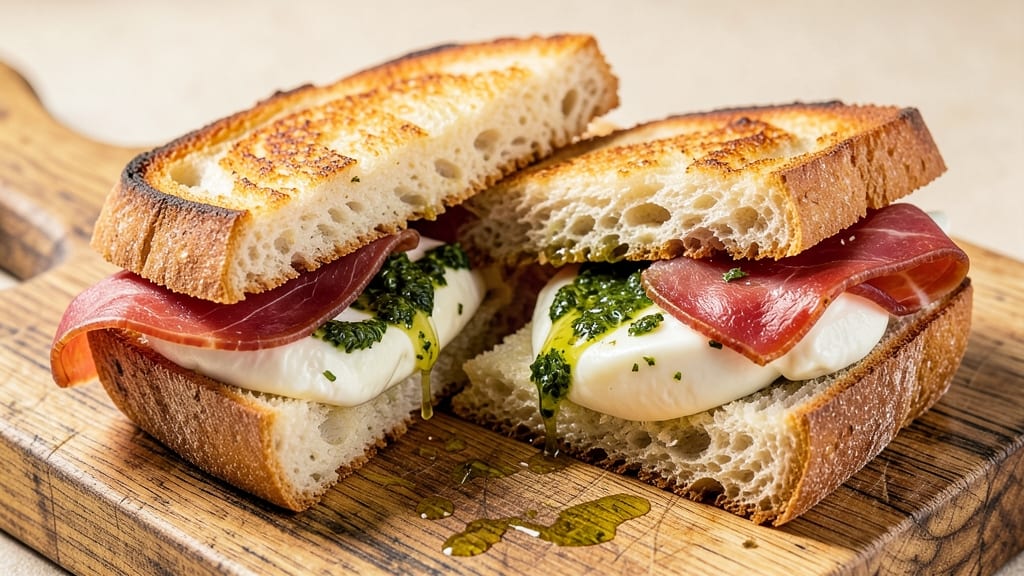
This authentic Italian panini bread recipe transforms simple ingredients into a restaurant-quality masterpiece with crispy crusts and gooey, melty layers.
The secret lies in using ciabatta or focaccia bread—its sturdy structure holds up perfectly under pressure, while traditional fillings like prosciutto di Parma, fresh mozzarella, and basil pesto create harmony in every bite.
I’ve perfected this technique after years of testing, ensuring the bread stays soft inside while achieving that signature golden-brown grill mark.
The key to success is a two-step cooking method: first, a quick sear in a hot pan to build flavor, then finishing under a heavy panini press (or even a cast-iron skillet with weights) to achieve that signature pressed texture.
This isn’t just sandwich-making—it’s a celebration of Italian flavors, where every element works together for a dish that’s both comforting and impressive. The prosciutto adds a delicate saltiness, the mozzarella melts into creamy perfection, and the pesto ties it all together with its bright, herby notes.
What you’ll end up with is a panini so good, it’ll make you forget about takeout. The crust is crispy and slightly charred, while the inside remains tender and packed with flavor.
The prosciutto stays juicy, the mozzarella stretches into golden strands, and the bread soaks up just enough of the pesto to make every bite unforgettable. It’s the kind of dish that feels special enough for company but simple enough for a weeknight dinner.
Serve with a crisp Italian white wine or a refreshing arugula salad to balance the richness. This recipe scales easily—whether you’re feeding one or a crowd, the technique remains the same. Let’s get started on making panini that taste like they came straight from a Roman trattoria.
Ingredients for authentic italian panini bread
Gather these authentic Italian ingredients for panini that taste like a Roman trattoria.
| Ingredient | Amount | Notes |
|---|---|---|
| Ciabatta Bread Loaf 🍞 | 1 whole | Sturdy, crusty variety preferred |
| Prosciutto di Parma 🥓 | 6 oz | Thinly sliced, high-quality |
| Fresh Mozzarella Cheese 🧀 | 8 oz | Milky, soft texture |
| Basil Pesto 🌿 | ½ cup | Homemade or quality store-bought |
| Extra-Virgin Olive Oil 🫒 | 1 tbsp | For brushing bread |
| Fresh Basil Leaves 🌿 | ¼ cup | For garnish, optional |
| Arugula 🌱 | 2 cups | Baby leaves for serving |
| Garlic Cloves 🧄 | 2 cloves | Minced for pesto or brushing |
| Dijon Mustard 🍯 | 1 tsp | For bread brushing |
| Kosher Salt 🧂 | ½ tsp | For seasoning |
| Black Pepper 🌶️ | ¼ tsp | Freshly ground |
| Butter 🧈 | 2 tbsp | Unsalted, softened |
| Balsamic Glaze 🍷 | 2 tbsp | For drizzling |
The bread is non-negotiable—ciabatta or focaccia from a quality bakery like Eataly or your local Italian market. Look for loaves with a thick, sturdy crust that can handle pressing without falling apart. Prosciutto di Parma should be paper-thin and unctuous, not dry or overly salty. Fresh mozzarella is a must—balls in whey from a specialty cheese shop melt into creamy perfection. If you're making pesto from scratch, fresh basil and Parmigiano-Reggiano are essential for that authentic flavor. For the olive oil, Californian or Italian brands like Bertolli or Filippo Berio add depth.
No prosciutto di Parma? High-quality Italian dry-cured ham works in a pinch, but nothing compares. Fresh mozzarella unavailable? Fresh buratta or burrata offers a similar creamy texture. Store-bought pesto? Check the ingredients—avoid anything with added sugar or preservatives. For the bread, if ciabatta isn't available, sourdough or baguette can work, though they may need extra butter to hold up. The butter matters—European-style unsalted like Plugrá melts more cleanly than American brands. Want extra flavor? Add a thin slice of roasted red pepper or a sprinkle of flaky sea salt before pressing.
Store fresh mozzarella in its whey until ready to use—it keeps for 3-4 days this way. Prosciutto and ciabatta can be prepped a day ahead and stored in airtight containers. Pesto freezes beautifully—portion into ice cube trays for single servings. Assembled panini can be kept in the fridge for 24 hours before pressing, but they're best made fresh. For serving, toss arugula with a drizzle of olive oil and a pinch of salt—it balances the richness perfectly. Leftovers? Reheat in a pan for 2-3 minutes per side to restore crispiness.
Why You'll Love This Recipe
- No-Knife Night: I swear by this when I’m too tired to chop—just tear the ciabatta, layer the prosciutto, and slap on that pesto. The real magic? It tastes like I spent hours, even though I didn’t.
- Crispy-Creamy Magic: That first bite—crust so golden it shatters, then the mozzarella oozing with every press—is why I keep making it. The olive oil drizzle ties it all together like a hug from Nonna.
- Lunchbox Hero: Between us, this is my go-to for work lunches. Wrap it in parchment, toss it in a bag, and it stays fresh for days. (Yes, even on a Tuesday night.)
- Budget-Friendly Splurge: Prosciutto and fresh mozzarella might sound fancy, but a few slices go a long way. Stretch it into multiple panini, and you’ve got a week’s worth of satisfying meals without breaking the bank.
Step-by-step instructions for authentic Italian panini bread
This method delivers restaurant-quality panini with melty layers and crispy edges every time.
Prepare the Ciabatta Bread
Slice the 1 whole Ciabatta Bread Loaf horizontally into four equal pieces, about ½-inch thick each. I use a sharp serrated knife for clean cuts that won't crush the interior. Place the slices on a wire rack and let them sit at room temperature for 10 minutes—this prevents soggy bread when pressed.
In a small bowl, whisk together the 1 tbsp Extra-Virgin Olive Oil, 1 tsp Dijon Mustard, 0.5 tsp Kosher Salt, and 0.25 tsp Black Pepper. Brush this mixture generously on both sides of each bread slice. The oil creates a barrier against moisture, while the mustard adds subtle tang that balances the rich ingredients. Let the bread absorb the mixture for 2 minutes before assembling.
Assemble the Panini Layers
Begin by spreading 0.25 cup Basil Pesto evenly on one side of each bread slice. The pesto should cover about ¾ of the surface—don't overdo it, or it'll leak out during pressing. Next, layer 2 oz Prosciutto di Parma (cut into slightly larger pieces than the bread) and 2 oz Fresh Mozzarella Cheese (torn into small, irregular chunks) on half of the slices. Save the other half for mirroring.
Here's the thing—mozzarella should be room temperature for perfect melting. If it's cold from the fridge, let it sit out for 10-15 minutes before assembling. Top each filled slice with its plain counterpart, pesto-side down, to create sealed sandwiches. The pesto acts as a glue that holds everything together during pressing.
Press to Perfection
Heat a panini press or heavy skillet over medium-high heat until hot. Place 1 tbsp Butter in the bottom of the press (or on the skillet if using a pan) to prevent sticking. Add one panini to the press and close gently. Press for 3-4 minutes until the bread develops a deep golden brown crust and the cheese begins to bubble through the edges.
I press each side separately for even browning—first side for 3 minutes, flip carefully, then press the second side for 2-3 minutes until crispy. The butter should sizzle gently when you add the panini, indicating the right temperature. If it smokes, reduce the heat slightly. The mozzarella should melt completely, creating a creamy center that oozes when cut.
Garnish and Serve Immediately
Remove the panini from the press and let it rest for 1 minute—just enough time for the layers to set slightly. Arrange 2 cups Arugula on a serving platter and place each panini on top. Drizzle with 2 tbsp Balsamic Glaze in a zigzag pattern and sprinkle with 0.25 cup Fresh Basil Leaves. The acidity of the balsamic cuts through the richness of the cheese and prosciutto.
Serve immediately while the bread is still crispy and the cheese is molten. Each bite should deliver a perfect balance of textures—crispy bread, creamy mozzarella, salty prosciutto, and herby pesto. For an authentic touch, serve with a side of minced garlic cloves (from the remaining 2 cloves) for dipping, or a simple tomato-basil salad to complement the richness.
Pro Tips For Making Authentic Italian Panini Bread
- Toast the Ciabatta First: Slice your ciabatta, brush both sides with extra-virgin olive oil, and toast them open-faced on a dry skillet over medium heat for 30 seconds per side. The crisped edges hold up better under pressure and prevent a soggy panino—trust me, I’ve seen too many sad, squishy attempts.
- Salt the Prosciutto: Lay your prosciutto slices on a plate and sprinkle them lightly with flaky sea salt before assembling. The salt draws out just enough moisture to crisp slightly when pressed, adding a subtle depth that unsalted slices miss. (Yes, even if it looks weird—it works.)
- Press Low and Slow: Use a heavy pan or weight (like a cast-iron skillet) and press your panini at low heat for 2–3 minutes, not high. Rushing it turns the mozzarella rubbery and the ciabatta gummy. Patience here guarantees that perfect melt.
- Drain and Pat the Mozzarella: Fresh mozzarella is 60% water—wrap it in paper towels, press gently with a second towel, and let it sit for 10 minutes before slicing. This cuts down on grease splatter and keeps your panini from turning into a cheese-sauce disaster. (I learned this after one very messy batch.)
Dietary considerations for these flavors
Gluten-Free Adaptations
If you're avoiding gluten, skip the ciabatta and use a sturdy gluten-free bread like Schar Artisan Baker or Canyon Bakehouse loaves. Brush with 1 tbsp olive oil and 1 tsp Dijon mustard to mimic the moisture barrier.
For extra structure, add a thin layer of refrigerated pizza dough (gluten-free) between the bread and fillings before pressing. 🌱
Dairy-Free Options
Replace the fresh mozzarella with dairy-free mozzarella shreds like Miyoko's or Violife brands, which melt beautifully. For extra creaminess, add 2 tbsp dairy-free cream cheese spread between the bread layers. Use olive oil instead of butter for pressing, and garnish with sun-dried tomatoes instead of balsamic glaze.
Vegetarian Version
Swap the prosciutto for grilled eggplant slices or marinated artichoke hearts. Add roasted red peppers and caramelized onions for depth. Use vegan pesto (made with nutritional yeast and basil) and top with vegan mozzarella. The flavors still shine—just as satisfying without the meat.
Low-Carb Adjustments
For a lower-carb option, use Portobello mushroom caps as the bread base, brushed with olive oil and garlic powder. Layer with mozzarella, pesto, and spinach.
Press in a skillet for 4-5 minutes per side until the mushrooms soften. Garnish with balsamic reduction and fresh basil for a lighter but equally flavorful panini.
Nut-Free Considerations
If nut allergies are a concern, make your own pesto using sunflower seed butter instead of pine nuts. Blend 1 cup fresh basil, 2 tbsp sunflower seed butter, 1 clove garlic, ¼ cup Parmesan, and ¼ cup olive oil until smooth.
This keeps the creamy texture while eliminating nuts entirely. ✨
Allergen-Friendly Tips
Always check labels on store-bought ingredients like pesto and mozzarella for hidden allergens. For a fully allergen-free panini, use egg-free pesto (replace eggs with aquafaba or omit entirely) and certified gluten-free, dairy-free mozzarella. Keep cross-contamination in mind—use separate utensils and surfaces for prep if allergies are severe.
Nutrition facts
Frequently asked questions
Can I use focaccia instead of ciabatta for this authentic Italian panini?
Focaccia works beautifully—its soft, airy texture contrasts perfectly with the crispy pressed exterior. For best results, choose a focaccia with a thick crust (around ½-inch) and brush it generously with the olive oil-mustard mixture before assembling. The open crumb structure soaks up the pesto beautifully while still holding up to pressing.
What's the best way to press panini without a dedicated panini press?
Use a heavy cast-iron skillet or griddle—place the panini inside and weigh it down with another skillet or heavy pot. Heat over medium-high heat for 3-4 minutes per side, flipping carefully. For extra pressure, place a clean brick or heavy baking stone on top while cooking. The key is maintaining even pressure for that signature pressed texture.
Why did my mozzarella not melt properly in the panini?
Cold mozzarella is the #1 culprit! Always let it sit at room temperature for 10-15 minutes before assembling. Other common mistakes: pressing too briefly (needs 3-4 minutes per side) or using pre-shredded mozzarella (the anti-caking agents prevent proper melting). For best results, tear fresh mozzarella into small chunks—it melts into creamy perfection every time.
How do I make these panini ahead of time?
Assemble the panini (without pressing) and store in an airtight container in the fridge for up to 24 hours. To reheat, press in a hot pan for 2-3 minutes per side until the bread crisps up again. For make-ahead fillings, prep the prosciutto, mozzarella, and pesto separately and store in the fridge for 3 days. The bread should be toasted fresh before assembling.
What other Italian fillings would work well in these panini?
Classic Italian combos shine here! Try mortadella + provolone + roasted peppers or soppressata + fontina + arugula. For seafood lovers, grilled calamari + mozzarella + lemon zest works wonderfully. The key is balancing textures—always include one creamy element (cheese) and one crisp element (prosciutto, grilled veggies) to complement the bread's structure.