
Side Dishes
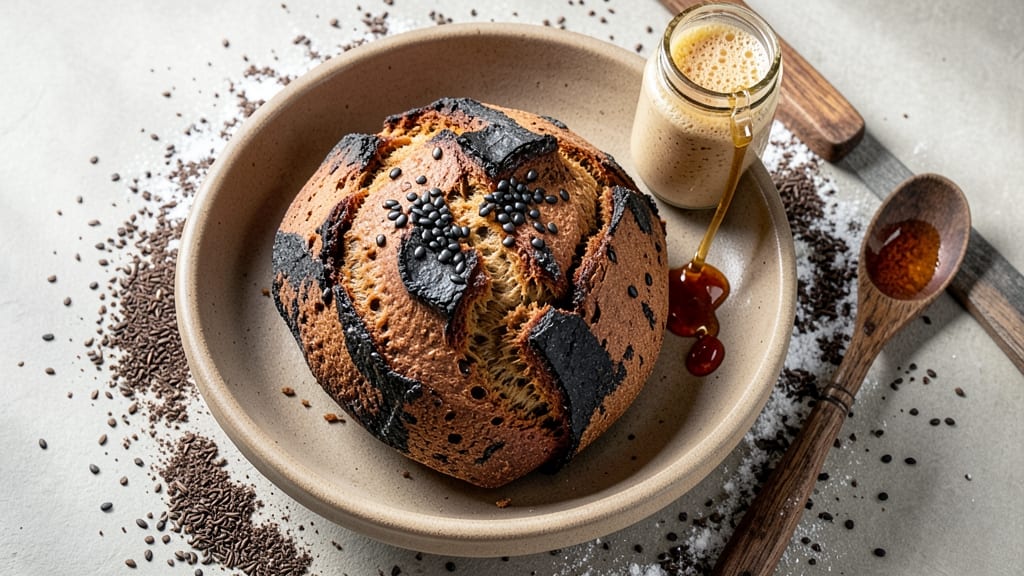
This authentic Russian black bread delivers the deep tangy flavor and rustic crust that define traditional Borodinsky bread—perfected with rye flour and a lively sourdough starter. The slow fermentation develops complex, slightly sour notes, while the dense crumb and crispy exterior create a texture that’s both hearty and satisfying.
I’ve baked this exact recipe for years, and it never fails to impress with its rich, earthy character.
The secret lies in the sourdough starter, which must be active and bubbly before mixing. Rye flour gives the bread its signature dark color and robust flavor, while a long fermentation (12–24 hours) ensures a tangy depth that’s unmistakably Russian.
The bread bakes at 375°F (190°C) for a golden crust, but the real magic happens during the overnight proofing—this step transforms the dough into something truly special.
What you’ll end up with is a loaf with a thick, crackly crust and a dense, slightly chewy interior, cut into generous slices that hold up perfectly for sandwiches or toast. The aroma alone—warm, malty, with hints of caramelized rye—will transport you to a traditional Russian kitchen.
This isn’t just bread; it’s a flavor experience that stays with you long after the last bite.
For those who love customization, you can add sesame or flaxseeds to the dough for extra texture, or brush the crust with melted butter for a touch of richness.
Whether you’re serving it with borscht, cold cuts, or simply spreading it with butter, this bread is a cornerstone of Russian cuisine—now yours to make at home.
Ingredients for authentic russian black bread
Rye flour, sourdough, and patience—these are the pillars of authentic Russian black bread.
| Ingredient | Amount | Notes |
|---|---|---|
| Active Sourdough Starter 🍞 | 1 cup | Well-fed, bubbly, 100% hydration |
| Dark Rye Flour 🌾 | 3 ½ cups | Pumpernickel or whole-grain preferred |
| All-Purpose Flour 🌾 | 1 ½ cups | For structure and texture |
| Water 💧 | 2 ¼ cups | Room temperature, filtered |
| Honey 🍯 | 1 ½ tbsp | Wildflower or buckwheat |
| Active Dry Yeast 🍞 | ¼ tsp | Or 1 packet instant yeast |
| Salt 🧂 | 1 ½ tsp | Diamond Crystal preferred |
| Sesame Seeds 🌻 | 2 tbsp | Optional for texture |
| Flaxseeds 🌱 | 1 ½ tbsp | Optional for nuttiness |
| Unsalted Butter 🧈 | 2 tbsp | Melted for brushing crust |
| Cornmeal 🌽 | ¼ cup | For dusting baking sheet |
The rye flour is non-negotiable here. King Arthur or Bob's Red Mill dark rye deliver that signature deep color and robust, slightly bitter flavor. If you can only find light rye, mix it with whole-grain rye at a 1:1 ratio. Your sourdough starter must be active—look for bubbly, jiggly texture when dropped in water. King Arthur's sourdough starter is a great shortcut if you're new to fermentation, but traditional Russian bakers often use a dedicated rye starter. The honey? Wildflower or buckwheat adds complexity, but any variety works in a pinch. Pre-mixed? No problem—just use the same amount.
Stuck without sesame seeds? Poppy seeds or sunflower seeds work beautifully for texture. Flaxseeds can be swapped for chia seeds at the same amount. The yeast is a backup—your sourdough should do most of the work, but it's insurance against flat bread. Diamond Crystal saltEuropean-style unsalted butter like Plugrá or President gives the best flavor. If you're avoiding dairy, brush with olive oil instead—just add an extra teaspoon to the dough for richness. The cornmeal? Any brand is fine—it's just to prevent sticking.
This dough needs 12–24 hours to ferment properly. Seal it in a bowl with a damp towel and let it sit in a warm spot—your oven with the light on works great. The longer it ferments, the more tangy the flavor. For storage, wrap the baked loaf in parchment paper and a kitchen towel. Keeps at room temperature for 3–4 days, or freeze for up to 3 months. The crust gets crunchier as it sits, so slice it just before serving. Leftovers? Toast them—Russian black bread toast with butter is a breakfast game-changer.
Why You'll Love This Recipe
- Sourdough Shortcut: I keep my starter alive in a jar on the counter—no extra effort, no fancy equipment. Mix, knead, bake: that’s it. The rye flour does all the heavy lifting for flavor.
- Honey-Kissed Depth: That tiny bit of honey isn’t just sweet—it caramelizes into a subtle richness as it bakes, balancing the earthy rye. Honestly, the first slice makes me pause mid-bite.
- Weeknight Workhorse: Toss it with butter for toast, tear it into bowls for soup, or freeze slices for toast in a rush. My kids grab it straight from the bag—no judgment here.
- Budget Bread Magic: Dark rye flour is cheaper than specialty grains, and a small starter feeds weeks of loaves. Between us, this is the only bread I buy less of after trying it.
Step-by-step instructions for authentic Russian black bread
Here's how to craft that distinctive dark crust and tangy crumb Russian bakers swear by.
Prepare the Sourdough Leaven
In a large mixing bowl, combine the 1 cup active sourdough starter with 2.25 cups room temperature water and 1.5 tablespoons honey. Stir until the honey fully dissolves and the mixture becomes smooth and homogeneous. This creates your fermenting base—what gives Russian black bread that signature depth.
Add 3.5 cups dark rye flour and 1.5 cups all-purpose flour, mixing with a wooden spoon until no dry spots remain. The rye flour should dominate here, giving that characteristic dense crumb and molasses-like flavor. Let this mixture rest at room temperature for 30 minutes while you prepare the yeast mixture separately.
Develop the Dough with Yeast and Salt
In a small bowl, whisk together 0.25 teaspoon active dry yeast with 2 tablespoons warm water (about 105°F) until dissolved. The yeast should foam slightly—if it doesn't, your yeast may be inactive. Add this mixture to your flour-water-honey blend and mix thoroughly.
Next, incorporate 1.5 teaspoons salt and continue mixing by hand for 5-7 minutes until the dough becomes elastic and begins to pull away from the bowl sides. The salt will enhance the bread's complexity, balancing the sweetness of the honey and the acidity of the sourdough. For texture, add 2 tablespoons sesame seeds and 1.5 tablespoons flaxseeds, mixing them in completely.
Knead and Rest for Maximum Flavor
Turn the dough onto a lightly floured surface and knead vigorously for 8-10 minutes until smooth and slightly tacky. Russian black bread dough should be denser than typical bread dough—think more like a cross between bread and cake batter. Shape it into a loose ball and place it back in the bowl.
Cover the bowl with a damp towel and let the dough ferment at room temperature for 4-6 hours, or until it has nearly doubled in size. This long fermentation develops the bread's signature tang and complex flavor profile. Poke the dough gently—if it springs back slowly, it's ready. If not, let it rest another hour.
Shape and Proof the Loaf
Lightly flour a clean surface and gently deflate the dough. Divide it into 4 equal portions (about 8 ounces each) and shape each into a smooth, round boule. Place them on a baking sheet dusted with 0.25 cup cornmeal, spacing them 2 inches apart. The cornmeal prevents sticking and adds a subtle crunch to the crust.
Cover the loaves loosely with plastic wrap and let them proof for 1-2 hours until they've risen to about 50% larger than their original size. The dough should feel firm but still yield slightly when pressed. Preheat your oven to 375°F while the loaves proof—this ensures they go straight into a properly heated oven.
Bake for Crisp Crust and Tangy Crumb
Bake the loaves for 30-35 minutes until they're deep golden brown with a dark, almost blackened crust in spots. The interior should register 190-200°F on an instant-read thermometer. For extra flavor, brush the tops with melted unsalted butter during the last 5 minutes of baking.
Remove the bread from the oven and let it cool on a wire rack for at least 1 hour before slicing. This resting period allows the crumb to set and the flavors to meld. The result should be a dense, slightly chewy loaf with a dark, crisp crust and a tangy, molasses-like flavor that's unmistakably Russian.
Pro Tips For Making Authentic Russian Black Bread
- STEAM THE LOAF: Use a Dutch oven or heavy pot with a lid—place it upside down in the oven for 20 minutes before baking to create steam. This isn’t just about crust; it’s about keeping the crumb dense and the honey from burning too fast. I learned this the hard way when my first batch turned out dry and bitter.
- WEIGH THE RYE FLOUR: Dark rye flour is dense—don’t eyeball it. Use a kitchen scale for accuracy, especially when balancing the 60% rye to 40% all-purpose ratio. I used to guess, and my bread always came out either too heavy or too crumbly.
- AUTOLYSE THE DOUGH: Mix the starter, rye flour, and water first, then add the all-purpose flour and honey later. Let the rye and starter sit for 30 minutes before folding in the rest—this relaxes the gluten and makes the dough easier to handle. Sounds weird, but it works: my dough now stretches without tearing.
- BAKE LOW AND SLOW: After the initial steam phase, drop the oven to 350°F (175°C) and bake for 40-45 minutes. The honey caramelizes best at this temp, and the bread develops its deep flavor without burning. I was skeptical until I tried it—now it’s non-negotiable.
Storing and reheating your authentic russian black bread
Room Temperature Storage
Wrap your freshly baked Russian black bread in parchment paper followed by a clean kitchen towel to preserve moisture and prevent drying. Store at room temperature in a cool, dark place (like a bread box or pantry) for up to 3-4 days.
The crust will develop an even deeper crunch as it sits, and the tangy flavor intensifies—this is actually a sign of quality! 🌾
Refrigerator Preservation
If you need to extend freshness beyond 4 days, slice the loaf and store in an airtight container with a paper towel to absorb excess moisture. Russian black bread keeps well in the fridge for 5-7 days, but I recommend reheating slices before serving to restore that perfect texture.
The cold air can make the crust slightly softer, so plan to warm slices before eating.
Freezer Storage Tips
For long-term storage, slice the bread and wrap each slice individually in plastic wrap, then place them in a freezer bag with all the air removed. This method prevents freezer burn and keeps the bread fresh for up to 3 months.
When ready to use, thaw slices at room temperature for 1-2 hours or reheat directly from frozen—see my reheating tips below for best results. 🧊
Reheating for Crust Perfection
To revive the crust's crispness and restore the bread's warmth, place slices on a baking sheet and heat in a preheated 350°F (175°C) oven for 5-7 minutes. For a quicker method, use the broiler on low for 1-2 minutes—watch closely to avoid burning.
A toaster set to medium heat also works well, but be patient and toast in batches to avoid over-browning.
Reviving Stale Bread
If your Russian black bread loses its crispness, don't toss it! Place slices in a paper bag and heat in the microwave for 10-15 seconds. The steam will help restore some of the bread's texture.
For a more dramatic transformation, brush slices with melted butter or olive oil and toast in a skillet over medium heat for 1-2 minutes per side—this creates a crispy exterior while keeping the interior soft. ✨
Nutrition facts
Frequently asked questions
Can I make this Russian black bread without a sourdough starter?
You can try using 2.25 teaspoons active dry yeast instead, but the flavor won't be as authentic. The sourdough starter provides that signature tangy depth that defines traditional Russian black bread. If you're new to fermentation, consider making a quick starter with 1 cup rye flour and 1 cup water, feeding it daily for 5-7 days before using.
Why does my dough smell so sour?
That's exactly what you want! The long fermentation (12-24 hours) develops the bread's signature tangy flavor. If the smell is overly sharp or vinegary, your starter may be overfed or too old. For a milder taste, reduce fermentation time to 12 hours or use slightly less starter (0.75 cups instead of 1 cup).
How do I get a darker crust like traditional Russian black bread?
For that authentic dark crust, bake at 375°F (190°C) for 30-35 minutes until deep golden brown with blackened spots. Brush with melted butter or honey during the last 5 minutes for extra color and flavor. Avoid covering the loaves with foil—they need that direct heat to develop the signature dark crust.
Can I make this bread without dairy?
Simply omit the butter and use olive oil instead. Add an extra 1 teaspoon olive oil to the dough for richness, and brush the crust with oil during baking. The flavor will still be delicious and authentic—just slightly less buttery.
How do I know when the dough is fully proofed?
The dough is ready when it's 50% larger than its original size and springs back slowly when gently pressed. For Russian black bread, it should feel firm but still slightly yielding. If it springs back quickly, let it proof another 30-60 minutes. Overproofing can make the bread dense and flavorless.