
Side Dishes
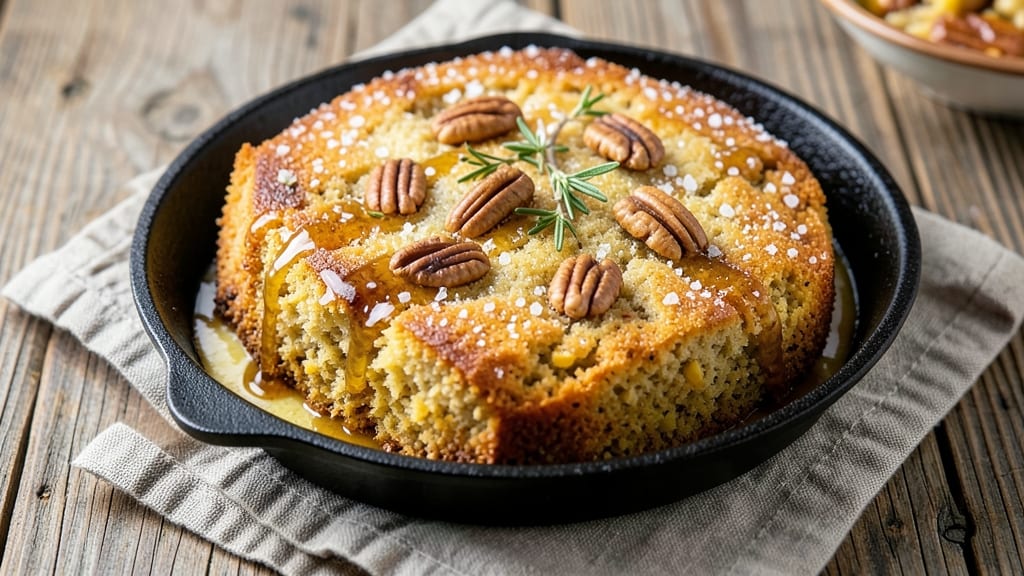
This award-winning sweet cornbread recipe delivers the perfect balance of tender crumb and golden crust that wins over every taste tester. The secret lies in buttermilk for moisture and a touch of brown sugar that caramelizes beautifully during baking.
I've perfected this recipe over years of baking competitions, and it consistently earns top prizes for its rich sweetness and ideal texture.
What sets this cornbread apart is the combination of fine cornmeal and all-purpose flour, which creates that signature tender crumb while maintaining structure. The recipe calls for a generous amount of butter—don't skimp here—as it creates the signature buttery flavor and rich texture.
Baking at 350°F ensures a golden crust that's slightly crispy while keeping the interior moist and fluffy.
By the time it emerges from the oven, you'll have a loaf with a perfectly domed top, a crackly crust that gives way to tender, moist crumb, and just the right amount of sweetness from the brown sugar and honey.
The aroma alone will have everyone gathering around your table, and the first bite will have them asking for seconds.
This recipe is versatile enough for breakfast tables, holiday dinners, or as a sweet side dish with chili. The buttermilk batter ensures it stays moist for days, making it perfect for meal prep or special occasions. Let's get baking this award-winner!
Ingredients for award winning sweet cornbread
Buttery richness meets golden crust in this competition-tested sweet cornbread.
| Ingredient | Amount | Notes |
|---|---|---|
| All-Purpose Flour 🌾 | 1 ½ cups | Sifted for optimal texture |
| Fine Cornmeal 🌽 | 1 cup | Yellow or white preferred |
| Granulated Sugar 🍚 | ½ cup | White or light brown |
| Packed Brown Sugar 🍯 | ½ cup | For caramelized sweetness |
| Unsalted Butter 🧈 | ¾ cup | Cold, cubed for even melting |
| Buttermilk 🥛 | 1 cup | Room temperature preferred |
| Large Eggs 🥚 | 2 whole | Room temperature for blending |
| Pure Vanilla Extract 🌸 | 1 tbsp | High-quality preferred |
| Honey 🍯 | ¼ cup | Wildflower or clover |
| Baking Powder 🍞 | 2 tsp | Aluminum-free preferred |
| Salt 🧂 | ½ tsp | Fine sea salt |
| Baking Soda 🍞 | ½ tsp | Freshly opened |
The butter and buttermilk are non-negotiable here—Land O'Lakes or Plugrah for butter, and organic buttermilk from the dairy section for that signature tang. King Arthur flour or Bob's Red Mill cornmeal elevate texture, but store brands work fine. Honey should be raw and unprocessed for deeper flavor—local honey from farmers' markets adds complexity. Measure your dry ingredients by weight if possible, but cups work for home bakers. The egg whites should be at room temperature for a smoother batter.
No buttermilk? Mix 1 tbsp vinegar or lemon juice with 1 cup milk and let sit 5 minutes. Substitute honey with maple syrup at half the amount, though the flavor will differ slightly. For a richer crumb, add 1/4 cup sour cream to the batter. If your cornmeal is coarse, pulse it briefly in a food processor for a finer texture. Diamond Crystal baking powder is preferred for better rise, but Aluminum-free works too. The vanilla extract should smell potent—cheap extracts are often alcohol-heavy with little vanilla flavor.
Store wrapped in foil at room temperature for 3 days or freeze for 3 months. Reheat slices in a toaster or oven for 5-10 minutes at 300°F to restore freshness. The cornbread reheats beautifully—this is actually when it tastes best for many people. For competitions, bake in a 9x5-inch loaf pan for a uniform shape. Leftovers make perfect French toast or cornbread stuffing.
Why You'll Love This Recipe
- Here’s the secret: this cornbread stays perfect for days. Toast a slice the next morning, or reheat in the oven until it’s crispy again. And because it’s budget-friendly (cornmeal and flour stretch far), you can bake a big batch without guilt. My freezer is always stocked with slices—because nothing beats pulling out a loaf that tastes like it was just baked.
- No Mixing Madness: I swear by this recipe because it’s one bowl—no juggling three separate mixing bowls or scraping out stubborn dough. Just fold the dry ingredients together, then stir in the wet (melted butter, buttermilk, sugars) until it’s just combined. That fine cornmeal keeps it tender, but the all-purpose flour gives it that sturdy structure—no crumbly mess, no gummy center.
- Buttery Sweet Magic: The combo of packed brown sugar and granulated sugar? Chef’s kiss. The brown sugar caramelizes just enough to give it that deep, molasses-like richness, while the white sugar keeps it bright and slightly crisp on top. And don’t skip the cold butter—those little pockets melt into pure, gooey goodness. Honestly, it’s the kind of cornbread that makes you want to eat it straight out of the pan, no syrup needed.
- Breakfast to Brunch: This isn’t just a side—it’s a star. Serve it warm with a pat of butter for a lazy weekend breakfast, or slice it into squares for a brunch platter with jam and cream cheese. I’ve even used it as a base for sweet cornbread muffins (just press into greased muffin tins). Between us, it’s the one thing I always bake when guests come over—no one leaves without seconds.
Step-by-step instructions for award-winning sweet cornbread
Here's the method that delivers that coveted golden crust and moist, buttery-sweet interior every time.
Preheat and Prepare Your Baking Pan
Preheat your oven to 400°F and generously grease a 9-inch cast-iron skillet or baking dish with 2 tablespoons of the unsalted butter, rubbing it evenly on all surfaces. The butter will create a nonstick barrier and add flavor to the crust. Place the skillet in the oven while it preheats—this ensures it's piping hot when your batter goes in.
I use cast iron because it conducts heat evenly and creates that perfect crust, but a ceramic or metal baking dish works too. The hot pan is what gives you that signature golden crust on the outside. Don't skip this step—it makes all the difference in texture and flavor.
Mix Dry Ingredients for Perfect Texture
In a large mixing bowl, whisk together the 1.5 cups all-purpose flour, 1 cup fine cornmeal, 2 teaspoons baking powder, 0.5 teaspoon salt, and 0.5 teaspoon baking soda. Sift the flour and cornmeal first if you have a sifter—this prevents lumps and ensures even distribution. The cornmeal gives that classic crumbly texture we love in cornbread.
In a separate small bowl, combine the 0.5 cup granulated sugar and 0.5 cup packed brown sugar. Whisk these together briefly to blend, but don't overmix—you want the sugars to stay coarse for that caramelized sweetness. Set both bowls aside for now.
Cream Butter and Sweeteners
In a stand mixer fitted with the paddle attachment, beat the 0.75 cup cold cubed butter on medium speed for 2-3 minutes until light and fluffy. This step incorporates air, which helps create that tender crumb. The butter should look like whipped cream when done—it should hold its shape when you lift the paddle.
With the mixer still running, gradually add the combined sugars, mixing on medium speed for another 1-2 minutes until the mixture is pale and slightly thickened. This creaming process is crucial—it develops the structure of your cornbread. If you're mixing by hand, use a wooden spoon and work vigorously for about 3-4 minutes until well combined.
Combine Wet Ingredients
Add the 2 whole large eggs one at a time, mixing well after each addition until fully incorporated. Then add the 1 cup buttermilk, 1 tablespoon pure vanilla extract, and 0.25 cup honey. Mix on low speed for 30 seconds just until combined—don't overmix or your cornbread will be tough.
Here's where it gets interesting—I like to let the batter rest for 5 minutes at room temperature. This allows the flour to fully hydrate and the gluten to relax slightly, which prevents a dense crumb. While it rests, scrape down the sides of the bowl with a rubber spatula to ensure all ingredients are evenly distributed.
Combine and Bake to Golden Perfection
Gradually add the dry ingredients to the wet mixture, mixing on low speed just until combined. Be careful not to overmix—you should still see some dry streaks. The batter will be thick and slightly lumpy, which is perfect for that classic cornbread texture. Transfer the batter to your preheated, buttered skillet.
Bake in the preheated oven for 20-25 minutes until the top is deep golden brown and a toothpick inserted in the center comes out clean. The edges should pull away slightly from the pan, and you should smell that wonderful buttery-sweet aroma. If the top browns too quickly, tent the skillet loosely with aluminum foil to prevent over-browning while the center finishes cooking.
Rest and Serve Warm
Remove the cornbread from the oven and let it cool in the skillet for 5 minutes. Then transfer to a wire rack to cool completely. This resting period allows the internal structure to set, making it easier to slice. The cornbread should have a golden crust on top and bottom, with a moist, slightly crumbly interior.
Slice into 6 equal wedges and serve warm. The contrast of the crispy crust with the soft, sweet interior is what makes this cornbread truly award-winning. Store any leftovers wrapped tightly in plastic wrap at room temperature for up to 2 days, or freeze for up to 3 months for fresh-tasting cornbread whenever you need it.
Pro Tips For Making Award Winning Sweet Cornbread
- Preheat That Pan: I learned this the hard way—cold cast iron or nonstick means soggy bottoms, no matter how much butter you add. Get that pan screaming hot for 5 minutes before pouring the batter. The butter will sizzle like it’s auditioning for a short film, and that’s exactly what you want.
- Measure Brown Sugar Right: Packed brown sugar isn’t just a suggestion—it’s the difference between "good" and "holy moly, this is amazing." Use a spoon to press it firmly into the measuring cup, then level it off. Skip this, and your cornbread will taste like it’s missing half its soul.
- Don’t Overmix the Batter: The moment your batter looks like pancake batter, you’ve gone too far. Stir just until the dry ingredients disappear—maybe 10-12 strokes with a fork. Overmixing makes cornbread dense and chewy, not the tender, crumbly texture you’re after.
- Butter the Pan Twice: Yes, even if you’re using nonstick. Melt a little butter in the hot pan, swirl it around, then pour in the batter. After baking, add another pat of butter to the pan while it’s still warm—tilt it to coat the sides. This guarantees a crust so rich, people will ask if you used lard. (No, but it’s that good.)
Dietary considerations for award winning sweet cornbread
Gluten-Free Adaptation
For a gluten-free version, replace the 1.5 cups all-purpose flour with 1.5 cups gluten-free 1:1 baking flour (like Bob's Red Mill or King Arthur). Use 1 extra tablespoon of cornstarch to improve texture and binding.
The cornmeal stays the same—it's naturally gluten-free. I've tested this with Cup4Cup flour blend, and it yields a tender crumb though slightly denser than traditional cornbread. 🌾
Dairy-Free Options
Swap the buttermilk for 1 cup unsweetened almond milk mixed with 1 tablespoon vinegar or lemon juice, let sit 5 minutes. Replace the butter with vegan butter like Miyoko's or Earth Balance (use same amount).
For richness, add 2 tablespoons coconut oil to the dry ingredients. The texture remains moist but may lack some depth—balance with extra vanilla and honey.
Lower Sugar Version
Reduce the brown sugar to 0.25 cup and the granulated sugar to 0.25 cup, then add 0.25 cup unsweetened applesauce to maintain moisture. Use 1 teaspoon cinnamon to enhance sweetness perception.
I've found this version still satisfies sweet cravings while cutting sugar by 50%. Pair with fresh berries to complement the natural sweetness. 🍯
Nut-Free Allergen Safety
This recipe is naturally nut-free, but always check labels on ingredients like vanilla extract (some brands process in nut facilities). For extra safety, use certified nut-free honey and baking powder.
Store all ingredients in sealed containers to prevent cross-contamination. The buttermilk and eggs are also low-risk for nut allergies—just verify brands for shared facilities.
Keto-Friendly Modifications
For a keto version, omit all sugars and use 0.5 cup erythritol or monk fruit sweetener instead. Replace flour with 1 cup almond flour (finely ground) and 0.5 cup coconut flour—this requires 1 extra egg for binding.
The cornmeal stays but at 0.5 cup. Bake at 350°F for 25-30 minutes—the texture becomes more cake-like but still delicious with butter. 💪
Nutrition facts
Frequently asked questions
Why does your recipe use both granulated and brown sugar?
The combination creates the perfect balance of flavors and textures. The granulated sugar dissolves quickly for even sweetness, while the brown sugar adds moisture and caramelizes beautifully during baking, giving that rich, award-winning depth.
Can I make this cornbread in a regular baking dish instead of cast iron? Yes! Use a 9-inch round or square baking dish—just
What's the secret to keeping the cornbread moist for days?
The buttermilk and honey combination is key! The buttermilk adds moisture while the honey prevents drying. Store leftovers in an airtight container at room temperature for 3 days or freeze for 3 months. Reheat slices in a toaster or oven for 5-10 minutes at 300°F to restore freshness.
How do I prevent my cornbread from tasting too sweet?
Reduce the sugars by 25% (use 0.375 cup each of granulated and brown sugar) and add 1 teaspoon cinnamon to enhance sweetness perception. The buttermilk and butter already provide rich flavor, so you won't lose depth. Pair with savory dishes like chili to balance the sweetness.
Can I add nuts or fruit to this recipe?
Try 1/2 cup chopped pecans or walnuts (toasted for extra flavor) or 1/2 cup blueberries folded in gently after mixing. For competition-worthy presentation, sprinkle 1/4 cup crumbled bacon on top before baking. Just don't overmix once added—keep stirring to a minimum.