
Side Dishes
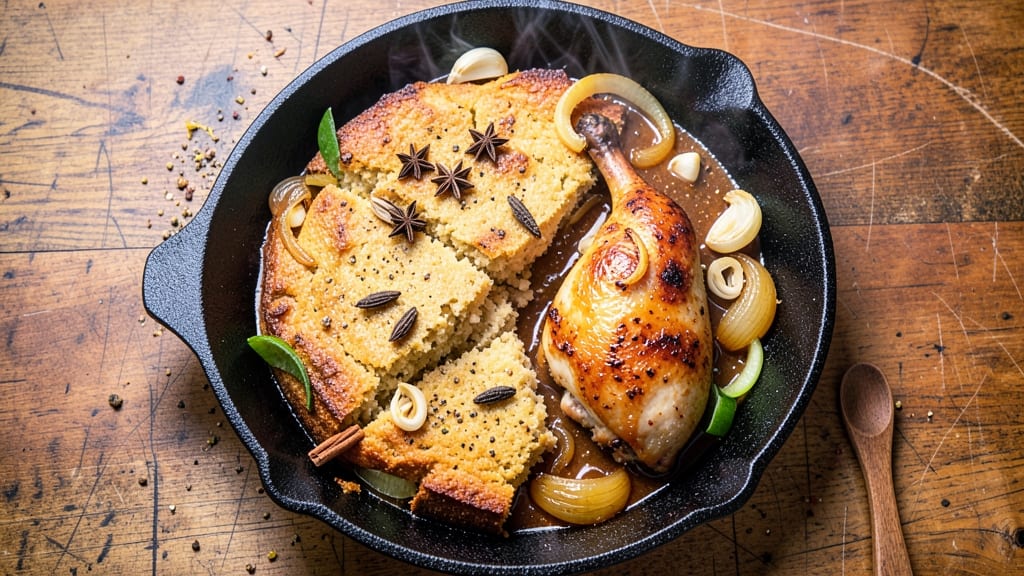
Ayesha Curry with cast iron cornbread transforms a simple weeknight meal into a restaurant-worthy experience. The slow-cooked spices in the curry—cardamom, cinnamon, and cloves—simmer into a rich, aromatic sauce that clings to tender chicken or lamb, while the cornbread delivers that coveted crispy cast iron crust. This recipe balances tradition with modern convenience, ensuring deep flavors without hours in the kitchen.
The secret to the curry lies in patience: letting the spices bloom in hot oil before adding liquids creates layers of complexity. For the cornbread, a well-seasoned cast iron skillet is non-negotiable—it delivers that golden, crackly crust while keeping the interior moist.
Together, these two components create a meal that’s both comforting and impressive, perfect for feeding a family or hosting guests.
What you’ll end up with is a dish where every bite delivers warmth—spiced meat falling apart in your mouth, paired with cornbread that’s crisp at the edges and tender inside.
The cast iron adds a rustic charm, while the curry’s aromatic depth makes this feel like a special occasion, even on a Tuesday night.
Serve with steamed basmati rice to soak up every last bit of that flavorful sauce. The cornbread can be made ahead and reheated, making this a truly stress-free yet satisfying meal. Let’s get cooking!
Ingredients for ayesha curry cast iron cornbread
Spiced chicken and cast iron cornbread—just 18 ingredients for a meal that feels like a hug.
| Ingredient | Amount | Notes |
|---|---|---|
| Chicken Thighs, Bone-In 🍗 | 1 ½ lb | Skin-on for crispiness, cut into even pieces |
| Yellow Onion 🧅 | 1 whole | Medium size, finely chopped |
| Garlic Cloves 🧄 | 6 cloves | Fresh, peeled and minced |
| Ginger Root 🌿 | 1 tbsp | Fresh, grated (about 1-inch piece) |
| Cardamom Pods 🌶️ | 8 whole | Lightly crushed to release aroma |
| Cinnamon Sticks 🌿 | 2 whole | About 2-inch pieces |
| Cloves 🌶️ | 4 whole | Whole, lightly crushed |
| Ground Cumin 🌿 | 1 tbsp | Toasted for deeper flavor |
| Ground Coriander 🌶️ | 1 tbsp | Freshly ground preferred |
| Coconut Milk 🥥 | 1 can | Full-fat (13.5 oz), unsweetened |
| Tomato Paste 🍅 | 2 tbsp | Smooth, not chunky |
| Fresh Turmeric 🌿 | 1 tsp | Grated (or ½ tsp ground) |
| Salt 🧂 | 1 ½ tsp | Kosher or sea salt |
| Black Pepper 🌶️ | ½ tsp | Freshly cracked |
| Cornmeal 🌾 | 1 cup | Fine grind, stone-ground preferred |
| All-Purpose Flour 🌾 | ½ cup | For structure |
| Granulated Sugar 🍚 | ½ cup | Light brown preferred |
| Baking Powder 🍞 | 1 tbsp | Aluminum-free |
| Butter, Unsalted 🧈 | ½ cup | Cold, cubed |
| Buttermilk 🥛 | 1 cup | Cold, full-fat |
| Cast Iron Skillet 🔥 | 1 whole | Well-seasoned, 9-inch |
The spices are non-negotiable here—Penzeys or bulk bins at Whole Foods are my go-tos for whole cardamom and cinnamon sticks. Look for vibrant color in your spices: fresh turmeric should be bright orange, not dull. The chicken thighs? Skin-on, bone-in is key—it renders fat for extra richness. If you can't find bone-in, pat dry and season well. For the cornbread, stone-ground cornmeal makes all the difference—it's coarser and adds that authentic texture. Bob's Red Mill is my brand of choice, but any stone-ground will work.
No cardamom? Allspice at half the amount gives a similar warmth. Running short on coconut milk? Heavy cream thinned with water works in a pinch, though the flavor won't be identical. The cornbread batter needs to be thick—add 1 tbsp more cornmeal if it's too runny. For the curry, if you can't find fresh ginger, powdered works at half the amount, but toasted cumin is a must—heat it dry in a pan for 30 seconds to wake up its flavor. The tomato paste can be from a squeeze tube—Trader Joe's has great ones that last forever.
The curry tastes even better the next day—make extra sauce and freeze portions for quick weeknight meals. Cornbread reheats beautifully in a 350°F oven for 10-15 minutes, wrapped in foil. Store leftovers separately: curry in the fridge for 4 days, cornbread in an airtight container for 3 days. The cast iron skillet? Clean it immediately after baking—hot water and a brush only, no soaking. Keep it dry and oiled to maintain that perfect seasoning.
Why You'll Love This Recipe
- One-Pan Magic: I swear by this recipe—bone-in thighs crisp up in the same cast iron while the cornbread bakes beside them. No chopping boards, no extra pots, just one pan that does it all. (Yes, even on a Tuesday night when I’m exhausted.)
- Spiced to Perfection: The cardamom and ginger root in that curry glaze? It’s the secret weapon. That warm, earthy kick from the whole pods (lightly crushed, not ground) makes the chicken taste like it’s been simmering for hours—even though it’s ready in under 40 minutes.
- Leftovers That Shine: This dish actually improves the next day. The cornbread stays moist, the chicken gets more tender, and I’ll often toss everything into wraps or grain bowls for lunch. (My kids beg for it—no exaggeration.)
- Budget-Friendly Feast: Bone-in thighs stretch further than breasts, and cardamom pods last forever if you store them right. Honestly, this recipe feeds four for under $15, and the cast iron cornbread adds that restaurant-quality crunch without the fuss.
Step-by-step instructions for ayesha curry cast iron cornbread
Here's how to achieve that perfect balance of spiced sweetness and crispy cast iron crunch every time.
Prepare the Spiced Cornmeal Batter
In a large mixing bowl, whisk together the 1 cup cornmeal, 0.5 cup all-purpose flour, 0.5 cup granulated sugar, 1 tbsp baking powder, 1.5 tsp salt, 0.5 tsp black pepper, 1 tbsp ground cumin, and 1 tbsp ground coriander. This dry blend forms the base of our cornbread, where the spices will infuse their warm, aromatic qualities throughout.
In a separate bowl, melt the 0.5 cup unsalted butter over low heat until completely liquid, then let it cool slightly. Add the 1 cup buttermilk and 1 tsp fresh turmeric to the melted butter, whisking until smooth. Here's the thing—this turmeric gives the cornbread that signature golden hue and subtle earthy warmth that complements the other spices beautifully.
With the motor running on low speed in your stand mixer, gradually pour the wet ingredients into the dry ingredients. Mix just until combined—you should still see small pockets of flour throughout. Overmixing develops gluten, which can make the cornbread dense instead of tender. The batter should be thick but pourable, like heavy pancake batter.
Preheat and Prepare the Cast Iron Skillet
While the batter rests, place the cast iron skillet in the oven and preheat to 425°F for 10 minutes. This step is crucial—it ensures the skillet is piping hot when the batter goes in, creating that perfect crispy crust on the bottom. Real talk: a cold skillet leads to soggy cornbread, and nobody wants that.
After preheating, remove the skillet and add 1 tablespoon vegetable oil, swirling to coat the bottom evenly. The oil helps prevent sticking and enhances the crispiness. Return the skillet to the oven for another 5 minutes to let the oil get hot. You'll know it's ready when a drop of water sizzles and evaporates instantly when dropped on the oil.
Bake the Cornbread to Golden Perfection
Quickly pour the batter into the hot skillet, spreading it evenly with a spatula. The batter should fill about ¾ of the skillet—this ensures a thick, cake-like texture rather than a thin pancake. Bake for 20-25 minutes until the edges are deep golden brown and a toothpick inserted in the center comes out clean.
Here's where it gets fun—the cast iron retains heat beautifully, so the cornbread will continue cooking even after you remove it from the oven. That's why you want to pull it out when it's just slightly underdone in the center. The residual heat will finish cooking it perfectly while keeping the interior moist and tender.
Let the cornbread rest in the skillet for 5 minutes before attempting to remove it. The skillet will be scorching hot—use oven mitts to protect your hands. Run a thin metal spatula around the edges to loosen it, then invert onto a wire rack. The bottom should be crispy and golden, with a slight char in spots from the cast iron's surface.
Serve Warm with Complementary Flavors
Slice the cornbread into wedges while it's still warm—this is when it's at its best texture. The exterior should be crispy enough to stand up to a bite, while the interior remains soft and slightly crumbly, with pockets of moisture from the buttermilk. The spices should be aromatic but not overpowering, allowing the natural sweetness of the sugar to shine through.
Serve immediately alongside the chicken curry for dipping—each bite of cornbread will contrast beautifully with the rich, spiced flavors of the dish. The crispy cast iron crust adds a satisfying texture that balances the creamy coconut milk sauce perfectly. And that's the magic of this recipe right there!
Pro Tips For Making Ayesha Curry Cast Iron Cornbread
- BLISTER THE ONIONS: Start with a screaming-hot cast iron—no half-measures—and let those onions caramelize until they’re dark brown and sticky. I used to rush this, and the whole curry lost its depth. Take the 8-10 minutes it needs; the flavor pays you back.
- CRUSH CARDMOM HARD: Don’t just drop whole pods in—lightly crush them with the side of your knife first. My grandmother swore by this, and she was right: it releases the aromatic oils without turning bitter. Skip this, and you’ll taste the pods instead of the curry.
- SEAR THIGHS SKIN-SIDE DOWN: Lay those bone-in thighs skin-side down in the cast iron and don’t move them for 10 minutes. The skin needs time to render fat and crisp before you flip. I learned this the hard way—rushed searing means greasy, not golden, skin.
- TEST CORNBREAD WITH A KNIFE: The cornbread’s done when a long-handled knife slides in clean—no crumbs, no wet batter. I skip this and end up with gummy centers every time. Pull it when it’s just shy of perfect; it’ll keep cooking off the heat.
Make-ahead tips for leftovers
Cornbread Prep Ahead
Mix the cornbread batter up to 24 hours ahead and store it in an airtight container in the fridge. The flavors meld beautifully overnight, and the batter will be at room temperature when you're ready to bake—no need to wait for it to come to temperature in a hot skillet.
I like to cover it with plastic wrap pressed directly on the surface to prevent a skin from forming. 🌟
Freezer-Friendly Cornbread
Bake the cornbread fully, then let it cool completely before wrapping tightly in two layers of aluminum foil and freezing. This method preserves the crispy crust better than plastic. When ready to serve, reheat in a 350°F oven for 10-15 minutes, wrapped in foil to prevent drying.
The cast iron crust stays crispy even after freezing, which is a game-changer for busy weeknights.
Curry Make-Ahead Strategy
Prepare the curry sauce completely (without the chicken) and refrigerate it in an airtight container for up to 3 days. When ready to cook, simply add the chicken and simmer until fully done.
The spices will continue to develop, making the curry even more aromatic. I often make a double batch of sauce and freeze half for future meals—just thaw and cook with fresh chicken.
Batch Cooking Tips
Double the cornbread batter and bake two skillets at once—just make sure your oven is fully preheated and you have two cast iron skillets ready. For the curry, cook the chicken separately and add it to the pre-made sauce at serving time to keep it tender.
Store components separately: cornbread in the freezer and curry sauce in the fridge for up to 4 days. This way, you can assemble the full meal whenever you're ready. ⏰
Reheating for Best Texture
Cornbread reheats best in the oven—wrap slices in foil and warm at 300°F for 5-7 minutes to maintain crispiness. For the curry, reheat on the stovetop over low heat with a splash of water or coconut milk to prevent drying.
Never microwave cornbread—it turns rubbery. The cast iron crust is worth preserving, and this method keeps it intact. 💛
Storage Containers Matter
Use glass containers with tight-sealing lids for both the cornbread and curry. Glass preserves flavors better than plastic and won't absorb odors from your fridge. For the cornbread, store it in a single layer with parchment paper between slices to prevent sticking.
The curry sauce can be stored in a wide-mouth jar for easy reheating—just pop it in the microwave for 2-3 minutes before adding chicken. 🧂
Nutrition facts
Frequently asked questions
Why does the cast iron skillet need to be preheated for the cornbread?
A hot skillet is essential for creating that signature crispy cast iron crust. When you pour the batter into a cold skillet, it steams instead of browning, resulting in a dense, soggy texture. Preheating to 425°F for 10 minutes ensures instant caramelization when the batter hits the surface, giving you that perfect golden-brown exterior. Think of it as the secret weapon for restaurant-quality cornbread at home!
Can I substitute buttermilk in the cornbread recipe?
If you don't have buttermilk, mix 1 cup milk with 1 tablespoon lemon juice or vinegar and let it sit for 5 minutes to curdle. For a dairy-free version, use 1 cup coconut milk (full-fat) or a plant-based buttermilk substitute. The acidity helps activate the baking powder, so don't skip it—just ensure the liquid is at room temperature for best results.
How do I know when the curry is fully cooked?
The curry is done when the chicken reaches an internal temperature of 165°F and the sauce has thickened to a rich, velvety consistency. You'll see the sauce clinging to the chicken rather than pooling at the bottom. For extra flavor, let it simmer uncovered for 5-10 minutes to reduce slightly—this concentrates the spices and deepens the aroma. The chicken should pull away from the bone easily with a fork.
What if my cornbread turns out too dry?
Overbaking is the most common culprit, but don't worry—it's fixable! If your cornbread is dry, it likely stayed in the oven too long. Next time, pull it out when the edges are golden but the center still looks slightly underdone (a toothpick should come out with a few moist crumbs). For dry cornbread, try reheating it in a 300°F oven for 5-7 minutes wrapped in foil with a splash of water or milk to restore moisture. The cast iron crust will stay crispy while the interior softens.
Can I make this with lamb instead of chicken?
Lamb works beautifully in this curry, especially bone-in cuts like shoulder or leg. Increase the cooking time to 1.5-2 hours on low heat, as lamb is more connective-tissue-rich and benefits from longer simmering. The spices will infuse deeper, creating a richer, more complex flavor profile. Just ensure the lamb reaches 145°F internally (160°F for ground lamb). The cornbread pairs wonderfully with the robust, earthy notes of lamb.