
Side Dishes
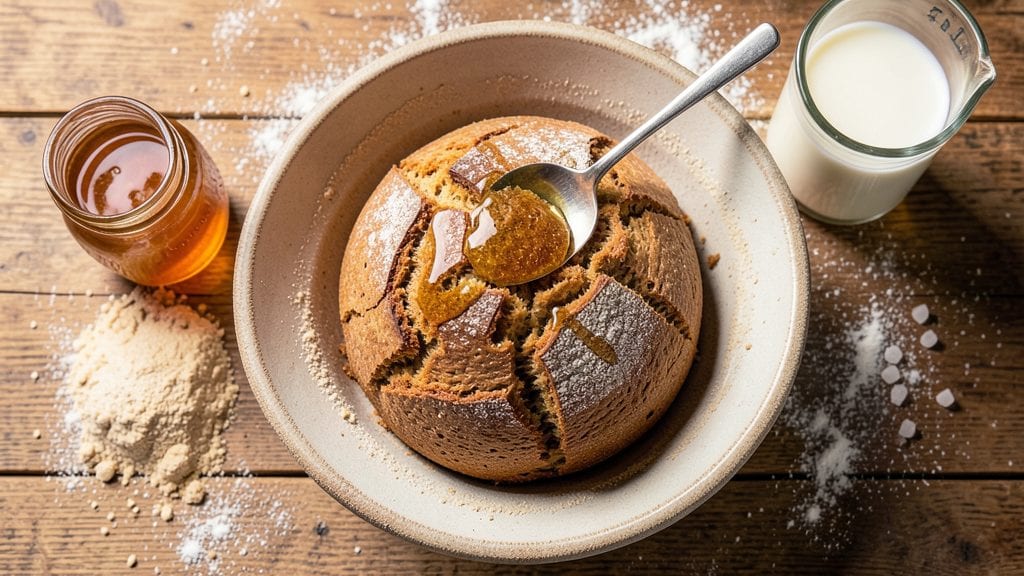
This basic brown bread recipe delivers the comforting warmth of homemade bread with a rustic crust and tender, whole-grain interior—perfect for sandwiches, toast, or serving alongside soups. The secret lies in balancing whole wheat flour with all-purpose for structure while keeping the process simple enough for beginners.
I’ve baked this version countless times, adjusting the ratios until I achieved that ideal crust color and moist crumb without compromising texture.
The dough comes together in 15 minutes with just five ingredients: whole wheat flour, all-purpose flour, honey, milk, and a pinch of salt. Unlike dense whole-grain loaves, this recipe maintains a light, airy crumb by incorporating a small amount of bread flour for elasticity.
Proofing in a warm spot for 1 to 1½ hours ensures a rise without overproofing, and baking at 375°F for 30 to 35 minutes yields a golden crust with a soft interior that stays fresh for days.
What sets this bread apart is its versatility—use it for classic toast, French toast, or as a base for grilled cheese. The honey adds subtle sweetness that balances the earthy whole wheat, while the milk keeps the crumb tender.
For extra richness, brush the crust with melted butter after baking. This recipe builds confidence in homemade bread without requiring sourdough starters or complex techniques.
Once baked, let the loaf cool on a wire rack before slicing to preserve its texture. Store wrapped at room temperature for up to 3 days or freeze for longer storage. The aroma alone will transform any meal into a cozy, homemade experience. Ready to bake?
Ingredients for basic brown bread
Five core ingredients transform into rustic brown bread with a tender crumb and golden crust.
| Ingredient | Amount | Notes |
|---|---|---|
| Whole Wheat Flour 🌾 | 2 cups | Lightly packed, not sifted |
| All-Purpose Flour 🌾 | 1 cup | Standard white flour |
| Bread Flour 🌾 | ½ cup | For improved elasticity |
| Honey 🍯 | ¼ cup | Pure, liquid consistency |
| Whole Milk 🥛 | ¾ cup | Room temperature preferred |
| Diamond Crystal Kosher Salt 🧂 | 1 tsp | Fine grain preferred |
| Active Dry Yeast 🍞 | ¼ tsp | Freshness date checked |
| Unsalted Butter 🧈 | 2 tbsp | Melted, for crust brushing |
| Water 💧 | ¼ cup | Warm, 110°F |
The flour blend is critical—King Arthur whole wheat flour delivers the best texture, but any quality brand works. Bob's Red Mill is a solid budget option if you're avoiding specialty stores. Avoid pre-sifted flours; lightly spooning and leveling the cups ensures consistent volume. The bread flour adds structure without heaviness, while the honey should be pure with no added fillers. Local honey adds subtle floral notes, but any liquid honey will work. Proof your yeast in the warm water first to ensure it's active—it should foam within 5 minutes.
No honey? Maple syrup works at a 1:1 ratio, though it adds deeper sweetness. Short on bread flour? All-purpose flour plus 1 tsp vital wheat gluten mimics its protein structure. The milk can be substituted with buttermilk or plain yogurt for tang, but adjust to 0.75 cup total. For a lighter crumb, some bakers add 1 tsp baking soda but omit the yeast entirely. If using salted butter for brushing, reduce the kosher salt to 0.75 tsp to avoid over-salting. Always weigh your flours if possible—cups vary by brand.
Store the loaf wrapped in a clean kitchen towel at room temperature for up to 3 days to maintain freshness. For longer storage, slice and freeze portions on a tray before transferring to a bag—3 months of crispy toast awaits. The crust stays crisp for 24 hours if wrapped tightly in foil. To revive stale slices, warm in a 350°F oven for 5-7 minutes with a damp paper towel. This bread freezes beautifully at any stage—even unbaked dough, wrapped tightly, keeps for 3 months.
Why You'll Love This Recipe
- No-Fuss Mixing: I swear by this dough—just stir, knead for three minutes (yes, really), and let the yeast do the work. The combo of whole wheat and bread flour gives it that perfect chew without requiring fancy techniques.
- Honey’s Secret Boost: That drizzle of honey isn’t just sweet—it caramelizes in the oven, giving the crust a golden crunch and the crumb a subtle depth. Trust me, it’s the little detail that makes it taste premium.
- Weeknight Workhorse: Slice it for toast, cube it for salads, or pack it for lunches—this bread handles it all. Between us, I’ve even used it to sop up leftover chili when I forgot to make rice. (Don’t judge.)
- Budget-Friendly Staple: Whole milk and basic flours mean this costs pennies per loaf, yet it feels like a bakery buy. Honestly, I make two loaves every Sunday—one for the week, one for the freezer—because it’s that reliable.
Step-by-step instructions for rustic whole-grain bread
A methodical approach yields a loaf with a crisp exterior and tender crumb—every detail matters.
Activate the Yeast and Prepare the Dough Base
In a small bowl, combine the 0.25 cup warm water (110°F), 0.25 cup honey, and 0.25 tsp active dry yeast. Let this mixture sit for 5-7 minutes until it becomes foamy and bubbly—this confirms the yeast is active. If it doesn’t bubble, your yeast may be stale, and you’ll need to start over.
In a large mixing bowl, whisk together the 2 cups whole wheat flour, 1 cup all-purpose flour, 0.5 cup bread flour, and 1 tsp diamond crystal kosher salt. Create a well in the center and pour in the yeast mixture. Use a wooden spoon to gradually incorporate the dry ingredients, stirring until a shaggy dough forms. The texture should be sticky but manageable—this is intentional for a moist, hearty loaf.
Develop the Dough Through Kneading
Turn the dough onto a lightly floured surface and knead for 8-10 minutes using a rhythmic motion—push, fold, and turn the dough while pulling it toward you. You’ll know it’s ready when it springs back slowly when poked and feels smooth but slightly tacky. Avoid over-kneading, which can toughen the bread.
Return the dough to the bowl, cover it tightly with a damp towel, and let it rise in a warm place for 1-1.5 hours until it doubles in size. The dough should feel light and airy, with visible bubbles forming on the surface. If it rises too quickly, the oven may be too warm—adjust accordingly.
Shape and Proof the Dough for Structure
Gently deflate the dough by pressing it down with your fist, then shape it into a round loaf. Place it in a lightly greased 9x5-inch loaf pan, seam-side up, and cover it again with the damp towel. Let it proof for an additional 30-45 minutes until it rises just above the pan’s rim. The dough should feel firm but still yield slightly when pressed.
Preheat your oven to 375°F while the dough proofs. Brush the top of the loaf with the 2 tbsp melted unsalted butter, then sprinkle lightly with a pinch of diamond crystal kosher salt for added flavor and crust color. This step ensures a golden, crisp exterior while keeping the interior moist.
Bake to Golden Perfection
Bake the loaf for 45-50 minutes until the top is deep golden brown and an instant-read thermometer inserted into the center reads 190-195°F. The bread should sound hollow when tapped on the bottom—this indicates it’s fully baked. If the top browns too quickly, tent it loosely with foil to prevent over-browning.
Remove the loaf from the pan immediately and transfer it to a wire rack to cool completely. Resist the urge to slice it while warm—this ensures clean cuts and prevents a gummy texture. Once fully cooled, slice with a serrated knife for a rustic, hearty loaf with a crisp crust and tender crumb.
Pro Tips For Making Basic Brown Bread
- Mix Flours First: Dump the whole wheat and all-purpose flours together before adding bread flour—this keeps the dense whole wheat from weighing down the lighter bread flour. I used to add them in layers and ended up with a dough that felt like it was fighting itself.
- Warm the Milk: Heat the whole milk to just under body temperature (about 100°F) before mixing it with the honey and yeast—this helps the yeast activate faster and prevents a sluggish rise. Cold milk makes the dough take forever, and nobody has time for that.
- Avoid Over-Kneading: Stop kneading once the dough springs back slowly when poked—overworking it turns whole wheat dough gummy. I learned this after making a batch that tasted like chewy rubber, and now I count to 10 before deciding it’s done.
- Proof in a Drawer: Let the dough rise in a lightly greased drawer (or a bowl with a damp towel) instead of the fridge—it’ll double faster in 1–2 hours at room temp. The fridge slows things down, and if you’re in a hurry, this cuts proofing time in half.
Regional styles of this recipe
Southern U.S. Sweet Potato Brown Bread
In the American South, brown bread often incorporates grated sweet potatoes for natural sweetness and moisture. Replace ½ cup of the whole wheat flour with ½ cup grated raw sweet potato (about 1 small potato) and reduce the honey to ¼ cup.
The sweet potato adds natural sugars that caramelize beautifully in the crust, creating a deeper golden color. I like to mix in 1 tsp cinnamon and ½ tsp nutmeg for warmth—this version pairs perfectly with chili or BBQ. 🌶️
Irish Soda Bread Variation
For a traditional Irish-style brown bread, skip the yeast entirely and replace it with 1 tsp baking soda. Increase the whole wheat flour to 2½ cups and add ½ cup buttermilk (or plain yogurt) to the wet ingredients.
This no-knead bread bakes in 35-40 minutes at 375°F for a dense, hearty loaf. Cut with a sharp knife while still warm for that classic cross pattern. The tangy buttermilk balances the earthy whole wheat beautifully.
German Pumpernickel Style
To create a denser, darker loaf inspired by German pumpernickel, replace the all-purpose flour with 1 cup rye flour and add 1 tbsp molasses to the honey mixture. Reduce the bread flour to ¼ cup and increase the whole wheat flour to 2¼ cups.
Bake in a 9x5-inch loaf pan for 50-55 minutes at 350°F—the lower temperature ensures slow baking for maximum flavor development. This version has a deep, molasses-rich taste perfect with strong cheeses or smoked meats.
Italian Rustic Focaccia Twist
For an Italian-inspired take, shape the dough into a 9x13-inch rectangle on a parchment-lined baking sheet instead of a loaf pan. Dimple the top with your fingers and drizzle with 2 tbsp olive oil before baking.
Add ½ cup cherry tomatoes (halved) and ¼ cup kalamata olives during the final 10 minutes of baking at 400°F. This focaccia-style bread has a crisp crust and olive oil-infused richness that pairs wonderfully with soups or as a side for grilled meats. 🍅
Swedish Cardamom Brown Bread
In Sweden, brown bread often includes cardamom for a fragrant twist. Add 1 tsp ground cardamom to the dry ingredients and replace ¼ cup of the honey with ¼ cup maple syrup for a deeper flavor. The cardamom's citrusy notes complement the whole wheat beautifully.
Bake as directed, but brush the crust with 1 tbsp melted butter mixed with ½ tsp cardamom after removing from the oven for an aromatic finish. This version shines with herring or smoked salmon.
Mexican Corn and Wheat Fusion
For a Mexican-inspired fusion, replace ½ cup of the whole wheat flour with ½ cup masa harina (corn flour) and add ¼ cup corn kernels to the dough. Mix in ½ tsp cumin and ¼ tsp smoked paprika for depth.
Shape into a round loaf and bake in a 9-inch cast-iron skillet for 35-40 minutes at 375°F. The corn adds a subtle sweetness and texture contrast, while the spices give it a smoky, earthy profile. Serve warm with black beans or as a base for quesadillas.
Nutrition facts
Frequently asked questions
Why does my brown bread turn out dense instead of light?
The most common cause is over-kneading or underproofing. Whole wheat flour absorbs more liquid, so knead just until the dough springs back slowly (8-10 minutes). Also, ensure your yeast is active and proof the dough in a warm spot (75-80°F) until it doubles (1-1.5 hours). For extra lightness, add 1 tsp baking soda to the dough.
Can I substitute whole wheat flour with another type?
Yes, but texture may change. For a lighter loaf, replace ½ cup whole wheat flour with ½ cup all-purpose flour. For a denser, nuttier bread, use ½ cup rye flour. Avoid gluten-free flours—they lack the structure for this recipe. If substituting, reduce honey slightly (¼ cup) to balance sweetness.
How do I fix a loaf that’s too sour or yeasty?
Overproofing causes a sour, yeasty flavor. Next time, reduce proofing time to 45-60 minutes and check dough temperature (75-80°F). For immediate fixes, mix 1 tsp baking soda with 1 tbsp water and spread on the crust before baking to neutralize acidity. Brush with extra honey or butter afterward to mask flavors.
What’s the best way to store brown bread to keep it fresh?
Wrap the cooled loaf in a clean kitchen towel or beeswax wrap, then place in a paper bag at room temperature for 3 days. For longer storage, slice and freeze portions on a tray before transferring to a bag (3 months). To revive stale slices, warm at 350°F for 5-7 minutes with a damp paper towel for crispiness.
Can I make this bread without a loaf pan?
Shape the dough into a round boule or batard and bake on a parchment-lined sheet at 375°F for 30-35 minutes. For extra crust, score the top with a razor before baking. Alternatively, use a 9-inch cast-iron skillet for a rustic, crusty loaf. Brush with melted butter and sprinkle with coarse salt after baking.