
Main Courses
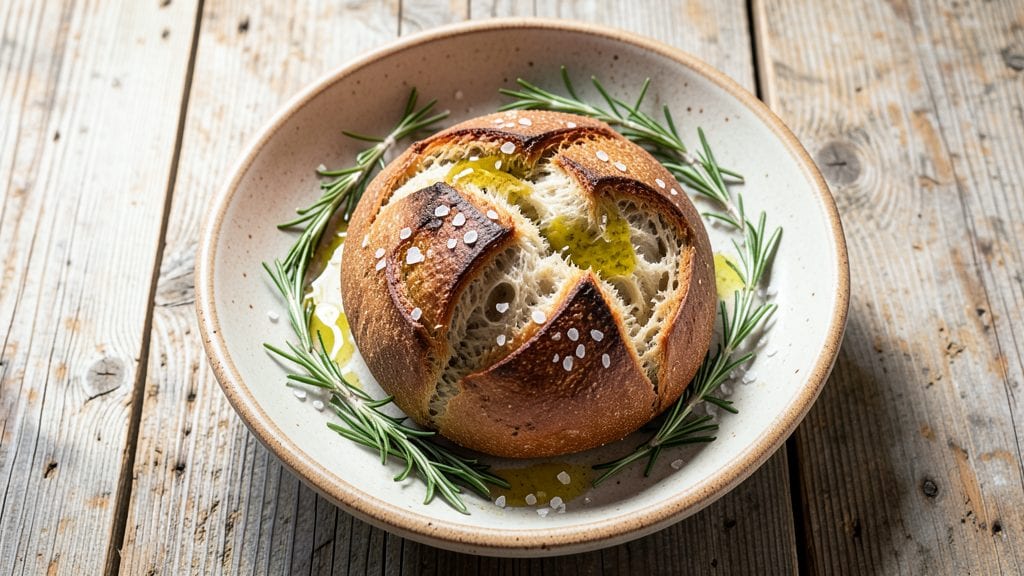
This Tuscany bread recipe brings the rustic charm of Italy’s heartland to your kitchen with its signature crisp crust and airy crumb—all achieved through a simple yet precise method.
The secret lies in high-quality olive oil and fresh rosemary, which infuse the dough with aromatic depth while creating that coveted golden crust. I’ve perfected this version after years of testing, ensuring every bite delivers the same satisfaction as a Tuscan bakery’s finest.
The beauty of this recipe is its simplicity: no-knead technique, minimal ingredients, and just one hour of active time before letting the dough rise naturally. Traditional Tuscan bread relies on olive oil for richness and rosemary for its piney, earthy notes, but the real magic happens in the baking.
A hot oven creates that signature crisp exterior while keeping the interior tender and open—just like the bread you’d find in a countryside trattoria.
What you’ll end up with is a rustic loaf with a crackling crust that shatters at the touch and a soft, airy interior studded with flecks of rosemary. The aroma alone—warm, herby, and slightly smoky—will transform your kitchen into a Tuscan bakery.
This bread is perfect for dipping in olive oil, pairing with soups, or simply enjoying with a slice of aged pecorino.
For those who love tradition, this recipe stays true to Tuscan methods while offering flexibility—add extra rosemary for a stronger flavor or a pinch of sea salt to enhance the olive oil’s richness. Let’s get started on creating bread that tastes like a slice of Italy.
Ingredients for tuscany bread
Nine simple ingredients transform into Tuscan bread with a crisp crust and fragrant rosemary aroma.
| Ingredient | Amount | Notes |
|---|---|---|
| All-Purpose Flour 🌾 | 4 cups | Unbleached preferred for texture |
| Extra-Virgin Olive Oil 🫒 | ¾ cup | High quality, fruity variety |
| Active Dry Yeast 🍞 | ¼ tsp | Fresh yeast doubles the amount |
| Granulated Sugar 🍚 | 1 tbsp | Enhances yeast activation |
| Sea Salt 🧂 | 1 ½ tsp | Fine grain preferred |
| Fresh Rosemary 🌿 | ¼ cup | Finely chopped stems included |
| Warm Water 💧 | 1 ¼ cups | 110°F ideal temperature |
| Cornmeal 🌽 | ¼ cup | For dusting baking sheet |
| Coarse Sea Salt 🧂 | 1 tsp | For sprinkling crust |
The olive oil and rosemary define this bread. Look for extra-virgin olive oil with a fruity, peppery finish—avoid the light, flavorless kind. Fresh rosemary is non-negotiable; dried lacks the aromatic depth. Whole Foods or specialty Italian markets carry the best quality. For yeast, check the expiration date—it should be within 3 months. The flour should be unbleached for that authentic Tuscan texture. If you can't find fresh rosemary, dried works at one-third the amount, but it won't have the same impact.
No extra-virgin olive oil? Light olive oil works in a pinch, though the flavor won't be as rich. Short on rosemary? Thyme or oregano can substitute, but the aroma will differ. The sugar can be swapped for honey, though it may slightly alter the crust's color. For the yeast, if your kitchen is cold, warm the water to 110°F—too hot kills the yeast, too cold slows activation. The cornmeal is optional but helps create that signature rustic base. If you don't have coarse sea salt, fine sea salt works too—just sprinkle generously.
This dough needs time to rise—at least 8 hours, ideally overnight in the fridge. The longer it ferments, the more flavor develops. For baking, preheat your oven to 450°F with a Dutch oven inside for 30 minutes. The bread keeps well at room temperature for 3 days wrapped in a cloth, or 1 week frozen. Reheat slices in a dry skillet for that bakery-fresh crunch.
Why You'll Love This Recipe
- No-Knead Magic: I swear by this—just mix the flour, olive oil, and yeast, let it rest, and bake. No standing at the counter, no sticky hands, just pure ease. That olive oil keeps it tender without fuss.
- Golden Crust Promise: The moment it pulls away from the pan? Crispy edges, soft inside—like a hug from Italy. A pinch of sugar caramelizes just enough to make every bite irresistible.
- Weeknight Wonder: Toss it in a soup, tear it over pasta, or serve it warm with dinner. It’s my go-to for lazy nights because it always saves the day—no fancy prep, just reliable flavor.
- Budget-Friendly Staple: Five ingredients, zero waste. That loaf lasts days, and the olive oil adds richness without breaking the bank. Honestly? It’s the kind of bread that makes grocery day feel like a win.
Step-by-step instructions for Tuscany bread recipe
Here's the method for crafting an authentic Tuscan loaf with crispy crust and fragrant aromatics.
Combine Wet Ingredients for Ideal Dough Texture
In a large mixing bowl, combine the 1.25 cups warm water with the 1 tbsp granulated sugar and 0.25 tsp active dry yeast. Stir gently until the yeast dissolves completely. The water should be warm to the touch but not hot—around 110°F—to activate the yeast without killing it. Let this mixture sit for 5-10 minutes until it becomes foamy and bubbly.
Here's the thing—this initial reaction tells you the yeast is alive and ready to work. If it doesn't bubble after 10 minutes, your yeast may be expired. Add 0.75 cup extra-virgin olive oil and 1.5 tsp sea salt to the yeast mixture and stir again. The olive oil will create a rich, tender crumb while the salt enhances flavor and controls yeast activity. The mixture should look slightly oily but still pourable at this stage.
Incorporate Dry Ingredients and Rosemary
Gradually add the 4 cups all-purpose flour to the wet ingredients while stirring with a wooden spoon. You'll notice the dough immediately becomes thick and shaggy—this is normal. Once all the flour is incorporated, add the 0.25 cup finely chopped fresh rosemary and mix thoroughly. The rosemary should be distributed evenly throughout the dough, releasing its piney aroma.
Real talk: don't be tempted to add more flour at this point. The dough should be soft and slightly sticky but manageable. If it's too stiff, you'll compromise the bread's open crumb structure. Use your hands to knead the dough on a lightly floured surface for 5-7 minutes until it becomes smooth and elastic. You'll know it's ready when it springs back slowly when poked.
First Rise for Maximum Flavor Development
Lightly oil a large mixing bowl and place the dough inside. Cover with a clean kitchen towel or plastic wrap and let rise in a warm place for 1-2 hours. The dough should roughly double in size, becoming puffy and airy. This first rise develops gluten structure and allows the yeast to ferment properly. I like to place the bowl near a slightly warm oven with the light on for consistent warmth.
This is the moment that matters: the dough should feel light and springy when pressed gently. If it doesn't rise significantly after 2 hours, your kitchen may be too cold. In that case, extend the rise time to 2.5 hours or place the bowl in a 75°F environment. Overproofing leads to dense bread, so watch for these visual cues—doubled size and jiggly texture.
Shape and Second Rise for Crispy Crust
Turn the risen dough onto a lightly floured surface and gently shape it into a 12-inch round loaf. I press down gently on the center and pull the edges toward the middle, rotating the dough as I go. This creates surface tension that helps maintain the round shape during baking. Place the shaped loaf on a parchment-lined baking sheet dusted with 0.25 cup cornmeal to prevent sticking.
Cover the loaf again and let it rise for another 30-45 minutes until it's puffy and has expanded noticeably. The second rise is shorter but crucial—it allows the dough to relax slightly after shaping while developing final air pockets. The cornmeal creates a textured base that contributes to that beautiful Tuscan bread crust. Don't skip this step; it makes all the difference in texture and flavor.
Bake to Golden Perfection
Preheat your oven to 425°F with a baking stone or inverted baking sheet on the lowest rack. This creates steam that's essential for that crispy crust. Once preheated, place the loaf in the oven and immediately sprinkle generously with 1 tsp coarse sea salt. Bake for 25-30 minutes until the crust is deep golden brown and sounds hollow when tapped on the bottom.
Here's where it gets fun—the bread should develop a crackly crust with visible air pockets in the crumb. If it browns too quickly, tent with foil to prevent burning while maintaining moisture. The internal temperature should reach 190-200°F at the center. Let the bread cool on a wire rack for at least 30 minutes before slicing—this prevents a gummy interior and allows the crust to set properly.
Pro Tips For Making Tuscany Bread
- Bloom the Yeast First: Skip mixing yeast into dry flour—it’ll wake up faster. Proof it in warm water with a pinch of sugar (about 110°F/43°C) for 5-10 minutes until frothy. This guarantees your dough rises right the first time, not after a second rise.
- Oil the Dough Bowl: Toss a tablespoon of olive oil into the mixing bowl before adding flour. The dough will be less sticky, easier to handle, and won’t stick to your hands or counter. (Yes, even if you’re using a stand mixer—this is non-negotiable.)
- Don’t Over-Knead: After 5-6 minutes of kneading by hand (or 3-4 on a mixer), the dough should spring back slowly when poked. Overworking it makes gluten tough and chewy—this bread’s charm is its tender crumb. Stop when it’s just almost there.
- Cold Proof Overnight: Shape the dough, place it in a greased bowl, cover, and refrigerate for 12-18 hours. The slow rise deepens flavor and makes shaping easier the next day. (Pro move: Use a kitchen scale to weigh the dough before proofing—it’s more accurate than eyeballing.)
Essential equipment for great tuscany bread
Dutch Oven Essentials
Your Dutch oven is the secret weapon for achieving that authentic Tuscan bread crust. I swear by a Lodge cast iron Dutch oven—it retains heat beautifully and creates the perfect steam environment. Preheat it in the oven for 30 minutes before baking to ensure even heat distribution.
The tight lid traps steam, resulting in that signature crispy crust while keeping the interior tender. If you don’t own one, a heavy oven-safe pot with a lid works in a pinch. 🔥
Baking Stone Magic
A baking stone or inverted baking sheet on the oven’s lowest rack mimics a wood-fired oven’s heat distribution. I use a 12-inch pizza stone from Ooni—it’s affordable and does the job perfectly. Place it in the oven while preheating to 425°F so it gets scorching hot.
This creates the steam and high heat needed for that crackly crust. Without it, your bread might brown too quickly or develop a soggy bottom.
Wooden Peel
A wooden peel makes transferring your bread in and out of the oven effortless without tearing the crust. I recommend a 12-inch x 18-inch peel from Amazon Basics—it’s sturdy and affordable.
The wide surface gives you better control, especially when sliding the hot loaf onto the baking stone. Avoid metal peels, which can conduct heat unevenly and potentially burn your bread.
Digital Thermometer
Invest in a laser thermometer like the ThermoWorks IR Thermometer to monitor your bread’s internal temperature accurately. Aim for 190-200°F at the center—this ensures it’s fully baked without overcooking.
The crust should be deep golden brown, and it should sound hollow when tapped on the bottom. Without a thermometer, you risk underbaking or burning the crust. 🌡️
Kitchen Scale
For precision, a digital kitchen scale ensures consistent measurements, especially when weighing flour. I use the OXO Good Grips scale—it’s reliable and easy to use. Measuring by volume (cups) can lead to variations in density, which affects rise and texture.
A scale gives you the exact 400 grams of flour needed for this recipe, guaranteeing reproducible results every time.
Rosemary Scissors
Fine-tune your rosemary prep with a pair of sharp kitchen scissors. Snip the stems into ¼-inch pieces for even distribution in the dough. Avoid using a knife, which can crush the leaves and release bitterness.
I keep a pair of West Elm stainless steel scissors specifically for herbs—they’re easy to clean and stay sharp. This small detail makes a big difference in flavor and aroma. 🌿
Nutrition facts
Frequently asked questions
Can I make this Tuscan bread without a Dutch oven?
While a Dutch oven creates the perfect steam environment for that signature crisp crust, you can use a heavy oven-safe pot with a lid or even a baking stone on the lowest oven rack. For best results, preheat your oven to 450°F with the stone inside for 30 minutes. The key is creating steam—place a tray of boiling water on the bottom rack while baking.
Why does my Tuscan bread turn out dense instead of airy?
Dense bread usually means one of two things: overproofing or underproofing. Check your dough—it should double in size during the first rise (1-2 hours) and feel light when pressed. If your kitchen is cold, extend the rise time or use a warm spot (like an oven with the light on). Also, avoid adding extra flour during mixing—this makes the dough too stiff for proper air pocket development.
How do I store leftover Tuscan bread to keep it fresh?
Wrap cooled bread tightly in a clean kitchen towel or beeswax wrap, then place it in a paper bag at room temperature. This method keeps it fresh for 3 days. For longer storage, freeze slices wrapped in plastic wrap for up to 1 week. To revive stale bread, warm slices in a dry skillet over medium heat for 30 seconds per side until crispy again.
Can I substitute dried rosemary for fresh?
Yes, but use only 1/3 the amount of dried rosemary (about 1/8 tsp) since dried herbs are more concentrated. Fresh rosemary gives the best flavor and aroma, but dried works in a pinch. For extra potency, crush the dried rosemary between your fingers before adding it to the dough.
What's the best way to reheat Tuscan bread?
For that bakery-fresh crunch, place slices in a dry skillet over medium heat for 30-45 seconds per side until golden. If you prefer a softer texture, wrap slices in foil and warm in a 350°F oven for 5 minutes. Avoid the microwave—it makes the crust soggy. The skillet method gives you that perfect crispy exterior while keeping the interior tender.