
Side Dishes
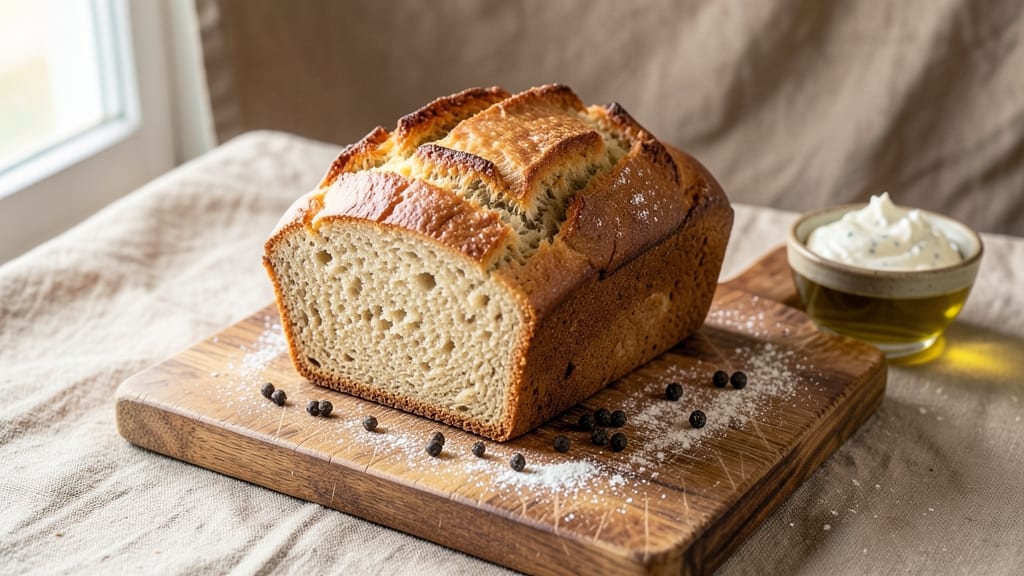
This healthy 5-ingredient cottage cheese bread recipe delivers a surprisingly light, airy loaf packed with hidden protein—no refined sugar or complicated steps. 💛 The secret lies in blending cottage cheese directly into the dough, creating a tender crumb and soft texture that rivals traditional bread.
I developed this recipe during a health kick when I needed a protein-rich side that felt indulgent without the guilt.
The beauty of this method is its simplicity: just mix cottage cheese with flour, baking powder, egg, and a touch of oil, then bake until golden. The cottage cheese hydrates the dough naturally, eliminating the need for milk or extra eggs while adding 15g of protein per slice.
No kneading, no waiting—just a foolproof process that yields a loaf with a crisp crust and soft interior.
Perfect for toast, sandwiches, or as a side with soups and salads, this bread stays fresh for days and reheats beautifully. The neutral flavor absorbs any toppings or fillings you like, making it infinitely versatile.
What’s more, it’s low-carb when made with almond flour and gluten-free if you swap the all-purpose flour.
Ready in just 30 minutes, this recipe proves healthy eating doesn’t mean sacrificing taste or texture. Let’s get started—your next loaf is lighter, healthier, and just as satisfying as the real thing.
Ingredients for 5 ingredient cottage cheese bread recipe healthy
Five simple ingredients transform into a protein-packed loaf that's lighter than traditional bread.
| Ingredient | Amount | Notes |
|---|---|---|
| Large Eggs 🥚 | 1 whole | Room temperature for even mixing |
| Extra-Virgin Olive Oil 🫒 | ¼ cup | Light variety for neutral flavor |
| All-Purpose Flour 🌾 | 2 ½ cups | Sifted for best texture |
| Baking Powder 🧂 | 2 tsp | Freshly opened for lift |
| Low-Fat Cottage Cheese 🧀 | 16 oz | Full-fat for richer texture |
The cottage cheese is the game-changer here—full-fat gives you that tender crumb, but low-fat works too if you're watching calories. Trader Joe's has the best selection of cottage cheese, but any 2% or full-fat brand will do. Look for the kind with small curds—it blends smoother. The flour matters too: King Arthur or Bob's Red Mill are my go-to for consistent texture. Sift it first to avoid dense bread. If you're gluten-free, swap the all-purpose for a 1:1 gluten-free blend like Cup4Cup—just add an extra teaspoon of baking powder.
No olive oil? Avocado oil or melted coconut oil work perfectly—just measure carefully. The egg can be replaced with a flax egg (1 tbsp ground flaxseed + 3 tbsp water) for vegan, but the texture won't be quite as tender. Baking powder older than 6 months? Test it first—mix 1 tsp with 2 tbsp hot water; it should bubble vigorously. If not, toss it and buy fresh. The cottage cheese should be at room temperature when mixing—cold cheese creates dense pockets. For extra flavor, stir in a pinch of garlic powder or onion powder to the dough before baking.
This bread stays fresh for 4-5 days wrapped in a clean kitchen towel, but it reheats beautifully too—just 10 seconds in the microwave with a damp paper towel. Freezes for 3 months if sliced and wrapped tightly. I always bake two loaves and freeze one for lazy mornings. The neutral flavor makes it perfect for toasting with avocado or using as a sandwich base. Store any leftovers in an airtight container to keep it from drying out.
Why You'll Love This Recipe
- No-Measurement Madness: I swear by this recipe because it’s literally five ingredients—no confusing ratios, no last-minute pantry raids. Just crack eggs, scoop cottage cheese, and dump flour. The olive oil keeps it tender without fuss, and the baking powder does all the rising work while you’re still deciding what to watch on TV.
- Secretly Rich Crust: Here’s what sold me—the crispy, golden edges with that unexpected buttery depth. The cottage cheese adds a subtle tang that balances the flour’s mildness, and the olive oil? It caramelizes just enough to make it taste like you slaved over it. (Between us, it’s my go-to when I want bread that feels indulgent but isn’t.)
- Lunchbox Hero: This bread holds up perfectly for sandwiches—no soggy middle, no weird textures. I pack it for work with turkey and hummus, or my kids take it to school with peanut butter. Honestly, it’s the only bread I bake now because it doesn’t turn into hockey pucks after two days. Plus, the cottage cheese keeps it moist longer than your average loaf.
- Pantry Stretch: I buy cottage cheese in bulk because it’s cheaper than bread, and this recipe uses just a cup—meaning one tub lasts me weeks. The eggs and olive oil are staples, and the flour? Well, I already have it. No weird substitutions, no wasted leftovers (unless you count the fact that my dog now begs for crusts). It’s my budget-friendly secret weapon for when I’m broke but still want something good.
Step-by-step instructions for cottage cheese bread
This bread comes together with just five ingredients—no yeast, no kneading, and no waiting. Here's how to make it light, airy, and packed with protein.
👨🍳 Step 1: Mix Wet Ingredients for Smooth Texture
In a large mixing bowl, combine the 1 whole Large Eggs and 16 oz Low-Fat Cottage Cheese. Use a hand mixer or whisk to blend until completely smooth—no lumps allowed. The cottage cheese should be fully incorporated, creating a thick, creamy base. I like to press it through a fine-mesh sieve if there are any stubborn chunks, as this ensures a silky texture in the finished bread.
Next, drizzle in the 0.25 cup Extra-Virgin Olive Oil while continuing to mix on low speed. The oil helps tenderize the bread and adds subtle richness without overpowering the light flavor. Mix just until fully combined—overmixing here can develop gluten prematurely, which we want to control later.
👨🍳 Step 2: Incorporate Dry Ingredients Gently
In a separate bowl, sift together the 2.5 cups All-Purpose Flour and 2 tsp Baking Powder. Sifting removes any lumps and aerates the flour, which helps create that signature light, airy crumb. Gradually add the dry mixture to the wet ingredients, mixing on low speed just until combined. You'll notice the batter will be thick and slightly sticky—this is normal and actually what we want for that tender crumb.
Here's the thing—don't overmix. Once the flour is just incorporated, stop mixing immediately. Overworking the batter develops gluten, which can make the bread dense instead of light. The dough should hold its shape when you lift the spoon, but still look slightly shaggy on the surface.
🥘 Step 3: Prepare the Loaf Pan for Perfect Rise
Preheat your oven to 350°F. Lightly grease an 8x4-inch loaf pan with olive oil or line it with parchment paper for easy removal. This size pan gives you that classic pull-apart texture while ensuring the bread bakes evenly. Tap the pan gently on the counter to remove any air bubbles that might have formed during greasing.
Transfer the batter to the prepared pan and spread it evenly using a spatula. Tap the pan again on the counter a few times to eliminate any remaining air pockets. The batter will rise slightly during baking, but not dramatically—this isn't yeast bread, so we're not looking for a dramatic dome. The key here is even distribution for consistent texture throughout.
🔥 Step 4: Bake Until Golden and Springy
Bake the bread for 50-55 minutes until the top is golden brown and a toothpick inserted into the center comes out clean. The bread should also spring back slightly when pressed gently with your finger—this is your best indicator of doneness. I usually start checking at the 45-minute mark because ovens vary in heat distribution.
If the top browns too quickly but the center isn't done, tent the pan loosely with aluminum foil to prevent over-browning while allowing the bread to finish cooking. The internal temperature should reach 200°F for perfect doneness. Let the bread cool in the pan for 10 minutes before transferring to a wire rack to cool completely.
⏰ Step 5: Rest and Slice for Maximum Tenderness
While the bread cools, resist the urge to slice it immediately—this is where patience pays off. Allowing the bread to cool completely prevents it from falling apart when you cut into it. The structure will firm up as it cools, making those clean slices possible. I like to let it cool for at least 30 minutes before slicing.
Once fully cooled, slice the bread into ½-inch thick pieces. Each slice should be light, airy, and slightly crumbly on the inside with a tender crust. The cottage cheese adds a subtle tang that balances the mild sweetness of the bread, making it perfect for toast, sandwiches, or served alongside soups. Store any leftovers in an airtight container for up to 3 days—it reheats beautifully in the oven at 300°F for 5-10 minutes.
Pro Tips For Making 5 Ingredient Cottage Cheese Bread Recipe Healthy
- Use Room-Temperature Eggs: Cottage cheese bread needs eggs to blend smoothly—cold eggs make lumps that won’t disappear, no matter how much you stir. Take them out of the fridge 10 minutes before mixing, or even better, let them sit in warm water for 2 minutes. I learned this the hard way after scraping batter off my whisk for the third time.
- Blend Cottage Cheese Until Silky: Don’t just dump in the cottage cheese—pulse it in a food processor or whisk it relentlessly until it’s completely smooth. Those little curds turn into a gummy mess in the oven. If you’re skipping the food processor, whisk for at least 2 minutes until it looks like thick pudding. Yes, even if your arm starts to hate you.
- Preheat Pan and Oven Together: This bread’s crust depends on a hot pan and oven working as a team. Preheat your oven to 375°F while you heat your skillet (cast iron or nonstick) over medium-high for 3-4 minutes. The second you pour in the batter, the pan should be so hot it sizzles—this seals the bottom and keeps it from sticking. I used to skip this, and my bread always ended up dense.
- Add Olive Oil Last, Not First: Mix the dry ingredients and cottage cheese first, then stir in the egg. Only after that do you add the olive oil—about 2 tablespoons—right before pouring into the pan. Why? The oil keeps the batter loose and helps it spread evenly. Dump it in early, and you’ll end up with a greasy, uneven puddle instead of a golden crust. Trust me, it’s worth the extra 30 seconds.
Common mistakes when making this recipe
Overmixing the Dough
This is the #1 mistake I see with cottage cheese bread—overworking the batter after adding flour. The cottage cheese already creates a tender texture, so you don’t need to develop gluten like you would with yeast bread.
Once the flour is just incorporated and no dry spots remain, stop mixing immediately. I’ve ruined several batches by continuing to stir, resulting in dense, chewy bread instead of that light, airy crumb we want. 💡
Skipping the Sieve
If your cottage cheese has large curds, don’t just blend it with a whisk—press it through a fine-mesh sieve first. Those stubborn curds can create dense pockets in your bread. I learned this the hard way when my first batch had uneven texture.
For best results, use a 16 oz full-fat cottage cheese with small curds (like Trader Joe’s or Great Value brands) to avoid this issue entirely.
Using Cold Cottage Cheese
Cold cottage cheese straight from the fridge can cause your bread to turn out gummy or unevenly baked. Always let it sit at room temperature for 15-20 minutes before mixing. I keep a small bowl of cottage cheese on my counter during the week so it’s ready to use.
Pro tip: If you’re in a hurry, place the sealed container in warm water for 5 minutes to speed up the process.
Incorrect Baking Time
Since this isn’t yeast bread, it won’t rise dramatically in the oven. Many people pull it out too early, resulting in a dense center. Bake until a toothpick comes out clean (50-55 minutes at 350°F) and the internal temperature reaches 200°F.
If the top browns too quickly, tent with foil—but don’t overdo it, or the center won’t finish cooking.
Not Cooling Properly
Slicing bread too soon is a classic mistake that leads to crumbly, messy pieces. Let the loaf cool in the pan for 10 minutes first, then transfer to a wire rack to cool completely (at least 30 minutes).
The structure firms up during cooling, making those perfect slices possible. I’ve seen people rush this step and end up with a sad, broken loaf—don’t be that person!
Ignoring the Pan Size
An 8x4-inch loaf pan is ideal for this recipe, but I’ve seen people use larger pans without adjusting the batter. This leads to a wider, flatter loaf that bakes unevenly.
If you don’t have an 8x4-inch pan, use a 9x5-inch pan and reduce the baking time by 5-10 minutes—just keep an eye on it to avoid over-browning. The right pan makes all the difference in texture and rise.
Nutrition facts
Frequently asked questions
Can I make this bread with almond flour for a low-carb version?
Yes! Swap the all-purpose flour for 2.5 cups almond flour and add an extra 1 teaspoon baking powder to help with rise. The texture will be denser but still delicious—great for keto diets. For even better results, soak the almond flour in 2 tablespoons warm water for 5 minutes before mixing to improve moisture absorption.
Why does my cottage cheese bread turn out dense instead of light?
Overmixing the batter is the most common cause. Once the flour is incorporated, stop mixing immediately to prevent gluten development. Also, ensure your cottage cheese is at room temperature and fully blended smooth—no lumps! Cold cheese or large curds can create dense pockets. Try pressing the cheese through a sieve first for silky texture.
How can I add flavor without changing the basic recipe?
Add ½ teaspoon garlic powder, ½ teaspoon onion powder, or 1 teaspoon dried herbs (like rosemary or thyme) directly to the wet ingredients. For sweet versions, stir in 1 tablespoon honey or maple syrup with the oil. The neutral flavor works well with almost any topping—just keep the ingredient count to 5 total.
Can I make this bread without eggs for a vegan version?
Yes! Replace the egg with a flax egg (1 tablespoon ground flaxseed + 3 tablespoons water), mixed and rested for 5 minutes. The texture won't be quite as tender, but it will still hold together. For extra binding, add 1 tablespoon ground chia seeds to the dry ingredients. Let the batter rest for 10 minutes before baking to improve structure.
How long does this bread stay fresh, and how should I store it?
Wrap the cooled loaf in a clean kitchen towel and store at room temperature for 3-4 days. For longer storage, slice and freeze individual portions for up to 3 months. To reheat, warm slices in a 300°F oven for 5-10 minutes or microwave with a damp paper towel for 10 seconds. The towel prevents drying out better than plastic.