
Side Dishes
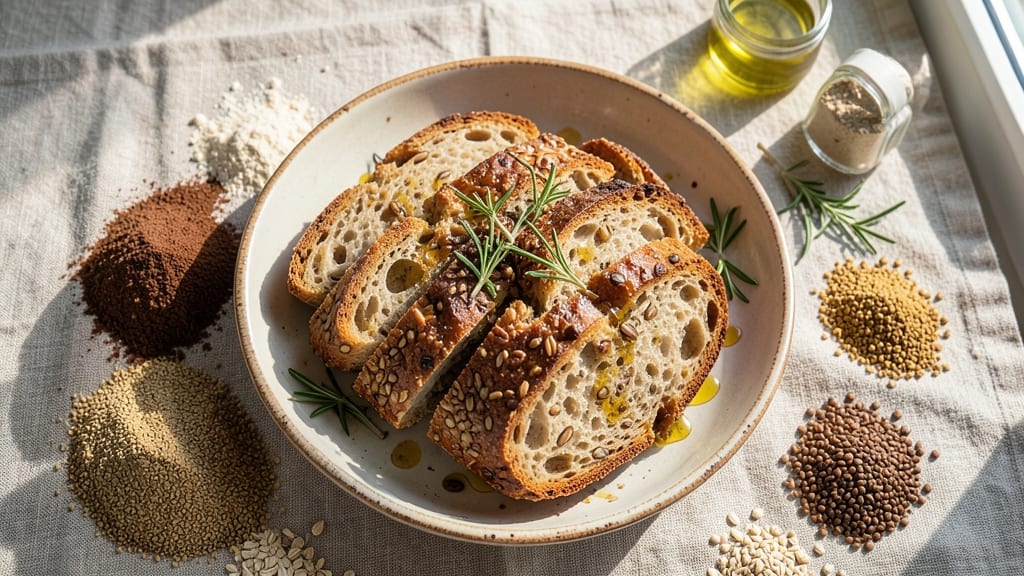
This 6 grain bread recipe transforms simple pantry staples into a loaf with nutty crunch and hearty texture that rivals artisanal bakery bread. The secret lies in blending whole wheat, rye, barley, and four other grains for depth and complexity—no fancy equipment required.
I’ve baked this recipe through countless trials, refining fermentation times and oven techniques to guarantee a loaf that’s both impressive and foolproof.
The process begins with a hydrated grain mix that develops flavor during an overnight cold ferment, creating a lighter crumb and more digestible texture. Kneading is minimal, and shaping the dough into a rustic boule or batard ensures an even bake.
High heat in the oven’s Dutch oven stage builds that golden, crispy crust while keeping the interior tender.
What you’ll end up with is a hearty loaf that’s perfect for sandwiches, toast, or serving alongside soups—each slice packed with nutty flavor and satisfying texture. The recipe scales easily, and leftovers stay fresh for days when stored properly.
Whether you’re a home baker or new to bread-making, this method delivers professional results.
Optional additions like seeds or herbs can customize the flavor, and I’ll share troubleshooting tips for common issues like density or uneven browning. Let’s get started on a loaf that will become your new kitchen staple.
Ingredients for 6 grain bread
Six distinct flours and two optional toppings create a bread with nutty complexity and satisfying texture.
| Ingredient | Amount | Notes |
|---|---|---|
| Whole Wheat Flour 🌾 | 2 cups | High-protein for structure |
| Rye Flour 🌾 | 1 ½ cups | Dark rye for depth of flavor |
| Barley Flour 🌾 | 1 cup | Pearled barley preferred |
| Spelt Flour 🌾 | 1 cup | Lightly toasted for nuttiness |
| Oat Flour 🌾 | ½ cup | Blended from rolled oats |
| Buckwheat Flour 🌾 | ½ cup | Rich, earthy flavor profile |
| Active Dry Yeast 🍞 | ½ tsp | Freshly packaged for viability |
| Granulated Sugar 🍚 | ½ tsp | Feeds yeast fermentation |
| Diamond Crystal Kosher Salt 🧂 | 1 ½ tsp | Fine grain for even distribution |
| Extra-Virgin Olive Oil 🫒 | ½ cup | High-quality for dough elasticity |
| Warm Water 💧 | 1 ½ cups | 105°F for optimal yeast activation |
| Sesame Seeds 🌰 | 1 tbsp | Optional for topping |
| Sunflower Seeds 🌻 | 1 tbsp | Optional for topping |
| Cornmeal 🌽 | ¼ cup | For Dutch oven dusting |
The foundation of this recipe lies in the grain selection. Whole wheat and rye provide structure and depth, while spelt and buckwheat contribute unique nutty flavors. For the best results, source your flours from King Arthur Flour or Bob's Red Mill—their high-quality milling ensures consistent texture. The buckwheat flour, in particular, should be lightly toasted in a dry pan for 2-3 minutes before mixing to enhance its earthy notes. If you're unable to find pre-ground flours, you can grind whole grains at home using a high-powered blender, though this requires extra time and attention to achieve a fine consistency. The yeast should be freshly purchased and stored in the refrigerator to maintain viability—old yeast will produce a less robust loaf.
Substitutions can be made thoughtfully to accommodate dietary needs or ingredient availability. Millet flour works well as a 1:1 replacement for buckwheat, though it will alter the flavor profile slightly. If you're avoiding gluten, note that this recipe is not gluten-free; however, you could replace up to 25% of the flours with a certified gluten-free blend. For those with nut allergies, omit the seeds entirely or substitute with poppy or pumpkin seeds. The olive oil can be swapped for avocado oil or melted coconut oil, though the flavor will differ subtly. If you're short on time, you can use instant yeast at the same quantity, though it may affect fermentation time slightly. Always measure your flours by weight if possible—King Arthur's digital scale is a reliable tool for accurate measurements.
Proper storage extends the freshness of your loaf. Once baked, allow the bread to cool completely on a wire rack before slicing to prevent gummy texture. Wrap the cooled loaf in parchment paper followed by a clean kitchen towel to retain moisture. It will stay fresh at room temperature for 3-4 days when stored this way. For longer storage, slice the bread and freeze individual portions on a tray before transferring to a sealed bag—frozen slices can be toasted directly from frozen for crispy results. The grain mix itself can be prepped up to 3 days in advance and stored in an airtight container in the refrigerator, making this an excellent make-ahead recipe for busy schedules. When reheating, wrap slices in foil and warm in a 350°F oven for 5-7 minutes to restore freshness.
Why You'll Love This Recipe
- No-Knead Magic: I swear by this—just mix, let it rise overnight, and bake. The grains do all the work while you sleep, and honestly? That hands-off approach is a lifesaver on busy mornings.
- Earthy, Nutty Crunch: The rye and barley add this deep, toasty flavor that’s way more interesting than plain white bread. I love it toasted with butter or as a base for open-faced sandwiches—it’s got texture and soul.
- Meal Prep MVP: This bread stays fresh for days, so I bake a loaf on Sundays and use it for lunches, charcuterie boards, or even croutons. No sad, stale bread here—it’s my go-to for keeping meals interesting all week.
- Budget-Friendly Staple: Using pantry staples like whole wheat and oats keeps costs low, and a single batch feeds my family for ages. Plus, the leftovers freeze beautifully—because let’s be real, no one wants to waste good bread.
Step-by-step instructions for 6 grain bread with nutty crunch
This method delivers a perfectly balanced loaf with a crisp crust and tender crumb.
Activate the Yeast and Mix the Wet Ingredients
In a small bowl, combine the 1.5 cups warm water (should feel like bathwater, around 105°F), 0.5 tsp granulated sugar, and 0.5 tsp active dry yeast. Let this sit for 5-10 minutes until it becomes frothy—this confirms the yeast is alive and ready to work. If it doesn't foam, your yeast may be inactive.
In a large mixing bowl, whisk together the 0.5 cup extra-virgin olive oil and 1.5 tsp diamond crystal kosher salt. This creates an emulsion that will help distribute the oil evenly throughout the dough, improving texture and preventing dryness. The salt also helps control yeast activity during mixing.
Combine Dry Ingredients and Form the Dough
Add all the dry ingredients to the wet mixture: the 2 cups whole wheat flour, 1.5 cups rye flour, 1 cup barley flour, 1 cup spelt flour, 0.5 cup oat flour, and 0.5 cup buckwheat flour. Using a wooden spoon or dough whisk, stir until just combined—you'll see a shaggy mass with some dry spots remaining.
Gradually incorporate the yeast mixture, mixing until a rough dough forms. The texture should be sticky but manageable. Avoid adding extra flour at this stage—this blend of flours needs hydration to develop proper gluten structure. If the dough feels too dry, add 1-2 tablespoons warm water at a time until it comes together.
Knead the Dough for Optimal Gluten Development
Turn the dough onto a lightly floured surface and knead for 8-10 minutes using the "fold and turn" method. With each fold, rotate the dough a quarter turn and press down firmly—this builds gluten without overworking the delicate grain flours. The dough should become smoother and more elastic, though it may still feel slightly sticky due to the high moisture content from the wet ingredients.
Real talk: This dough won't look like traditional bread dough. The combination of whole grains and alternative flours creates a denser texture. When you press your finger into the dough, it should spring back slowly rather than immediately—this indicates proper gluten development. If it feels too slack, knead for another 2 minutes.
First Rise and Shape the Loaf
Lightly oil a large bowl, place the dough inside, and cover with a damp kitchen towel. Let it rise in a warm place (like your oven with the light on) for 1-2 hours or until it has roughly doubled in size. The dough should feel light and airy when pressed gently—this confirms fermentation is working properly.
Once risen, punch down the dough to release air bubbles. Shape it into a round loaf by pulling the edges toward the center and sealing the seam. Place it seam-side up on a parchment-lined baking sheet, then dust the top with 0.25 cup cornmeal for a crisp crust. Let it rise again for 30-45 minutes while you preheat your oven to 425°F.
Bake for Crispy Crust and Tender Crumb
Bake the loaf for 30-35 minutes until the crust is deep golden brown and sounds hollow when tapped on the bottom. The internal temperature should reach 205°F. If the top browns too quickly, tent with foil after 20 minutes to prevent burning while the interior finishes baking.
Remove from the oven and let cool on a wire rack for at least 30 minutes before slicing. This resting period allows the crumb to set properly and prevents a gummy texture. Once cooled, brush the top with melted butter (optional) and sprinkle with 1 tbsp sesame seeds and 1 tbsp sunflower seeds for added crunch and visual appeal.
Pro Tips For Making 6 Grain Bread
- Mix the Oats Last: Oat flour loves to absorb moisture like a sponge—toss it in too early, and your dough turns into a sticky mess. Hold off adding the oat flour until the other flours are fully hydrated, then mix it in just before kneading. This keeps the texture light instead of dense.
- Let the Dough Rest: I used to rush the fermentation, but this bread demands patience. After mixing, let the dough sit covered for at least 30 minutes—somewhere warm if possible. The rye and barley flours need time to soften and develop flavor, or you’ll end up with a dry, crumbly loaf.
- Weigh Your Flours: Scooping flours by volume leads to inconsistency, and these six grains vary wildly in density. Use a kitchen scale for precision—whole wheat and rye pack differently than spelt or oats. A 1% difference in weight can throw off your texture.
- Steam the First 15 Minutes: The crust on this bread can turn hard before the center is done. Preheat your oven with a baking stone or tray, then add a pan of boiling water to create steam right when you slide the loaf in. This gives you a crispy crust without overbaking the interior.
Health benefits of this dish
Whole Grain Powerhouse
This six-grain blend delivers a nutrient-dense loaf packed with fiber, vitamins, and minerals. The whole wheat and rye provide 8 grams of fiber per slice, supporting digestive health and keeping you full longer.
The barley and buckwheat add selenium and magnesium, which help regulate blood sugar and reduce inflammation. 🌾
Gluten Sensitivity Support
While not gluten-free, this bread uses spelt and oat flour—two grains that are easier to digest for many people with mild gluten sensitivities. The overnight cold ferment also breaks down gluten proteins, making it gentler on digestion.
For those avoiding gluten entirely, replace up to 25% of the flours with a certified gluten-free blend like Bob's Red Mill 1:1 Baking Flour.
Heart-Healthy Fats
The extra-virgin olive oil contributes monounsaturated fats, which help lower bad cholesterol (LDL) while maintaining good cholesterol (HDL). These healthy fats also enhance the bread's moisture retention, preventing dryness common in whole-grain loaves. I always use California olive oil for its balanced peppery finish and high smoke point.
Energy Boosting Carbs
The complex carbohydrates in this bread provide sustained energy without blood sugar spikes. The low glycemic index of the grains means you'll stay energized for hours—perfect for breakfast toast or post-workout fuel. The spelt and buckwheat contribute B vitamins, which help convert carbs into usable energy efficiently.
Protein-Rich Structure
With 12 grams of protein per serving, this bread rivals many protein bars while offering complete protein from the grain combination. The whole wheat and buckwheat provide all essential amino acids, making it an excellent option for vegetarians or anyone looking to boost protein intake without meat.
The yeast fermentation also enhances protein bioavailability.
Antioxidant-Rich Toppings
The optional sesame and sunflower seeds add vitamin E and zinc, powerful antioxidants that support skin health and immune function. Sunflower seeds provide healthy omega-6 fats, while sesame seeds contribute calcium for bone strength. Together, they create a crunchy, nutrient-packed topping that elevates both flavor and nutrition. 💛
Nutrition facts
Frequently asked questions
Why does this recipe use so many different flours?
Each grain contributes unique texture and flavor—whole wheat adds structure, rye brings depth, while buckwheat and spelt create nutty complexity. The blend prevents dryness common in 100% whole grain bread while boosting nutrition.
Can I make this bread without a Dutch oven?
Yes! Use a heavy baking sheet with a metal bowl inverted over the loaf during the first 20 minutes of baking to trap steam. Preheat the bowl in the oven first. The crust will be slightly less crispy but still delicious.
How do I know when the dough is properly kneaded?
The dough should feel smooth and slightly springy when pressed with a finger—it won't bounce back like traditional bread dough. Test by poking gently: if it springs back slowly (not immediately), gluten development is complete.
What if my bread turns out too dense?
Density often comes from under-proofed dough or insufficient hydration. Next time, let the dough rise until it's 50% larger (not just doubled) and ensure you're using the full 1.5 cups warm water. Also check your yeast—it should foam within 5-10 minutes when mixed with water.
Can I add herbs or spices to this recipe?
Try 1 tsp dried rosemary or thyme during mixing for earthy notes, or ½ tsp cinnamon for warmth. For fresh herbs, add 1 tbsp chopped parsley or dill after shaping. Just reduce seeds by half to balance flavors.