
Side Dishes
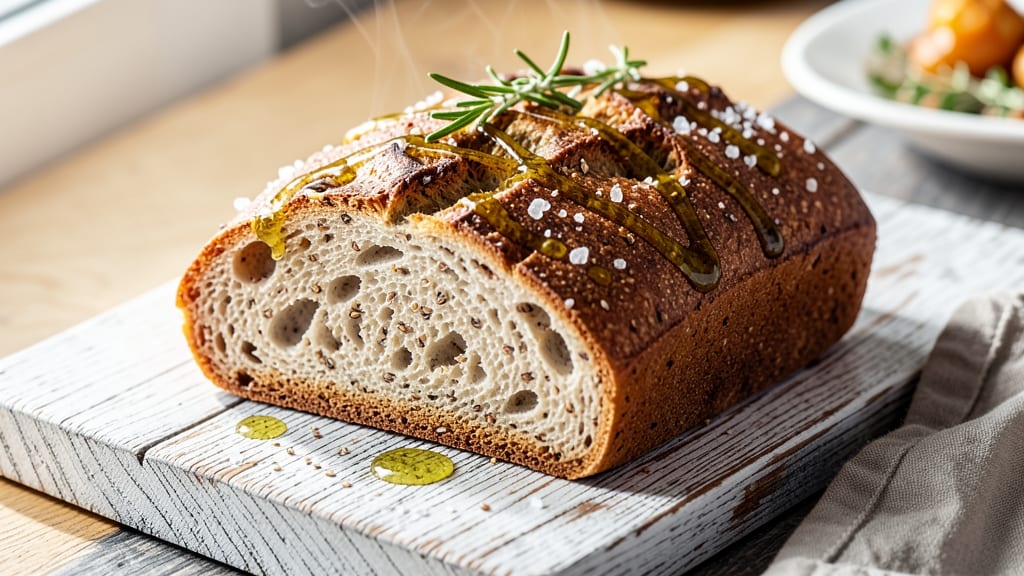
This artisan spelt bread recipe delivers the perfect balance of nutty crust and rustic chew that makes every slice worth savoring. 🌟 Spelt flour brings a subtle sweetness and satisfying density that sets it apart from traditional wheat bread, while traditional techniques ensure professional results even for home bakers.
The key to exceptional spelt bread lies in the autolyse process, where flour and water rest before adding yeast. This step develops gluten gently, creating a tender yet chewy crumb.
The dough requires careful handling—it's wetter than standard bread dough but rewards patience with an open crumb structure and golden-brown crust.
By following this method, you'll achieve a loaf with a crisp exterior that gives way to a moist, chewy interior. The nutty aroma from the spelt flour fills your kitchen as it bakes, promising a bread that's perfect for sandwiches, toast, or simply enjoying with butter.
Each slice maintains its structure while offering satisfying texture.
Optional additions like seeds or herbs can enhance the flavor profile without compromising the bread's signature qualities. The recipe includes precise timing for proofing and baking to ensure consistent results every time. Let's create this exceptional loaf together.
Ingredients for artisan spelt bread
Spelt flour, yeast, and patience create this artisan loaf with nutty depth and satisfying chew.
| Ingredient | Amount | Notes |
|---|---|---|
| Spelt Flour 🌾 | 4 cups | Stone-ground for optimal texture |
| Warm Water 💧 | 2 ¾ cups | Filtered or spring water preferred |
| Active Dry Yeast 🍞 | ¼ oz | Or 2.25 tsp, fresh yeast preferred |
| Granulated Sugar 🍚 | ½ tbsp | Feeds yeast activation |
| Sea Salt 🧂 | 1 ½ tsp | Diamond Crystal preferred |
| Olive Oil 🫒 | ½ cup | Extra-virgin for richness |
| Honey 🍯 | 1 tbsp | Wildflower preferred |
| Sesame Seeds 🌰 | ¼ cup | Toasted for enhanced flavor |
| Poppy Seeds 🌱 | ¼ cup | Optional for nutty crunch |
| Fresh Rosemary 🌿 | ½ oz | Finely chopped, optional |
| Cornmeal 🌽 | ¼ cup | For dusting baking sheet |
The spelt flour is the heart of this recipe—Bob's Red Mill or King Arthur brands deliver consistent quality. Look for stone-ground flour, which retains more nutrients and flavor than standard white flour. Warm water should be between 105-110°F—too hot kills yeast, too cold slows fermentation. If your yeast isn't fresh, test it first: proof it in warm water with sugar for 5-10 minutes—it should bubble actively. The Diamond Crystal sea salt enhances flavor without overpowering the bread's natural sweetness, while honey adds subtle moisture and caramelization during baking.
No spelt flour? Whole wheat flour works in a pinch, though the texture will be denser. Substitute honey with maple syrup if needed, but reduce to 1 tbsp to maintain proper dough hydration. Sesame and poppy seeds can be swapped for flaxseeds or sunflower seeds for a different texture. For herb lovers, fresh thyme or parsley work beautifully instead of rosemary. The olive oil can be replaced with avocado oil, though it lacks the fruity depth. Always measure flour by weight if possible—1 cup spelt flour weighs about 4 oz, not the standard 4.5 oz of all-purpose flour.
This dough requires at least 2 hours of proofing time—don't rush it. Store uncooked dough in the fridge for up to 24 hours before baking for enhanced flavor. The baked loaf keeps well at room temperature for 3-4 days when wrapped in a clean kitchen towel. For longer storage, freeze slices individually—3 months in an airtight bag. Toasting stale slices restores crispness instantly. The nutty aroma intensifies as it cools, so resist slicing immediately after baking for the best texture.
Why You'll Love This Recipe
- No-Knead Nightmare Solved: I swear by this recipe because it skips the grueling knead—just mix, let it rise, and bake. The spelt flour does all the heavy lifting for that soft, airy crumb, while the yeast handles the rest in under 2 hours. (Yes, even on a Tuesday night.)
- Nutty, Earthy Magic: That warm water and spelt flour combo? It’s like a cozy hug for your taste buds—slightly sweet, with a deep, almost buttery richness. The sea salt ties it all together, making every slice taste like a bakery secret.
- Weeknight Workhorse: This bread is my go-to for sandwiches, toast, or dipping in olive oil—no fancy prep needed. It keeps beautifully for days, so I can bake once and eat it all week. (My kids call it "the glue that holds lunches together.")
- Budget Bakery Trick: Five ingredients, zero waste, and it costs a fraction of store-bought. The yeast and sugar are the only splurges, but they make it rise like a dream. Plus, leftovers? I freeze slices and toast them straight from the bag. Effortless.
Step-by-step instructions for artisan spelt bread
Master the art of spelt breadmaking with this professional method for a loaf with nutty depth and perfect texture.
👨🍳 Step 1: Activate the Yeast and Prepare the Dough
In a large mixing bowl, combine the 2.75 cups warm water (about 105°F) with the 0.25 oz active dry yeast and 0.5 tbsp granulated sugar. Let this sit for 5-10 minutes until you see frothy bubbles forming on the surface—this confirms the yeast is active. If no bubbles appear, your yeast may be dead, and you'll need to start over.
To the yeast mixture, add the 4 cups spelt flour, 1.5 tsp sea salt, 0.5 cup olive oil, and 1 tbsp honey. Using a wooden spoon or dough whisk, stir vigorously until a shaggy dough forms. The spelt flour will absorb moisture differently than wheat flour, so resist the urge to add extra water. Let the dough rest for 10 minutes while you prepare your workspace.
🍳 Step 2: Develop the Dough Through Kneading
Transfer the dough to a lightly floured surface and knead for 8-10 minutes until smooth and elastic. Spelt dough is naturally stickier than wheat dough, so wet your hands frequently to prevent sticking. You'll know it's ready when it springs back slowly when poked and forms a windowpane when stretched thin.
For best results, I use a combination of hand-kneading and stretch-and-folds. After the initial kneading, divide the dough into two equal portions in a lightly oiled bowl, cover with a damp towel, and let rise at room temperature for 1-2 hours or until doubled in size. The slower rise at room temperature develops more complex flavors compared to a quick rise in the fridge.
🥘 Step 3: Shape and First Proof
Punch down the risen dough and divide it into 4 equal portions (about 8 oz each). Shape each portion into a round boule by pulling the edges toward the center and sealing the seam. Place the shaped boules on a baking sheet dusted with 0.25 cup cornmeal, cover with a damp towel, and let proof for another 30-45 minutes until they've risen noticeably and feel light when touched.
While the dough proofs, preheat your oven to 425°F with a Dutch oven inside for 30 minutes. This creates a steam environment crucial for developing that beautiful crust. The cornmeal prevents sticking and adds a subtle crunch to the bottom of your loaves.
🔥 Step 4: Bake for Crispy Crust and Open Crumb
Carefully transfer one boule at a time to the preheated Dutch oven. Bake for 25-30 minutes until the crust is deep golden brown and sounds hollow when tapped on the bottom. The interior temperature should reach 190-200°F when measured with an instant-read thermometer.
After the initial bake, remove the lid and continue baking for 5-10 minutes to develop a crisp crust. For extra flavor, sprinkle the tops with 0.25 cup sesame seeds and 0.25 cup poppy seeds right after removing the lid. The seeds will toast beautifully in the residual heat.
⏰ Step 5: Cool and Finish with Rosemary
Transfer the baked loaves to a wire rack and let cool completely for at least 1 hour before slicing. The internal temperature will continue to rise as it cools, and this resting period allows the gluten to relax for cleaner slices. For the final touch, brush the cooled loaves with a mixture of finely chopped fresh rosemary and a little olive oil for an aromatic finish.
Slice with a serrated knife and serve within 2-3 days for optimal freshness. The crust should be crisp with a satisfying crunch, while the interior reveals an open crumb with visible pockets of air—characteristic of well-developed spelt bread. Store any leftovers wrapped in a bread bag at room temperature.
Pro Tips For Making Artisan Spelt Bread
- STIR THE YEAST FIRST: Mix the yeast with warm water and sugar before adding flour—this guarantees it’s active and saves you from a dough that won’t rise. I’ve wasted enough time on sluggish yeast because I skipped this step, so don’t make the same mistake.
- WEIGH YOUR FLOUR: Spelt flour packs differently than wheat—use a kitchen scale for accuracy. A cup of spelt can vary by 20-30 grams, and your dough consistency will suffer if you guess.
- LET IT RISE SLOW: Cold-proof the dough overnight in the fridge for deeper flavor and better texture. Yes, it takes longer, but the crust will be crispier and the crumb more open—worth the wait.
- SKIP THE KNEADING SHORTAGE: Spelt dough is sticky—don’t overwork it. A few minutes by hand or 3-4 minutes in the mixer is enough; over-kneading makes it tough. I learned this after making a dense brick the first time.
Regional styles of this dish
German Rye-Spelt Mix
In Germany, bakers often blend spelt flour with rye flour for a denser, heartier loaf. Use 2 cups spelt flour and 2 cups rye flour in this recipe, reducing the water to 2.25 cups to account for rye's higher absorption.
Add 1 tbsp molasses to the dough for depth, and bake in a stoneware pot instead of a Dutch oven for a rustic look. The result is a slightly tangy, dark-crusted loaf perfect with smoked fish or cheese platters. 🌾
Italian Herb-Infused
Southern Italian bakers favor adding fresh herbs to spelt bread for brightness. Swap the rosemary for 1 oz fresh basil and 1 oz fresh oregano, finely chopped, along with 1 tbsp lemon zest. Reduce the honey to ½ tbsp to balance the herbs' intensity.
Shape the dough into a batard (oval loaf) and bake at 400°F for 35-40 minutes for a lighter crust. This version pairs beautifully with olive oil and balsamic vinegar. 🌿
French Fougasse Twist
For a rustic Provençal touch, shape the dough into a fougasse (open-top bread) by dimpling the surface with your fingers before baking. Brush the tops with 1 tbsp olive oil and sprinkle with flaky sea salt and coarse black pepper.
Add 2 tbsp chopped sun-dried tomatoes and 1 tbsp chopped Kalamata olives for a Mediterranean flair. Bake at 425°F for 20-25 minutes until golden and crisp. Serve warm with herb butter or tapenade. 🧂
Scandinavian Seed Loaf
Nordic bakers love seed-heavy spelt breads for crunch and nutrition. Boost the seed mix to ½ cup each of sesame, poppy, and flaxseeds, plus ¼ cup chopped almonds. Add 1 tsp ground cardamom to the dough for warmth.
Shape into a round loaf and bake in a cloche for the first 20 minutes, then uncover to crisp. This version keeps well for 5-6 days and tastes amazing with smoked salmon or cottage cheese. 🌰
American Sourdough Hybrid
Combine spelt flour with 2 cups sourdough starter (replacing 2 cups of water) for a tangy, airy loaf. Reduce the yeast to 0.125 oz (1 tsp) since the starter provides leavening.
Shape into a boule and bake as directed, but increase the final uncovered time to 15 minutes for extra crust development. This hybrid delivers the open crumb of sourdough with spelt’s nutty sweetness. 🍞
Nutrition facts
Frequently asked questions
Why does spelt bread dough feel so sticky?
Spelt flour has a higher moisture content and less gluten than wheat flour, creating a naturally wetter dough. The extra olive oil and honey also contribute to the stickiness. Wet your hands frequently when handling it, and use a dough scraper to avoid tearing the delicate gluten structure. The stickiness actually helps create that signature chewy texture!
Can I make this bread without a Dutch oven?
If you don't have a Dutch oven, use a heavy baking sheet or stoneware dish. Place a metal bowl filled with boiling water on the lower oven rack to create steam during the first 15 minutes of baking. This mimics the steam environment of a Dutch oven and helps develop that crisp crust.
How do I know when the dough is fully proofed?
Look for three key signs: the dough should have doubled in size, feel light when touched, and leave a noticeable indentation when gently pressed with your finger. For spelt dough, it may not rise as dramatically as wheat dough, but it should feel noticeably puffier. The proofing time can vary between 1-2 hours depending on your kitchen's temperature.
What if my bread turns out dense instead of chewy?
Dense spelt bread usually results from underproofing or over-kneading. Next time, give the dough extra proofing time (up to 3 hours at room temperature) and knead gently—spelt dough develops gluten more slowly. Also ensure your yeast is fresh and your oven is fully preheated with the Dutch oven inside before adding the bread.
Can I add whole grains to this recipe?
Yes! You can replace up to 1 cup of the spelt flour with whole grains like cracked wheat, millet, or quinoa for added texture and nutrition. Just reduce the water by 1-2 tablespoons since these grains absorb more moisture. For best results, soak them overnight first to improve digestion and texture in the final loaf.