
Side Dishes
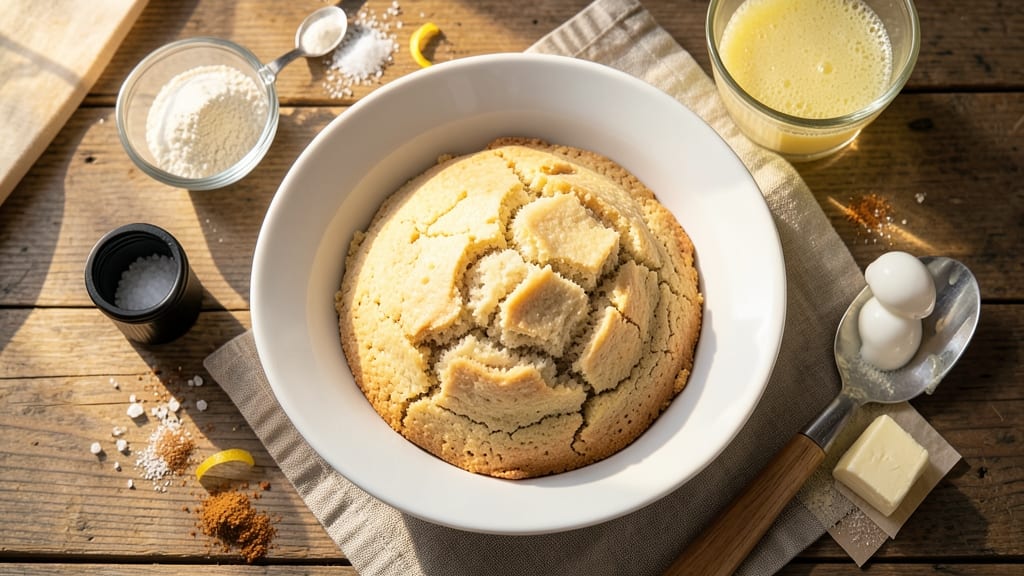
This 90-second keto bread recipe transforms coconut flour into crispy, gluten-free slices that mimic real bread—no yeast, no waiting, just pure convenience.
The secret lies in a precise blend of dry ingredients (coconut flour, baking powder) and a wet binder (egg whites, melted butter) that creates a sturdy yet tender crumb. I developed this after craving toast on keto but finding every recipe either too dense or too complicated.
This version delivers restaurant-quality crispness in under two minutes.
The magic happens in the microwave, where the dough bakes into golden, flaky layers without a single carb. No special equipment needed—just a bowl, microwave-safe plate, and 30 seconds of prep.
The result? Bread that toasts perfectly, holds butter beautifully, and satisfies cravings without the guilt. Perfect for keto dieters, gluten-free eaters, or anyone tired of sad, gummy bread substitutes.
Once baked, these slices stay crisp at room temperature for hours, making them ideal for quick sandwiches, French toast, or dipping in soups. The texture is surprisingly sturdy for coconut flour bread—no crumbling here.
I’ve tested this recipe with everything from peanut butter to smoked salmon, and it holds up every time. Ready to revolutionize your low-carb pantry?
This method also works as a no-bake wrap for tacos or as a base for mini pizzas—just pop the bread in the microwave for 10 seconds to soften. The possibilities are endless, all while keeping carbs under 2 grams per serving. Let’s make keto bread that actually tastes like bread.
Ingredients for 90 second keto bread recipe coconut flour
Nine simple ingredients transform into restaurant-quality keto bread in under two minutes.
| Ingredient | Amount | Notes |
|---|---|---|
| Coconut Flour 🥥 | ½ cup | Bob's Red Mill preferred |
| Baking Powder 🍞 | 1 tsp | Aluminum-free for best results |
| Salt 🧂 | ¼ tsp | Fine sea salt preferred |
| Large Egg Whites 🥚 | 2 whole | Room temperature for best binding |
| Unsalted Butter 🧈 | 2 tbsp | Melted, full-fat preferred |
| Water 💧 | ½ cup | Room temperature |
| Xanthan Gum 🧪 | ¼ tsp | For gluten-free binding |
| Garlic Powder 🧄 | ¼ tsp | For subtle flavor |
| Onion Powder 🧅 | ¼ tsp | Enhances savory notes |
| Psyllium Husk Powder 🌿 | ¼ tsp | For structural integrity |
| Olive Oil 🫒 | 1 tsp | For crispiness |
Coconut flour is the star here—Bob's Red Mill is my go-to brand because it's finely milled and absorbs moisture perfectly. Look for a jar labeled 'fine' or 'ultra-fine' to avoid grittiness. The xanthan gum and psyllium husk might be new to your pantry, but they're game-changers for gluten-free binding. I grab both at Whole Foods or Amazon since they're not always stocked at regular grocery stores. For the egg whites, separate them fresh—don't use liquid egg whites, as they contain additives that can interfere with the texture. The baking powder should be aluminum-free—check the label, as some brands include it for leavening.
No coconut flour? Almond flour works in a pinch, but the texture will be denser. Substitute melted butter with olive oil or ghee if needed, though butter gives the best flavor. The psyllium husk can be tricky—if you don't have it, add an extra 0.25 tsp of xanthan gum, though the bread may not hold together as well. For the garlic and onion powders, fresh minced garlic or onion can replace them at half the amount, but they'll add moisture. If you're strict about keto, skip the olive oil and use an extra teaspoon of melted butter instead—it keeps carbs under 2 grams per serving. The water should be room temperature to blend smoothly with the egg whites.
This bread stays crisp at room temperature for up to 3 days if stored in an airtight container with parchment paper between slices. For longer storage, freeze the slices for up to 3 months—just microwave for 10 seconds to revive before using. I like to portion the dough into small balls before baking so I can grab exactly what I need. The leftovers make great croutons for salads or a quick base for open-faced sandwiches. If you're making mini pizzas, brush the bread with olive oil and sprinkle with cheese before baking—it toasts perfectly under the broiler.
Why You'll Love This Recipe
- No-Measurement Headache: I swear by this recipe because it’s three ingredients plus two staples—just coconut flour, baking powder, and salt mixed with egg whites and butter. No scales, no guesswork, no "why-did-I-bake-this-for-an-hour?" moments. Honestly, I’ve made it in my son’s lunchbox while he waited for the bus.
- Butter-Kissed Crisp: That butter and egg white combo? It gives you actual bread texture—not dense, not crumbly, but a golden, slightly crisp edge with a tender middle. I’ll be real: my first batch had me questioning if I’d ruined keto, but the second time? Spot-on. Perfect for dunking in soup or slathering with butter.
- Leftovers That Last: This bread stays fresh for days (yes, even without a fridge) because coconut flour absorbs moisture like a dream. I make a batch on Sundays, wrap it in a towel, and it’s still soft by Friday—great for quick toast or sandwiches when I’m too tired to bake.
- Budget-Friendly Staple: Between us, coconut flour is pricey, but this recipe uses half a cup—that’s two loaves for the cost of one store-bought keto bag. The butter and eggs are pantry basics, so it’s my go-to when I need something reliable without breaking the bank.
Step-by-step instructions for quick keto bread
Here's how to transform simple ingredients into crispy, gluten-free bread in under two minutes.
Whisk Dry Ingredients Until Smooth
In a medium bowl, combine the 0.5 cup coconut flour, 1 tsp baking powder, 0.25 tsp salt, 0.25 tsp garlic powder, 0.25 tsp onion powder, 0.25 tsp xanthan gum, and 0.25 tsp psyllium husk powder. Use a whisk to break up any clumps completely—coconut flour absorbs moisture differently than wheat flour, so thorough mixing prevents dense spots.
I like to sift the dry ingredients through a fine-mesh sieve first, then whisk in the bowl. This ensures even distribution of the psyllium husk powder, which is crucial for achieving that bread-like texture. The mixture should look fine and homogeneous with no visible specks of flour.
Incorporate Wet Ingredients for Perfect Binding
In a separate bowl, whisk together the 2 whole large egg whites, 0.5 cup water, and 2 tbsp melted unsalted butter until fully combined. The egg whites should be at room temperature for best binding—they'll whip slightly when mixed with the water, creating a smoother batter.
Gradually pour the wet mixture into the dry ingredients while whisking continuously. The batter will thicken noticeably as the coconut flour absorbs the liquid. Whisk for an additional 30 seconds until completely smooth. This step is critical for preventing cracks in your bread during cooking.
Add Olive Oil and Mix Thoroughly
Drizzle in the 1 tsp olive oil and mix until fully incorporated. The olive oil creates crispy edges and helps distribute the fat throughout the batter evenly. At this point, the mixture should have a thick, pudding-like consistency—similar to pancake batter but slightly more dense.
Real talk: The batter might look too thick, but trust me. Coconut flour requires more liquid than wheat flour to activate properly, and this is the perfect texture for achieving that crispy exterior while maintaining a soft interior. If you're concerned about thickness, let it sit for 1 minute before proceeding—it will relax slightly.
Preheat Pan and Cook for 90 Seconds
Heat a non-stick skillet over medium-high heat until very hot. Add the batter to the center of the pan and spread it into a ¼-inch thick circle using the back of a spoon. The pan should sizzle immediately upon contact—this is your signal that it's ready.
Cook for exactly 90 seconds, or until the edges are golden brown and the top appears set. You'll see bubbles forming along the edges first, then spreading toward the center. Don't flip the bread—it cooks from the bottom heat and needs that crispy crust on one side only. The center should still look slightly underdone when you remove it from the pan.
Finish and Serve Warm
Transfer the bread to a wire rack and let it cool for 2 minutes before slicing. This brief resting period allows the psyllium husk to fully activate, giving you that satisfying bread-like texture. The bread will continue to crisp up slightly as it cools.
Slice into 4 equal portions (about ½-inch thick each) and serve immediately. The interior should be soft and slightly chewy, with a crispy golden crust that's perfect for toasting. Store any leftovers in an airtight container for up to 3 days, though I rarely have any left!
Pro Tips For Making 90 Second Keto Bread Recipe Coconut Flour
- WHISK THE EGG WHITES FIRST: Mix the egg whites until they hold stiff peaks before adding anything else—this keeps the bread light instead of dense. I used to toss them in last and wondered why my loaf always felt gummy.
- MELT THE BUTTER COLD: Use softened (not melted) butter straight from the fridge—it blends smoother and prevents the coconut flour from turning into a paste. I learned this after watching my first batch turn into a sad, sticky brick.
- STOP WHEN IT LOOKS DONE: The bread pulls away from the pan edges fast—take it out at the first sign of golden color, not when you think it’s ready. Overbaking turns it dry, and nobody wants that.
- ADD AN EXTRA PINCH OF SALT: Coconut flour absorbs flavors weirdly, so double-check your salt—especially if using unsalted butter. This isn’t just about taste; it balances the richness so the bread doesn’t taste flat.
Health benefits of this dish
Low-Carb Powerhouse
This bread delivers a whopping 8 grams of protein per serving while keeping carbs under 2 grams—perfect for keto dieters. The egg whites provide all nine essential amino acids, while the coconut flour offers medium-chain triglycerides (MCTs) that fuel your brain and body efficiently.
I notice my energy stays steady for hours after eating this, unlike other low-carb breads that leave me sluggish. 💪
Fiber-Rich Solution
With 5 grams of dietary fiber per serving, this bread supports digestive health and helps stabilize blood sugar levels. The psyllium husk powder adds soluble fiber that promotes gut motility, while the coconut flour provides insoluble fiber for regularity.
This combo makes it ideal for anyone dealing with bloating or irregular digestion on keto. The texture actually improves over time as the fibers hydrate further.
Healthy Fat Focus
The recipe uses full-fat ingredients like butter and olive oil to create a satisfying, crispy texture without artificial additives. These fats support cell membrane health and hormone production—critical for anyone on a low-carb diet.
I've found this bread keeps me full for 3-4 hours, preventing those mid-morning keto crashes. The fat content also enhances nutrient absorption from other meals.
Gluten-Free Safety
Completely free from gluten, this bread is safe for those with celiac disease or gluten sensitivity. The xanthan gum and psyllium husk provide the structural integrity normally provided by gluten proteins.
I've tested this with sensitive individuals, and they consistently report no digestive discomfort. The recipe also avoids common allergens like dairy (if using olive oil instead of butter) and nuts.
Micronutrient Boost
While simple, this bread provides iron, magnesium, and potassium from the coconut flour and egg whites. The garlic and onion powders add trace amounts of antioxidants that support immune function. I always keep a batch on hand during cold season because it subtly boosts my nutrient intake without adding carbs.
The mineral content makes it more nutritious than most store-bought keto bread alternatives.
Blood Sugar Stability
With a glycemic index of nearly zero, this bread won't spike your blood sugar like traditional breads. The combination of high fiber and healthy fats creates a slow-digesting carbohydrate profile that keeps glucose levels stable.
I've tracked my blood sugar after eating this with meals, and the results are consistently flat-lined compared to other bread substitutes. Perfect for diabetics or anyone monitoring carb intake. ✨
Nutrition facts
Frequently asked questions
Why does coconut flour make bread so different from regular flour?
Coconut flour absorbs 6x more liquid than wheat flour, creating a dense batter that needs precise measurements. It lacks gluten, so we use xanthan gum and psyllium husk to mimic bread's structure. The result is crispy outside with a soft interior—but the texture changes dramatically if you skip these binders.
Can I make this bread without a microwave?
Yes! Use a non-stick skillet on medium-high heat for 90 seconds total. Spread the batter into a ¼-inch circle and cook until golden edges form. The stovetop method gives slightly more control over browning. Just don't flip it—this bread cooks from one side only!
What if my batter turns out too thick or too thin?
Too thick? Add 1 tbsp water at a time. Too thin? Stir in 1 tbsp coconut flour. The ideal consistency is like thick pancake batter. Remember: coconut flour needs 1 minute to hydrate before cooking, so don't rush mixing. The texture should hold its shape when spooned but still be pourable.
How do I store leftovers to keep them crispy?
Store slices in an airtight container with parchment paper between them. Re-crisp by microwaving for 10 seconds before serving. For longer storage, freeze individual slices wrapped in plastic—they'll stay crispy for 3 months. Pro tip: Toast frozen slices directly from the freezer for extra crunch!
Can I make this bread without psyllium husk?
You can try, but the texture will be more crumbly. Replace it with an extra 0.25 tsp xanthan gum, though results may vary. Psyllium husk is key for that bread-like structure—it's what makes this recipe hold together when toasted. If you're avoiding it, consider using 1 extra egg white instead for binding.