
Side Dishes
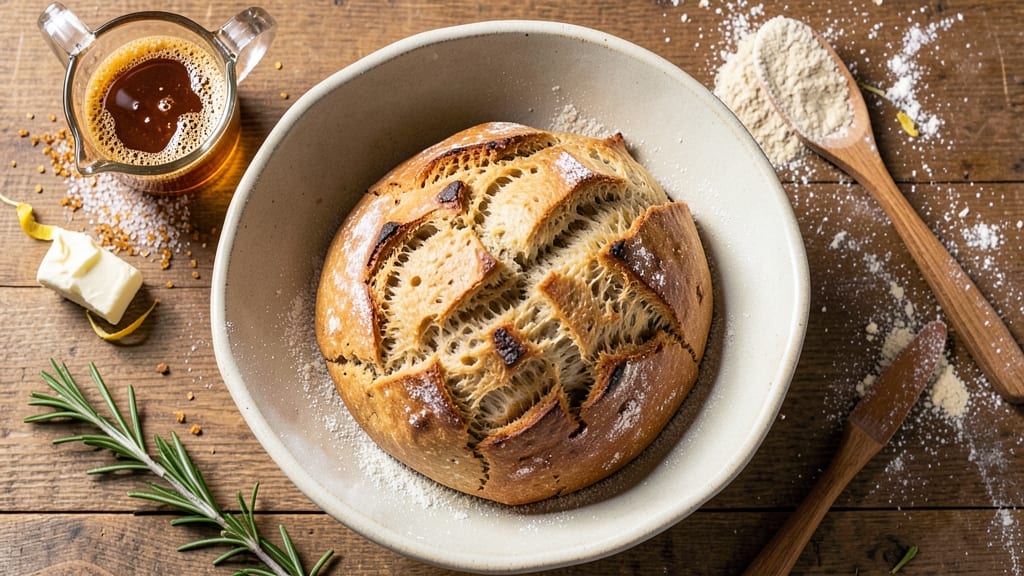
This active dry yeast whole wheat bread recipe delivers the perfect balance of nutty depth and irresistible crusty crunch. The secret lies in proper yeast activation and a precise hydration ratio that creates a tender yet sturdy crumb—no dense, heavy loaves here.
I've perfected this method over years of baking, ensuring every slice has that satisfying chew and rich whole grain flavor you crave.
What sets this recipe apart is its professional approach to traditional techniques, like the Dutch oven method for achieving that signature oven spring and crispy crust.
The dough requires just 30 minutes of active time, followed by a 2-hour bulk fermentation and overnight cold proof in the fridge—this slow fermentation develops incredible flavor without demanding your full attention.
The result is a loaf that's both rustic and refined, with a golden-brown crust that crackles when you break it open.
By the time you pull that loaf from the oven, you'll have a bread with a crusty exterior and a tender, open crumb that's perfect for sandwiches, toast, or serving alongside soups. The whole wheat flour adds subtle sweetness and a satisfying nutty aroma that makes this bread irresistible.
Whether you're a seasoned baker or new to whole wheat bread, this recipe delivers professional-quality results every time.
The beauty of this method is its flexibility—you can bake it immediately after shaping or let it ferment overnight for even deeper flavor development. The dough's slightly sticky texture makes it easy to shape into a classic round loaf or a free-form boule.
Here's everything you need to create your best whole wheat bread yet.
Ingredients for active dry yeast whole wheat bread
These eleven ingredients transform into a loaf with professional-quality crust and tender crumb—worth every minute of fermentation.
| Ingredient | Amount | Notes |
|---|---|---|
| Active Dry Yeast 🍞 | 2 ¼ tsp | Ensure yeast is fresh and active |
| Whole Wheat Flour 🌾 | 4 cups | High-protein preferred for structure |
| Bread Flour 🌾 | 1 cup | Boosts gluten development for chew |
| Granulated Sugar 🍚 | ½ cup | Feeds yeast for optimal rise |
| Unsalted Butter 🧈 | ½ cup | Cold, cubed for flavor and texture |
| Warm Water 💧 | 1 ½ cups | 110°F for perfect yeast activation |
| Diamond Crystal Kosher Salt 🧂 | 1 ½ tsp | Fine grain for even distribution |
| Extra-Virgin Olive Oil 🫒 | 1 tbsp | For dough enrichment and crust |
| Honey 🍯 | 1 tbsp | Enhances crust browning and sweetness |
| Cornmeal 🌽 | ¼ cup | For dusting and crispy base |
| Ice Water ❄️ | 2 tbsp | For final dough adjustment |
The yeast is non-negotiable here—King Arthur or Fleischmann are my go-tos, but any active dry yeast works if it's fresh. For flour, King Arthur Whole Wheat or Bob's Red Mill give the best balance of protein and flavor. The bread flour boosts gluten, which is essential for that satisfying chew. If you're using a lower-protein whole wheat blend, add an extra 0.25 cups for structure. The butter should be cold when mixed in—this creates pockets of flavor without making the dough too sticky. For the water, use a thermometer to hit 110°F—too hot and you'll kill the yeast, too cold and it won't activate properly.
No bread flour? All-purpose plus 1 tsp vital wheat gluten works in a pinch—just mix it with your whole wheat first. Out of honey? Maple syrup at half the amount gives similar sweetness. The olive oil can be swapped for melted butter if you prefer, but the EVOO adds a lovely fruity note to the crust. For the Dutch oven method, Le Creuset or Lodge brands are ideal, but any heavy pot with a lid will do. If your dough feels too sticky after adding the ice water, let it rest for 10 minutes—the gluten will relax and it'll come together better. The cornmeal isn't just for dusting; it adds a subtle sweetness to the crust that pairs perfectly with the nutty whole wheat.
This dough is best when shaped and proofed overnight in the fridge—8-12 hours gives you that sourdough-like depth without the wait. For shaping, use a lightly floured surface and your hands to create surface tension. The proofed loaf keeps 2 days at room temperature wrapped in a clean kitchen towel, or 5 days in the fridge. For freezing, bake the loaf, cool completely, then wrap tightly in plastic and foil. It'll stay fresh for 3 months—just reheat slices in a 350°F oven for 5-10 minutes to restore that bakery-fresh crunch.
Why You'll Love This Recipe
- No-Knead, No-Fuss Rise: I swear by the 30-minute prep here—just toss the whole wheat and bread flour with warm water, yeast, and a pinch of sugar, then let it do its thing. Honestly, the dough practically mixes itself while you’re making dinner.
- Buttery Wheat Magic: That little pat of unsalted butter in the dough? It turns the dense whole wheat into something tender and rich—like a hug for your sandwiches. The bread flour keeps it light, so you get the best of both worlds.
- Weeknight Sandwich Hero: This bread is my go-to for quick lunches or dinner rolls—it holds up to grilled cheese, soups, or even toasted with jam. (Yes, even on a Tuesday night when you’re too tired to think.)
- Budget-Friendly Staple: Whole wheat flour stretches further than you’d expect, and the yeast makes it rise high enough to feed a crowd. Freeze half the loaf, and you’ve got fresh bread for days—no last-minute grocery runs needed.
Step-by-step instructions for active dry yeast whole wheat bread
Transform simple ingredients into a loaf with nutty depth and irresistible crust—here's how to master the process.
Activate the Yeast for Maximum Rise
In a small bowl, combine the 2.25 tsp active dry yeast, ½ cup warm water (110°F), and 1 tbsp granulated sugar. Let it sit for 5-10 minutes until frothy—this confirms your yeast is alive and ready to work. If it doesn't bubble, your yeast may be stale, and you'll need to start fresh.
Here's the thing—whole wheat flour absorbs water differently than white flour, so we're prepping the yeast separately to ensure it gets enough moisture to activate properly. The sugar feeds the yeast, giving it energy to create that perfect rise. Stir gently with a spoon to avoid creating too many bubbles prematurely.
Mix the Dough with Precision
In the bowl of a stand mixer fitted with the dough hook, combine the 4 cups whole wheat flour, 1 cup bread flour, and 1.5 tsp diamond crystal kosher salt. Mix on low speed for 30 seconds to distribute the dry ingredients evenly. Add the ½ cup cold cubed unsalted butter and mix until it begins to incorporate into the flour.
With the mixer running on low, gradually add the yeast mixture, 1 tbsp extra-virgin olive oil, and 1 tbsp honey. The dough will look shaggy at first—this is normal. Mix on medium speed for 5-7 minutes until the dough begins to pull away from the sides of the bowl and forms a smooth, elastic texture. Real talk: whole wheat dough is stickier than white flour dough, so don't be tempted to add extra water yet.
Knead for Optimal Gluten Development
Continue kneading on medium speed for 8-10 minutes until the dough reaches a smooth, slightly tacky consistency. It should pass the windowpane test—press your finger into the dough, then pull it apart; if it stretches without tearing, you've developed enough gluten for a good structure. If it's still sticky, add 1 tbsp ice water at a time until it reaches the right texture.
I know it seems like forever, but this kneading time is crucial. The bread flour helps build that chewy texture we love in whole wheat bread, but it needs proper gluten development to hold together. The dough should feel firm yet slightly springy when pressed gently. If it's too soft, it'll collapse during proofing; if too stiff, it'll be dense.
First Rise for Maximum Flavor Development
Shape the dough into a round loaf and place it in a lightly greased bowl. Cover with a damp towel and let it rise in a warm place (75-80°F) for 1-2 hours, or until it has nearly doubled in size. The dough should feel light and springy when pressed gently with your fingertip. Here's where the magic happens—the yeast works its magic, creating those tiny air pockets that will give your bread its airy texture.
Don't rush this step. Whole wheat dough rises more slowly than white flour dough, so be patient. If your kitchen isn't warm enough, place the bowl near a warm oven with the light on (but not in the oven). The goal is to give the yeast plenty of time to ferment fully, developing deep, nutty flavors that set this bread apart.
Shape and Proof for Crusty Perfection
Punch down the dough to release air, then shape it into a round loaf on a parchment-lined baking sheet. Brush the top generously with extra-virgin olive oil and sprinkle with ¼ cup cornmeal for that classic crunchy crust. Cover loosely with plastic wrap and let it proof for 30-45 minutes until it has risen about 50%.
This final proofing stage is what gives the bread its oven spring—the dramatic rise in the oven that creates that beautiful, airy crumb. The cornmeal creates a crispy barrier between the dough and the baking sheet, preventing sticking and adding texture. Preheat your oven to 375°F while the dough proofs—you want everything ready to go when the time comes.
Bake to Golden, Crusty Perfection
Bake the loaf for 35-40 minutes until the internal temperature reaches 190-195°F and the crust is deep golden brown. For the last 10 minutes, tent the loaf with aluminum foil if it's browning too quickly—we want that beautiful color without burning. The bread is done when it sounds hollow when tapped on the bottom.
Here's the moment you've been waiting for—remove the bread from the oven and let it cool on a wire rack for at least 30 minutes before slicing. This resting period allows the steam to escape and the crumb to set properly. The crust should be crispy and shatterable, while the interior reveals that perfect open crumb with visible pockets of air and flecks of whole wheat throughout.
Pro Tips For Making Active Dry Yeast Whole Wheat Bread
- Bloom the Yeast First: I learned this the hard way—skipping the 5-minute yeast activation in warm water (110°F) with a pinch of sugar just because the recipe didn’t explicitly say to. The dough rose slower, and the loaves turned out dense. Do this step even if the recipe doesn’t mention it, especially with whole wheat, which can be tough on yeast.
- Use Cold Butter: Whole wheat dough is heavy, and warm butter makes it even harder to handle. Cut that unsalted butter straight from the fridge into cold cubes—it’ll create pockets of steam during baking, giving you a lighter crumb. (Yes, even if you’re impatient like me.)
- Don’t Over-Knead: Whole wheat breaks down faster than white flour, and over-kneading turns your bread into a gummy brick. Stop when the dough springs back slowly (about 5-7 minutes by hand) and resists but doesn’t stick. Too much work = tough bread.
- Add Vital Wheat Gluten: Whole wheat lacks the protein structure of bread flour, so if your loaves are falling flat, mix in 1-2 tablespoons of vital wheat gluten with the dry ingredients. It’s a game-changer for rise and texture—no one will guess it’s there.
Creative variations of these flavors
Sweet Honey Whole Wheat
Amplify the natural sweetness of whole wheat by adding 2 tbsp molasses to the dough along with the honey. The deep, caramel notes complement the nutty whole wheat perfectly, creating a loaf that's ideal for breakfast toast or French toast.
I like to brush the crust with an extra 1 tbsp honey after baking for a glossy finish that adds subtle sweetness with every bite. 🍯
Seeded Crunchy Loaf
For added texture and nutrition, stir ¼ cup sunflower seeds or pumpkin seeds into the dough during the final 2 minutes of kneading. These seeds add a satisfying crunch while providing healthy fats and minerals.
I recommend toasting the seeds in a dry pan for 2-3 minutes before mixing them in to enhance their flavor. The seeds distribute beautifully throughout the crumb, creating pockets of crunch in every slice.
Herb-Infused Variation
Transform your loaf into a savory masterpiece by adding 1 tbsp dried rosemary or 1 tbsp fresh thyme leaves to the dough during mixing. The herbs pair wonderfully with the nutty whole wheat, creating a bread perfect for serving with roasted meats or Mediterranean dishes.
For an extra boost, sprinkle ½ tsp garlic powder along with the salt in the dry ingredients. This variation keeps for 3 days at room temperature wrapped in a towel.
Cinnamon-Raisin Twist
Create a dessert-worthy loaf by folding in ½ cup raisins and 1 tsp cinnamon during the final 2 minutes of kneading. The raisins add natural sweetness while the cinnamon enhances the warm, comforting flavors.
Brush the baked loaf with a mixture of 1 tbsp melted butter and 1 tbsp brown sugar for a sweet glaze that caramelizes beautifully. This variation is perfect for serving with coffee or as a breakfast treat with a spread of cream cheese.
Dutch Oven Sourdough Hybrid
For a loaf with sourdough-like depth, replace 1 cup of the warm water with ½ cup active sourdough starter (at its peak, with bubbles). This creates a complex flavor profile that's more tangy and less sweet than traditional yeast bread.
Bake in a Dutch oven for 40-45 minutes to achieve that signature crusty exterior and open crumb. The starter adds probiotic benefits while enhancing the bread's keeping quality—this loaf stays fresh for 5 days at room temperature.
Everything Bagel Flavor
Give your whole wheat bread a bagel-like flavor by adding 1 tsp poppy seeds, 1 tsp sesame seeds, and ½ tsp onion powder to the dough during the final kneading.
After shaping, brush the loaf with an egg wash (beat 1 egg with 1 tbsp water) and sprinkle with 1 tbsp everything bagel seasoning before baking.
The seeds add crunch and visual appeal, while the egg wash creates a golden, shiny crust that's perfect for slicing into thick bagel-style pieces. 🥯
Nutrition facts
Frequently asked questions
Why does whole wheat bread need bread flour too?
Whole wheat flour has less gluten-forming protein than white flour, so adding 1 cup bread flour gives your loaf that satisfying chew and structure. The bread flour creates stronger gluten strands that hold onto the air bubbles from fermentation, preventing a dense, heavy crumb. Think of it as the secret weapon for that perfect open crumb texture.
Can I make this bread without a stand mixer?
Mix the ingredients by hand in a large bowl, then knead vigorously for 10-12 minutes on a floured surface until the dough becomes smooth and elastic. The key is to develop that gluten—press and fold the dough repeatedly until it passes the windowpane test. Just be prepared for some serious arm work compared to the mixer method!
What's the deal with the ice water at the end?
The ice water helps adjust the dough's hydration if it's too sticky after kneading. Add it 1 tablespoon at a time until the dough reaches a slightly tacky but workable consistency. This prevents over-hydration which can lead to a gummy crumb. Think of it as the final touch to get your dough just right before shaping.
How do I know when the dough is fully proofed?
Press your fingertip gently into the dough—if it springs back slowly (not immediately) and leaves a slight indentation, it's ready. For the final proof, look for about 50% increase in size. The dough should feel light and airy, not dense. Pro tip: If your kitchen is cold, place the dough near a warm oven (with light on) to help it rise properly.
Why does my whole wheat bread taste bland?
Whole wheat flour absorbs flavors differently, so try these fixes: Add 1 extra tablespoon of honey or ½ teaspoon cinnamon to the dough, or brush the baked crust with melted butter. The overnight cold proof also develops more flavor—try extending it to 12 hours for deeper nutty notes. Sometimes, using a slightly older flour (1-2 months past date) adds more flavor too!