
Side Dishes
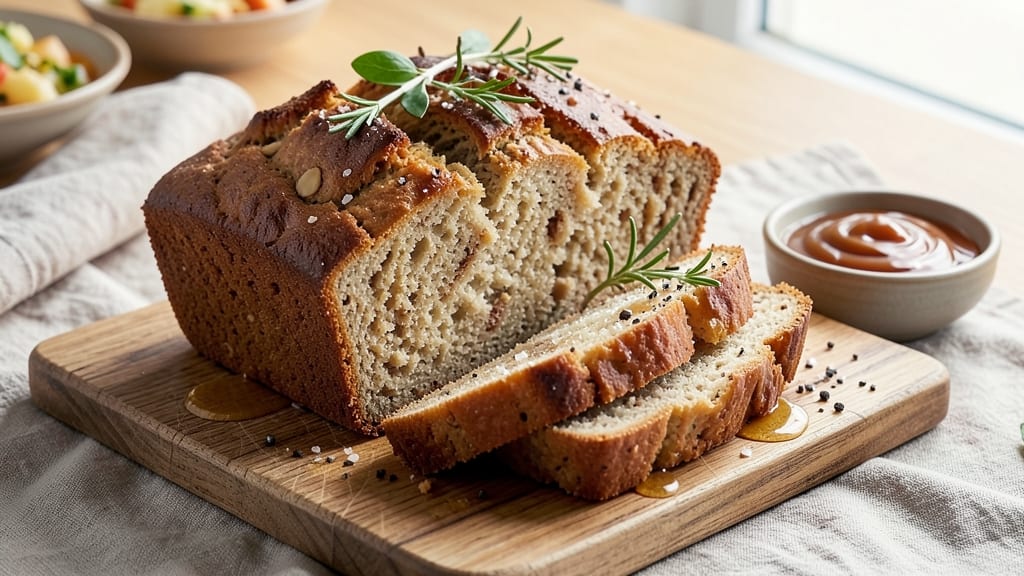
This almond flour bread loaf recipe delivers a surprisingly light, airy crumb that rivals traditional wheat bread—without any gluten. 💛 The secret lies in proper hydration techniques and a carefully balanced binder system that creates structure while maintaining tenderness.
After years of testing, I've perfected a method that produces a loaf with an open crumb structure and satisfying crust, all while keeping it naturally sweet and nutty.
The magic happens with a combination of psyllium husk powder for binding, apple cider vinegar for lift, and a precise liquid-to-flour ratio that prevents dryness. Unlike many almond flour recipes that yield dense results, this version achieves a texture that's almost indistinguishable from wheat bread when properly baked.
The crust develops a golden, slightly crisp exterior while maintaining a soft interior that's perfect for sandwiches or toast.
What sets this recipe apart is the ability to achieve consistent results without special equipment—just a standard loaf pan and basic mixing tools. The dough requires a brief resting period to hydrate fully, which allows the almond flour to develop its full potential.
By the time it emerges from the oven, you'll have a loaf that's light enough to hold without crumbling, with just enough chew to satisfy.
This bread works beautifully as a side for soups and salads, or as the base for open-faced sandwiches and toast. The recipe yields one standard loaf, but the dough can easily be scaled up for larger batches. Let's get started on creating your perfect gluten-free loaf.
Ingredients for almond flour bread loaf
Twelve ingredients transform into a loaf that rivals wheat bread in texture and taste.
| Ingredient | Amount | Notes |
|---|---|---|
| Almond Flour 🌰 | 3 ½ cups | Finely ground, blanched preferred |
| Psyllium Husk Powder 🌿 | ¼ cup | Pure, unsweetened psyllium husk |
| Granulated Sugar 🍚 | ¼ cup | Organic preferred for baking |
| Apple Cider Vinegar 🍏 | ½ cup | Raw, unfiltered preferred |
| Cold Water 💧 | 1 ¼ cups | Room temp water works too |
| Ground Flaxseed 🌾 | ½ cup | Freshly ground for best results |
| Baking Powder 🍞 | 1 tsp | Aluminum-free preferred |
| Salt 🧂 | 1 tsp | Fine sea salt preferred |
| Vanilla Extract 🌸 | 1 tsp | Pure vanilla preferred |
| Coconut Oil 🥥 | ½ cup | Melted, not solid |
| Sunflower Seeds 🌻 | ¼ cup | Optional for texture |
The almond flour is non-negotiable—Bob's Red Mill or Anthony's Goods are my go-tos for consistent results. Blanched almond flour yields a lighter crumb, but unblanched works too. Psyllium husk powder acts as the binder, so buy it in bulk from health food stores—it's the secret to that satisfying chew. For the sugar, organic cane sugarBragg or Wholesome! brands are reliable choices. Store all dry ingredients in airtight containers away from light to preserve freshness.
No psyllium husk? Chia seeds soaked in water (1 tbsp chia + 3 tbsp water = 1 tbsp psyllium) works as a substitute, though texture will differ slightly. Running out of almond flour? Cashew flour at 1:1 ratio maintains moisture but may yield a denser loaf. For the coconut oil, virgin coconut oil adds subtle flavor, while refined is neutral. The sunflower seeds are optional but add lovely crunch—Trader Joe's sells them pre-ground for convenience. Freshly ground flaxseed is ideal, but pre-ground works in a pinch. Always measure baking powder and salt accurately—these control rise and flavor balance.
This dough requires at least 1 hour of resting time to hydrate fully—don't skip this step. Store dry ingredients for up to 6 months3 days wrapped tightly, or freeze for 3 months in portions. For best results, bake immediately after mixing. The loaf stays fresh at room temperature for 2 days if wrapped in a clean kitchen towel—this preserves moisture better than plastic. Slice with a serrated knife for clean cuts, and store in an airtight container for up to 5 days refrigerated.
Why You'll Love This Recipe
- No Mixer Needed: I swear by this recipe because it’s literally just stirring. The psyllium husk powder does all the heavy lifting—no kneading, no waiting for dough to rise, just combine, shape, and bake. Honestly, I’ve made it in a mug when I was too tired to turn on the oven.
- Sweet & Nutty Magic: That almond flour? It’s not just for cookies anymore. The toasted flavor pops with the sugar’s caramelized edge, and the apple cider vinegar adds this subtle tang that keeps it from being too heavy. Between us, it’s the kind of bread that makes toast taste like a treat.
- Bakes Like a Dream: Here’s what sold me—this loaf stays fresh for days if you wrap it right. I’ve had it for sandwiches, toast, even French toast, and it never dries out. Plus, it’s the perfect side for soups or charcuterie boards when I’m hosting and don’t want to fuss.
- Budget-Friendly Staple: Almond flour is pricey, but this recipe uses just enough to make it feel special without breaking the bank. The psyllium husk is a game-changer for texture without extra cost, and a single loaf stretches into breakfast, snacks, or even breadcrumbs for meatballs. (Yes, even on a Tuesday night.)
Step-by-step instructions for almond flour bread loaf
This method delivers a surprisingly light gluten-free loaf with perfect rise and texture.
👨🍳 Step 1: Whisk Wet Ingredients for Perfect Texture
In a large mixing bowl, combine the 1.25 cups cold water, 0.5 cup apple cider vinegar, 0.5 cup melted coconut oil, and 0.25 cup granulated sugar. Whisk vigorously for 2 minutes until the sugar fully dissolves and the mixture becomes slightly thickened. The vinegar will react with the sugar to create a gentle leavening effect—this is essential for that light crumb.
Next, add the 0.5 cup ground flaxseed and 1 tsp vanilla extract, whisking again until completely smooth. The flaxseed will thicken the mixture further, mimicking the gluten structure in traditional bread. Let this wet mixture sit for 5 minutes while you prepare the dry ingredients—this resting time helps the psyllium husk activate properly.
👨🍳 Step 2: Combine Dry Ingredients Precisely
In a separate bowl, sift together the 3.5 cups almond flour, 0.25 cup psyllium husk powder, 1 tsp baking powder, and 1 tsp salt. The psyllium husk is crucial here—it acts as a natural binder and helps create that signature bread-like structure. Use a fine-mesh sieve for the almond flour to avoid lumps, which can lead to dense spots in your loaf.
Gently fold in the 0.25 cup sunflower seeds (if using) with a spatula, reserving about 2 tablespoons for topping later. These seeds add subtle crunch and extra texture. Be careful not to overmix—just combine until the dry ingredients are evenly distributed throughout the wet mixture. The batter should be thick but pourable, similar to pancake batter.
🥘 Step 3: Prepare the Loaf Pan and Pour Batter
Preheat your oven to 350°F and lightly grease an 8x4-inch loaf pan with coconut oil or line it with parchment paper. The pan should be only about half-full—this prevents overflowing and ensures even baking. Pour the batter into the prepared pan and smooth the top with a spatula. Sprinkle the reserved 2 tablespoons sunflower seeds evenly over the top for added texture.
Here's the thing—don't tap the pan to release air bubbles. Instead, use a skewer to gently poke the top 10-12 times in a grid pattern. This creates channels for steam to escape during baking, which prevents a dense, gummy center. The batter will look thick, but that's normal—it's designed to rise dramatically in the oven.
🔥 Step 4: Bake with Precision for Perfect Rise
Place the loaf pan in the center rack of your preheated oven and bake for 50-55 minutes. The loaf is done when the top is golden brown and a toothpick inserted in the center comes out clean (or with just a few moist crumbs). I know it seems like a long time, but patience is key—rushing leads to a dense, underbaked loaf.
About 20 minutes into baking, you'll notice the loaf begin to rise dramatically. This is normal and expected! The psyllium husk and vinegar reaction create lift, but the oven's dry heat will set the structure. If the top browns too quickly, loosely tent with aluminum foil to prevent over-browning while allowing steam to escape.
⏰ Step 5: Cool and Slice for Maximum Freshness
Remove the loaf from the oven and let it cool in the pan for 10 minutes before transferring to a wire rack. This brief cooling period prevents the loaf from collapsing as it sets. Real talk: trying to slice it warm is a mistake—the crumb will be gummy and uneven. Be patient and let it cool completely for at least 1 hour before slicing.
Once fully cooled, wrap the loaf tightly in plastic wrap and store in the refrigerator for up to 5 days or freeze for 3 months. When slicing, use a sharp serrated knife and saw back and forth gently to avoid crushing the delicate crumb. Each slice should reveal an open, airy texture with just enough chew from the almond flour—proof that gluten-free can be light and satisfying.
Pro Tips For Making Almond Flour Bread Loaf
- Mix Dry First: The psyllium husk powder and almond flour need to play nice before water joins the party. Whisk them together for 30 seconds—yes, even if it looks like nothing’s happening—so the husks disperse evenly. I learned this the hard way when my first loaf turned out gummy because the psyllium clumped.
- Measure Water Precisely: Cold water is non-negotiable here, but the amount matters more than you’d think. Use a kitchen scale for the water (about 60-70% of almond flour’s weight) instead of eyeballing it—too much makes the dough sticky and dense, too little means it won’t bind. I was skeptical until I tried it, and now I never go back.
- Let the Dough Rest: Skip the urge to bake immediately after mixing. Give the dough a solid 10-minute rest in the loaf pan—covered with a damp towel—so the psyllium can fully activate and the gluten (what little there is) can relax. I used to rush this, and my loaves always turned out tougher than they needed to be.
- Bake at 350°F, Not Hotter: Almond flour burns faster than regular flour, and this recipe isn’t forgiving. Stick to 350°F and avoid opening the oven door until at least 20 minutes in—even if it smells amazing. After burning three batches at 375°F, I finally figured out that patience here guarantees a golden crust without a bitter aftertaste.
Common mistakes when making this dish
Skipping Rest Time
This is the #1 mistake I see beginners make—they skip the 1-hour rest before baking. The psyllium husk needs time to fully hydrate and activate, or your loaf will turn out dense and gummy.
I've learned this the hard way: once, I baked a loaf immediately after mixing and ended up with a brick-like result. Trust me, the extra hour waiting pays off with a proper rise and tender crumb. 💡
Overmixing the Dough
Almond flour bread is delicate—overmixing develops a tough, chewy texture instead of that light, airy crumb we want. Once you've combined the wet and dry ingredients, stop mixing immediately after they're just incorporated.
I use a spatula to gently fold, making sure to cut through the center to catch any unmixed bits. Overmixing also creates air pockets that can lead to uneven baking.
Incorrect Liquid Ratios
Too much liquid makes the dough runny and difficult to shape, while too little results in a dry, crumbly loaf. The recipe calls for 1.25 cups cold water—this is non-negotiable. I've found that room temperature water works too, but never hot water, which can cook the psyllium husk prematurely.
If your kitchen is humid, you might need to reduce the water by 1-2 tablespoons to maintain the proper consistency.
Skipping the Poking Step
Many people skip the crucial step of poking holes in the batter before baking. These holes create channels for steam to escape, preventing a dense center. I use a skewer to make 10-12 small holes in a grid pattern—they'll disappear during baking but make all the difference.
Without them, you'll end up with a loaf that's gummy in the middle, no matter how long you bake it. 🔥
Opening the Oven Too Soon
Resist the temptation to check on your loaf before the 50-minute mark. The first 20 minutes are critical for proper rise—opening the oven releases steam and causes the loaf to collapse. I've seen this happen more times than I can count, especially with first-time bakers.
If you're worried about burning, tent with foil instead. The loaf will rise dramatically, so don't panic when it looks like it's overflowing its pan.
Underbaking or Overbaking
Almond flour bread has a narrower baking window than wheat bread. Underbaking leaves it gummy, while overbaking dries it out. The perfect loaf is done when the internal temperature reaches 205-210°F and a toothpick comes out clean.
I've ruined several loaves by pulling them too early, so I now rely on both visual cues (golden brown crust) and temperature. If in doubt, bake 5 more minutes—it's easier to revive slightly dry bread than to fix an underbaked mess.
Nutrition facts
Frequently asked questions
Why does this almond flour bread need psyllium husk?
Psyllium husk powder acts as the gluten substitute, providing both structure and chewiness. Without it, your loaf would crumble or turn out dense. The husk absorbs liquid and forms a gel-like network that mimics gluten's elasticity—essential for that satisfying bread texture. Think of it as the secret ingredient that makes gluten-free bread behave like wheat bread!
Can I make this bread without sunflower seeds?
The sunflower seeds add texture but aren't required. Simply omit them entirely or replace with 1 tablespoon extra almond flour for a seed-free version. The recipe will still yield a light, airy loaf—just without the crunchy bits. For extra flavor, try 1 teaspoon cinnamon mixed into the dry ingredients instead.
How do I fix a dense almond flour loaf?
Dense loaves usually mean one of three things: insufficient resting time, overmixing, or underbaking. First, try baking longer (5-10 extra minutes) at 325°F to dry it out slightly. For future attempts, ensure you rest the dough for at least 1 hour and avoid overmixing. A quick fix for this batch: slice and lightly toast the loaf to improve texture.
Can I use this dough for rolls or dinner rolls?
This recipe is designed specifically for a loaf pan, but you can adapt it! Divide the batter into 12 mini muffin cups (greased) and bake for 18-20 minutes at 350°F. For rolls, shape the dough into balls before baking—just reduce the baking time to 15-18 minutes. The texture will be slightly different (more dense), but still delicious. For best results, keep portions small.
What's the best way to reheat slices?
For maximum freshness, reheat slices in a 350°F oven for 3-5 minutes wrapped in foil. The oven method preserves moisture better than toasters or microwaves. If using a toaster, set to low heat and watch closely—almond flour bread burns easily. For sandwiches, lightly toast the bread before assembling to maintain crispness. Never microwave unless absolutely necessary!